
Bangkok Joins Singapore, Manila, Kuala Lumpur, and Ho Chi Minh City Today at the Asian Travel Tech Show 2026 Revolutionizing Southeast Asian Travel with Industry Leaders and Tech Giants Attracting Thousands of Business Travelers from Around the Globe
Bangkok, Singapore, Manila, and Kuala Lumpur are forming a Southeast Asian travel tech corridor in 2026, leveraging AI a

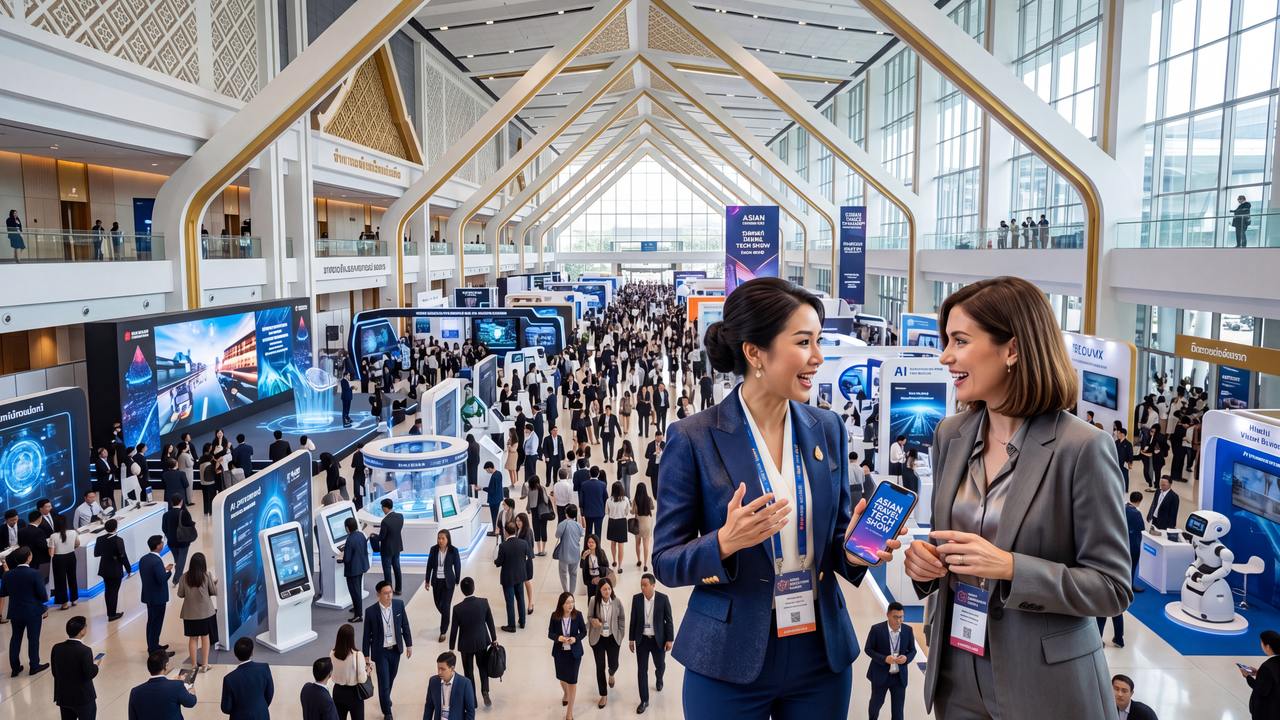
Image generated by AI
[Bangkok, June 26, 2026] — Southeast Asia is undergoing a systemic transformation as Bangkok, Singapore, Manila, Kuala Lumpur, and Ho Chi Minh City converge to establish a massive regional travel technology corridor. This coordinated effort involves the integration of artificial intelligence (AI), enhanced MICE (Meetings, Incentives, Conventions, and Exhibitions) infrastructure, and digital reform to attract high-yield business travelers and global investors.
Regional Shift Toward a Digital Tourism Ecosystem
The landscape of Southeast Asian tourism is being redrawn, moving away from isolated destination marketing toward a connected network of technology and commerce. Industry reports indicate that public agencies across five major capitals are employing a unified strategy: prioritizing digital transformation, structuring high-value business events, and streamlining cross-border movement to maximize the economic value of every visitor.
Rather than relying on a single exhibition, this regional surge is being driven by a synchronized chain of state-backed conferences, digital platforms, and tourism policies. This systemic approach is designed to pull global suppliers, venture capitalists, and high-spending delegates deeper into the Southeast Asian market.
Bangkok Positions Itself as a Global Exhibition Hub
In Thailand, the Bangkok Metropolitan Administration and the national government are aggressively positioning the capital as a "city of exhibitions." This strategic framework integrates MICE readiness directly into the city's urban development plans, ensuring that Bangkok serves as more than just a leisure destination.
A primary example of this ambition is the upcoming 2026 Annual Meetings of the International Monetary Fund (IMF) and the World Bank Group, scheduled for October 12 to October 18. These high-profile events will be hosted at the Queen Sirikit National Convention Center, signaling to the world that Bangkok is a secure, modern, and digitally connected hub capable of hosting the world's most influential decision-makers.
The economic impact of this strategy is already evident in trade activity. Thailand Travel Mart Plus 2026 has become a central pillar for global buyer engagement. According to the Public Relations Department, the event expected 800 international buyers, with government reports projecting over 15,000 business appointments and an estimated THB 5 billion in tourism revenue. This reliance on high-density corporate events necessitates the adoption of advanced travel tech, including smarter booking flows, real-time visitor analytics, and coordinated digital servicing.
AI Integration and Smart City Initiatives in Thailand
The Thai government has shifted its policy language to treat artificial intelligence as a necessity rather than an option. Official 2026 directives state that AI will be deployed to enhance visitor experiences and distribute tourist traffic more evenly across various destinations.
This policy alignment suggests that Bangkok is evolving into an intelligent service environment. The goal is to implement AI-driven crowd management, personalized transport recommendations, and seamless digital payment systems. By linking tourism growth to digital capability, Bangkok is competing on a global stage where competitiveness is measured by technological efficiency as much as by traditional attractions.
Singapore Sets the Regional Innovation Benchmark
While Bangkok rises as a business node, Singapore continues to serve as the gold standard for travel tech integration. The Singapore Tourism Board (STB) has operationalized this through "Tcube," an innovation hub where tourism firms utilize a "learn-test-scale" framework to adopt data analytics and AI.
The institutionalization of innovation is a key differentiator for Singapore. Through the AI Playbook for Tourism and the Tcube Centre of Excellence, the government acts as a curator and accelerator for new tools. This structured approach ensures that technology is not just showcased but is embedded into the formal tourism economy.
The scale of Singapore's event ecosystem remains immense. Travel Tech Asia 2026 is slated for October 21 to 23, running alongside ITB Asia 2026 and MICE Show Asia. Previous Ministry of Trade and Industry data indicates that ITB Asia alone targets over 18,000 delegates, 1,000 exhibitors, and 1,500 buyers. With projected 2026 tourism receipts between 31 and 32.5 billion Singapore dollars, the city-state is functioning as a living laboratory for future travel behavior.
Manila and Kuala Lumpur Expand the Tech Corridor
In the Philippines, the shift is being driven by the ASEAN Sectoral Plan 2026–2030. This regional roadmap prioritizes digital transformation, seamless travel, and workforce development. Manila serves as the operational center for these negotiations, bridging the gap between high-level policy and commercial execution.
The Tourism Promotions Board has highlighted PHITEX 2026 in Metro Manila as the premier government-led trade event for matchmaking Philippine sellers with global buyers. The city's capacity is supported by eight major venues, including the Philippine International Convention Center, the World Trade Center Metro Manila, and the SMX Convention Center. By framing Manila as a functional city for delegates and medical or tech congresses, the government is driving the demand for sophisticated registration systems and transport coordination.
Similarly, Kuala Lumpur is leveraging the "Visit Malaysia 2026" campaign to attract 43 million international visitors. The strategy involves a "ladder" approach: expanding buyer networks through events like the Global Travel Meet at the World Trade Centre Kuala Lumpur, amplifying business event credentials, and then scaling up leisure flows.
Malaysia's commitment is further codified in the Digitalization Strategic Plan 2025–2029, published by the Ministry of Tourism, Arts and Culture. This plan ensures that tourism modernization is a state priority, positioning Kuala Lumpur as a digitally supported command center for national market expansion.
Ho Chi Minh City and the Digital Frontier
Vietnam is also intensifying its digital ambitions, with Ho Chi Minh City emerging as a critical node. The Vietnam National Authority of Tourism is actively promoting ITE HCMC 2026, seeking support from the Pacific Asia Travel Association (PATA) to attract international partners through digital invitations and official platforms. This indicates a move toward a more digitized and "green" approach to tourism trade in Vietnam.
Regional Tourism Targets and Event Metrics
| City | Key Event/Initiative | Primary Objective | Projected Impact/Scale |
|---|---|---|---|
| Bangkok | IMF/World Bank Meetings | MICE Leadership | THB 5 Billion (via Travel Mart) |
| Singapore | Travel Tech Asia / ITB Asia | AI & Data Innovation | 18,000+ Delegates |
| Manila | PHITEX 2026 | ASEAN Digital Reform | 8 Major Event Venues |
| Kuala Lumpur | Visit Malaysia 2026 | Market Expansion | 43 Million Visitors |
| Ho Chi Minh | ITE HCMC 2026 | Digital & Green Tourism | PATA-backed International Outreach |
Impact Analysis: The New Southeast Asian Travel Map
The convergence of these five cities into a "tech corridor" fundamentally changes the value proposition of Southeast Asian travel. By shifting focus from low-cost leisure to high-yield business and MICE travel, these nations are insulating their economies against volatility in the leisure sector.
The reliance on a "chain of state-backed conferences" creates a multiplier effect. When a business traveler visits Bangkok for an IMF meeting, they are interacting with a digital ecosystem that is mirrored in Singapore or Kuala Lumpur. This creates a seamless regional experience that encourages longer stays and increased cross-border movement.
Why This Matters (Information Gain)
This regional synchronization represents a departure from the traditional "destination competition" model where cities fight for the same tourists. Instead, Southeast Asia is building a collaborative infrastructure. By aligning their AI policies and MICE calendars, these cities are creating a "network effect"—the more any one city adopts a specific travel tech standard (like seamless digital payments or AI-driven concierge services), the more valuable the entire corridor becomes to a global business traveler.
For the aviation and hospitality industries, this means a shift in demand toward "premium-efficiency." The focus is no longer just on capacity, but on the integration of data—from the moment a delegate books a flight to their movement between a convention center and a hotel. The "travel tech corridor" is effectively turning Southeast Asia into a single, digitally integrated business hub, making the region an indispensable destination for the global corporate and investment community.
Related Travel Guides
Disclaimer
This article is for informational and educational purposes only. It does not constitute legal, financial, or professional advice. While we strive to provide accurate and up-to-date information, travel policies, regulations, and conditions change rapidly. Always verify information with official sources before making travel decisions. Nomad Lawyer makes no representations about the accuracy, reliability, completeness, or suitability of the information provided. Readers should consult qualified professionals for advice specific to their circumstances. The views expressed in this article are those of the author and do not necessarily reflect the views of Nomad Lawyer.
Preeti Gunjan
Contributor & Community Manager
A passionate traveller and community builder. Preeti helps grow the Nomad Lawyer community, fostering engagement and bringing the reader experience to life.
Learn more about our team →