
Bangkok's Automatic Train Protection System Launches After Makkasan Tragedy—What Tourists Need to Know
Thailand deploys automatic train protection at Bangkok crossings following the deadly Makkasan accident. Here's how the system reshapes rail safety and travel.

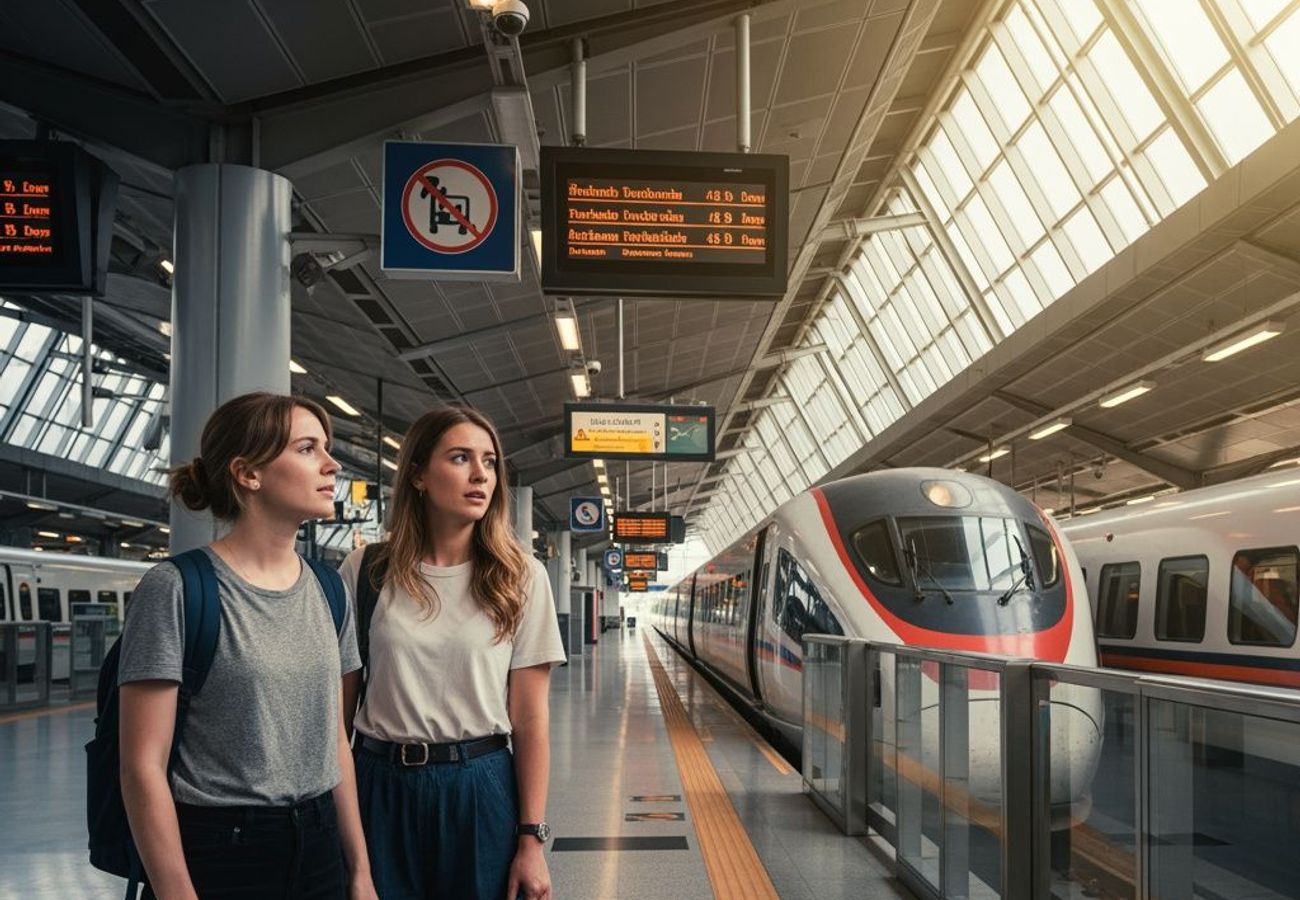
Image generated by AI
The news breaking out of Bangkok this week cuts straight to the heart of urban rail safety. After the catastrophic Makkasan railway crossing accident, Thailand's transport authorities have moved aggressively to deploy an automatic train protection system at one of the city's deadliest intersections. For anyone planning travel through Bangkok—or living there—what happens next could reshape how the city moves.
I've covered transport accidents for years, and Makkasan stands out. It wasn't a mechanical failure or a freak weather event. It was a collision born entirely from human vulnerability: congestion, timing, and the razor-thin margins that separate routine commutes from tragedy.
The Makkasan Moment: When a System Breaks
The accident itself was brutally simple. A passenger bus became trapped on the Makkasan level crossing due to traffic gridlock. A freight train approached. The barriers came down, but too late. The impact killed 8 people and injured around 30 others.
That collision became the inflection point. For transport officials, it wasn't just another accident report filed away. It was evidence that Bangkok's rail system needed something it had been missing: a safety net that didn't depend on perfect human coordination in imperfect conditions.
Reddit: "Level crossings in dense cities are always a nightmare. You can't blame the driver or the bus—you blame the system." — r/transit
How The New Automatic Train Protection Works
Here's where it gets serious. Instead of relying solely on barrier gates and human operators, the system operates in real time with zero tolerance for delay.
When a crossing isn't fully clear, the automatic train protection system does what humans can't always do: it stops the train. Not gradually. Not after a warning. Immediately.
The system's core functions include:
Automatic braking if a crossing remains obstructed beyond safe windows. Barrier fault detection that identifies incomplete or faulty gate closure before a train reaches the intersection. Traffic light synchronization that clears road space in advance of rail movements. Predictive intervention that reacts faster than manual override in congested peak hours.
The engineering is elegant in its directness. It removes the human element where human error is most likely to occur—at the exact moment when split-second decisions matter most.
What Changes on the Ground
If you're commuting through Bangkok or visiting the city, you won't see much change at street level. The real transformation happens invisibly, in the coordination between rail operators, traffic systems, and crossing supervisors.
But the effects ripple outward. Train delays caused by road congestion should drop noticeably. Peak-hour commutes become more predictable. The constant low-level anxiety that comes with crossing busy rail intersections in Bangkok eases quietly into the background.
For tourists, this matters more than it initially appears. Bangkok rail travel is the circulatory system of the city. Safer crossings mean smoother connections between airports, hotels, and districts. It means fewer unexpected delays during tight itineraries.
Level Crossings: The Weakest Link
Level crossings have always been the vulnerability in Bangkok's Thailand rail safety system. Traffic doesn't stop moving in Bangkok—it compounds. Rush hour creates a perfect storm: vehicles backed up across tracks, trains running on schedule, and operators with seconds to decide what happens next.
The reforms now being rolled out address this structural weakness:
Real-time communication systems between crossing supervisors and central control. Enforcement protocols for keeping vehicles off tracks. Coordination with Bangkok traffic police to manage congestion near crossings. Incident response procedures that escalate immediately when congestion threatens safety.
It's not glamorous work, but it's foundational. These changes turn a system that was reactive—responding to emergencies—into one that's predictive, catching problems before they become collisions.
The Harder Conversation: Driver Safety Standards
Alongside the infrastructure push, authorities introduced something more uncomfortable to discuss: stricter train driver oversight. This came after historical concerns about substance use among operators in Thailand's rail system.
The updated requirements now mandate:
Regular drug and alcohol testing for all train operators. Quarterly safety certification reviews rather than annual checks. Enforcement mechanisms with real consequences for violations. Operational discipline standards that apply uniformly across all rail operators.
This is the part of rail reform that doesn't make headlines but determines whether safety systems actually function as designed. A perfect automatic braking system fails if the operator isn't alert enough to work within it.
Why Tourists Should Care About Rails Safety
Most visitors think of rail safety as someone else's problem. It's not. Tourism in Bangkok depends on the reliability of its transport networks. When rail crossings fail, the whole city feels it—delayed airport connections, missed tours, cascading frustration.
More fundamentally: safer systems build trust. When tourists know their train journey is backed by multiple layers of protection—automated braking, synchronized traffic, constant monitoring—they move with confidence. They spend more, stay longer, and return.
The improvements support:
Reliable connections between Suvarnabhumi Airport and downtown. Predictable commute times for hotel-to-attraction trips. Integration between rail networks and the broader Bangkok transport ecosystem. Gradual modernization of Thailand's tourism infrastructure to match international standards.
Prevention, Not Response
The philosophical shift here matters as much as the technology. The automatic train protection system Bangkok is designed to prevent accidents, not manage their aftermath.
Traditional crossing systems wait for a problem to develop, then respond. This system stops the problem before it begins. It's the difference between fire departments and fire prevention—one reacts to disasters, the other stops them from happening.
If the Makkasan rollout succeeds as expected, similar systems will expand across Thailand's rail network. Other regions are already watching. Other cities with dense urban rail corridors are taking notes.
What Comes Next for Bangkok Rails
The immediate focus is on expanding the automatic train protection across Bangkok's remaining level crossings. The long-term goal is building a Thailand rail safety system that scales with the city's growth without increasing risk.
This means:
Systematic expansion of protection systems across all high-risk crossings. Integration of rail and road traffic management at a city-wide level. Modernization of signal systems and operator interfaces. Capacity improvements that allow more trains to move safely through busy corridors.
Bangkok isn't building a new system. It's learning from Makkasan and implementing what that tragedy demanded: a city where trains and cars don't share space through hope and timing, but through design and automation.
For commuters and travelers, the message is simple: the system that moves you through Bangkok is becoming harder to break, and that's exactly what needs to happen.
Thailand's rail future is being written not in response to success, but in response to failure—and that's when real change actually takes hold.
Related Travel Guides
Disclaimer
This article is for informational and educational purposes only. It does not constitute legal, financial, or professional advice. While we strive to provide accurate and up-to-date information, travel policies, regulations, and conditions change rapidly. Always verify information with official sources before making travel decisions. Nomad Lawyer makes no representations about the accuracy, reliability, completeness, or suitability of the information provided. Readers should consult qualified professionals for advice specific to their circumstances. The views expressed in this article are those of the author and do not necessarily reflect the views of Nomad Lawyer.
Raushan Kumar
Founder & Lead Developer
Full-stack developer with 11+ years of experience and a passionate traveller. Raushan built Nomad Lawyer from the ground up with a vision to create the best travel and law experience on the web.
Learn more about our team →