
Bali Tourism Reaches Iconic Heights As Smooth Aviation Infrastructure Redefines Island Travel In Indonesia, Find Out Now
Bali Tourism Reaches Iconic Heights As Smooth Aviation Infrastructure Redefines Island Travel In Indonesia, Find Out Now

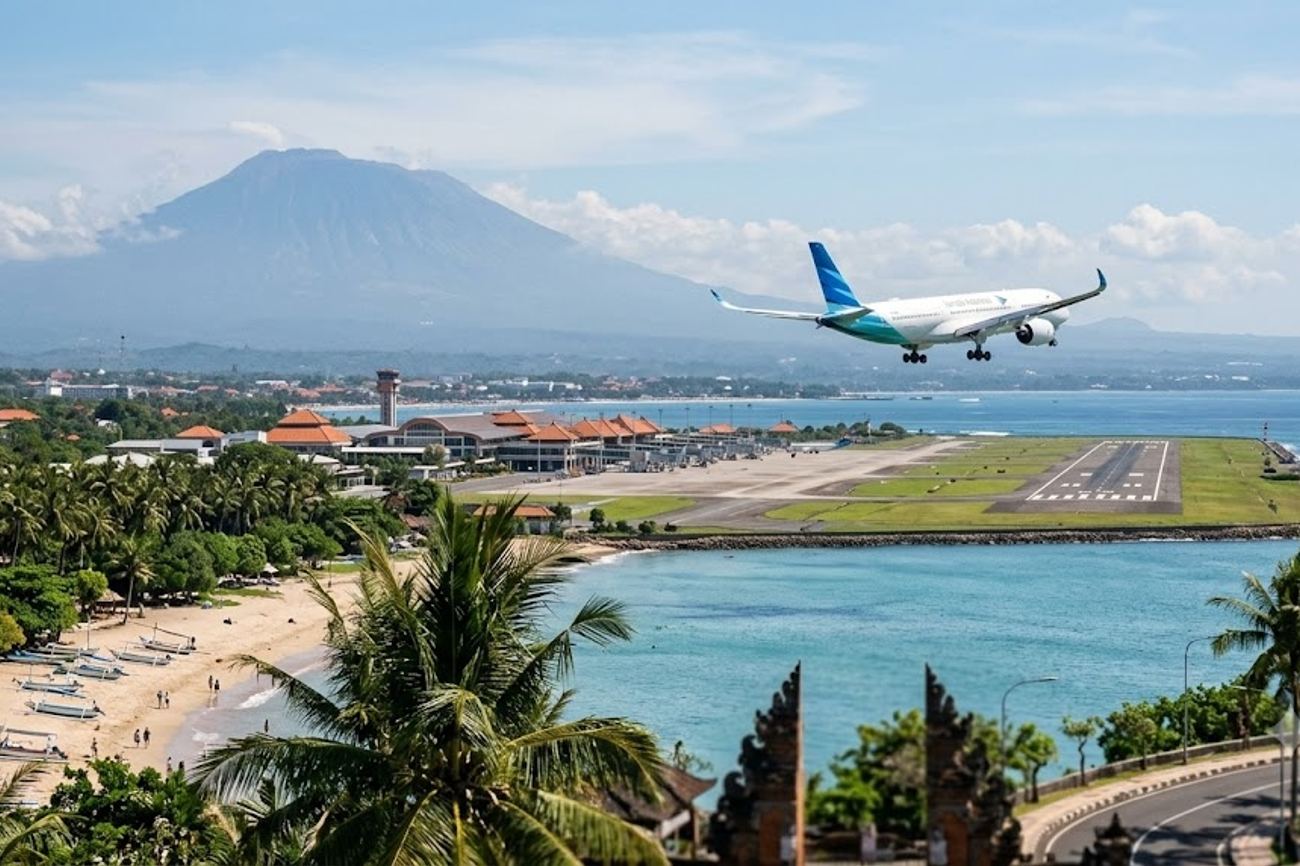
Image generated by AI
[Denpasar, May 2024] — Bali has processed more than 13 million passengers across 80,000 flights over a two-year period, cementing its position as a primary global aviation hub. The surge in traffic is driven by a strategic mix of high-volume international corridors and a robust domestic network, prompting the regional government to implement aggressive infrastructure upgrades and environmental levies to sustain growth.
The operational scale involves the management of 8.5 million international arrivals and 4.7 million domestic travelers. This traffic is concentrated heavily in three primary corridors: Singapore, which remains the highest-volume international route; Jakarta (Cengkareng), which dominates domestic transit; and Australia, which provides 25% of the 4 million foreign arrivals recorded during the reporting window. To manage this density, authorities are integrating automated customs processing and expanded baggage systems to prevent terminal bottlenecks.
Infrastructure Scaling and Route Dominance
The aviation ecosystem in Bali relies on a high-frequency "shuttle" model, particularly from Singapore Changi Airport, which allows international tourists to pivot easily between multiple Asian destinations. This connectivity is bolstered by code-share agreements and regional alliances that maximize the capacity of short-haul corridors.
The domestic sector is anchored by Cengkareng, the primary gateway for Jakarta. This route is vital not only for convenience but for economic stability, as it ensures a steady flow of Indonesian citizens from Java and other provinces. This domestic cushion protects the island's hospitality sector from the volatility of global economic shifts that often impact foreign luxury travel.
The geographical distribution of passengers reveals a deep dependency on the Australian market. With one-quarter of foreign visitors originating from cities such as Sydney, Melbourne, and Perth, the local service economy is sustained through both peak and off-peak seasons. This steady stream of visitors allows for year-round operational viability for airport staff and surrounding community vendors.
Passenger Impact: What This Means for Your Trip
For travelers booking flights to Bali, the current operational climate translates into several practical changes:
Bali is experiencing a significant surge in international arrivals as aviation infrastructure upgrades streamline passenger flow. Travelers can now access updated flight schedules and booking services through the Garuda Indonesia portal to ensure seamless transit to the island.
- Mandatory Entry Fees: Every international arrival must now pay a standardized entry levy of $15 (150,000 IDR). This is a non-negotiable requirement upon arrival.
- Transit Efficiency: Increased investment in automated customs and optimized terminal layouts means reduced wait times at immigration, though peak-hour surges from Singapore and Jakarta flights can still cause temporary congestion.
- Ground Transport Shifts: Travelers should expect a move away from traditional private taxis. New electric shuttle corridors are being deployed to move passengers from terminal gates directly to high-density zones like Canggu, Seminyak, and Kuta.
- Predictable Transfers: The introduction of battery-electric tram networks is designed to bypass the island's notorious surface-road traffic, offering a high-speed alternative for those heading to distant hospitality districts.
The $60 Million Green Initiative
To offset the ecological footprint of 13.2 million arrivals, municipal authorities have launched a targeted financial mechanism. The $15 international tourist levy is projected to generate over $60 million annually. Unlike general tax funds, this capital is legally earmarked for specific environmental protections.
According to regional administrators, these funds are being funneled into:
- Waste Management: Construction of community-level treatment plants to handle the surge in tourist-generated refuse.
- Marine Conservation: Funding for coastal erosion barriers and the cleanup of river systems that feed into the ocean.
- Eco-Restoration: The rehabilitation of natural trails in rural districts to prevent degradation from foot traffic.
This "self-sustaining funding loop" is designed to ensure that the increase in passenger volume does not lead to the permanent destruction of the natural assets that attract tourists in the first place.
Decarbonizing the Last Mile
Beyond the airport terminals, the focus has shifted to "last-mile" connectivity. The heavy congestion between the aviation gateway and coastal resorts has triggered a transition toward low-emission transit.
Urban planners are prioritizing electric shuttle corridors to reduce the carbon output of thousands of daily airport transfers. By replacing internal combustion engine taxis with battery-electric alternatives, the region aims to smooth traffic flow on narrow coastal thoroughfares.
The Indonesian government continues to enhance tourism sustainability and accessibility to support the growing influx of global visitors. Detailed travel requirements and official destination guidelines are maintained by the Ministry of Tourism and Creative Economy to optimize the visitor experience.
The long-term strategy involves a light-rail battery-electric tram network. These systems are engineered to operate independently of surface road traffic, providing a predictable timeline for passengers traveling from the airport to their hotels. This infrastructure shift is intended to serve as a blueprint for other high-volume destinations in the Caribbean and South America.
FAQ: Bali Aviation & Transit 2024
How much is the Bali tourist levy and how is it paid? International travelers must pay a fee of $15 (150,000 IDR) upon arrival. These funds are dedicated to ecological preservation, marine conservation, and municipal waste management to offset the impact of high visitor volumes.
What are the busiest flight routes into Bali? The highest-volume international corridor is Singapore. Domestically, the route from Cengkareng (Jakarta) is the most dominant. Australian cities, including Sydney, Melbourne, and Perth, also provide a massive share of total arrivals.
How is the airport addressing traffic congestion to resorts? Authorities are deploying electric shuttle corridors and developing battery-electric tram networks. These systems are designed to bypass congested surface roads and provide direct, low-emission transport to Kuta, Seminyak, and Canggu.
Will airport wait times improve with these changes? Yes. The regional government is investing in automated customs processing and expanded baggage handling systems to scale operations and reduce passenger wait times during peak arrival windows.
Efficiency meets ecology as Bali re-engineers its gateway for the next million arrivals.
Related Travel Guides
- Cyprus Transforms The Travel Industry By Turning Quiet Hidden Border Towns Into The Ultimate Year-Round Escape For Travelers
- Dubai’s Global Village Unveils Season 31 VIP Packages With Exclusive Perks And AED 31,000 Prize
- United States Aligns With Outdoor Escapes As Hidden Lakes Offer Tahoe Inspired Adventures Without Crowds
Disclaimer
This article is for informational and educational purposes only. It does not constitute legal, financial, or professional advice. While we strive to provide accurate and up-to-date information, travel policies, regulations, and conditions change rapidly. Always verify information with official sources before making travel decisions. Nomad Lawyer makes no representations about the accuracy, reliability, completeness, or suitability of the information provided. Readers should consult qualified professionals for advice specific to their circumstances. The views expressed in this article are those of the author and do not necessarily reflect the views of Nomad Lawyer.
Preeti Gunjan
Contributor & Community Manager
A passionate traveller and community builder. Preeti helps grow the Nomad Lawyer community, fostering engagement and bringing the reader experience to life.
Learn more about our team →