
Bali Beats Jakarta and All Other Cities in Indonesia With Strong Hotel and Travel Demand Throughout the First Nine Months of 2026
Bali Beats Jakarta and All Other Cities in Indonesia With Strong Hotel and Travel Demand Throughout the First Nine Months of 2026

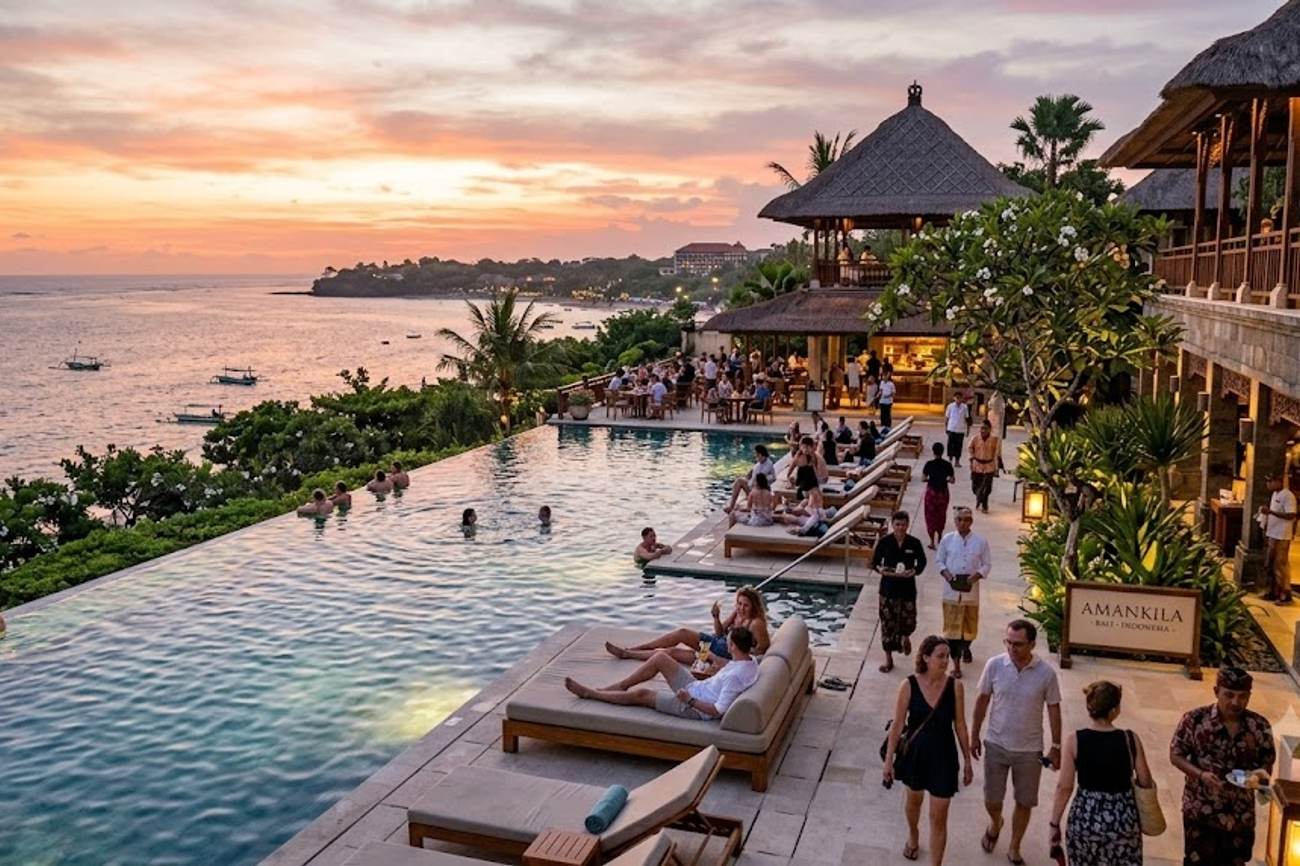
Image generated by AI
59.4% hotel occupancy in Bali marks the highest rate across 15 Indonesian provinces for the first nine months of 2026, cementing the island's dominance over the national travel economy. This figure, paired with an average visitor stay of 2.86 nights, creates a compounding economic effect that distinguishes Bali from the more transactional, short-stay patterns seen in Indonesia's urban centers. While other regions struggle to convert foot traffic into extended residency, Bali has successfully engineered a diversified ecosystem of wellness, luxury, and culture that compels travelers to remain on the island nearly twice as long as they do in the capital.
The Divergence of Leisure and Commercial Demand
The Indonesian travel market in 2026 is characterized by a sharp divide between "destination" hubs and "gateway" hubs. Bali operates as a primary destination, where the hotel stay is the centerpiece of the journey. In contrast, Jakarta and Banten function as gateways, where accommodation is often a logistical necessity rather than the primary draw.
Jakarta maintains a significant presence with 52.9% hotel occupancy, yet its average stay is a mere 1.59 nights. This suggests a market driven by the rhythms of corporate calendars and government functions. The capital's demand is anchored by the Ministry of Tourism and Creative Economy initiatives to blend business with urban exploration, leveraging sites like Kota Tua and the National Monument. However, the brevity of these stays limits the per-visitor spend on local leisure services compared to the prolonged residency seen in Bali.
Further east, Yogyakarta utilizes a heritage-led model. With 50.9% hotel occupancy and an average stay of 1.56 nights, the city attracts a demographic focused on Javanese history and the Borobudur and Prambanan complexes. While the occupancy is strong, the shorter duration of stay indicates that Yogyakarta often serves as a cultural stopover rather than a long-term base, reflecting a different consumption pattern than the resort-heavy model of the south.
Regional Performance Metrics: Q1-Q3 2026
The following data illustrates the disparity between occupancy rates and the actual duration of stay across Indonesia's top-performing provinces.
| Province | Hotel Occupancy Rate | Average Stay (Nights) | Primary Demand Driver |
|---|---|---|---|
| Bali | 59.4% | 2.86 | Diversified Leisure/Wellness |
| West Kalimantan | 55.9% | 1.41 | Commercial/Regional Mobility |
| Jakarta (DKI) | 52.9% | 1.59 | Corporate/Urban Business |
| Banten | 52.2% | 1.42 | Airport Transit/Jakarta Overflow |
| East Kalimantan | 51.3% | 1.60 | Infrastructure/Government |
| Yogyakarta (DI) | 50.9% | 1.56 | Cultural Heritage/Arts |
| West Java | 46.5% | 1.41 | Highland Escapes/Shopping |
Expert Analysis: The "Duration Gap" and its Economic Implications
From a senior editorial perspective, the most critical data point is not the occupancy percentage, but the "duration gap" between Bali and the rest of the archipelago. A 2.86-night average stay in Bali versus a 1.41-night stay in West Kalimantan—despite both having high occupancy—reveals two entirely different business models.
Bali has surpassed Jakarta and other major cities in Indonesia in terms of hotel and travel demand for the first nine months of 2026, according to official statistics. The island's popularity can be attributed to its rich cultural heritage and natural beauty, attracting visitors from around the world. For the most up-to-date information on travel requirements and regulations, visitors can check the official website of the Indonesian Ministry of Tourism for the latest updates and guidelines.
For travelers booking these routes, the direct consequence is a difference in infrastructure. Bali’s economy is built for "slow travel," with a heavy concentration of luxury villas and integrated resorts that encourage on-site spending. Conversely, the high occupancy in West Kalimantan (55.9%) and East Kalimantan (51.3%) is likely driven by the "project economy"—government contractors, infrastructure engineers, and business consultants who require a bed for a night or two before moving to the next site.
The pricing pressure this creates means that Bali can maintain higher Average Daily Rates (ADR) because the value proposition is tied to an "experience" rather than just a "room." In provinces like Banten, where occupancy is 52.2%, the market is highly sensitive to the proximity of Jakarta's airports and corporate hubs. If corporate travel dips, these hotels have less "leisure cushion" to fall back on compared to Bali's multifaceted appeal.
Furthermore, the emergence of East Kalimantan as a top-five market (51.3% occupancy) is a geopolitical signal. As Indonesia shifts its administrative and infrastructure focus toward the east, the travel economy is following the money. This is no longer just about beaches; it is about the movement of capital and governance. Travelers should expect an increase in business-class hotel inventory in Balikpapan and Samarinda, potentially squeezing out budget options as the "project economy" drives up demand for premium corporate lodging.
The strong demand for travel to Bali has also led to an increase in passenger traffic at Ngurah Rai International Airport, with many airlines operating direct flights to the island. To plan their trip and book flights, travelers can visit the official website of Garuda Indonesia for the latest schedules and fares. Additionally, the airport's official website provides information on passenger logistics, including terminal layouts and transportation options, making it easier for visitors to navigate and plan their trip to Bali.
Key Takeaways
- Bali's Market Dominance: Leading with 59.4% occupancy and the longest average stay (2.86 nights), Bali remains the only province successfully converting high volume into long-term residency.
- The Rise of the East: East Kalimantan (51.3%) and West Kalimantan (55.9%) have entered the top tier of hotel demand, signaling a shift toward business and infrastructure-led travel in the outer islands.
- Jakarta's Transactional Nature: Despite a strong 52.9% occupancy, the capital's low average stay (1.59 nights) confirms its role as a corporate transit hub rather than a leisure destination.
- Strategic Proximity: Banten's 52.2% occupancy is largely a byproduct of its geographic relationship with Jakarta, capturing airport-related and short-term metropolitan overflow.
- Cultural Consistency: Yogyakarta maintains a stable 50.9% occupancy, proving that heritage tourism remains a resilient, albeit short-stay, driver of the Indonesian economy.
FAQ: Indonesia Travel Trends 2026
Why is Bali's average stay so much longer than Jakarta's? Bali offers a "cluster" of experiences—from Ubud's wellness retreats to Seminyak's beach clubs—encouraging multi-day itineraries. Jakarta is primarily a commercial hub where visitors stay only long enough to complete business meetings or short urban tours.
Is West Kalimantan a good destination for leisure travelers? While it has high hotel occupancy (55.9%), the short average stay (1.41 nights) suggests it is currently dominated by business travel. However, it offers emerging opportunities for nature-based tourism and Dayak cultural experiences.
How does West Java differ from Bali in terms of tourism? West Java focuses on "short-break" tourism. With a 46.5% occupancy rate and 1.41-night average stay, it serves as a weekend escape for Jakarta residents seeking cooler highlands and shopping in Bandung.
Which Indonesian province is best for cultural tourism in 2026? Yogyakarta remains the premier choice, maintaining 50.9% occupancy through its proximity to Borobudur and Prambanan, offering a more traditional Javanese experience compared to Bali's resort-centric model.
The shift toward Kalimantan suggests that while Bali owns the heart of the traveler, the east is beginning to capture the wallet of the professional.
Tags: Bali Tourism 2026, Jakarta Hotel Demand, East Kalimantan Infrastructure, Indonesian Hospitality Trends, Yogyakarta Heritage Travel, Tripdataset Analysis
Related Travel Guides
Disclaimer
This article is for informational and educational purposes only. It does not constitute legal, financial, or professional advice. While we strive to provide accurate and up-to-date information, travel policies, regulations, and conditions change rapidly. Always verify information with official sources before making travel decisions. Nomad Lawyer makes no representations about the accuracy, reliability, completeness, or suitability of the information provided. Readers should consult qualified professionals for advice specific to their circumstances. The views expressed in this article are those of the author and do not necessarily reflect the views of Nomad Lawyer.
Preeti Gunjan
Contributor & Community Manager
A passionate traveller and community builder. Preeti helps grow the Nomad Lawyer community, fostering engagement and bringing the reader experience to life.
Learn more about our team →