
Bahrain Targets Global Expansion as 2024 Tourism Revenue Hits BD1.9 Billion
Bahrain recorded 14.9 million visitors in 2024, generating BD1.9 billion. The Kingdom now targets India, China, and the UK for its 2027–2031 tourism strategy.
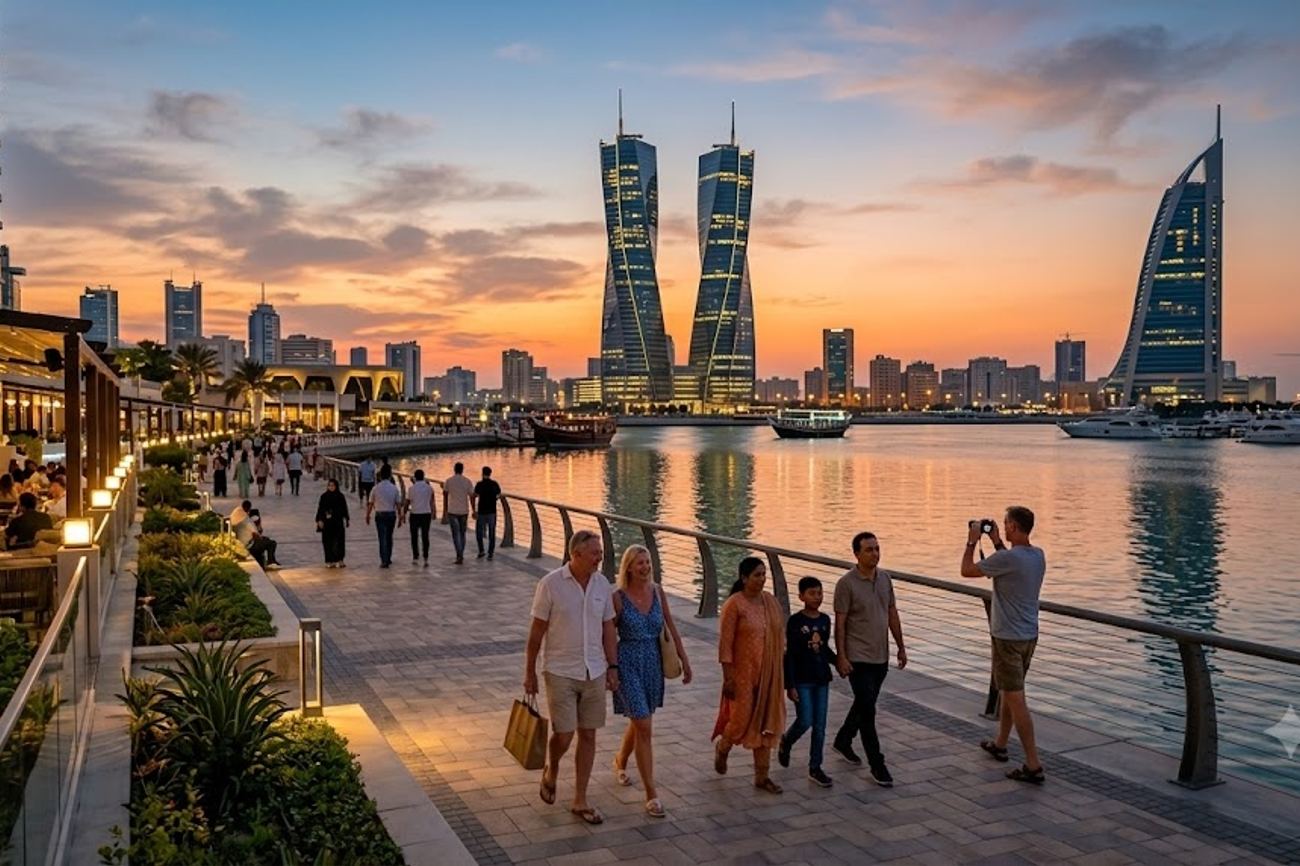
Image generated by AI
Manama, September 6, 2026 —
Bahrain is currently navigating a transformative phase in its tourism sector, leveraging a massive influx of regional visitors to build a foundation for global expansion. In 2024, the Kingdom welcomed 14.9 million visitors, with inbound tourism revenue climbing to BD1.9 billion. While the Saudi Arabian market remains the primary driver of these figures—accounting for approximately 12.8 million visits—officials are now looking toward the 2027–2031 National Tourism Strategy to diversify the visitor demographic.
The Kingdom is seeking to transition from a regional weekend hub into a globally recognized short-break destination. By exporting its successful "short-stay" model to markets such as India, China, Germany, and the United Kingdom, Bahrain aims to reduce its reliance on a single source market while increasing the average spend per tourist.
Saudi Connectivity Fuels Massive Visitor Volume
The current scale of Bahrain's tourism success is largely attributed to its unique geographical link with Saudi Arabia. The King Fahd Causeway serves as a vital artery, transforming international travel into a convenient cross-border excursion for residents of Saudi Arabia's Eastern Province. This accessibility has fostered a culture of repeat visits, where travelers frequently cross the border for dining, retail therapy, and family entertainment without the logistical hurdles of traditional international flights.
Industry data confirms that this convenience has created a high-frequency visit pattern. Rather than relying on singular annual vacations, the Saudi market utilizes Bahrain for spontaneous, short-term leisure. This "weekend engine" has pushed total visitor numbers to 14.9 million, split between a high volume of day-trippers and a significant number of overnight guests.
The financial impact of this regional flow is substantial. With an average daily expenditure of BD69.1 per person, the constant stream of visitors has solidified Bahrain's position as a primary leisure node in the Gulf.
Bahrain Tourism Performance Metrics (2024)
| Indicator | Recorded Figure |
|---|---|
| Total visitors | 14.9 million |
| Day visitors | 8.3 million |
| Overnight visitors | 6.6 million |
| Tourist nights | 19.2 million |
| Average stay | 2.9 nights |
| Average daily expenditure | BD69.1 |
| Inbound tourism revenue | BD1.9 billion |
| Aircraft movements | 101,534 |
Strategic Pivot Toward 2031 National Objectives
As the current National Tourism Strategy (2022–2026) nears its conclusion, the Bahraini government is drafting a successor framework for 2027–2031. This upcoming strategy is designed to analyze evolving traveler behaviors and implement international best practices to maintain competitiveness in an increasingly crowded Gulf tourism market.
While the previous phase focused heavily on maritime tourism, sports, and cultural events, the new roadmap seeks to refine the "value proposition" for specific international segments. The goal is not to abandon the lucrative Saudi market, but to layer additional, independent demand streams on top of it.
Priority markets identified for this expansion include the GCC, India, China, Germany, and the UK. By targeting these diverse regions, Bahrain can balance its tourism economy against regional fluctuations.
Market-Specific Strategic Propositions
| Market | Proposed Value Proposition | Primary Strategic Advantage |
|---|---|---|
| Saudi Arabia | Frequent weekend getaways | Direct road accessibility |
| India | Luxury, weddings, and business-leisure | Robust Gulf air connectivity |
| UK | Heritage, events, and winter sun | Long-haul leisure demand |
| China | Luxury retail and cultural exploration | Massive international scale |
| Germany | Wellness, culture, and winter escapes | European market diversification |
| Wider GCC | Dining, leisure, and major events | Short-haul repeat visit patterns |
The Rise of the 72-Hour Gulf Escape
A central pillar of Bahrain's future growth is the concept of the "72-hour destination." Unlike larger neighbors that promote week-long itineraries, Bahrain is leveraging its compact geography as a competitive edge. The ability for a visitor to experience UNESCO-listed heritage sites, traditional souqs, high-end shopping, and waterfront entertainment without extensive travel time between locations makes it an ideal candidate for the "micro-cation" trend.
This strategy aligns with a global shift toward shorter, more frequent trips. A three-night stay is easily integrated into business travel or can serve as a standalone luxury break. However, for this to work on a global scale, Bahrain must move beyond being a "stopover" or an "add-on" to trips to Dubai or Doha. The challenge lies in packaging its offerings so that a traveler from London or Mumbai views Bahrain as the primary destination.
India as the Primary Growth Catalyst
Among the targeted international markets, India represents the most immediate opportunity due to existing aviation infrastructure. Bahrain International Airport maintains strong links to major Indian hubs, including Mumbai and Delhi, with flight times averaging approximately three hours.
Current flight schedules further extend this reach to cities such as Bengaluru, Hyderabad, Chennai, and Kochi. This connectivity opens several high-value avenues:
- The Luxury Segment: Affluent Indian travelers seeking high-end hospitality and retail.
- The "Bleisure" Market: Business professionals extending corporate trips into leisure stays.
- Specialized Tourism: The potential for medical tourism and high-spend destination weddings.
The success of this expansion depends on Bahrain's ability to differentiate its cultural and luxury offerings from other regional competitors to win the "consideration phase" of the Indian traveler's journey.
Diversifying via European and British Markets
While the Saudi market is driven by spontaneity and road access, the UK and German markets require a more structured motivational trigger. European travelers are less likely to visit on a whim and more likely to plan around specific events or seasonal needs.
For these markets, Bahrain is positioning itself as a premier winter escape. By emphasizing its heritage narratives and luxury sporting events, the Kingdom can attract a demographic that provides greater geographical diversification and typically longer average stays than the regional weekend visitor.
Why This Matters (Information Gain & Experience)
For the global traveler, Bahrain's shift toward a "72-hour" model signals a change in how the Gulf is consumed. Instead of the overwhelming scale of mega-cities, Bahrain offers a more curated, accessible experience. From a logistical standpoint, this makes the Kingdom an ideal "anchor" for those who find larger hubs exhausting but want the luxury and safety of the GCC.
For investors and hospitality providers, the 2027–2031 strategy indicates a move toward higher-yield tourism. By targeting the Indian wedding market and European winter travelers, the focus is shifting from volume (which is already solved by the Saudi market) to value. This likely means an increase in boutique luxury developments and specialized cultural tours designed to maximize the spend of a visitor staying only three nights.
Related Travel Guides
Disclaimer
This article is for informational and educational purposes only. It does not constitute legal, financial, or professional advice. While we strive to provide accurate and up-to-date information, travel policies, regulations, and conditions change rapidly. Always verify information with official sources before making travel decisions. Nomad Lawyer makes no representations about the accuracy, reliability, completeness, or suitability of the information provided. Readers should consult qualified professionals for advice specific to their circumstances. The views expressed in this article are those of the author and do not necessarily reflect the views of Nomad Lawyer.