
B-2 Spirit Bomber: History's Only Crewed Flying Wing Stealth Aircraft
The B-2 Spirit bomber remains aviation's only operational crewed flying wing stealth aircraft. Unveiled in 1988, Northrop Grumman's revolutionary design set global military aviation standards that no nation has replicated in 2026.

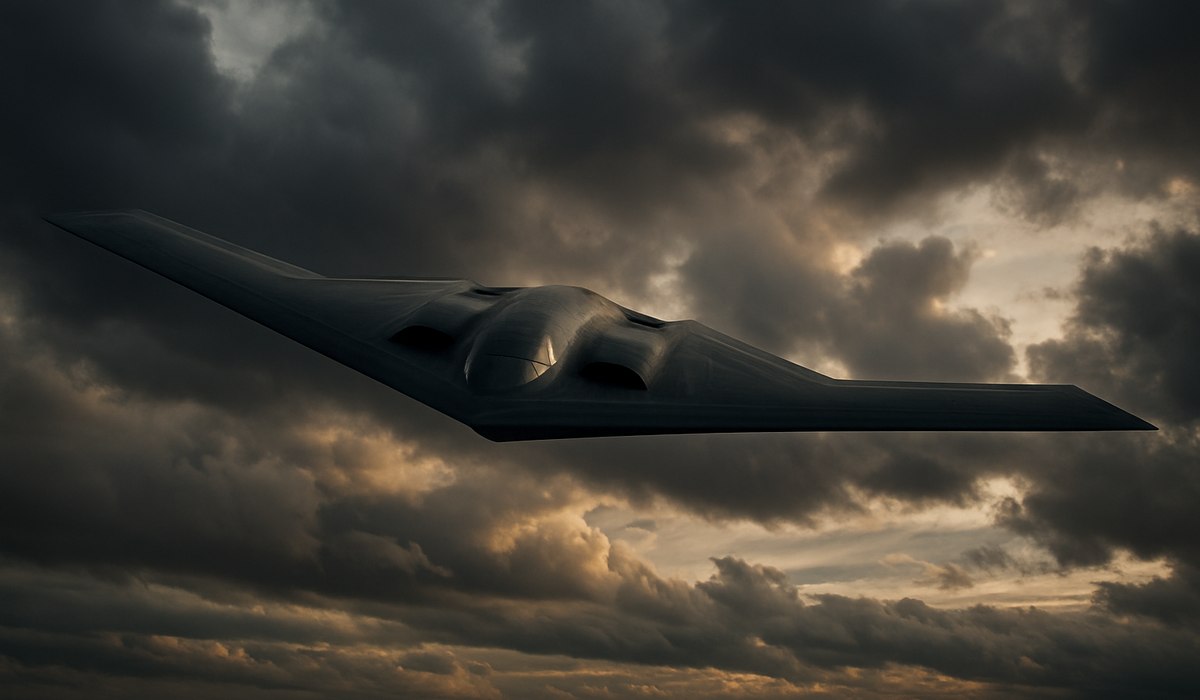
Image generated by AI
The B-2 Spirit Bomber: Aviation's Unmatched Flying Wing Innovation
The B-2 Spirit bomber stands as a singular achievement in global aviation history. When Northrop Grumman unveiled this revolutionary aircraft at Air Force Plant 42 in Palmdale, California, in 1988, it accomplished something no other air force has replicated: a fully operational, crewed flying wing stealth bomber. Nearly four decades later, the B-2 Spirit remains the world's only successfully produced crewed flying wing aircraft with fifth-generation stealth capabilities.
This exclusivity underscores the profound engineering complexity behind the flying wing design and its integration with cutting-edge stealth technology. Understanding this milestone illuminates why military aviation enthusiasts, defense analysts, and travelers interested in aerospace history continue studying this transformative platform.
The Flying Wing Innovation: Design Excellence Without Precedent
The flying wing design represents one of aviation's most radical departures from conventional aircraft architecture. Unlike traditional jets featuring distinct fuselages, tail sections, and separate wings, the B-2 Spirit's entire structure functions as one integrated lifting surface.
This revolutionary approach eliminates the vertical stabilizers and horizontal control surfaces that characterize standard military aircraft. The aerodynamic integration distributes weight evenly across the airframe, creating exceptional lift-to-weight ratios. Every component—from cockpit to landing gear—integrates into the wing structure itself.
Northrop Grumman engineers spent years perfecting this flying wing design through advanced computer modeling and wind tunnel testing. The result transformed how aerospace designers conceptualize large aircraft. Today's unmanned aerial vehicles and future transport concepts often reference the B-2 Spirit's aerodynamic principles, though none have achieved the bomber's combination of size, payload capacity, and performance.
The flying wing design also provides inherent advantages for stealth operations. The blended airframe presents minimal radar cross-sections from multiple angles, fundamentally different from aircraft with protruding fuselages and tail sections. This geometric efficiency made the B-2 Spirit revolutionary when introduced and remains unmatched across global air forces.
Learn more about aerospace innovation at Northrop Grumman's official aerospace division.
Stealth Technology Breakthrough: Redefining Military Aviation
The B-2 Spirit bomber emerged during the Cold War's peak, when air defense systems became increasingly sophisticated. Traditional bombers faced mounting threats from surface-to-air missiles and advanced fighter interceptors. The United States needed a fundamentally different approach to strategic bombing capability.
Stealth technology represented that breakthrough. By integrating advanced materials, geometric design principles, and electronic countermeasures, the B-2 Spirit achieved radar invisibility unprecedented for crewed aircraft at that scale. The bomber's composite construction, radar-absorbing coatings, and internal weapons bays all contribute to its minimal radar signature.
This stealth aircraft capability meant the B-2 Spirit could penetrate defended airspace where conventional bombers could not operate safely. One aircraft could accomplish missions requiring multiple conventional bombers supported by extensive electronic warfare and fighter escorts.
No other nation has successfully fielded a comparable fifth-generation stealth aircraft with the B-2 Spirit's range, payload capacity, and operational sophistication. While other countries develop next-generation fighters with stealth features, producing a large-scale stealth aircraft bomber requires mastery across multiple technological disciplines simultaneously.
The B-2 Spirit's stealth capabilities remain classified in many respects, but declassified information confirms its revolutionary effectiveness. This technological advantage has shaped military aviation strategy globally since 1988.
For current aviation news and updates, visit the Federal Aviation Administration.
Global Aviation Impact: Setting Standards Without Competitors
The B-2 Spirit bomber's introduction fundamentally altered global military aviation strategy and procurement planning. When the United States fielded this revolutionary platform, allied air forces recognized the shifting technological landscape.
No air force worldwide has successfully produced a competing crewed flying wing stealth bomber. Russia investigated similar concepts but never achieved operational fielding. China has pursued stealth technology integration but not within a flying wing design framework. European nations focused resources on fighter development rather than strategic bombing platforms.
This global reality reflects the extraordinary complexity of integrating flying wing design with stealth aircraft technology at operational scale. The engineering challenges span materials science, aerodynamics, propulsion systems, weapons integration, and avionic architecture. Northrop Grumman's achievement required sustained investment and technical expertise across multiple decades.
The B-2 Spirit's uniqueness influences defense spending decisions worldwide. Nations must decide whether to develop indigenous long-range strike capabilities or rely on allied partnerships. The aircraft's unmatched performance characteristics shape strategic planning for countries facing near-peer competitors.
This technological gap remains remarkably persistent. Despite nearly four decades of development by other major powers, no nation has deployed a comparable crewed flying wing stealth bomber. The B-2 Spirit continues defining what strategic bombing platforms can achieve when resources, expertise, and determination align.
Legacy and Future Developments: Continuity Beyond 2026
The B-2 Spirit bomber fleet continues serving as the backbone of American strategic aviation capabilities. Continuous modernization programs upgrade avionics, sensors, and mission systems while maintaining the core flying wing design that ensures its relevance.
Future strategic aviation concepts reference B-2 Spirit principles extensively. Next-generation platforms under development will incorporate lessons learned from nearly four decades of operational experience. However, the next manned strategic bomber likely won't incorporate a flying wing design due to different operational requirements and technologies.
Unmanned aerial platforms increasingly adopt flying wing design concepts pioneered by the B-2 Spirit. These aircraft lack the crewed cockpits and associated constraints, enabling different configurations. Yet the B-2 Spirit's original achievement—producing a successful large-scale crewed flying wing stealth bomber—remains unmatched.
The aircraft's operational life extends well beyond 2026, with service projections continuing into the 2050s following modernization investments. This longevity speaks to the fundamental soundness of Northrop Grumman's original design and the limited likelihood of displacement by competing systems.
Historical significance aside, the B-2 Spirit demonstrates how dedicated innovation can produce results other nations cannot replicate despite comparable resources. The combination of visionary design, technological integration, and sustained commitment created an aviation milestone unlikely to be surpassed in the near future.
Key B-2 Spirit Bomber Facts and Specifications
| Specification | Detail |
|---|---|
| First Flight | July 17, 1989 |
| Operational Introduction | 1997 |
| Manufacturer | Northrop Grumman Corporation |
| Airframe Configuration | Flying wing design with integrated fuselage |
| Stealth Capability | Fifth-generation stealth aircraft technology |
| Crew Requirement | Two pilots (crewed operation) |
| Wingspan | 172 feet (52.4 meters) |
| Cruise Altitude | 50,000+ feet |
| Range | 6,000+ nautical miles unrefueled |
| Operational Status | Fully operational, no competing nation has deployed comparable systems |
What This Means for Aviation Enthusiasts and Travelers
For those interested in aerospace history and military aviation development, the B-2 Spirit bomber represents a pivotal achievement worth understanding:
- Recognition of Innovation Asymmetry: The B-2 Spirit's continued uniqueness demonstrates that technological breakthroughs cannot be easily replicated, even
Disclaimer
This article is for informational and educational purposes only. It does not constitute legal, financial, or professional advice. While we strive to provide accurate and up-to-date information, travel policies, regulations, and conditions change rapidly. Always verify information with official sources before making travel decisions. Nomad Lawyer makes no representations about the accuracy, reliability, completeness, or suitability of the information provided. Readers should consult qualified professionals for advice specific to their circumstances. The views expressed in this article are those of the author and do not necessarily reflect the views of Nomad Lawyer.
Kunal K Choudhary
Co-Founder & Contributor
A passionate traveller and tech enthusiast. Kunal contributes to the vision and growth of Nomad Lawyer, bringing fresh perspectives and driving the community forward.
Learn more about our team →