
Worst U.S. Airports for Connecting Flights: 13 High-Risk Hubs Identified in 2026 Transportation Data
Bureau of Transportation Statistics data highlights high-risk U.S. hubs where tight layovers, airspace congestion, and layout delays trigger missed flights.

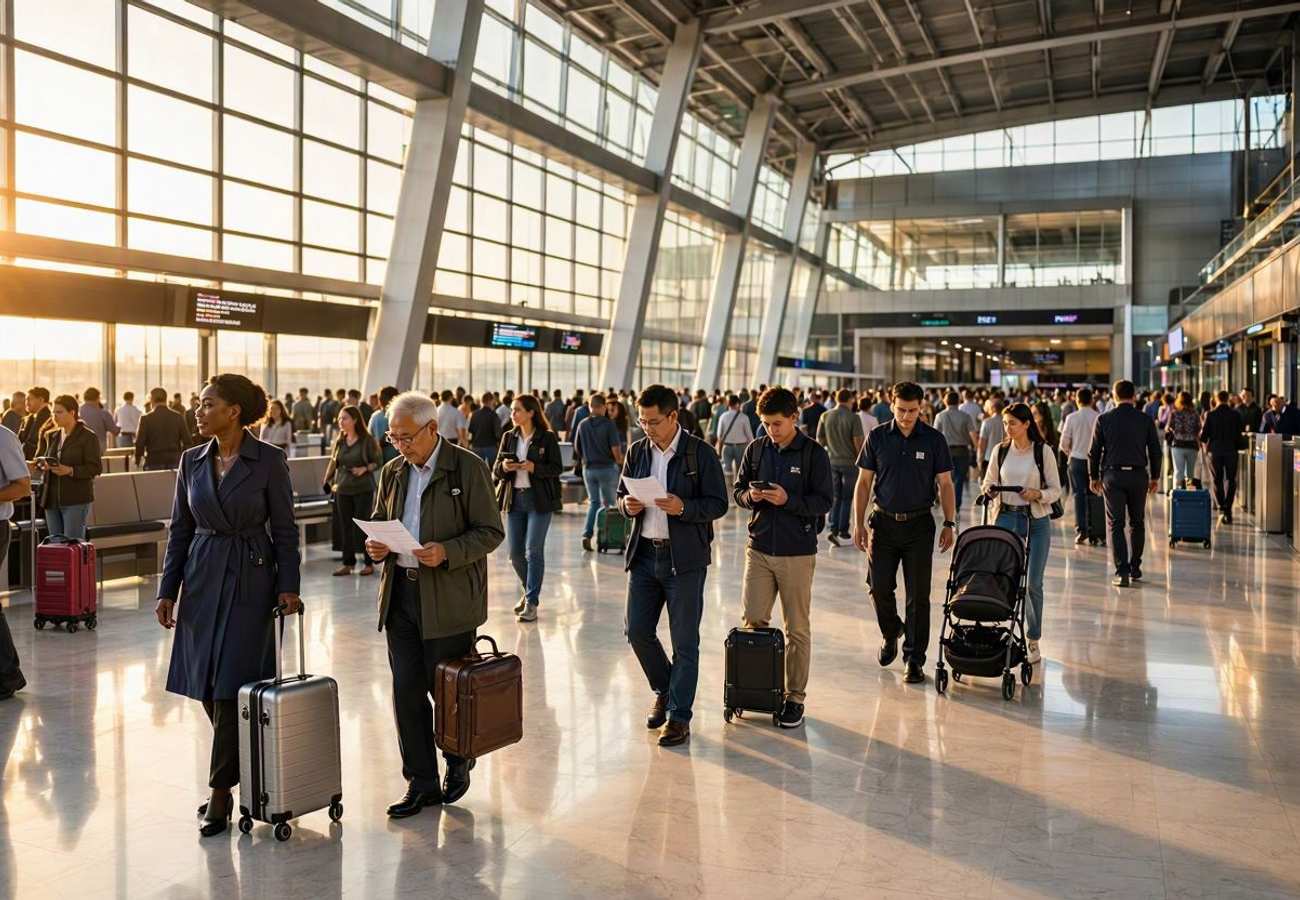
Federal transportation data identifies top U.S. connecting hubs where operational delays create high risks for tight layovers.
Flight connection risks at major American hubs are reaching critical levels, with official transportation statistics through July 2026 highlighting severe punctuality bottlenecks across key travel corridors. Federal performance metrics indicate that complex terminal layouts, regional airspace congestion, and international customs processing times are transforming routine layovers into high-stress races against time for connecting passengers.
[WASHINGTON] — Commercial aviation data released by federal transportation authorities reveals that tight layovers at major U.S. airports present an escalating operational hazard for air travelers. According to updated performance records from the Bureau of Transportation Statistics (BTS), airports across the United States are struggling with chronic arrival delays, terminal transfer bottlenecks, and regional airspace constraints that regularly sever flight connections.
Federal definitions classify a flight as on-time if it departs or arrives within 15 minutes of its published schedule. However, for travelers navigating multi-leg itineraries, a 15-minute arrival delay frequently consumes the entire safety buffer required to catch a connecting flight. Recent 2026 analytical data flags major facilities—including Newark Liberty, LaGuardia, Orlando, San Francisco, John F. Kennedy, and Chicago O’Hare—for maintaining particularly weak arrival punctuality records.
Systemic Delay Factors Across Major U.S. Transit Hubs
Connecting through a large hub involves multiple moving parts that do not impact non-stop point-to-point travelers. When an inbound aircraft lands 25 minutes behind schedule, passengers must still traverse sprawling concourses, board inter-terminal transit systems, or clear mandatory security checkpoints before reaching their next departure gate.
Operational risks vary considerably by location. Certain hubs encounter persistent air traffic control flow restrictions, while others feature massive physical footprints where gate-to-gate transit requires significant walking time. International connections introduce an extra layer of operational complexity, as passengers must complete U.S. Customs and Border Protection (CBP) formalities, collect and re-check checked baggage, and pass through Transportation Security Administration (TSA) screening before continuing to domestic gates.
Dallas/Fort Worth International (DFW): Network-Wide Delay Cascades
Dallas/Fort Worth International Airport (DFW) in Texas represents one of the most critical passenger transfer points in North America. Analytical evaluations highlight DFW due to its immense connecting passenger volume, scheduled flight density, and exposure to severe convective weather patterns.
DFW features an automated Skylink train system connecting all five terminal buildings inside the secure perimeter. Operating 24 hours a day, Skylink trains run at two-minute intervals, averaging a five-minute transit time between stations and a maximum nine-minute journey between the most distant concourses.
While intra-terminal transit is efficient, DFW remains highly susceptible to network contagion. Because the airport serves as a primary hub linking dozens of feeder cities, adverse weather or air traffic control holds generate cascading delays across an airline's entire fleet. When incoming flights arrive off-schedule, even rapid Skylink transit cannot prevent passengers from missing tight connections.
Newark Liberty International (EWR): Northeast Airspace Strain and Infrastructure Vulnerabilities
Newark Liberty International Airport (EWR) in New Jersey illustrates how regional airspace constraints jeopardize passenger layovers. Located within the congested metropolitan New York aviation system, Newark operates under strict air traffic management controls.
During August 2026, Federal Aviation Administration (FAA) traffic advisories repeatedly cited Newark for ground delay programs and airborne holding patterns reaching up to 30 minutes due to air traffic staffing constraints and severe weather. An airborne holding delay eats directly into a traveler's layover, turning what seemed like an adequate connection during booking into an immediate flight failure upon landing.
Newark's systemic vulnerability was starkly demonstrated on September 21, 2026, when a major communications failure at an FAA air traffic control facility in Philadelphia—caused by a severed backup fiber-optic line—disrupted flight operations throughout the Northeast corridor. Newark suffered hundreds of flight cancellations during the failure. The event emphasized that connection hazards often stem from external regional infrastructure rather than terminal-level operations.
Denver International Airport (DEN): Physical Footprint and Customs Clearance Hurdles
Denver International Airport (DEN) in Colorado presents a connection challenge centered on physical distance and international processing logistics. As one of the largest airport properties in North America, DEN relies on an automated concourse train to ferry passengers between its main terminal and concourses.
Navigating DEN requires significant movement before reaching train platforms. Severe winter storms and strong mountain wind patterns frequently interrupt flight schedules, compounding transfer difficulties for passengers caught in delayed operations.
International travelers face substantial procedural steps at Denver. Official DEN operational guidelines confirm that international arriving passengers must clear CBP immigration and customs, claim checked baggage, re-check luggage for domestic onward legs, complete full TSA security screening, and take the automated train to their departing gate. This elaborate sequence renders a 90-minute international-to-domestic layover exceptionally high-risk compared to a domestic transfer between adjacent gates.
Chicago O'Hare International Airport (ORD): Terminal 5 Transfers and TSA Re-Screening
Chicago O'Hare International Airport (ORD) in Illinois remains a vital national aviation hub, but complex terminal logistics require careful advance planning. BTS performance data for 2026 lists O'Hare's departure on-time performance rate at 70%, reflecting persistent operational friction.
O'Hare manages passenger traffic across four active terminals: Terminals 1, 2, 3, and 5. Terminals 1, 2, and 3 are interconnected airside behind secure TSA barriers, enabling straightforward domestic transfers. Terminal 5 operates separately.
While O'Hare runs an airside Terminal Transfer Bus during scheduled hours to transport passengers to Terminal 5 without leaving the secure area, transfers outside bus operating hours require passengers to exit the secure zone, board the landside Airport Transit System train, and pass through TSA security checkpoints a second time. International arrivals at Terminal 5 also mandate CBP processing and luggage re-checking, making layovers under two hours extremely precarious.
John F. Kennedy (JFK) and LaGuardia (LGA): New York Metro Airspace Gridlock
John F. Kennedy International Airport (JFK) and LaGuardia Airport (LGA) in New York highlight the operational challenges of the crowded New York airspace corridor. At JFK, transfer feasibility hinges on whether an itinerary requires moving between disconnected terminals, which frequently requires exiting and re-entering TSA security.
Both JFK and LaGuardia share airspace congestion risks with Newark and Philadelphia. The September 21, 2026 FAA communications outage triggered widespread flight holds and cancellations across JFK and LaGuardia, demonstrating how regional air traffic control failures impact all metropolitan airports simultaneously. BTS 2026 figures place LaGuardia among the U.S. airports recording the lowest arrival punctuality scores.
Hartsfield-Jackson Atlanta International Airport (ATL): Volume Exposure and Weather Disruption
Hartsfield-Jackson Atlanta International Airport (ATL) in Georgia functions as a high-density connecting hub designed for rapid passenger movement. BTS 2026 performance figures record Atlanta's departure on-time rate at 77%.
ATL utilizes an efficient underground Plane Train connecting all concourses in a linear layout. However, the airport's sheer operational scale creates vulnerability. When severe afternoon convective storms impact Georgia, air traffic management programs slow aircraft movements, triggering widespread delays that ripple across connecting flight schedules.
Los Angeles International Airport (LAX): Multi-Mile Walking Distances and Transfer Shuttles
Los Angeles International Airport (LAX) in California presents physical distance challenges for transferring travelers. LAX maintains a continuous post-security pedestrian route connecting Terminals 1 through 8, stretching roughly 2 miles from end to end.
Traversing a two-mile terminal path requires considerable time and physical effort. Although LAX provides free terminal shuttle buses, roadway congestion around the central terminal horseshoe causes transit delays during peak travel windows. Certain interline transfers still force passengers to exit the secure area and clear TSA lines again, turning moderate layover times into missed flights.
Additional High-Risk U.S. Transit Facilities: MIA, SFO, BOS, PHL, and DCA
Several other major U.S. airports present specific operational risks for connecting itineraries:
- Miami International Airport (MIA): Handles massive international passenger flows between the U.S., Latin America, and the Caribbean. International arrivals must complete full CBP processing, and severe tropical weather frequently causes flight holds.
- San Francisco International Airport (SFO): Subject to low marine cloud cover and strict runway separation rules. BTS 2026 data places SFO among the major U.S. airports with lower punctuality performance.
- Boston Logan International Airport (BOS): Frequently impacted by Northeast corridor airspace congestion and severe winter weather patterns.
- Philadelphia International Airport (PHL): Interconnected with regional Northeast airspace. The September 21, 2026 FAA fiber-optic outage originated at a Philadelphia facility, resulting in more than 200 flight cancellations at PHL.
- Ronald Reagan Washington National Airport (DCA): BTS 2025 and 2026 records highlight DCA for elevated cancellation rates, which pose severe risks for connecting passengers because canceled flights force full itinerary rebookings.
Comprehensive Performance Breakdown of Major U.S. Connecting Airports
The table below outlines the key connection risk factors and official Bureau of Transportation Statistics departure punctuality data across 13 major U.S. hubs:
| Rank | Airport Name | City | State | Code | Primary Connection Risk Factor | BTS 2026 Departure On-Time % |
|---|---|---|---|---|---|---|
| 1 | Dallas/Fort Worth International Airport | Dallas–Fort Worth | Texas | DFW | Massive transfer volume, weather delays, and network cascades | —* |
| 2 | Newark Liberty International Airport | Newark | New Jersey | EWR | Metropolitan airspace congestion and operational restrictions | —* |
| 3 | Chicago O’Hare International Airport | Chicago | Illinois | ORD | Complex Terminal 5 transfers, security re-screening, and weather | 70% |
| 4 | Denver International Airport | Denver | Colorado | DEN | Sprawling layout, long concourse transfers, and weather | —* |
| 5 | John F. Kennedy International Airport | New York | New York | JFK | Multiple terminals and international transfer procedures | —* |
| 6 | LaGuardia Airport | New York | New York | LGA | Congested Northeast airspace and cancellation exposure | —* |
| 7 | Hartsfield-Jackson Atlanta International | Atlanta | Georgia | ATL | Enormous hub volume and weather-related cascading delays | 77% |
| 8 | Miami International Airport | Miami | Florida | MIA | International customs processing and tropical storm disruption | —* |
| 9 | Los Angeles International Airport | Los Angeles | California | LAX | 2-mile post-security walk lengths and shuttle congestion | —* |
| 10 | San Francisco International Airport | San Francisco | California | SFO | Weather/ATC exposure and connection timing constraints | —* |
| 11 | Boston Logan International Airport | Boston | Massachusetts | BOS | Northeast weather and airspace congestion | —* |
| 12 | Philadelphia International Airport | Philadelphia | Pennsylvania | PHL | Northeast congestion and regional ATC infrastructure risks | —* |
| 13 | Ronald Reagan Washington National | Washington, D.C. | Virginia | DCA | Cancellation exposure and constrained regional operations | —* |
*Data note: BTS historical performance data tracks specific monthly reporting thresholds; numerical percentages are published for select major hubs while overall rankings reflect long-term multi-year metrics.
Essential Highlights for Connecting Air Travelers
- Punctuality Gaps: An inbound flight delayed by just 20 to 30 minutes can eliminate a passenger's entire layover window at large hubs like Newark or Denver.
- Terminal 5 Re-Screening: Layovers at Chicago O'Hare involving Terminal 5 outside bus hours require exiting security and undergoing full TSA re-screening.
- International Border Clearance: International arrivals at DEN, MIA, ORD, and JFK require mandatory CBP immigration clearance, luggage retrieval, re-checking, and TSA screening before boarding domestic flights.
- Walking Distances: Los Angeles International Airport features a 2-mile post-security pedestrian corridor between Terminal 1 and Terminal 8.
- Airspace Outages: Regional incidents, such as the September 21, 2026 Philadelphia fiber-optic line failure, can ground hundreds of flights simultaneously across Newark, JFK, LGA, and PHL.
Critical Layover Strategies for Navigating High-Risk Airport Connections
For the traveler, booking a flight itinerary with a short layover represents a calculated operational risk. A 45-minute domestic layover may appear efficient on booking engine screens, but it offers zero cushion when an inbound aircraft encounters ground holds, de-icing delays, or extended taxiway waits.
From a logistical standpoint, a missed flight connection creates cascading financial and personal consequences. Late-day flight cancellations or misconnections often leave passengers stranded overnight, separated from checked baggage, and forced to cover unexpected hotel costs. During peak travel periods, standby lists for subsequent flights fill rapidly, leaving stranded travelers waiting up to 48 hours for confirmed seats.
Travelers can protect their journeys by adopting strategic booking habits:
- Schedule Adequate Buffer Time: Reserve layovers of at least 90 minutes to two hours for domestic flights at sprawling hubs (DFW, DEN, ATL, ORD), and at least three hours for itineraries involving international arrivals or terminal changes.
- Verify Terminal Layouts Pre-Flight: Review airport terminal maps prior to departure to identify whether arriving and departing flights land within the same secure building zone.
- Select Morning Departures: Book early morning flights to avoid cumulative afternoon air traffic delays and convective weather holds.
- Track Inbound Aircraft Status: Monitor airline apps and flight tracking platforms to anticipate airborne holding delays before landing at congested hubs.
FAQ: U.S. Airport Flight Connections 2026
What is the minimum recommended layover time for international connections in the U.S.?
Travelers should allow a minimum of 2.5 to 3 hours for international-to-domestic connections at U.S. airports to complete CBP immigration, baggage collection, luggage re-checking, and TSA security re-screening.
Why are Newark and New York airports particularly prone to layover delays?
Newark, JFK, and LaGuardia operate within highly congested metropolitan airspace. Minor severe weather or air traffic staffing issues quickly trigger airborne holding patterns and ground delay programs.
What happens if I miss my connecting flight due to an airline delay?
Under U.S. aviation standards, if an inbound delay or cancellation within the airline's control causes a missed connection, the carrier is responsible for rebooking you on the next available flight without extra fees.
Related Travel Guides
Disclaimer
This article is for informational and educational purposes only. It does not constitute legal, financial, or professional advice. While we strive to provide accurate and up-to-date information, travel policies, regulations, and conditions change rapidly. Always verify information with official sources before making travel decisions. Nomad Lawyer makes no representations about the accuracy, reliability, completeness, or suitability of the information provided. Readers should consult qualified professionals for advice specific to their circumstances. The views expressed in this article are those of the author and do not necessarily reflect the views of Nomad Lawyer.
Kunal K Choudhary
Co-Founder & Contributor
A passionate traveller and tech enthusiast. Kunal contributes to the vision and growth of Nomad Lawyer, bringing fresh perspectives and driving the community forward.
Learn more about our team →