
Breaking: Massive Aviation Crisis Grips Chicago O’Hare as United, Delta, and Lufthansa Face 494 Delays Crippling Routes to Canada and Europe
A staggering 494 flight delays and 6 cancellations paralyze Chicago O'Hare, trapping thousands of travelers on routes to Europe, Canada, and across the U.S.

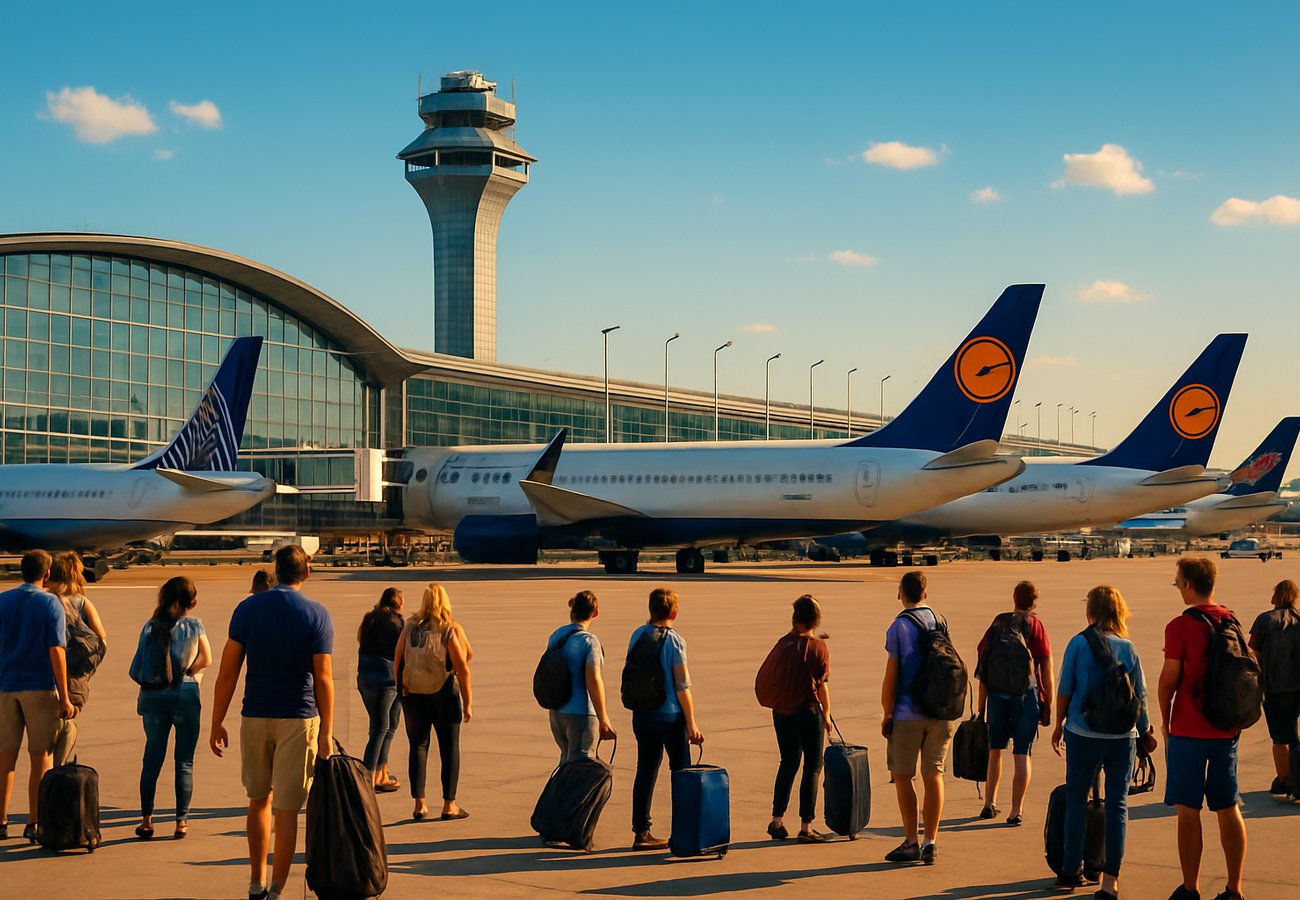
Image generated by AI
"Ripple Effect" Triggered by Severe Weather Paralyzes a Critical Transatlantic Gateway
An unprecedented aviation crisis has engulfed Chicago O’Hare International Airport (ORD), sending catastrophic shockwaves through both the United States domestic network and vital transatlantic corridors. A volatile mix of severe weather conditions, intense airspace congestion, and cascading operational challenges has resulted in a staggering 494 flight delays and 6 outright cancellations. Thousands of passengers have been left stranded as major operators, including United Airlines, Delta Air Lines, Air Canada, and Lufthansa, desperately attempt to stabilize their fracturing schedules.
As the delays compound hour by hour, the disruption has morphed into a sprawling global issue. The sheer volume of gridlocked aircraft in Chicago is now triggering massive ripple effects, severely impacting major economic and passenger hubs across North America and mainland Europe.
EXPANDED OVERVIEW: The Scale of the Disruption
According to the latest flight tracking data sourced on April 24th, the sheer scale of the disruption at Chicago O'Hare is monumental. While the total number of absolute cancellations currently sits at just 6, the massive backlog of 494 delayed flights indicates a deeply compromised operational environment.
Airlines have been forced to prioritize safety protocols amidst the adverse weather, inherently slowing down ground operations, refueling, and runway clearances. Consequently, the delay count is compounding, severely impacting travelers attempting to reach major cities such as Toronto, Brussels, Frankfurt, and Munich.
GLOBAL AVIATION CONTEXT: The Root Cause
The immediate catalyst for today’s staggering gridlock is a powerful convergence of severe weather systems and a highly saturated volume of air traffic. Unlike isolated mechanical issues, severe weather events at a mega-hub like O'Hare mandate immediate ground stops and wider separation requirements between airborne aircraft.
This rapidly degrades the airport's hourly arrival and departure capacity. When an airport operating at peak volume suddenly loses capacity, a compounding backlog immediately forms, effectively trapping inbound and outbound flights across the entire network.
REGIONAL IMPACT: Domestic "Spokes" Bear the Brunt
The domestic geographic impact is spreading like wildfire, heavily fracturing connecting routes across the United States. Chicago O’Hare functions as the central nervous system for countless domestic "spokes," and the backlog has forced widespread delays at numerous regional and mid-major airports.
Crucial operational friction is currently being reported at:
- Harrisburg Intl (MDT): Facing significant disruptions driven by both downstream delays and cancellations.
- Austin-Bergstrom Intl (AUS): A multitude of flights across major airlines are trapped behind schedule.
- Bradley Intl (BDL) & Cleveland-Hopkins Intl (CLE): Both vital airports are reporting notable delays, effectively destroying passenger connection itineraries.
INTERNATIONAL TRADE & CONNECTIVITY IMPACT
Chicago O'Hare serves as a premier intercontinental gateway, and today’s gridlock is directly threatening critical passenger trade routes to Canada and Europe. The disruptions are severely crippling operations at several major international hubs:
- Toronto Pearson Intl (YYZ): Canada’s busiest airport is absorbing a massive rate of delays, heavily impacting cross-border business travel.
- Frankfurt Intl (FRA) & Munich Int’l (MUC): Key German economic centers are heavily affected, as transatlantic arrivals from Chicago fail to arrive on schedule.
- Brussels (BRU): The vital European capital is also caught in the shockwave, suffering inbound and outbound connection interruptions.
INDUSTRY / EXPERT ANALYSIS: The Carrier Breakdown
The operational strain is testing the resilience of nearly every major carrier utilizing the hub. United Airlines, which utilizes Chicago O'Hare as a primary global fortress hub, is absorbing the brunt of the chaos. The massive volume of delayed United aircraft has crippled their highly complex international and domestic banks.
Similarly, American Airlines and Delta Air Lines are facing intense operational friction as delays cascade through their respective connection matrices. The pain is not limited to U.S. flag carriers; highly respected European legacy airlines including Lufthansa and British Airways, alongside Air Canada, are struggling to navigate the backlog, forcing thousands of international travelers into agonizing holding patterns.
WHAT HAPPENS NEXT: Guidance for Travelers
The operational environment at Chicago O'Hare remains highly fluid and extremely volatile. For the thousands of passengers caught in the 494 active delays, proactive strategy is essential:
- Stay Informed Digitally: Gate agents will be vastly overwhelmed. Rely exclusively on airline mobile apps for real-time gate changes and inbound aircraft tracking.
- Aggressively Seek Rebooking: If your flight is canceled, bypass the physical customer service lines. Immediately contact the airline via phone or digital channels, as most carriers are currently offering highly flexible, fee-free rebooking waivers.
- Understand Accommodation Protocols: If your delay stretches overnight due to operational challenges (rather than strict weather clauses), politely inquire about meal vouchers and hotel accommodations at the customer service desk.
CONCLUSION
The 494 flight delays paralyzing Chicago O’Hare International Airport highlight the profound fragility of the modern global aviation network when confronted with severe weather at a central mega-hub. As the massive backlog of aircraft continues to cause cascading disruptions from Austin to Frankfurt, travelers are starkly reminded of the interconnected nature of international transit. Until United, Delta, and Lufthansa can successfully reset their global rotations, the ripple effects of this crisis will be felt around the world.
KEY TAKEAWAYS
- Massive Disruption: Chicago O'Hare is currently paralyzed by 494 delays and 6 cancellations driven by severe weather and high traffic volume.
- Global Routes Choked: Critical international flights to Toronto, Brussels, Frankfurt, and Munich are severely delayed.
- Major Carriers Impacted: United Airlines, American Airlines, Delta, Lufthansa, and Air Canada are all suffering massive operational setbacks.
- Domestic Ripple Effect: Regional airports including Austin, Harrisburg, Cleveland, and Bradley are facing cascading connection failures.
- Passenger Strategy: Travelers must prioritize flexibility, monitor mobile apps for live updates, and immediately seek digital rebooking options.
Disclaimer
This article is for informational and educational purposes only. It does not constitute legal, financial, or professional advice. While we strive to provide accurate and up-to-date information, travel policies, regulations, and conditions change rapidly. Always verify information with official sources before making travel decisions. Nomad Lawyer makes no representations about the accuracy, reliability, completeness, or suitability of the information provided. Readers should consult qualified professionals for advice specific to their circumstances. The views expressed in this article are those of the author and do not necessarily reflect the views of Nomad Lawyer.
Kunal K Choudhary
Co-Founder & Contributor
A passionate traveller and tech enthusiast. Kunal contributes to the vision and growth of Nomad Lawyer, bringing fresh perspectives and driving the community forward.
Learn more about our team →