
Avianca Expands Winter 2026 Miami Gateway Routes Linking New York and Latin American Hubs
Avianca reinforces Miami International Airport as a primary North-South gateway with expanded winter capacity and strategic connections to New York JFK and Central American capitals.

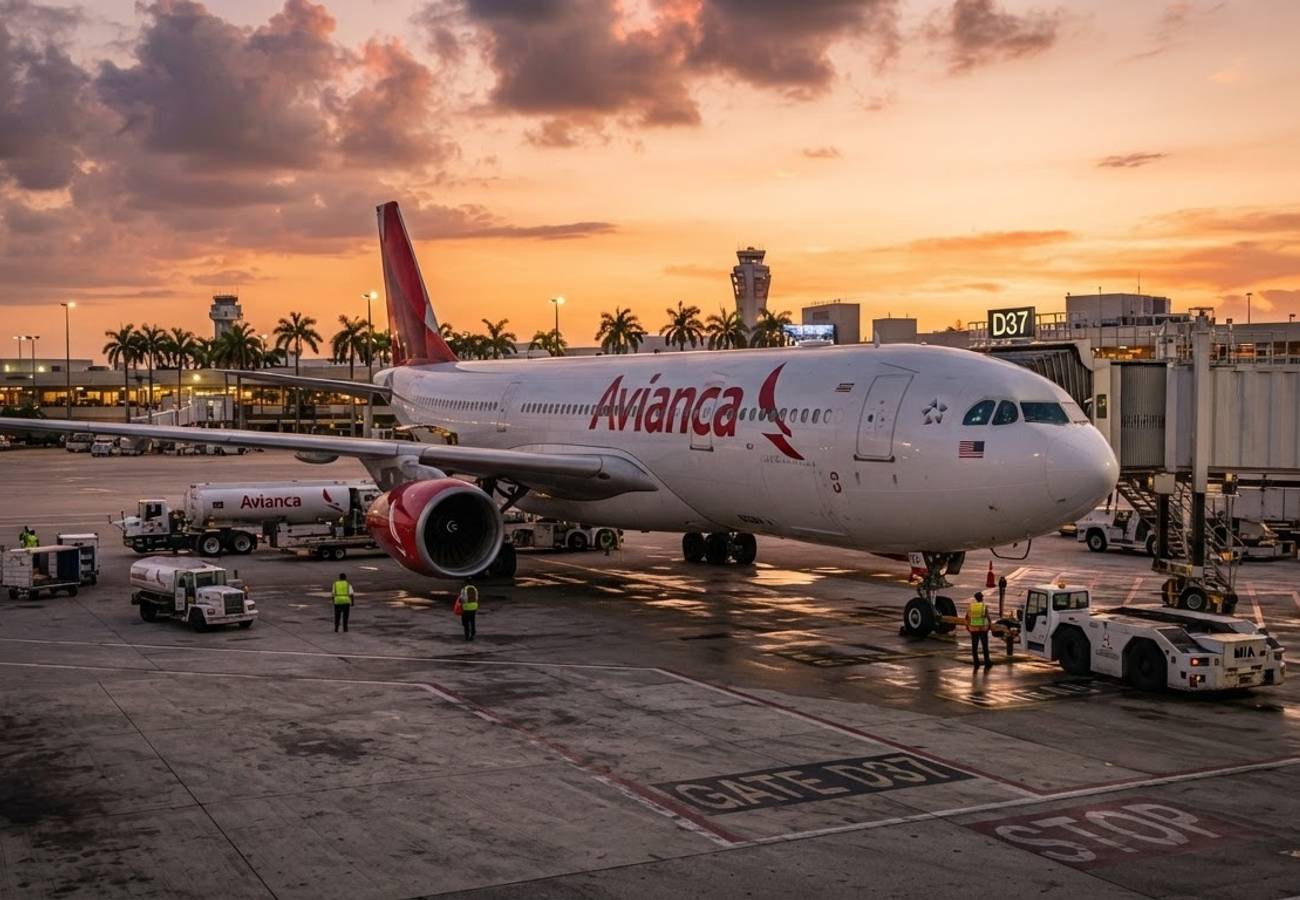
Image generated by AI
Avianca is intensifying its operational focus on Miami International Airport (MIA) for the winter 2026 season, deploying expanded capacity to bridge North American demand with Latin American hubs. The strategy specifically targets the high-volume corridor between South Florida and New York JFK.
Avianca is repositioning Miami as a critical North–South gateway, adjusting its winter network to capture resilient leisure and Visiting Friends and Relatives (VFR) traffic. While the airline does not operate direct flights between Miami and New York, it is utilizing a "knot" strategy—linking the two cities via Bogotá and Central American hubs to create a seamless transit pipeline for passengers moving between the U.S. East Coast and the Southern Cone.
Strategic Network Expansion and Capacity
The airline's shift toward a high-density, point-to-point model is evident in its recent capacity injections. A primary highlight is the daily Miami–San José service launched in early 2025, which contributes over 2,500 weekly seats. This route serves as both a destination for point-to-point travelers and a feeder for the broader Colombian network.
To diversify beyond the standard Bogotá–Miami trunk line, Avianca has historically utilized winter "push" routes to secondary Colombian cities. These include seasonal services to:
- Bucaramanga
- Pereira
- Santa Marta
While some secondary Colombia–U.S. patterns are being rationalized to ensure profitability, the core focus remains on high-yield corridors. This ensures that aircraft are deployed efficiently during the peak northern hemisphere winter, when travel to the Caribbean and Latin America typically surges.
Winter Route Specifications and Connectivity
The following table outlines the primary connectivity patterns Avianca is leveraging to link New York and Miami with the Latin American region.
| Route Segment | Frequency | Primary Purpose | Connection Hubs |
|---|---|---|---|
| Miami $\rightarrow$ San José | Daily | Point-to-Point / Feeder | San José (SJO) |
| Bogotá $\rightarrow$ New York (JFK) | Multiple Daily | Trunk Route / Premium | Bogotá (BOG) |
| Bogotá $\rightarrow$ Miami (MIA) | High Frequency | Trunk Route / Gateway | Bogotá (BOG) |
| Miami $\rightarrow$ Secondary Colombia | Seasonal | Leisure / VFR | Bucaramanga, Pereira, Santa Marta |
Traveler Logistics Guide: Navigating the Miami-NY-LATAM Pipeline
From a ground-level perspective, the best way to navigate Avianca’s network is to leverage the Bogotá hub for multi-city itineraries. Since there is no direct MIA-JFK flight on this carrier, passengers should structure their bookings as "open-jaw" or multi-city tickets to maximize efficiency.
Optimal Connection Strategies:
- Layover Timing: When connecting through Bogotá (BOG), allow a minimum of 3 hours for international-to-international transfers. While BOG is efficient, security screenings for flights heading to the U.S. can be rigorous.
- Booking Tips: To link New York and Miami on a single itinerary, book through the Avianca portal using the "Multi-city" tool. This ensures baggage is checked through to the final destination and provides protection in case of delays.
- Digital Transit: Travelers entering the U.S. via MIA or JFK should ensure their customs declarations are handled via the MPC (Mobile Passport Control) app to bypass longer queues during the winter peak.
- Premium Transit: Avianca has consolidated business-class availability on the JFK and MIA routes. For those on long-haul sectors, booking these specific segments early is recommended as they are high-demand corridors for corporate travelers.
Infrastructure and Regional Impact
This network refinement signals a broader trend at Miami International Airport, which continues to see steady growth in Latin American traffic. By concentrating on proven corridors—specifically Bogotá–New York and Central America–Miami—Avianca is avoiding the risks of overextension in niche markets.
The move increases direct competition with North American legacy carriers that rely on MIA and JFK as their primary Latin American entry points. By offering a viable, premium-integrated alternative through Bogotá, Avianca is effectively lowering the barrier for travelers moving between the two most important gateways in the hemisphere.
Strategic capacity rationalization ensures that while some niche routes vanish, the remaining services offer higher stability and more competitive pricing for the 2026 winter window.
Related Travel Guides
Disclaimer
This article is for informational and educational purposes only. It does not constitute legal, financial, or professional advice. While we strive to provide accurate and up-to-date information, travel policies, regulations, and conditions change rapidly. Always verify information with official sources before making travel decisions. Nomad Lawyer makes no representations about the accuracy, reliability, completeness, or suitability of the information provided. Readers should consult qualified professionals for advice specific to their circumstances. The views expressed in this article are those of the author and do not necessarily reflect the views of Nomad Lawyer.
Raushan Kumar
Founder & Lead Developer
Full-stack developer with 11+ years of experience and a passionate traveller. Raushan built Nomad Lawyer from the ground up with a vision to create the best travel and law experience on the web.
Learn more about our team →