
Austria Pumpkin Festival Draws Global Visitors as Europe’s Biggest Autumn Celebration Goes Viral: All You Need to Know
Austria Pumpkin Festival Draws Global Visitors as Europe’s Biggest Autumn Celebration Goes Viral: All You Need to Know

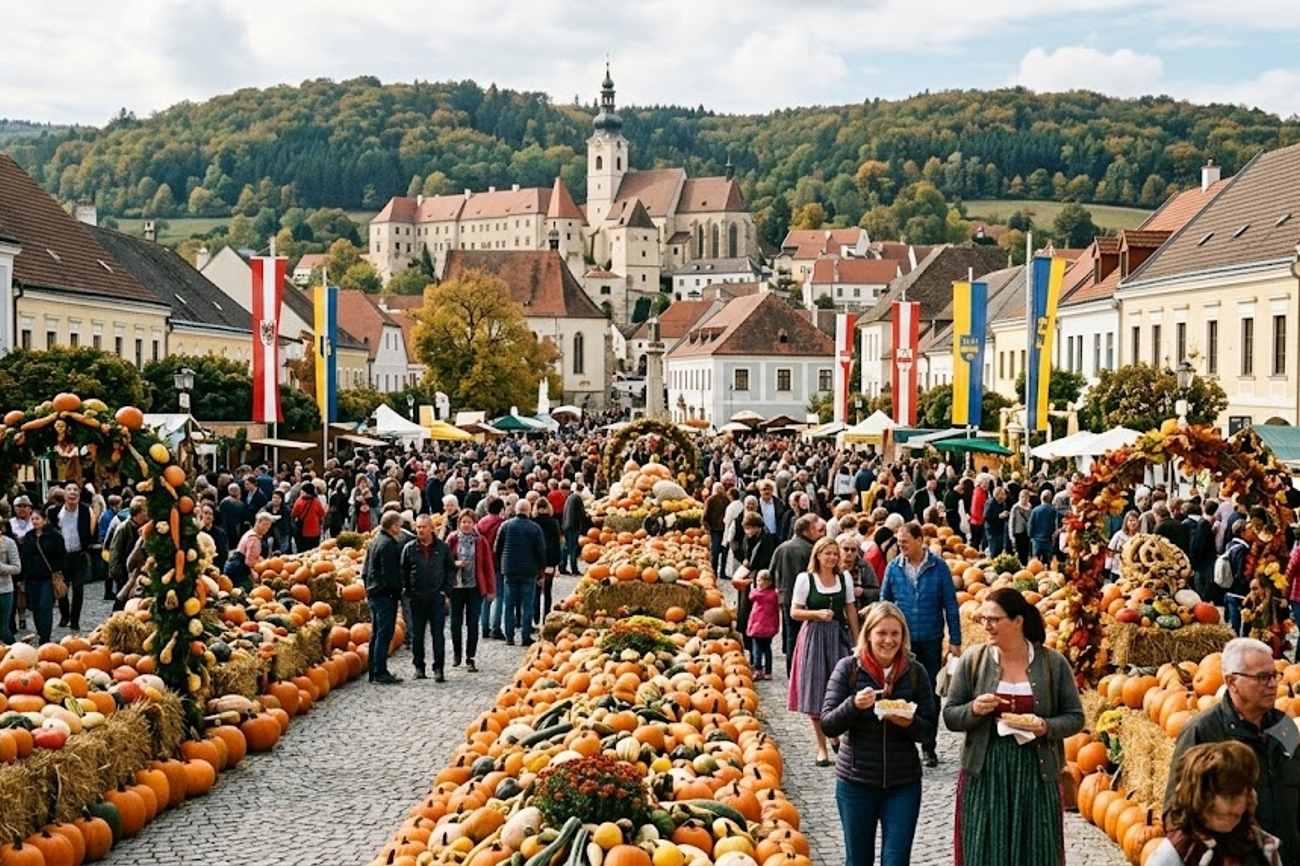
Image generated by AI
Millions of online views generated by social media imagery are now driving a measurable shift in European shoulder-season travel, transforming traditional agricultural harvests into high-yield tourism assets. This phenomenon is most visible in Austria, where the strategic integration of giant pumpkin displays and regional culinary experiences is successfully decoupling rural economic stability from the volatile summer peak. By converting agrarian traditions into "shareable" digital content, Austrian regional boards are effectively utilizing the "Instagram effect" to redirect international foot traffic away from saturated urban centers like Vienna and toward the countryside.
The Pivot to Seasonal Experience Tourism
The transition from passive sightseeing to active, seasonal experience tourism represents a fundamental shift in consumer behavior. Modern travelers are increasingly eschewing the "bucket list" approach to travel—which prioritizes monuments and museums—in favor of time-bound events that offer a sense of exclusivity and authenticity. In Austria, the autumn pumpkin festivals serve as the primary vehicle for this shift.
These events are not merely local fairs; they are engineered tourism products designed to extend the operational window of rural hospitality sectors. By centering the experience around the harvest, Austria is leveraging its existing strengths in Alpine landscapes and wine regions to create a multi-layered itinerary. This strategy encourages visitors to combine pumpkin exhibitions with stays in mountain villages and explorations of lakeside destinations, thereby increasing the average length of stay and the total spend per visitor.
The operational success of these festivals relies on a diversified attraction model. According to regional data, the primary drivers are:
| Festival Feature | Tourism Driver | Economic Impact |
|---|---|---|
| Giant Pumpkin Displays | Visual/Social Media Appeal | High international visibility |
| Harvest Activities | Agritourism Engagement | Direct revenue for farmers |
| Regional Food Markets | Culinary Exploration | Support for local SMEs |
| Family Workshops | Multi-generational Appeal | Increased hotel occupancy |
| Scenic Outdoor Walks | Nature Tourism | Promotion of rural infrastructure |
The Digital Catalyst and Rural Redistribution
The growth of pumpkin tourism is inextricably linked to the evolution of digital discovery. For small-scale agricultural communities, the cost of traditional international marketing is often prohibitive. However, the inherent visual nature of pumpkin festivals—featuring massive sculptures and vivid autumnal colors—allows these destinations to bypass traditional agencies.
When visitors share images of giant pumpkin installations or regional desserts on social platforms, they act as unpaid brand ambassadors. This organic reach creates a feedback loop: digital visibility leads to increased physical visitation, which in turn generates more digital content. This mechanism is particularly effective for the Austrian National Tourist Office, as it promotes a decentralized tourism model. By drawing crowds to rural areas, the government reduces the "overtourism" pressure on major cities and distributes wealth more equitably across the provinces.
This redistribution is critical for the sustainability of rural European villages. The influx of autumn visitors provides a vital financial cushion for farmers and local artisans, allowing them to maintain traditional land-use practices that might otherwise be economically unviable in a purely agricultural market.
Expert Analysis: The Economics of the Shoulder Season
For the seasoned traveler and the industry analyst, the rise of pumpkin festivals is a case study in "shoulder season" optimization. Historically, the period between the end of summer and the start of winter was a period of dormancy for European rural tourism. The strategic deployment of harvest festivals transforms this dead zone into a revenue-generating window.
For travelers booking these routes, the direct consequence is a more favorable cost-to-experience ratio. Autumn offers lower crowd density than the July-August peak, yet the availability of curated events like the pumpkin festivals ensures that the "experience value" remains high.
The pricing pressure this creates is fascinating: while hotels may lower their base rates to attract autumn guests, the "experience economy" allows festivals to charge premiums for specialized workshops, gourmet tasting menus, and exclusive tours. We are seeing a shift from "room-night" revenue to "experience-based" revenue.
Furthermore, this trend signals a broader European movement toward agritourism. By linking the International Air Transport Association (IATA) flight patterns—which show a steady flow of international arrivals into hubs like Vienna or Munich—to specific rural events, Austria is successfully capturing the "long tail" of the tourism market. The result is a more resilient economic model that does not collapse the moment the summer sun fades.
Key Takeaways
- Economic Decentralization: Pumpkin festivals are actively moving tourist spend from urban hubs to rural agricultural communities, supporting small-scale farmers and regional businesses.
- Digital-First Discovery: Social media visibility has replaced traditional marketing, making visual "spectacles" like giant pumpkin displays the primary driver for international arrivals.
- Shoulder Season Stability: By creating a high-value autumn attraction, Austria is reducing its dependence on the summer peak and stabilizing year-round employment in the hospitality sector.
- Agritourism Integration: The success of these events lies in combining food tourism (pumpkin soups, regional desserts) with cultural heritage and nature exploration.
- European Scaling: While Austria is a leader, this model is being mirrored in Germany (notably the Ludwigsburg Pumpkin Festival), Italy, France, and Portugal to diversify their tourism portfolios.
FAQ: European Pumpkin Tourism 2024
When is the best time to visit pumpkin festivals in Austria? The peak season typically runs from September through October, aligning with the natural harvest cycle and the change in autumn foliage.
Are these festivals suitable for international travelers without a car? While many are in rural areas, Austria's integrated rail and bus networks make most regional hubs accessible, though local shuttles are often provided during major festival weekends.
What is the difference between Austrian and German pumpkin festivals? Austria focuses heavily on integrating the harvest with Alpine landscapes and wine regions, whereas Germany, specifically Ludwigsburg, is renowned for massive, highly structured exhibitions and competitive pumpkin growing.
Do I need to book tickets in advance for these events? For smaller village fairs, entry is often free or pay-at-the-gate. However, for large-scale exhibitions or specialized culinary workshops, advance booking is increasingly recommended due to social media-driven demand.
The harvest is no longer just about the crop; it is about the capture.
Related Travel Guides
Disclaimer
This article is for informational and educational purposes only. It does not constitute legal, financial, or professional advice. While we strive to provide accurate and up-to-date information, travel policies, regulations, and conditions change rapidly. Always verify information with official sources before making travel decisions. Nomad Lawyer makes no representations about the accuracy, reliability, completeness, or suitability of the information provided. Readers should consult qualified professionals for advice specific to their circumstances. The views expressed in this article are those of the author and do not necessarily reflect the views of Nomad Lawyer.
Kunal K Choudhary
Co-Founder & Contributor
A passionate traveller and tech enthusiast. Kunal contributes to the vision and growth of Nomad Lawyer, bringing fresh perspectives and driving the community forward.
Learn more about our team →