
Australia Coincide Canada, UAE and Others Lead Global MICE Growth Through Events, Sustainability and Infrastructure
Australia, Canada, the UAE, and global contenders lead MICE expansion through major events, green-certified venues, and strategic infrastructure ahead of Brisbane 2032.

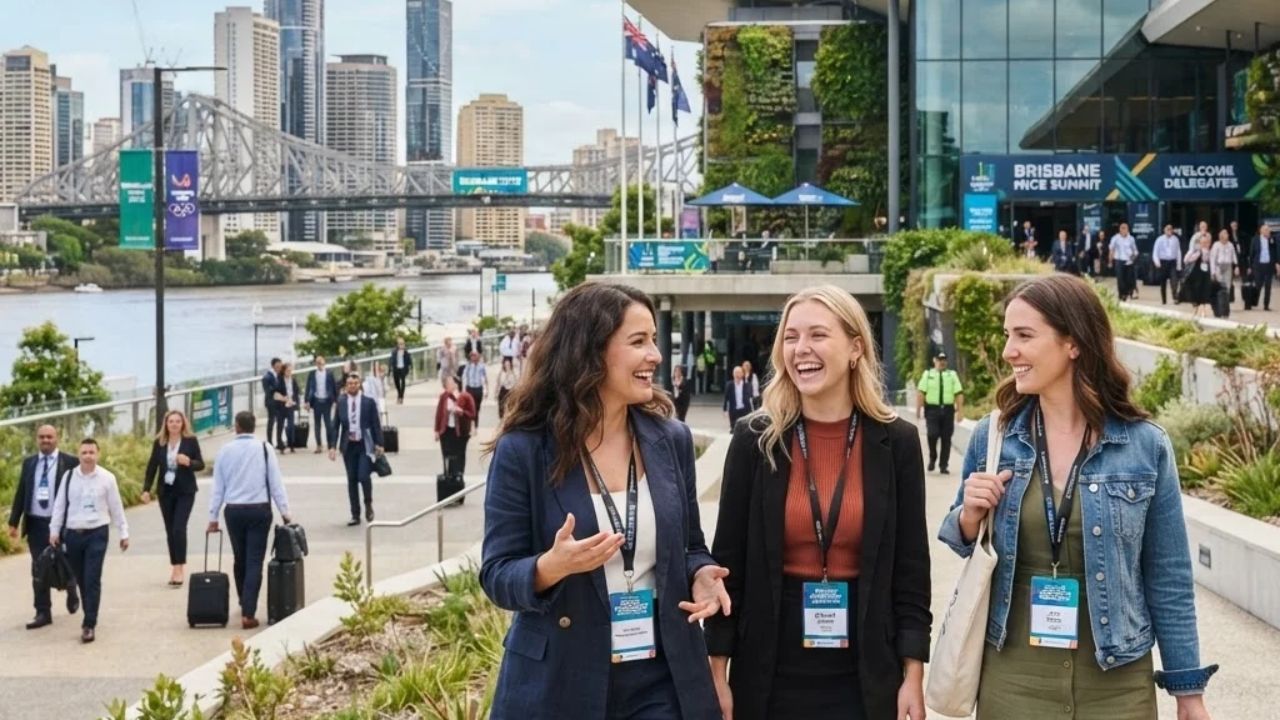
Image generated by AI
Between 2018 and the present day, a single targeted government initiative has secured 221 international business gatherings for Australia, injecting $1.5 billion directly into the visitor economy. While vacationers picture quiet outback expanses and coastal breaks, the nation's tourism pipeline is driven by high-yield delegates attending meetings, incentives, conventions, and exhibitions. Unveiled at IMEX Frankfurt, Australia's strategy leverages major sporting milestones—the Rugby World Cup 2027, T20 Cricket fixtures, and the Brisbane 2032 Olympic and Paralympic Games—to prove the continent offers unmatched event infrastructure. For delegates landing in Brisbane, Sydney, or Melbourne, convention trips become deep encounters with urban culture and ecology.
Visiting Australia for an international summit means discovering an island nation that approaches commerce through a relaxed yet disciplined local lens. The split between business duty and leisure is fading as attendees combine weekday sessions in certified green halls with weekend coastal walks or cool-climate wine tastings. By tying growth to high-standard venues and environmental accountability, tourism authorities are turning transient event traffic into lasting community investment.
The Decade Runway: How Major Events Power Business Tourism
Speaking at IMEX Frankfurt, Sally Cope, Executive General Manager of Business Events Australia, framed the country's ambitions directly: "We want to make sure that Australia is front and centre." Rather than waiting for organizers to consider Southern Hemisphere venues, Australia uses major sporting fixtures as magnets for corporate planners. The roadmap positions the Rugby World Cup 2027 and premier T20 Cricket tournaments as gateways to Brisbane 2032, proving national logistics, transport, and hospitality to a worldwide audience.
The operational backbone of this campaign is the Bid Fund Programme. Launched in 2018, this targeted funding mechanism has delivered 221 confirmed event wins worth $1.5 billion to the visitor economy. Recognising extended planning cycles for world congresses, officials have extended application support through 2032, aligning with the broader Tourism 2035 strategy. This long-term horizon gives planners certainty when committing to multi-year conference preparations.
Underpinning these efforts is the "Team Australia" model, uniting convention bureaux, councils, venue operators, and destination management firms into a single entity to eliminate planner friction. Parallel to this is the "Green Is Our Gold" initiative highlighted at IMEX Frankfurt. By championing venues with EarthCheck certification and green building credentials, Australia meets corporate demand for audited sustainability, mitigating delegate footprints from keynote to departure. Planners can review operational requirements directly through Tourism Australia.
What Makes Australia Different: Beyond Conventional Venues
The race to host global gatherings has intensified worldwide, with destinations offering sophisticated facilities and aggressive incentives. Singapore remains the closest benchmark to Australia's approach, relying on the Singapore Tourism Board (STB), the Singapore Exhibition & Convention Bureau (SECB), the Business Events in Singapore (BEiS) support scheme, and its MICE Sustainability Roadmap to maintain dominance in Southeast Asia. In North America, Canada leverages cities like Toronto, Vancouver, and Montreal through Business Events Canada, pairing large urban halls with mountain wilderness. The United Arab Emirates channels vast resources into Dubai and Abu Dhabi, drawing crowds through intercontinental airline connectivity and luxury hospitality complexes. In East Asia, Japan and South Korea combine bullet-train transit and tech districts with deep cultural traditions in hubs like Tokyo, Kyoto, Seoul, and Busan.
What differentiates Australia within this competitive arena is the immediate connection between urban centers and ancient natural environments. In Brisbane, the designated host city for 2032, the convention district sits along a winding river precinct where delegates can step out of a symposium and board electric city ferries within minutes. In Sydney, delegates gather beneath the sails of the Opera House while overlooking a marine harbor home to wild penguins and migratory humpback whales.
Australia replaces sterile conference center isolation with authentic regional flavor. Instead of generic banquet catering, delegates enjoy rock oysters from New South Wales estuaries, wagyu beef from Victoria, and heritage wines from the Barossa Valley. Australian events also incorporate First Nations heritage, inviting attendees to experience ancient storytelling, smoking ceremonies, and ecological wisdom directly from traditional custodians whose connections to the country span over 65,000 years.
Visitor Insider Tips: Navigating Events, Neighborhoods, and Transit
Succeeding as a visitor or corporate traveler in Australia requires understanding local rhythms, seasonal weather shifts, and transport systems. The relaxed demeanor of everyday life masks an efficient, high-functioning service economy that rewards thoughtful planning.
Timing Your Journey Avoid scheduling business trips between mid-December and late January, when southern cities experience intense summer heat and coastal regions face peak domestic holiday rates. The premier windows for visiting are Spring from September through November and Autumn from March through May. During these shoulder periods, daytime temperatures in Brisbane, Sydney, and Melbourne hover around pleasant twenty-degree averages, creating ideal conditions for walking between meetings and dining outdoors.
Selecting Your Neighborhood Base In Brisbane, bypass anonymous highway hotels and base yourself in South Bank, situated adjacent to the Brisbane Convention & Exhibition Centre, or cross into the West End for artisanal coffee and craft breweries. In Sydney, choose boutique accommodations in historic rocks quarters or leafy Surry Hills. In Melbourne, choose South Wharf for direct riverfront convention access, or head across the Yarra into Fitzroy for independent dining and street art.
Local Etiquette and Networking Culture Australian workplace interactions are distinctly egalitarian. Hierarchy is downplayed, and formal corporate pretension is viewed with skepticism. Genuine friendliness, punctuality, and straightforward communication build immediate rapport. Coffee culture is taken seriously; networking rarely occurs over boardroom filter coffee, taking place instead around corner espresso bars serving expertly pulled flat whites. Tipping is not customary in restaurants or taxis because hospitality personnel receive award wages, making a courteous verbal appreciation the standard response.
Smart Urban Transit Do not depend on peak-hour taxis or rideshares during major events. Brisbane features the efficient Airtrain linking the international terminal directly to South Bank and city center stations in twenty minutes, alongside contactless Go Card transit across buses and river catamarans. Sydney operates with the seamless Opal card system covering trains, light rail, and harbor ferries, while central Melbourne provides a free tram zone across its downtown core.
Cultural and Environmental Context: Balancing Growth with Conservation
A massive expansion in delegate numbers brings significant responsibility toward Australia's delicate environmental systems. Attracting hundreds of thousands of international attendees across the decade leading to 2032 puts pressure on aviation corridors, energy grids, and water supplies. The "Green Is Our Gold" initiative seeks to address these tensions by enforcing strict resource management across convention facilities, mandating zero-waste catering programs, and prioritizing low-emission public transport connections.
Responsible travel in Australia requires acknowledging traditional land ownership. Welcome to Country and Acknowledgement of Country protocols are integral elements of public gatherings, reminding visitors that every conference takes place on Aboriginal and Torres Strait Islander lands. Delegates are encouraged to participate in community-led cultural excursions that channel tourism spending directly to Indigenous-owned enterprises, supporting heritage preservation and remote community development.
Equally significant is the protection of Australia's internationally recognized natural reserves. From the Great Barrier Reef in Queensland to the ancient rainforests of the Wet Tropics, the country's biodiversity faces growing climate challenges. Travelers can review ongoing conservation frameworks through the UNESCO World Heritage Centre. By selecting eco-certified operators and adhering to Leave No Trace principles when exploring regional tracks, visiting professionals help ensure that international event growth strengthens environmental guardianship rather than degrading fragile natural settings.
FAQ: Visiting Australia 2026
What is the best time of year to visit Australia for business travel? Autumn from March to May and Spring from September to November offer mild temperatures, minimal rainfall, and comfortable conditions for walking between venues and exploring regional highlights without summer crowds.
Do international delegates require a visa to enter Australia? Yes. Nearly all international travelers must secure an electronic visa prior to departure, such as the Electronic Travel Authority or eVisitor permit, depending on their passport nationality.
How do visitors reach central Brisbane from the airport? The Brisbane Airtrain departs directly from international and domestic terminals, reaching central stations and the South Bank convention district in approximately twenty minutes without highway traffic delays.
Is Australia safe for solo travelers and delegates? Australia ranks among the world's safest travel destinations. Major metropolitan areas offer well-policed transit hubs, clean streets, and reliable public services, requiring only standard everyday awareness.
As the path toward Brisbane 2032 unfolds, Australia proves that world-class event capability and environmental stewardship can unite to create unforgettable delegate experiences.
Related Travel Guides
Disclaimer
This article is for informational and educational purposes only. It does not constitute legal, financial, or professional advice. While we strive to provide accurate and up-to-date information, travel policies, regulations, and conditions change rapidly. Always verify information with official sources before making travel decisions. Nomad Lawyer makes no representations about the accuracy, reliability, completeness, or suitability of the information provided. Readers should consult qualified professionals for advice specific to their circumstances. The views expressed in this article are those of the author and do not necessarily reflect the views of Nomad Lawyer.
Naina Thakur
Contributor & Travel Specialist
Travel enthusiast and legal writer covering visa regulations, responsible tourism, and cultural journeys across global destinations.
Learn more about our team →