
Auckland City Rail Link Launch Disrupted by Station Fire Hours After NZ$5.5 Billion Opening
Auckland's NZ$5.5 billion City Rail Link suffered flight and train delays after a small fire at Waitematā Station hours after opening.

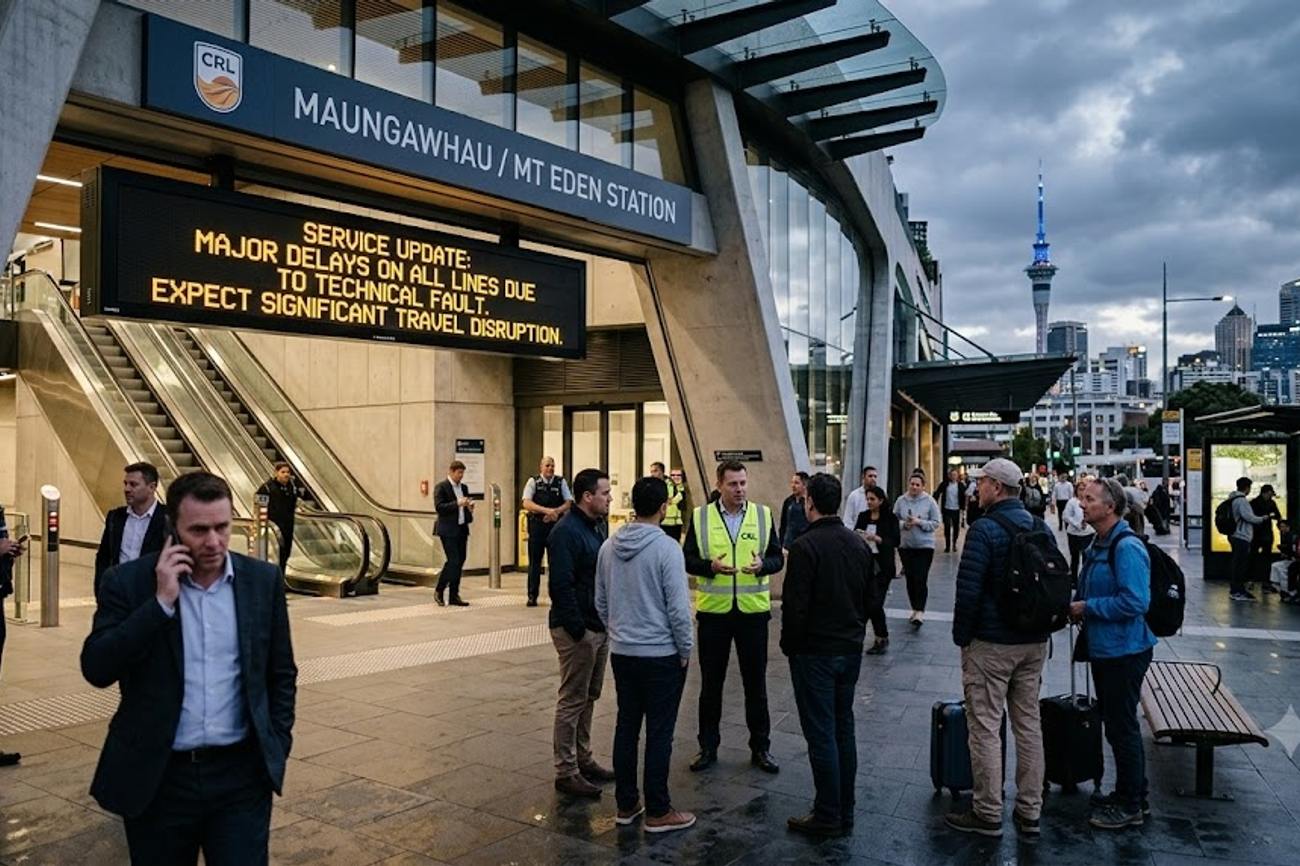
Photo Credit – Franklin Times
New Zealand's flagship NZ$5.5 billion City Rail Link (CRL) suffered system-wide cancellations and delays just hours after opening, following a small fire near the upper section of Waitematā Station in central Auckland.
AUCKLAND, New Zealand — Commercial operations on Auckland's City Rail Link (CRL), the country's first major underground passenger railway system, experienced initial operational delays on Sunday morning due to a station fire. Emergency response teams and railway safety technicians attended the site at Waitematā Station, forcing temporary train cancellations and schedule diversions across the newly inaugurated underground network, as reported by Franklin Times.
Following safety clearance by fire crews, Auckland Transport (AT) gradually restored services, with passenger trains temporarily bypassing Waitematā Station while inspection and ventilation procedures were completed.
Project Infrastructure Specifications: Auckland City Rail Link (CRL)
The NZ$5.5 billion CRL represents the largest transport infrastructure project ever constructed in New Zealand, engineered to replace Auckland's single terminal rail design with a through-running underground loop.
| Project Metric | Infrastructure Benchmark & Specification |
|---|---|
| Project Investment | NZ$5.5 Billion (New Zealand Dollar) |
| Underground Tunnel Length | 3.45 Kilometers (Twin Tunnels beneath Auckland CBD) |
| Network Capacity Target | Quadruples (4x) total passenger rail capacity across Auckland |
| Key Underground Hubs | Waitematā (Britomart), Te Waihorotiu, Karanga-a-Hape, & Maungawhau |
| Operational Mandate | Converts dead-end terminal into a continuous through-city loop |
| Initial Passenger Launch | Sunday Morning, September 13, 2026 |
| Disruption Incident | Upper station fire at Waitematā Station triggering line delays |
Disruption Timeline and Emergency Safety Response
The operational hiccup highlights the complex safety monitoring protocols activated during the initial launch of major underground transit infrastructure.
- Fire Detection: Early Sunday morning, smoke detectors flagged a small fire near the upper concourse level of Waitematā Station, prompting automatic station evacuation alarms.
- Emergency Protocol Activation: Fire and Emergency New Zealand (FENZ) crews responded to inspect station structures, ventilation ducts, and electrical feeds.
- Temporary Network Re-routing: Auckland Transport adjusted train rotations on the Eastern, Southern, and Western lines, re-routing select services to bypass Waitematā while maintaining passenger movements across outer suburban stations.
- Phased Service Recovery: Following safety clearance, trains resumed through-tunnel operations, with normal schedule frequencies returning progressively across central Auckland.
Strategic Urban Capacity and Economic Growth Impact
Despite initial opening day delays, the City Rail Link establishes the foundation for Auckland's long-term public transport expansion.
- Through-Routing Efficiency: Before the CRL, passenger trains entering central Auckland had to reverse back out of Britomart Station, creating severe frequency caps. The new 3.45-kilometer twin-tunnel loop allows continuous train movement, eliminating terminal bottlenecks.
- Commuter and Visitor Accessibility: The CRL improves connections between suburban residential zones, the Central Business District (CBD), university campuses, and commercial waterfront precincts.
Traveler Logistics Guide: Navigating Auckland Transport Rail Services
For commuters and international visitors navigating Auckland's public transport network, key operational tips ensure smooth journeys.
1. AT HOP Card Payment and Fares
- Unified Smartcard Payment: Passengers using Auckland Transport (AT) trains and buses must tap on and tap off using an AT HOP card or contactless payment (Visa/Mastercard) at station gates.
- Fare Zones: City Rail Link stations operate within Auckland's central Zone 1 fare boundary, enabling seamless transfers between trains and inner-city bus routes (NX1, InnerLink, OuterLink).
2. Airport Connection Logistics from Central Auckland
- Connecting to Auckland Airport (AKL): Travelers transferring from CRL rail services to Auckland International Airport can take the Southern Line train to Puhinui Station and transfer directly to the frequent AirportLink electric bus.
- SkyDrive Bus Alternative: Direct express SkyDrive buses run from SkyCity terminal in central Auckland to Auckland Airport terminals in 40 to 50 minutes.
3. Service Updates and Alternative Bus Transfers
- AT Mobile App: During network maintenance or unplanned disruptions, check the official AT Mobile app or station digital displays for real-time rail replacement bus locations (RRB stops).
FAQ: Auckland City Rail Link Opening Disruption
What caused the disruption on the opening day of Auckland's City Rail Link?
A small fire detected near the upper section of Waitematā Station triggered safety checks, causing temporary train cancellations and delays.
How much did the Auckland City Rail Link cost to build?
The City Rail Link (CRL) represents a total infrastructure investment of NZ$5.5 billion.
What is the physical length of the underground tunnels?
The CRL features twin underground tunnels extending 3.45 kilometers beneath central Auckland.
How does the CRL improve Auckland's train capacity?
By converting the rail network into a continuous through-system, the CRL allows Auckland's train network to handle up to four times its previous passenger capacity.
Related Travel Guides
Disclaimer
This article is for informational and educational purposes only. It does not constitute legal, financial, or professional advice. While we strive to provide accurate and up-to-date information, travel policies, regulations, and conditions change rapidly. Always verify information with official sources before making travel decisions. Nomad Lawyer makes no representations about the accuracy, reliability, completeness, or suitability of the information provided. Readers should consult qualified professionals for advice specific to their circumstances. The views expressed in this article are those of the author and do not necessarily reflect the views of Nomad Lawyer.
Raushan Kumar
Founder & Lead Developer
Full-stack developer with 11+ years of experience and a passionate traveller. Raushan built Nomad Lawyer from the ground up with a vision to create the best travel and law experience on the web.
Learn more about our team →