
Severe Travel Chaos Engulfs Atlanta, New York, and Boston Airports as Delta Air Lines Suffers 38 Cancellations and Over 600 Delays: Latest Airline News
As severe weather and brutal staffing shortages cripple US aviation infrastructure, Delta Air Lines passengers are trapped in massive travel chaos across Atlanta, New York, and Boston.

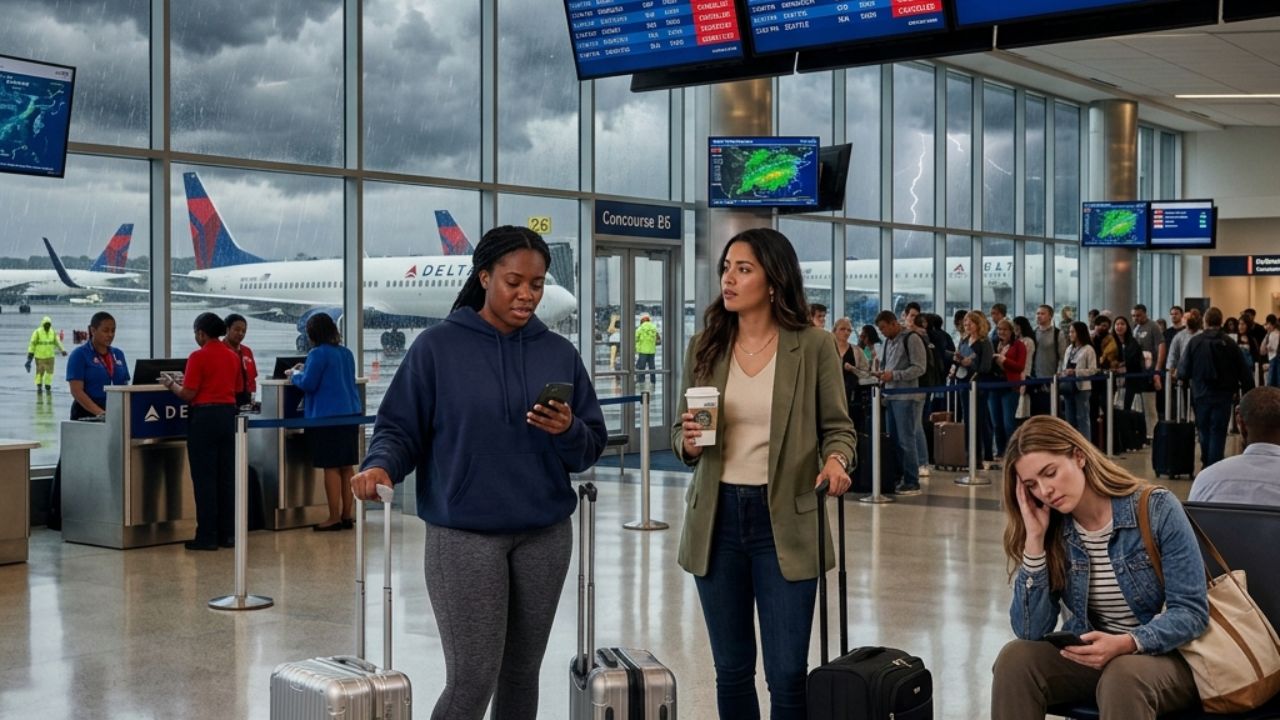
Image generated by AI
A Catastrophic Breakdown of the US Domestic Network
While the global passenger network relies heavily on the United States for flawless domestic and international connectivity, this critical aviation corridor has just suffered a terrifying, systemic operational collapse. Delivering highly urgent, critical airline news, verified aviation data confirms that thousands of desperate travelers are currently trapped in severe travel chaos across major hubs including Atlanta, New York, and Boston. While furious passengers attempt to navigate this unprecedented wave of airport disruptions, these exclusive aviation updates reveal that Delta Air Lines is fiercely battling to stabilize its shattered network after officially recording 38 outright flight cancellations and a staggering total of over 600 severe delays. With highly lucrative domestic and international routes violently thrown off schedule, this localized operational breakdown has instantly triggered a massive chain reaction, plunging the broader North American aviation sector into logistical paralysis right before the peak summer travel season.
Expanded Overview: The Scale of the Delta Air Lines Disruption
The strategic execution of recovery operations at these mega-hubs serves as a massive, undeniable test of Delta Air Lines' operational resilience. Historically, the carrier has heavily prided itself on industry-leading reliability. However, the sheer, unprecedented volume of this current disruption—totaling over 638 affected flights—has pushed ground handling, customer service, and airline logistics teams to the absolute brink of failure.
By aggressively attempting to manage the terrifying backlog, Delta is being forced to alter crew schedules, brutally delay aircraft rotations, and hold thousands of connecting passengers in increasingly crowded, uncomfortable terminals. What should have been routine journeys for families, corporate executives, and international tourists have violently transformed into exhausting, multi-day ordeals. Long lines have completely overwhelmed customer service counters, and departure boards are flashing an endless stream of delay notifications, heavily highlighting how quickly a disruption at a major airline hub can completely destroy the national transportation grid.
Section-Wise Breakdown of the Hub Collapse
Atlanta Airport Under Massive Pressure
The absolute epicenter of this operational nightmare is Hartsfield-Jackson Atlanta International Airport, globally recognized as Delta Air Lines' largest and most critical mega-hub. Because Atlanta serves as the absolute central connection point for massive volumes of passengers traveling across the United States and internationally, even moderate disruptions here are catastrophic. During this current crisis, flights originating from or connecting through Atlanta experienced the most severe, brutal impacts. As the departure boards violently shifted to red, the airport’s ecosystem was instantly crushed under the terrifying weight of displaced human traffic, crippling Delta's carefully coordinated bank structure and heavily stranding connecting passengers.
New York and Boston Infrastructure Crumbles
Simultaneously, travelers utilizing New York-area airports and Boston Logan International Airport experienced massive, cascading challenges as aviation operations faced severe pressure from crumbling infrastructure and airspace restrictions. Recent operational issues at New York’s LaGuardia Airport directly contributed to broader traffic management complications. Federal Aviation Administration (FAA) traffic management initiatives heavily restricted arrival and departure rates across the Northeast corridor, forcing authorities and Delta dispatchers to aggressively adjust schedules, often resulting in planes being held on the tarmac for hours.
Delta’s Internal Staffing and Crew Crisis
While severe weather and FAA constraints initiated the delays, internal operational challenges at Delta Air Lines have heavily exacerbated the crisis. Industry reports indicate that the carrier has been fiercely battling severe crew scheduling and staffing shortages. Crucially, a reported decline in pilots accepting additional flight assignments has brutally reduced operational flexibility. When airspace congestion occurs, airlines desperately need reserve crews to step in; without them, delays instantly snowball into massive flight cancellations.
Delta Air Lines Disruption Metrics & Affected Operations Table
To fully comprehend the highly severe operational parameters and massive logistical breakdown dictating this crisis, the following table explicitly details the core disruption metrics, affected hubs, and driving factors behind the collapse:
| Operational Metric / Affected Hub | Verified Disruption & Logistics Data |
|---|---|
| Total Delta Air Lines Disruption | 38 outright cancellations and over 600 delays |
| Primary Epicenter of Chaos | Hartsfield-Jackson Atlanta International Airport (ATL) |
| Northeast Corridor Impact | New York (LGA) and Boston airports severely bottlenecked |
| External Disruption Factors | Thunderstorms and aggressive FAA traffic management |
| Internal Airline Factors | Severe crew scheduling challenges and pilot staffing limits |
| Regulatory Passenger Protection | U.S. DOT mandates assistance, refunds, and meal vouchers |
| Broader Network Consequence | Violent chain reaction across Delta's domestic routing |
Passenger Impact: Stranded in the Transit Trap
For the modern domestic commuter and international tourist, the passenger impact of this massive hub collapse is financially and emotionally devastating. The modern demographic is increasingly demanding absolute logistical speed, actively turning away from travel itineraries crippled by heavily delayed flights.
Passengers trapped across Atlanta, New York, and Boston immediately experienced the massive terror of missing highly critical onward connections or losing entire days of their expensive vacations. Families traveling for vital reunions and professionals heading to non-negotiable business meetings found themselves subjected to extended, exhausting airport stays. Under extreme pressure, the U.S. Department of Transportation (DOT) has aggressively reminded passengers of their rights, forcing airlines to provide rebooking assistance, refunds, meal vouchers, and expensive overnight accommodations for disruptions within the carrier's control, though proving fault during weather events remains highly contentious.
Industry Analysis: The Fragility of the US Aviation Network
From an industry operations perspective, the Delta Air Lines delays highlight a highly terrifying reality for US aviation planners. Travel analysts fiercely argue that modern aviation operates within a highly interconnected, extremely fragile system. Thunderstorms and airspace congestion are inevitable, but the inability to rapidly recover exposes a severe structural weakness.
By relying so heavily on pilots picking up extra shifts to cover operational gaps, US airlines expose their entire networks to cascading failures the moment those pilots refuse to fly. Furthermore, FAA-controlled traffic management measures frequently throttle airport capacity, making rapid recovery mathematically impossible. This massive disruption forces carriers to recognize that investing heavily in crew redundancy and highly advanced scheduling software is absolutely non-negotiable ahead of the brutal peak summer travel season.
Conclusion: A Highly Volatile Horizon for US Aviation
The sudden, violent wave of 38 cancellations and over 600 delays across Delta Air Lines' network is exponentially more than a routine bad day at the airport—it represents a massive, highly visible failure of the US domestic transit system. By completely paralyzing flights out of massive global destinations like Atlanta, New York, and Boston, this disruption has proven that even the most profitable carriers remain terrifyingly vulnerable to operational collapse. As Delta executives desperately increase pilot reserve levels and accelerate hiring efforts to stabilize their schedules, millions of passengers are urged to fiercely monitor their flight statuses and assert their DOT-mandated rights while the aviation sector struggles to clear the massive logistical backlog.
Key Takeaways
- Massive Delta Collapse: Delta Air Lines suffered a catastrophic operational breakdown, recording 38 flight cancellations and over 600 delays.
- Atlanta Takes the Brunt: Hartsfield-Jackson Atlanta International Airport, Delta's massive mega-hub, served as the epicenter of the travel chaos.
- Northeast Gridlock: New York (LGA) and Boston airports faced severe infrastructure pressure and strict FAA traffic flow restrictions.
- Staffing Shortages: A critical lack of pilots accepting extra assignments heavily damaged Delta's ability to recover from the initial delays.
- DOT Rights Activated: Passengers are aggressively urged to demand refunds, meal vouchers, and hotel accommodations under federal guidelines.
Disclaimer: The delay metrics, specific cancellation numbers, and affected airline routing data presented in this report are based on official operational figures for Delta Air Lines and US airport authorities at the time of the incident. Network capacity, specific flight recovery timelines, crew staffing levels, and carrier rebooking protocols are highly volatile and subject to continuous operational change. Domestic travelers are urgently advised to monitor their specific booking status directly via the Delta Air Lines official mobile application and thoroughly review DOT compensation eligibility before leaving the airport.
Disclaimer
This article is for informational and educational purposes only. It does not constitute legal, financial, or professional advice. While we strive to provide accurate and up-to-date information, travel policies, regulations, and conditions change rapidly. Always verify information with official sources before making travel decisions. Nomad Lawyer makes no representations about the accuracy, reliability, completeness, or suitability of the information provided. Readers should consult qualified professionals for advice specific to their circumstances. The views expressed in this article are those of the author and do not necessarily reflect the views of Nomad Lawyer.
Kunal K Choudhary
Co-Founder & Contributor
A passionate traveller and tech enthusiast. Kunal contributes to the vision and growth of Nomad Lawyer, bringing fresh perspectives and driving the community forward.
Learn more about our team →