
Assam Gohpur Numaligarh Underwater Tunnel Set To Rewrite Northeast India Travel With A New Brahmaputra Gateway
Assam Gohpur Numaligarh Underwater Tunnel Set To Rewrite Northeast India Travel With A New Brahmaputra Gateway

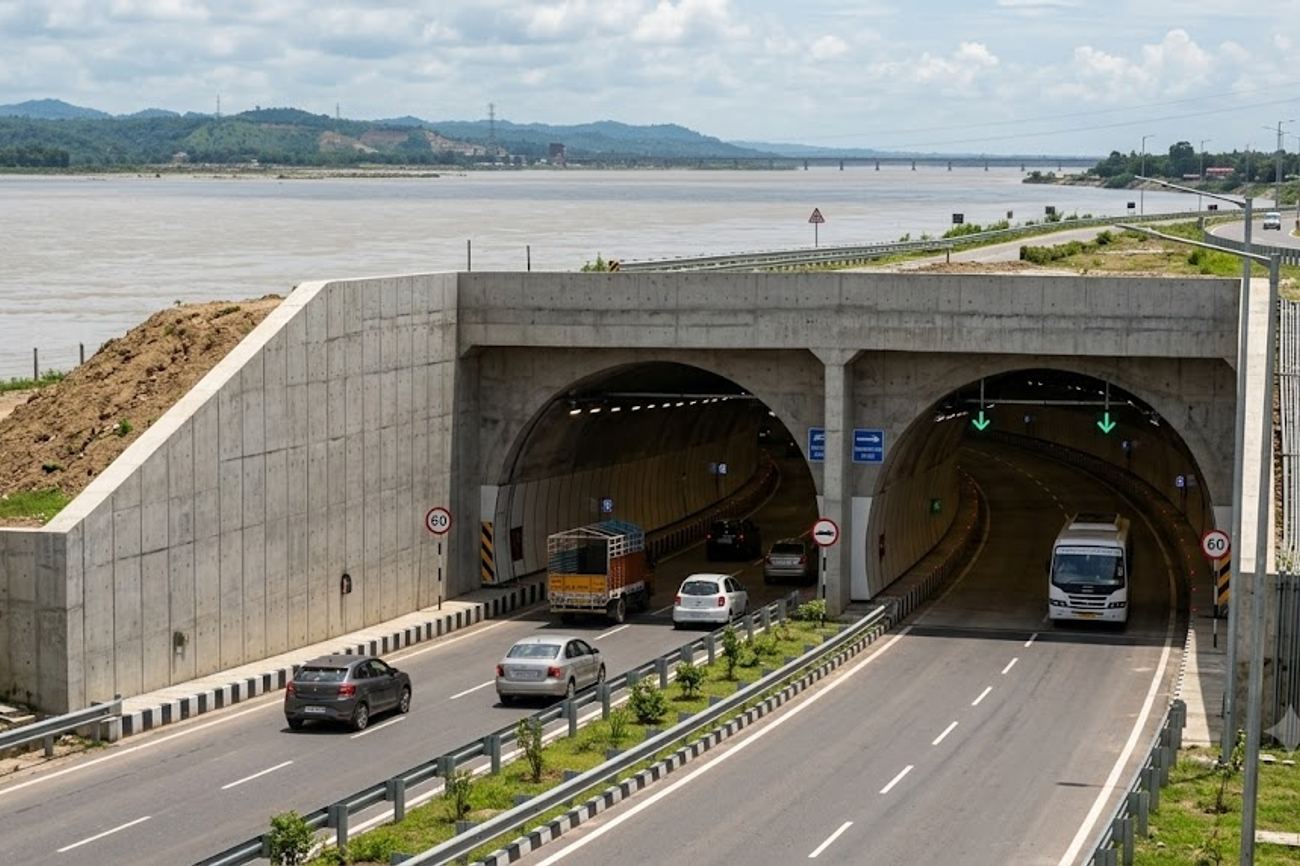
Image generated by AI
240 kilometers is the current distance travelers must navigate to move between Numaligarh on NH-715 and Gohpur on NH-15, a journey that typically consumes six hours of transit time. This inefficiency is the primary catalyst for the Gohpur-Numaligarh underwater tunnel, a project that will fundamentally alter the geography of Northeast India by carving a direct path beneath the Brahmaputra River. By replacing a winding detour with a streamlined corridor, the Indian government is not merely building a road; it is eliminating a systemic logistical bottleneck that has historically isolated the northern and southern sectors of Assam.
The Brahmaputra Barrier and the Greenfield Solution
For decades, the Brahmaputra River has functioned as both a cultural lifeline and a physical wall. While the river defines the region's identity, its seasonal volatility and immense width have forced transport planners to rely on circuitous overland routes. The approved Gohpur-Numaligarh project seeks to neutralize this geographic impediment through a greenfield corridor spanning approximately 33.7 kilometers.
Approved by the Cabinet Committee on Economic Affairs in February 2026, the project utilizes an Engineering, Procurement, and Construction (EPC) model to manage its immense technical complexity. The objective is to integrate two critical national highways—NH-15 and NH-715—creating a high-speed link that bypasses existing congested crossings. This is not a simple bridge replacement but a total reimagining of regional transit, integrating both automotive and rail capacities into a single subterranean system.
Engineering the Abyss: Data and Specifications
The scale of the project is reflected in its capital requirements and technical dimensions. With a total capital cost of ₹18,662 crore, including civil construction costs of ₹11,982.36 crore, the project represents one of the most expensive and ambitious engineering feats in the history of the Ministry of Road Transport and Highways.
The core of the project is a 15.79-kilometer underwater segment consisting of twin tubes. These tubes are designed with an internal diameter of 11.5 metres and are separated by a distance of 25 metres. To ensure operational safety, cross passages are positioned every 500 metres, allowing for emergency evacuation and maintenance access.
| Technical Specification | Detail |
|---|---|
| Total Corridor Length | ~33.7 km |
| Underwater Tunnel Length | 15.79 km |
| Design Speed | 100 kmph |
| Structural Design Life | 100 years |
| Traffic Capacity | ~30,756 Passenger Car Units (PCU) |
| Riverbed Cover (Min) | 25 metres at maximum scour depth |
Supporting this subterranean artery is a network of four artificial islands. These islands are critical for the transition from land to tunnel, acting as stabilized platforms in a river known for shifting beds. Two islands are dedicated to road infrastructure—one at Gohpur (1.4 km long, 320 metres wide) and one at Numaligarh (1.6 km long, 320 metres wide). Two additional islands, each 2 km long and 50 metres wide, are dedicated specifically to railway facilities.
Expert Analysis: The Logistics of Regional Integration
From a senior editorial perspective, the Gohpur-Numaligarh tunnel is less about "travel" and more about "market access." For the average traveler, the reduction in travel time from six hours to a fraction of that is the immediate win. However, the deeper implication lies in the integration of rail and road within a single underwater corridor.
For travelers booking routes into the Northeast, the direct consequence is a collapse of the "distance tax" typically associated with Assam's interior. By linking NH-15 and NH-715, the project creates a high-velocity transit spine. This allows for a seamless flow of people and goods between the industrial hubs of Numaligarh and the administrative and commercial centers connected via Gohpur.
The pricing pressure this creates is significant. Historically, the high cost of logistics in Northeast India—driven by long transit times and fuel consumption on detour routes—has inflated the cost of goods and services. As the International Air Transport Association (IATA) often notes regarding multimodal connectivity, the efficiency of "last-mile" or "middle-mile" ground transport determines the viability of regional tourism. When a destination becomes accessible in two hours instead of six, it shifts from a "bucket list" expedition to a viable weekend excursion.
Furthermore, the requirement for 25 metres of riverbed cover above the tunnel crown is a response to the Brahmaputra's extreme scour depth. In aviation terms, this is akin to building a runway that can withstand a category 5 hurricane; it is an over-engineered safety margin necessary because the Brahmaputra is one of the most unstable riverbeds in the world. The 100-year design life indicates that the Indian government is viewing this as a permanent geopolitical asset, intended to anchor the economy of the Seven Sister States for a century.
Key Takeaways
- Massive Time Savings: The project aims to replace a 240-kilometer detour and six-hour journey with a direct 33.7-kilometer corridor.
- Hybrid Infrastructure: This is India's first underwater tunnel to combine both a four-lane road and railway infrastructure in a twin-tube system.
- High-Capacity Transit: The tunnel is engineered for a design speed of 100 kmph and a capacity of 30,756 passenger car units (PCU).
- Extreme Engineering: To combat seasonal flooding, the project includes four artificial islands and a mandatory 25-metre riverbed cover to prevent erosion.
- Economic Scale: The total investment reaches ₹18,662 crore, signaling a strategic shift toward high-capex, high-impact connectivity in Assam.
FAQ: Assam Underwater Tunnel 2026
Will the tunnel be open to both cars and trains? Yes. The project features a twin-tube design where one tube is dedicated to four-lane road traffic and the other incorporates railway infrastructure, allowing for multimodal transport.
How does the tunnel handle the Brahmaputra's flooding? Engineers are using four artificial islands to stabilize approaches and ensuring the tunnel remains buried under at least 25 metres of riverbed, even during maximum scour (erosion) events.
Which highways are being connected by this project? The tunnel creates a direct link between NH-15 at Gohpur and NH-715 at Numaligarh, bypassing the current long-distance detour.
What is the expected speed limit inside the tunnel? The tunnel is engineered for a design speed of 100 kmph, significantly increasing the velocity of transit between northern and southern Assam.
A subterranean gamble that could finally turn the Brahmaputra from a barrier into a bridge.
#AssamInfrastructure #BrahmaputraTunnel #NumaligarhGohpurLink #IndiaNortheastConnectivity #NH15 #NH715
Related Travel Guides
- JR East GREEN×EXPO 2027 Shinkansen Launch Creates A New Japan Rail Travel Experience Across Major Cities
- Uzbekistan Travel Revolution Begins As First China To Iran Block Train Opens Historic Eurasian Rail Gateway
- Thailand Approves 106.8 Billion Baht Southern Double-Track Railway Expansion to Malaysia Border
Disclaimer
This article is for informational and educational purposes only. It does not constitute legal, financial, or professional advice. While we strive to provide accurate and up-to-date information, travel policies, regulations, and conditions change rapidly. Always verify information with official sources before making travel decisions. Nomad Lawyer makes no representations about the accuracy, reliability, completeness, or suitability of the information provided. Readers should consult qualified professionals for advice specific to their circumstances. The views expressed in this article are those of the author and do not necessarily reflect the views of Nomad Lawyer.
Kunal K Choudhary
Co-Founder & Contributor
A passionate traveller and tech enthusiast. Kunal contributes to the vision and growth of Nomad Lawyer, bringing fresh perspectives and driving the community forward.
Learn more about our team →