
Assam Completes Full Rail Electrification: The Complete Traveler's Guide to Electric Train Journeys Across the Northeast
With the electrification of the rugged 169-kilometre Lumding–Badarpur Hill section, Assam finishes electrifying its entire 2,589 route kilometres of Broad Gauge rail network, launching a cleaner, faster era of train travel across Northeast India.

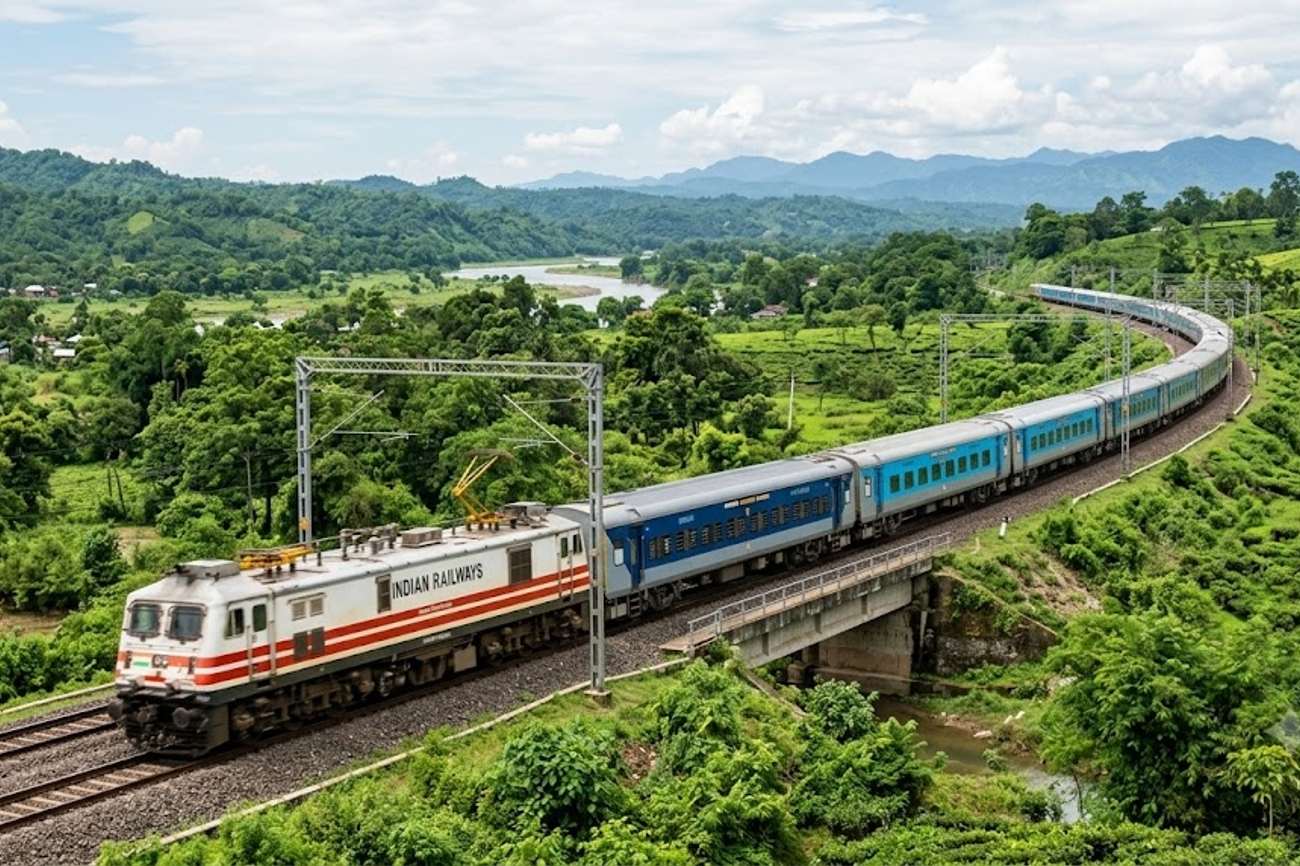
Electric train traversing the newly electrified hill corridor of Assam
The 169-kilometre Lumding–Badarpur rail corridor through Assam's Barail Range was long regarded as one of South Asia's most daunting railway engineering obstacles, forcing trains to crawl behind smoking diesel engines through monsoon-scarred cliffs, spiral loops, and fragile mountain passes. That era of soot and stalling locomotives has drawn to a definitive close. Northeast Frontier Railway has officially energized the final mountainous section of track, completing the total electrification of Assam's entire Broad Gauge network spanning nearly 2,589 route kilometres. For travelers who have spent years navigating the long delays of Lumding Junction, where heavy diesel engines were laboriously coupled and uncoupled before trains could tackle the highland ascents, this transition unlocks silent, uninterrupted journeys connecting the fertile Brahmaputra Valley directly to the remote hills of Dima Hasao and the southern river basins of the Barak Valley.
Electric traction across the entire state alters the experience of exploring Northeast India. The rhythmic rumble of diesel power is replaced by the smooth hum of electric locomotives gliding past emerald tea gardens, ancient bamboo groves, and rainforest ridges. With zero operational stops required for locomotive swaps, passengers bound for Silchar, Agartala, and the mountain borders of Mizoram can now experience continuous, reliable rail transit across some of the most dramatic terrain on the subcontinent.
Conquering the Barails: The Engineering Triumph of the Lumding–Badarpur Section
The completion of the Lumding–Badarpur Hill section represents the crowning achievement of a multi-year modernization push across eastern India. While electrifying the flat riverine floodplains of the Brahmaputra basin presented standard logistical requirements, the 169-kilometre hill route between Lumding and Badarpur posed immense geographical challenges. The track threads through the unstable slopes of the Barail Range, crossing towering viaducts, dozens of dark tunnels, and steep gradients where torrential monsoon rains regularly trigger mudslides and ground subsidence.
Establishing dependable overhead traction wires in this rugged terrain required substantial reinforcement of the regional electrical grid. The decisive breakthrough came with the activation of the dedicated high-voltage transmission connection linking the Haflong grid facility to the New Haflong traction facility. This specialized power corridor feeds constant, balanced voltage to overhead catenary lines, providing electric locomotives with the sustained pulling power needed to haul multi-coach passenger trains and heavy freight up severe mountain inclines without losing momentum.
By bringing this final 169-kilometre mountain bottleneck into the electrified network, Indian Railways has unified all 2,589 route kilometres of Assam's Broad Gauge lines under one continuous power system. The immediate operational gain is the total elimination of traction change delays. Historically, express trains traveling from New Delhi, Kolkata, or Guwahati had to halt at Lumding for up to forty-five minutes while crews swapped out electric engines for twin diesel units capable of tackling the hills. Today, modern electric engines run straight through from origin to destination, cutting dwell times, lowering carbon emissions, and granting rail operators the flexibility to run more frequent passenger services across regional borders.
What Makes Assam's Rail Corridors Different: From Tea Plateaus to Cloud Forests
Rail journeys in Assam provide an encounter with geography and culture unlike anywhere else in India. Leaving behind the bustling river hubs along the Brahmaputra, trains quickly enter expansive tea estates where bright green bushes stretch to the horizon beneath shade trees, tended by local tea garden workers carrying handwoven wicker baskets. As the tracks curve south toward Dima Hasao, Assam's only true hill district, the terrain ascends sharply into mist-shrouded rainforests dominated by towering teak, wild banana, and thick stands of bamboo.
The route passes along the edge of globally celebrated wildlife sanctuaries, including regions bordering the UNESCO World Heritage Centre recognized Kaziranga National Park and Manas Wildlife Sanctuary. In previous decades, the heavy rumble and exhaust fumes of diesel locomotives were an unavoidable disruption along forest fringes known for wild elephant herds, one-horned rhinos, and rare hornbills. The transition to electric traction significantly dampens track noise and eliminates toxic trackside soot, creating a quieter passage through sensitive animal migration paths.
Past the mountain summit of Jatinga, famous for its seasonal bird phenomena and cool ridge breezes, the railway spirals down through the Barak Valley toward Badarpur and Silchar. Here, the cultural environment shifts from the Tibeto-Burman traditions of the Dimasa and Karbi communities into the Bengali-speaking river plains along the Barak River, where water hyacinths blanket calm oxbow lakes and wooden fishing dinghies drift beneath bamboo footbridges. Traveling this route by train allows visitors to experience the striking cultural and ecological transition between Assam's two historic river valleys in a single continuous journey.
Visitor Insider Tips: Navigating the Northeast's Electrified Lines
- Secure a Seat in the Vistadome Coach: For the ultimate visual experience across the Lumding–Badarpur corridor, book a seat in the specialized Vistadome coach attached to select day trains operating out of Guwahati toward New Haflong and Silchar. Featuring panoramic glass ceilings, large observation windows, and 180-degree rotating seats, these coaches offer unbroken views of the deep ravines, cascading waterfalls, and historic arch bridges of Dima Hasao. Tickets open sixty days in advance on the official Indian Railways ticketing system and sell out rapidly during autumn.
- Base Yourself in Haflong: Rather than treating the hill route solely as a transit line, alight at New Haflong station and spend two to three days exploring Assam's premier hill retreat. Stay in Upper Haflong near the serene Haflong Lake or book a community homestay in the nearby village of Muolhoi. Consult the regional officers at Assam Tourism for certified local guides who can lead morning hikes through coffee plantations and village orchards.
- Savor Authentic Station and Hill Cuisine: At railway halts like Lumding, vendors sell paper cones of roasted peanuts, fresh ginger tea, and savory vegetable chops seasoned with fragrant panch phoron spices. Once in Haflong, visit local markets to taste traditional Dimasa dishes, including smoked pork prepared with dried bamboo shoots (Muya Awandru), bitter autumn greens, and fragrant steamed sticky rice wrapped in banana leaves.
- Time Your Journey for Clear Skies: Plan your train travel between late October and mid-March. During these post-monsoon and winter months, the skies across the Barail Range remain crisp and blue, daytime temperatures hover around twenty degrees Celsius, and mountain visibility extends for miles. Avoid travel during the peak monsoon months of June through August, when heavy cloudbursts can cause temporary track disruptions in the mountain cuttings.
- Respect Local Etiquette and Wildlife Zones: When traveling through tribal hill districts, dress modestly, always ask permission before photographing village weavers at their looms, and refrain from tossing waste or plastic from open train doors. Keep train windows securely latched at night when passing through designated elephant corridors between Lumding and Hojai, where trains adhere to strict precautionary speed limits to protect crossing herds.
Cultural and Environmental Context: Green Transit in an Ecological Hotspot
Assam occupies a vital position within the Eastern Himalayan biodiversity hotspot, an ecologically fragile zone where dense river networks, pristine wetlands, and subtropical montane forests intersect with growing human settlements. For generations, the expansion of modern transport infrastructure presented difficult trade-offs between regional economic integration and the preservation of natural habitats. The transition of 2,589 route kilometres of rail from diesel fuel to electric traction represents a major ecological victory for the state.
By phasing out diesel engines, Indian Railways eliminates millions of litres of fossil fuel combustion annually across Northeast India. In the hill passes of Dima Hasao, this means sensitive mosses, orchids, and wild ginger varieties that cling to trackside rock faces are no longer coated in unburned hydrocarbons and greasy exhaust particulate. Furthermore, electric locomotives deliver superior braking responsiveness and regenerative deceleration on steep declines, providing locomotive drivers with finer speed control when approaching marked wildlife corridors where elephants and deer are known to wander near the rails.
Equally significant is the cultural empowerment rail modernization brings to indigenous hill populations. The Lumding–Badarpur railway is the economic lifeline for Dimasa, Zeme Naga, Kuki, and Hmar farming communities across the highlands. Local growers rely on early morning passenger trains to transport seasonal harvests of organic hill ginger, sweet pineapples, wild honey, and indigenous broom grass down to wholesale markets in Lumding and Silchar. With electric traction cutting transit delays and lowering railway operating costs, these rural farming families gain faster, more dependable access to urban trade centers, helping sustain ancestral agricultural traditions while integrating with modern regional commerce.
FAQ: Riding Assam's Electric Hill Corridors 2026
How does full electrification reduce train journey times across Assam? By eliminating forty-five-minute stops previously required to swap diesel and electric locomotives at Lumding, express trains maintain continuous speed, trimming significant transit time between Guwahati, Silchar, and neighboring states.
What is the most scenic stretch of the newly electrified network? The 169-kilometre Lumding–Badarpur Hill section through Dima Hasao is the most scenic, featuring mountain tunnels, deep gorges, lush rainforests, and expansive views across the Barail Range.
Do Indian travelers or foreign tourists need special permits for this route? Domestic travelers do not require permits for Assam. Foreign tourists can travel freely along the main railway corridor without an Inner Line Permit, though valid passport identification is required when booking.
Are tickets on newly electrified routes more expensive? No, ticket prices remain standard according to Indian Railways tariff structures. The shift to electric power reduces carrier operating costs without imposing price surcharges on regular passenger fares.
As quiet electric currents replace diesel roar across the Barail mountains, Assam's railways turn what was once a rugged frontier obstacle into one of India's most breathtaking green journeys.
Related Travel Guides
- Northern Railway Strengthens Festival Connectivity With New Special Trains Linking Punjab and Eastern India
- Indian Railways Adds 100 Festival Special Trains for Durga Puja, Diwali, and Chhath 2026 to Ease Passenger Rush
- The Northeast Frontier Rail Trail: Traveling Guwahati, Haflong, and Silchar by Electric Train
Disclaimer
This article is for informational and educational purposes only. It does not constitute legal, financial, or professional advice. While we strive to provide accurate and up-to-date information, travel policies, regulations, and conditions change rapidly. Always verify information with official sources before making travel decisions. Nomad Lawyer makes no representations about the accuracy, reliability, completeness, or suitability of the information provided. Readers should consult qualified professionals for advice specific to their circumstances. The views expressed in this article are those of the author and do not necessarily reflect the views of Nomad Lawyer.
Raushan Kumar
Founder & Lead Developer
Full-stack developer with 11+ years of experience and a passionate traveller. Raushan built Nomad Lawyer from the ground up with a vision to create the best travel and law experience on the web.
Learn more about our team →