
Asia's Overnight Airports Face the 2 AM Layover Test: Sleep Zones, Transit Hotels, and Terminal Realities

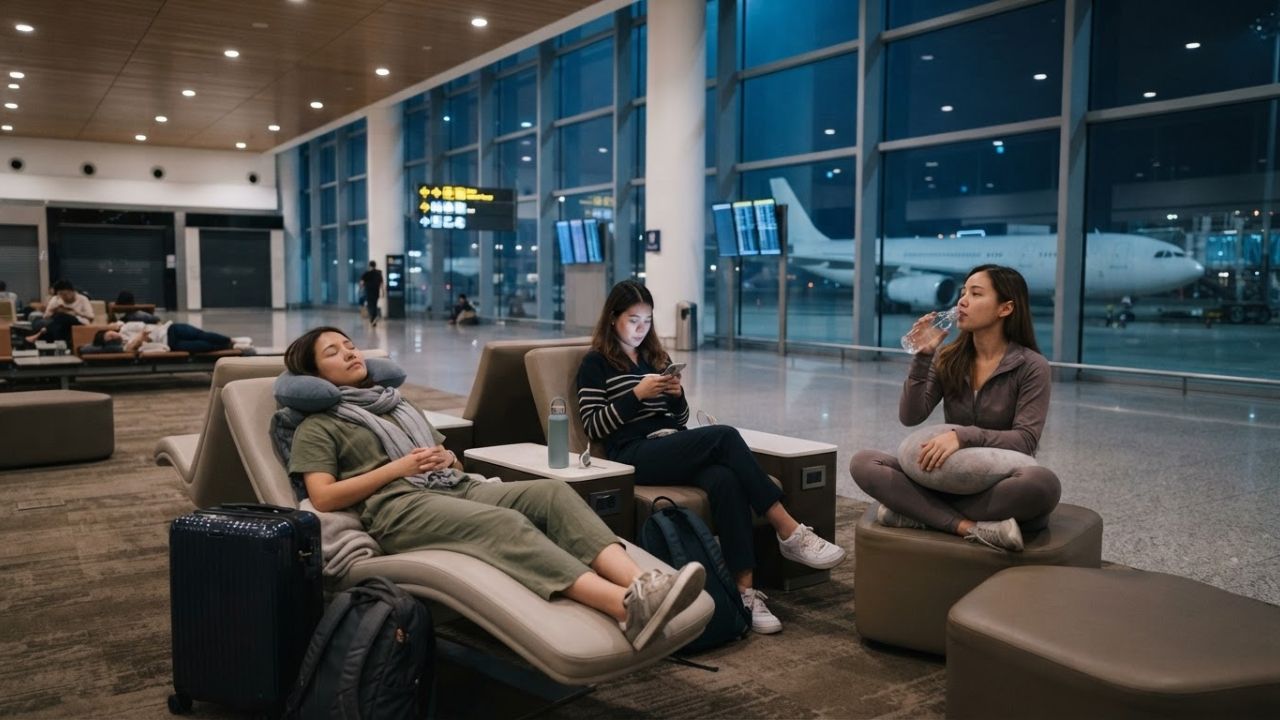
With global air traffic climbing to 9.8 billion passengers and international journeys jumping 6.1 per cent, Asia’s premier aviation hubs are transforming overnight transit into a frontline test of physical rest, terminal access, and passenger recovery.
As international routes expand across the Asia-Pacific region, extended overnight layovers have shifted from an occasional inconvenience into a routine travel reality. Airports Council International (ACI World) data demonstrates that international passenger movements reached approximately four billion in 2025, driven by massive traffic volumes through Asian transit points. Tokyo Haneda ranked third globally with 91.68 million passengers, Incheon logged 74.13 million total (including 73.55 million international travelers), Changi handled 69.98 million total (with 69.40 million international), Kuala Lumpur reached 63.41 million (45.48 million international), and Hong Kong processed 60.81 million international fliers alongside 394,730 flight movements.
Yet sheer passenger volume fails to answer the question facing red-eye fliers: when the clock strikes 2:00 AM and retail shutters fall, where can an exhausted traveler actually sleep?
The Midnight Reality Check: Deconstructing 24-Hour Terminals
A terminal operating around the clock does not equate to 24-hour passenger comfort. Experienced long-haul travelers assess overnight transit not by daylight marketing, but through four distinct operational windows:
- 10:00 PM: Concourse restaurants and lounges operate normally, boarding gates are accessible, and terminal shuttles run on full schedules.
- Midnight: Commercial storefronts shut, ambient lighting dims, and public food options contract to minimal vending machines or lone convenience stalls.
- 2:00 AM: The critical physical test begins. Travelers without access to dedicated rest facilities face metal armrests, chilly air conditioning, and automated safety broadcasts.
- 5:00 AM: Early departure waves restart, bringing cleaning teams, security queues, boarding announcements, and foot traffic that abruptly end rest windows.
An eight-hour scheduled connection rarely translates to eight hours of usable sleep. Factoring in deplaning, security checks, transit between terminals, and mandatory pre-boarding times, fliers arriving at 11:30 PM realistically have only five hours before repacking bags.
Hub-by-Hub Sleep Architecture: Singapore, Seoul, Tokyo, and Hong Kong
Each major Asian gateway handles nighttime recovery through distinct infrastructure strategies:
Singapore Changi: Transit Zoning and Free Snooze Lounges
Singapore Changi (handling 69.98 million passengers) stands out for integrating free, dedicated snooze lounges across its airside zones in Terminals 1, 2, and 3. For complete privacy, 24-hour transit hotels operate inside the departure transit area, allowing passengers to rest without clearing border control.
Geography matters: while Ambassador Transit Hotels operate strictly airside, alternative properties like YOTELAIR are situated inside the public Jewel complex. Clearing immigration to reach Jewel requires entry visas and baggage collection, a misstep that can disrupt separate-ticket bookings.
Seoul Incheon: Dedicated NAP and Refresh Zones
Incheon International Airport operator reported 74.07 million passengers—its highest volume since opening in 2001—with ACI recording 73.55 million international movements. Incheon counters transfer fatigue with 24-hour NAP Zones, Relax Zones, and Refresh Zones within Terminal 1's transfer mezzanine, alongside capsule hotels.
However, amenities carry staggered operating schedules: while quiet zones stay open all night, free transit shower rooms operate strictly between 5:00 AM and 11:00 PM.
Tokyo Haneda: Terminal Constraints and Timed Refresh Rooms
Tokyo Haneda (91.68 million passengers) enforces strict terminal separation. While Terminal 3 stays open 24 hours for international ticket holders, domestic Terminals 1 and 2 lock their doors around midnight.
Within Terminal 3, paid overnight infrastructure is well-maintained: 24-hour shower facilities feature 21 private shower rooms (priced at ¥1,500 for 30 minutes) and five refresh rooms equipped with reclining chairs (¥3,000 for 60 minutes). Terminal 3 also houses 24-hour lounges, including the 80-seat TIAT Lounge and the 89-seat SKY LOUNGE.
Hong Kong International: Gate-Adjacent Resting Lounges
Processing 61 million passenger trips in 2025 (a 15 per cent year-on-year increase) and over five million tonnes of cargo, HKIA utilizes a decentralized layout. Instead of centralizing beds in one wing, designated resting lounges with reclining loungers and free shower amenities are distributed near departure gates, saving passengers long terminal treks before morning connections.
Overnight Pitfalls: Airside vs. Landside Rest Strategies
| Passenger Need | Common Midnight Breakdown | Recommended Strategy |
|---|---|---|
| Sleeping | Benches with fixed armrests, cold drafts, high noise | Identify airside NAP or Snooze zones before arrival |
| Dining | Full-service restaurants close by midnight | Dine prior to 10:00 PM or carry non-perishable rations |
| Hygiene | Transfer showers closed overnight (e.g., Incheon) | Shower before 11:00 PM or queue at 5:00 AM reopening |
| Device Power | Central charging stations monopolized | Pack a high-capacity portable power bank |
| Immigration | Leaving security zone requires entry visas/customs | Verify whether hotel is strictly airside or public landside |
Local Visitor Insider Tips for Overnight Hub Transit
- Pack an Airport Sleep Kit: Terminals lower thermostat temperatures overnight to reduce cooling costs; pack an ultralight down jacket, eye mask, silicone earplugs, and slip-on socks in your carry-on.
- Scout Quiet Satellite Concourses: Gates designated for midday wide-body departures are frequently empty between 1:00 AM and 4:30 AM, offering quiet seating rows away from main corridors.
- Track Water Refill Points: Bottled water sales shut with retail counters; locate airside drinking water fountains immediately upon deplaning to stay hydrated in dry cabin conditions.
- Cultural Etiquette in Shared Rest Zones: Incheon and Changi rest zones strictly prohibit phone calls, alarms on speaker, and using shoes on padded loungers. Keep phone alarms on vibration mode.
- Baggage Through-Check Verification: Always confirm at your origin check-in desk that baggage is checked through to the final destination; retrieving luggage overnight forces you through immigration into public landside areas.
Sustainable Transit and the Long-Term Tourism Outlook
The evolution of overnight airport hospitality aligns with broader regional sustainability goals. Rather than forcing millions of passengers into motorized city transfers, late-night taxi queues, and short-stay downtown hotels, self-contained terminal sleep infrastructure cuts regional ground transportation emissions.
By upgrading airside rest spaces, civil aviation authorities and regional tourism boards protect passenger wellbeing. Long-haul travelers who arrive rested and refreshed are far more inclined to spend money in local cultural economies, participate in heritage tours, and explore secondary regional destinations upon completing their journeys.
Related Travel Guides
Disclaimer
This article is for informational and educational purposes only. It does not constitute legal, financial, or professional advice. While we strive to provide accurate and up-to-date information, travel policies, regulations, and conditions change rapidly. Always verify information with official sources before making travel decisions. Nomad Lawyer makes no representations about the accuracy, reliability, completeness, or suitability of the information provided. Readers should consult qualified professionals for advice specific to their circumstances. The views expressed in this article are those of the author and do not necessarily reflect the views of Nomad Lawyer.
Raushan Kumar
Founder & Lead Developer
Full-stack developer with 11+ years of experience and a passionate traveller. Raushan built Nomad Lawyer from the ground up with a vision to create the best travel and law experience on the web.
Learn more about our team →