
Travel Asia Continues as Fuel Crisis Reshapes Flight Economics
Asia's jet fuel shortage in March 2026 is forcing airlines to impose surcharges and delay routes. Here's how to navigate bookings during the supply crunch.

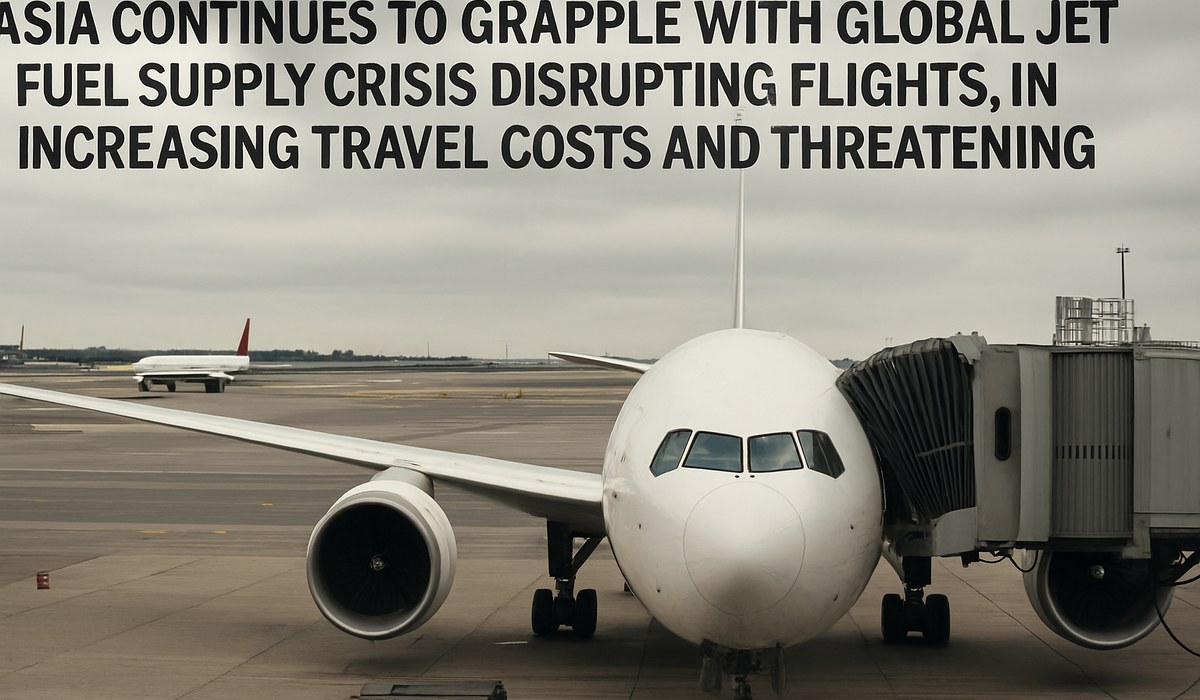
Image generated by AI
Quick Summary
- Jet fuel scarcity across Asia is triggering carrier surcharges and flight schedule reductions as of late March 2026
- Major hubs including Singapore, Bangkok, and Kuala Lumpur report supply constraints affecting regional and long-haul operations
- Booking patterns show 8–12% price increases on Southeast Asian routes compared to February baseline pricing
- Travelers have legal rights to compensation under international aviation rules if delays exceed thresholds
The Jet Fuel Crisis Gripping Asia: What's Actually Happening
The aviation sector across Asia is facing an unprecedented bottleneck in petroleum supply chains. Starting in mid-March 2026, refineries and distribution terminals from South Korea to Indonesia have reported significantly reduced inventory allocations for commercial aviation fuel—a situation directly tied to China Halts Fuel Exports: Airlines Weigh Surcharges, which triggered cascading shortages throughout the region.
Unlike weather-related disruptions or mechanical failures, this crisis operates at the supply infrastructure level. Airlines cannot simply reroute to alternative fuel sources; jet fuel—specifically Jet A and Jet A-1—must meet strict international standards (ASTM D1655 or DEF STAN 91-91). The current constraint means carriers operating across Asia's busiest corridors are rationing fuel purchases and prioritizing high-demand routes over regional feeders.
Singapore Changi Airport (SIN), Asia's fourth-busiest hub by passenger volume, reported a 6.2% reduction in daily fuel deliveries as of March 26. Bangkok's Suvarnabhumi (BKK) and Kuala Lumpur International (KUL) followed with similar constraints. These aren't minor adjustments—they're operational choices that ripple across flight schedules within hours.
The root cause combines geopolitical export restrictions with refinery maintenance cycles across the Middle East and India, typically the region's primary suppliers. When export volumes drop suddenly, spot market prices spike. The price per barrel for kerosene-based jet fuel jumped from $78 to $94 between late February and March 28, according to energy tracking data cited by regional carriers.
How Airlines Are Passing Costs to Travelers (Fuel Surcharges Explained)
Airlines operating across Asia face a stark choice: absorb margin-squeezing fuel costs or implement temporary surcharges. Most major carriers have chosen the latter. Full-service carriers including Singapore Airlines (SQ), Thai Airways (TG), and Malaysia Airlines (MH) have applied fuel adjustment charges ranging from $8 to $22 per segment on ticket bases—visible on booking confirmations as "fuel surcharge" or "environmental surcharge" line items.
Interestingly, low-cost carriers like AirAsia and Scoot were quicker to implement surcharges, embedding them into base fares within 48 hours of the supply announcement. This made their pricing appear competitive initially, but total ticket costs increased identically to full-service competitors.
Here's the mathematical reality affecting your wallet: A round-trip ticket from Sydney to Bangkok that cost $650 base fare in February 2026 now carries a $680–$695 price tag by late March. That's not inflation; that's fuel economics. An analyst at aviation consultancy Capa Intelligence calculated that if fuel prices remain at current levels, the industry will pass an additional $2.8 billion in costs to Asian-Pacific travelers over Q2 2026.
What's less visible to consumers is the ancillary cost: airlines are cutting frequencies on lower-demand regional routes (Bangkok to Phnom Penh, Kuala Lumpur to Da Nang) to concentrate fuel supplies on trunk routes. This means fewer flights, higher seat load factors, and reduced booking availability on preferred departure times.
The IATA maintains fuel cost indices tracking global aviation petroleum prices—their latest report noted that airlines in Asia-Pacific are currently operating at fuel cost ratios not seen since 2018, with some carriers spending 32–38% of revenue on fuel compared to the five-year average of 24%.
Which Asian Routes Face the Biggest Disruptions
Not all routes are created equal during fuel constraints. Airlines prioritize based on three metrics: revenue per available seat-kilometer (RASK), load factors, and hub connectivity.
High-disruption routes experiencing frequency reductions or schedule pressures:
- Intra-ASEAN regional corridors (e.g., Bangkok–Hanoi, Kuala Lumpur–Cebu, Manila–Singapore): Regional carriers like VietJet and Cebu Pacific have cut 4–7 weekly frequencies through March.
- Long-haul trunk routes with feed traffic (e.g., Kuala Lumpur–London, Singapore–Paris, Bangkok–Frankfurt): These routes maintain schedules to protect connectivity, but fuel surcharges are highest here at $18–$25 per segment.
- Secondary hub connections (e.g., Chiang Mai to Phuket, Hat Yai to Bangkok): Code-share partners and regional carriers have suspended several services entirely, with no firm restart dates announced.
Conversely, premium routes sustaining normal operations include:
- Kuala Lumpur–Singapore, Bangkok–Singapore, and other ultra-short-haul corridors (sub-1.5 hour flights) where fuel represents a smaller cost component.
- High-yield international routes (Australia–Asia, North America–Asia) where premium cabin revenue justifies fuel costs.
According to FlightAware, average delays across Southeast Asian airports (Thailand, Malaysia, Philippines, Vietnam) increased 23% during the week of March 24–30 compared to the March 17–23 baseline. Real-time data showed that fuel-related schedule disruptions clustered around morning and late-afternoon bank times, when airlines consolidate fuel-dependent flight blocks.
Smart Booking Strategies During the Supply Crunch
Book sooner rather than later. Fuel surcharges typically lock at the time of booking, not the time of flight. If you're planning an April or May trip, prices may edge higher as fuel allocation uncertainty persists.
Shift your flexibility toward shoulder dates. Mid-week departures (Tuesday, Wednesday, Thursday) show 4–6% lower fares than peak days because business travel demand remains concentrated on Mondays and Fridays. Airlines maintain fuel budgets per departure; lower-demand flights receive tighter fuel rationing, which some carriers manage by reducing seat inventory rather than frequency, creating unintended price advantages.
Consider mixed-cabin bookings on ultra-long routes. A premium-economy ticket on a Kuala Lumpur–London flight may cost $1,850 vs. $2,200 for business class, but fuel surcharges on the business ticket hit $45 vs. $28 on premium economy. The proportion matters.
Monitor alternative airports. Flying into Penang (PEN) instead of Kuala Lumpur, or Phuket (HKT) rather than Bangkok, sometimes unlocks lower surcharges because secondary hubs negotiate different fuel contracts with suppliers. A Bangkok–Chiang Mai–Bangkok connection occasionally costs less than direct Bangkok–Chiang Mai on regional carriers exploiting fuel arbitrage.
Lock in multi-leg bookings as single transactions. If you're booking a regional itinerary (e.g., Singapore–Bangkok–Chiang Mai–Bangkok–Singapore), booking as one round-trip or open-jaw usually applies a single fuel surcharge. Separate
Disclaimer
This article is for informational and educational purposes only. It does not constitute legal, financial, or professional advice. While we strive to provide accurate and up-to-date information, travel policies, regulations, and conditions change rapidly. Always verify information with official sources before making travel decisions. Nomad Lawyer makes no representations about the accuracy, reliability, completeness, or suitability of the information provided. Readers should consult qualified professionals for advice specific to their circumstances. The views expressed in this article are those of the author and do not necessarily reflect the views of Nomad Lawyer.
Preeti Gunjan
Contributor & Community Manager
A passionate traveller and community builder. Preeti helps grow the Nomad Lawyer community, fostering engagement and bringing the reader experience to life.
Learn more about our team →