
Asia Travel Chaos: Tropical Storm Jangmi Triggers 2,076 Flight Cancellations and 3,581 Delays Across Japan, China, South Korea, and Thailand
As Tropical Storm Jangmi violently batters the Asian continent, extreme weather and operational gridlock trigger unprecedented travel chaos, forcing major airlines to execute thousands of flight cancellations across Tokyo, Beijing, and Bangkok.

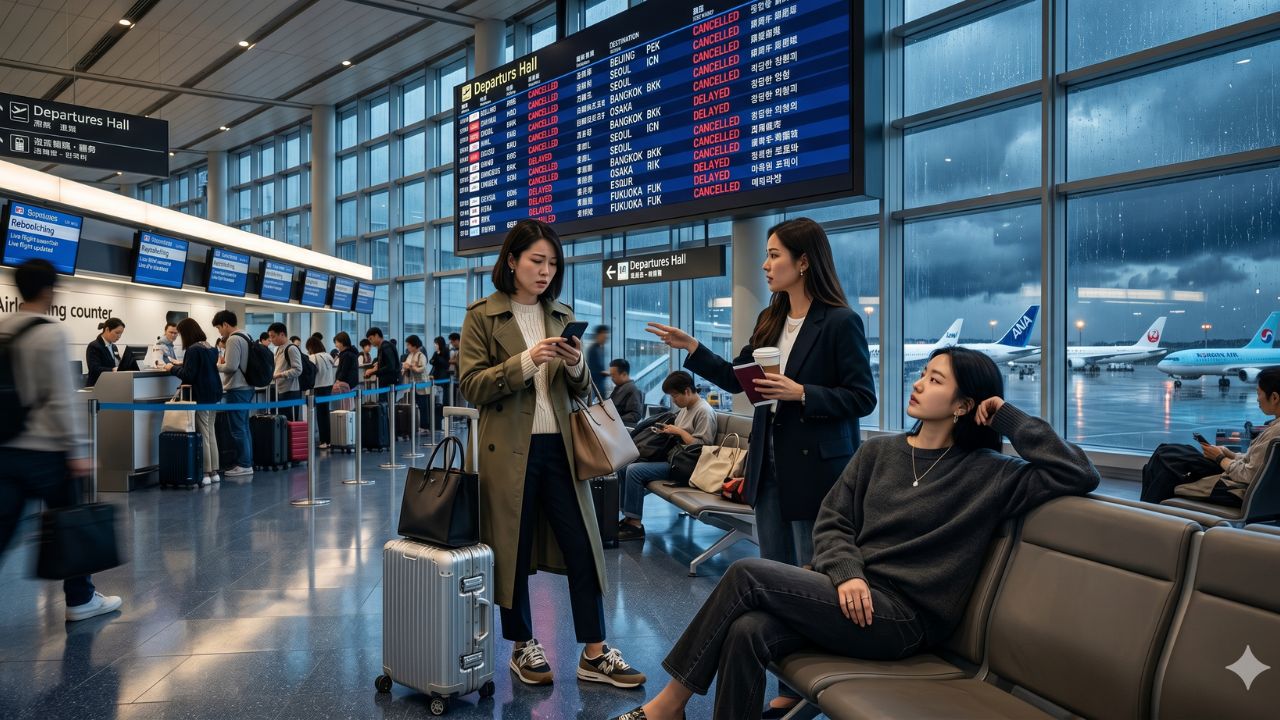
Image generated by AI
A Massive Operational Meltdown Plunges Asia into Gridlock
While massive sectors of the global passenger network frequently battle highly unpredictable labor shortages, synchronized logistical bottlenecks, and horrific fleet constraints, sudden, hyper-violent extreme weather events remain the absolute most terrifying catalyst for unmanageable, sudden airport disruptions. Delivering highly urgent, breaking airline news, verified Asian aviation trackers confirm that a catastrophic meteorological breakdown has actively generated severe, cascading travel chaos across the massive Asian aviation network. Today, June 3, 2026, severe travel distress forcefully emerged as Tropical Storm Jangmi violently battered the region, completely paralyzing commercial aviation and unleashing an unprecedented wave of 2,076 massive flight cancellations and 3,581 endless departure delays across Japan, China, South Korea, Thailand, India, and the Philippines.
While desperate travelers usually attempt to navigate sudden, terrifying airport disruptions caused by isolated technical failures, these exclusive aviation updates reveal a highly systemic, incredibly destructive capacity failure driven by raw atmospheric violence. Verified transit data confirms that this massive operational collapse has severely restricted ground handling and air traffic flow across Tokyo, Fukuoka, Beijing, Incheon, and Bangkok. This horrific meteorological meltdown is actively destroying the travel itineraries of hundreds of thousands of highly vulnerable passengers, violently stranding domestic commuters and international tourists flying with major legacy carriers like Japan Airlines, All Nippon (ANA), Air China, and Air India.
Expanded Overview: The Scale of the Trans-Asian Crisis
The sudden, highly publicized execution of this massive continental operational lockdown serves as an undeniable example of how rapidly the world's busiest transit networks can completely disintegrate under extreme weather pressure. Tropical Storm Jangmi has brought extreme rainfall, violent hurricane-force winds, and massive localized flooding. This catastrophic weather front, combined with residual operational backlogs and already high passenger traffic volumes, has created a devastating cascading effect across Asia’s absolute busiest hubs.
The terrifying reality of this crisis is found in the sheer volume of high-capacity aircraft abruptly removed from the daily schedule. With over 5,657 combined flight disruptions officially recorded, airlines are instantly removing millions of seats from the market. This catastrophic reduction instantly paralyzes both inbound and outbound traffic, actively destroying thousands of incredibly vulnerable connecting itineraries. Furthermore, the storm's massive ground effects—including violent power outages, fallen trees, and paralyzed public transport networks—have violently disrupted surface transit, leaving massive crowds of passengers entirely trapped within heavily compromised, overwhelmed airport terminals from Japan to Southeast Asia.
Section-Wise Breakdown of the Connectivity Crisis
Japan: The Epicenter of the Storm
Japan remains firmly at the absolute epicenter of these travel disruptions. Tokyo International Airport (Haneda), the massive global mega-hub, suffered an apocalyptic 693 cancellations and 227 delays, completely shattering its daily operational schedule. Narita International Airport followed closely with 106 cancellations and 121 delays. Down south, Naha (Okinawa) recorded 58 cancellations and 142 delays as storm-related flooding violently forced operational halts in Kagoshima and Fukuoka. Consequently, flag carriers were decimated: Japan Airlines executed 321 cancellations (81 delays), while All Nippon grounded 231 flights (130 delays). Regional operators like ANA Wings, Skymark, and Japan Air Commuter severely struggled to maintain basic schedules amid heavy rainfall constraints.
China: Major Airports Grapple with Meltdowns
China’s busiest hubs were heavily affected by the storm's powerful residual bands. Guangzhou Baiyun International recorded an incredible 25 cancellations and 326 severe delays, while Shanghai Pudong suffered 36 cancellations and 168 delays. The massive Beijing Capital and Beijing Daxing airports faced combined delays of over 200 flights. Secondary hubs including Hangzhou Xiaoshan, Chengdu Tianfu, and Xiamen Gaoqi compounded passenger challenges across eastern and southern China. Major carriers including China Eastern (74 cancellations, 274 delays), Air China (49 cancellations, 117 delays), and Shenzhen Airlines were among the absolute worst-hit, causing massive domestic travel chaos.
South Korea, Thailand, and Regional Strain
In South Korea, Incheon International experienced 20 cancellations and 120 delays, directly disrupting vital international connectivity alongside Gimpo International (12 cancellations, 48 delays). Local carriers Korean Air and Jeju Air faced massive ground congestion. Further south, Thailand’s Suvarnabhumi Bangkok International recorded 4 cancellations and 93 massive delays. In India, Indira Gandhi International (DEL) reported 13 cancellations and 182 delays, heavily straining Air India and SpiceJet operations, while Manila International (MNL) in the Philippines logged 5 cancellations and 40 delays, effectively paralyzing the Southeast Asian corridor.
Verified Asian Disruption Data
To fully comprehend the massive operational scale and devastating delays dictating this highly volatile international crisis, the following tables explicitly detail the exact cancellation metrics officially recorded across the impacted Asian hubs:
Major Asian Airport Disruption Matrix
| Targeted Airport Hub | Flight Cancellations | Flight Delays |
|---|---|---|
| Tokyo Haneda (Japan) | 693 Cancellations | 227 Delays |
| Guangzhou Baiyun (China) | 25 Cancellations | 326 Delays |
| Tokyo Narita (Japan) | 106 Cancellations | 121 Delays |
| Shanghai Pudong (China) | 36 Cancellations | 168 Delays |
| Naha / Okinawa (Japan) | 58 Cancellations | 142 Delays |
| Incheon International (South Korea) | 20 Cancellations | 120 Delays |
| Indira Gandhi (Delhi, India) | 13 Cancellations | 182 Delays |
| Suvarnabhumi Bangkok (Thailand) | 4 Cancellations | 93 Delays |
Severe Airline Disruption Metrics
| Affected Airline | Total Cancellations | Total Delays |
|---|---|---|
| Japan Airlines (JAL) | 321 Cancellations | 81 Delays |
| All Nippon Airways (ANA) | 231 Cancellations | 130 Delays |
| China Eastern | 74 Cancellations | 274 Delays |
| Air China | 49 Cancellations | 117 Delays |
| ANA Wings / Skymark | 167 Combined Cancellations | 66 Combined Delays |
Passenger Impact: Navigating the Regional Meltdown
For the modern commuter attempting to navigate this highly volatile Asian network, the passenger impact of this massive Japanese and Chinese meltdown is completely exhausting. The massive reduction in capacity guarantees that surviving flights will be horribly overcrowded, leaving business travelers and international tourists utterly stranded.
- Anticipate Overwhelming Terminal Congestion: Because massive amounts of seat capacity have been violently deleted from the Tokyo, Beijing, and Bangkok schedules, thousands of passengers are simultaneously dumped back into the terminal departure halls. Security screening and rebooking procedures will take exceptionally longer than usual.
- Beware of Secondary Transport Failures: Passengers must prepare for massive secondary disruptions. Because Storm Jangmi is aggressively flooding roads and paralyzing train networks, simply leaving the airport to find a local hotel may prove physically impossible in southern Japan and coastal China.
- Contact Airlines Promptly: Do not wait in massive terminal queues. Immediately utilize official airline websites or mobile apps to review available travel options, request digital rebooking, or demand refunds for cancelled journeys before the thousands of other displaced passengers exhaust the carrier's customer service networks.
Conclusion: A Highly Volatile Transit Crisis
The massive, highly publicized operational breakdown across the Asian aviation network represents a severe, terrifying crisis for the global travel sector. By actively forcing passengers to endure over 5,657 critical flight disruptions across the continent's most vital corridors, Storm Jangmi guarantees an incredibly stressful, highly exhausting travel experience. As operational teams frantically battle this sudden extreme weather gridlock and severe ground handling shortage, passengers are heavily urged to aggressively monitor their bookings, strictly avoid unnecessary travel to affected hubs, and fully expect massive, cascading flight disruptions amidst unprecedented global travel chaos.
Key Takeaways
- Massive Continental Meltdown: Tropical Storm Jangmi has completely paralyzed Asia's primary transport network, causing an incredible 2,076 cancellations and 3,581 delays.
- Tokyo Heavily Compromised: Tokyo Haneda suffered the absolute worst disruptions globally, logging an apocalyptic 693 cancellations and 227 delays.
- Massive Chinese Congestion: Major hubs including Guangzhou and Shanghai suffered hundreds of massive delays, violently stranding China Eastern and Air China passengers.
- Severe Ground Effects: The storm has triggered massive power outages and local flooding, paralyzing public transport and trapping tourists at airports across Japan and Southeast Asia.
- Passenger Survival Tactics: Travelers are aggressively urged to check their flight status hours in advance, strictly avoid traveling to flooded southern airports, and keep all booking reference documentation readily available to rapidly rebook alternative flights once the storm clears.
Disclaimer: The specific cancellation metrics, delayed flight timelines, and airline operational failures presented in this report are based on verified transit data compiled from FlightAware regarding the Asian flight disruptions in June 2026. Official airline routing, terminal congestion levels, and local weather alerts are highly volatile and subject to continuous, real-time update based on active airline directives, fluctuating ground handling capacity, and sudden meteorological shifts. Prospective passengers are urgently advised to fiercely monitor their specific booking status and verify active flight schedules directly via the airline's official portal prior to airport arrival.
Disclaimer
This article is for informational and educational purposes only. It does not constitute legal, financial, or professional advice. While we strive to provide accurate and up-to-date information, travel policies, regulations, and conditions change rapidly. Always verify information with official sources before making travel decisions. Nomad Lawyer makes no representations about the accuracy, reliability, completeness, or suitability of the information provided. Readers should consult qualified professionals for advice specific to their circumstances. The views expressed in this article are those of the author and do not necessarily reflect the views of Nomad Lawyer.
Kunal K Choudhary
Co-Founder & Contributor
A passionate traveller and tech enthusiast. Kunal contributes to the vision and growth of Nomad Lawyer, bringing fresh perspectives and driving the community forward.
Learn more about our team →