
Asia Reshapes Aviation Corridors as Japan and Other Countries Accelerate Direct Routes, Smart Hubs and SAF Transition
There is a restructuring of the aviation scene in Asia as new changes in airspace conditions, passenger needs, growth of the

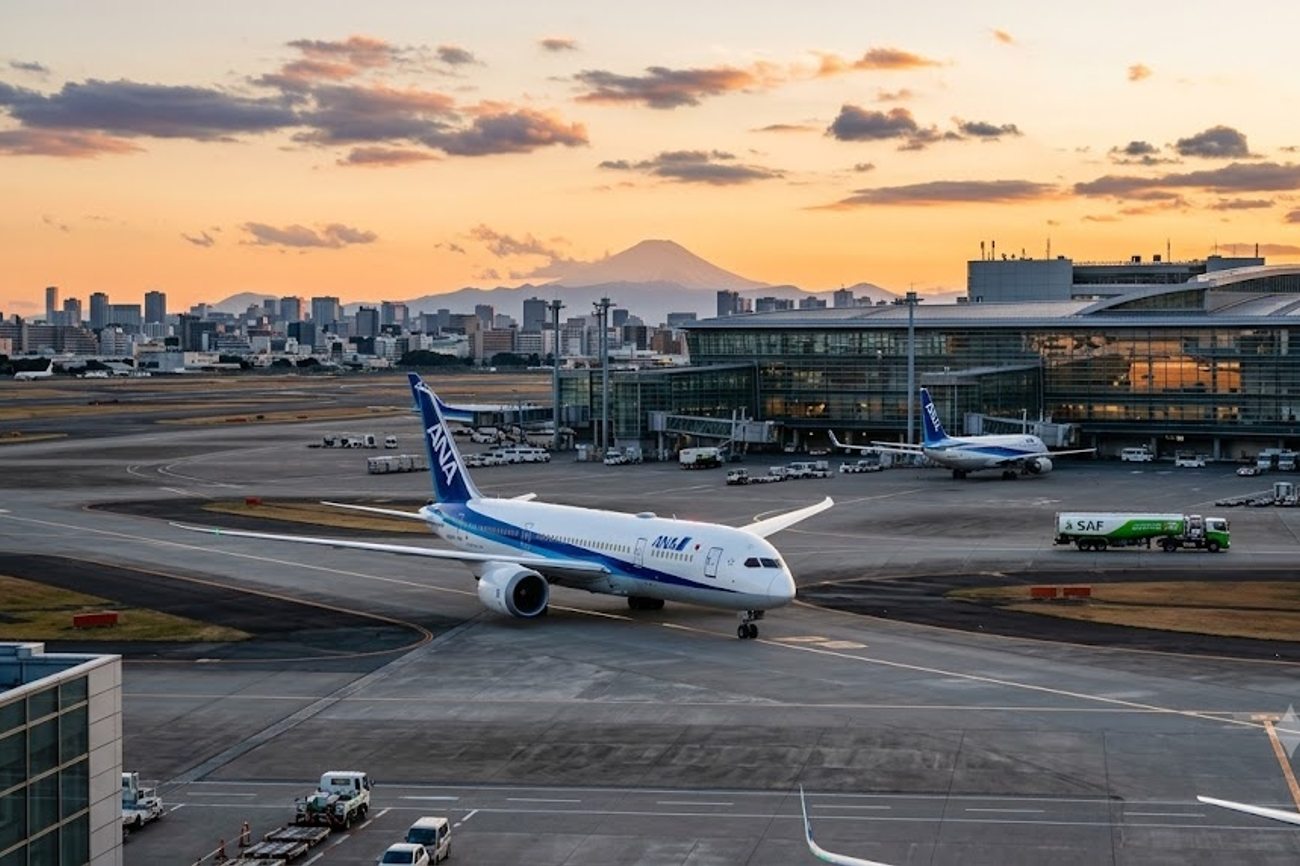
Image generated by AI
There is a restructuring of the aviation scene in Asia as new changes in airspace conditions, passenger needs, growth of the infrastructure and the requirements of sustainability bring about new dynamics in connectivity in the region. Japan, Singapore, India, Vietnam, and Malaysia are enhancing their aviation links through international flights, smart airports, and sustainable aviation fuel. Aviation companies and airport operators are developing new networks to minimize dependence on intricate transfer points as well as gain access to new tourism and business destinations. Aircraft and airport expansion, new rules for cargo transport and the use of SAF are also driving this trend.
Structural Realignment Across Asian Aviation Corridors
A structural realignment of the commercial aviation landscape across the Asia-Pacific region is being driven by northern airspace closures, sovereign infrastructure overhauls, bilateral renegotiations, and statutory decarbonization mandates. Historically, long-haul passenger and cargo flows across East, South, and Southeast Asia were dependent on established hub-and-spoke transfer models centered at legacy megahubs. However, non-stop routings between Europe and East Asia have been forced to divert around Siberian airspace due to ongoing airspace restrictions across Northern Eurasia, resulting in extended flight times, increased fuel burn, and strained operating margins for legacy transit routes. In response, ultra-long-haul aircraft are being deployed, secondary airport networks are being adjusted, and customs frameworks are being updated by regional carriers and civil aviation authorities so that high-yield corporate connectivity can be protected and high-value belly-hold cargo flows can be secured.
The manner in which Asian aviation corridors are being adapted to geopolitical and environmental demands is highlighted by this transition. Yield management, fleet optimization, and targeted point-to-point connections are being prioritized by airlines and hub operators rather than the pursuit of unconstrained capacity recovery. In Japan, Tokyo’s dual-airport architecture has been re-engineered so that high-yield corporate point-to-point routes at Haneda are separated from transpacific-to-ASEAN transit flows at Narita. Concurrently, a transition from aggregate volume expansion toward sustainable transit operations is being undertaken by Singapore, through the establishment of distance-tiered sustainable aviation fuel levies and the deployment of regional low-cost carrier feeder routes into secondary Southeast Asian cities.
In South Asia, long-range widebodies and extended-range narrowbodies are being deployed by Indian carriers so that the market share of Gulf transit hubs can be challenged. Meanwhile, how spillover traffic from congested hubs is captured and high-value leisure tourism corridors are protected from network volatility is demonstrated by the development of Long Thanh International Airport in Vietnam and the point-to-point archipelagic networks in Malaysia.
Country / Gateway Primary Strategic Focus Regulatory and Operational Mechanism Target Industry Audience Japan & East Asia Airspace Avoidance & Premium Slot Differentiation Deployment of Airbus A350-1000 and Boeing 787-9 fleets; Haneda and Narita slot segmentation Airline Network Planners, Corporate Travel Management Companies (TMCs)
Japan is at the forefront of reshaping aviation corridors in Asia, with a focus on accelerating direct routes and smart hubs. The country's major airlines, such as Japan Airlines, are investing heavily in modernizing their fleets and expanding their networks, as can be seen on the Japan Airlines official website. This move is expected to increase connectivity and reduce travel times for passengers traveling to and from Japan. Singapore & Southeast Asia Statutory SAF Mandates & Regional LCC Feeder Logistics Distance-tiered SAF levies under CAAS statutory fund; Singapore Airlines-to-Scoot interline ticketing Tour Wholesalers, Airport Operators, Corporate MICE Planners India & South Asia Direct Long-Haul Pivot & Cargo Transshipment Reform Reformed sovereign transshipment policy; widebody and A321XLR direct international inductions Freight Forwarders, Corporate Travel Buyers, Airline Commercial Directors Vietnam & Mekong Region Transit Overflow Capture & Dual-Hub System Creation Rollout of Long Thanh International Airport (LTK); Bilateral Air Service Agreement expansion Inbound Tour Operators, Hotel Asset Developers, Regional Tourism Boards Malaysia & Archipelago Secondary Gateway Airlift & Network Buffering Direct East Asian international flights to Kota Kinabalu and Kuching; narrowbody-widebody balancing Resort Asset Managers, Regional DMOs, Eco-Tourism Operators
The development of smart hubs is also a key aspect of Asia's aviation transformation, with airports such as Singapore Changi Airport leading the way in terms of innovation and efficiency. Passengers can expect a seamless travel experience with the implementation of automated check-in and baggage handling systems, as outlined on the Changi Airport Group website. Additionally, the airport's commitment to sustainability and reducing carbon emissions is a major draw for environmentally conscious travelers. Japan and East Asia: Dual-Airport Segmentation and Airspace Avoidance Economics
The cost structures of routes connecting Europe, North America, and East Asia have been permanently altered by extended airspace restrictions across Northern Eurasia. For Japanese legacy carriers, including Japan Airlines (JAL) and All Nippon Airways (ANA), southern or polar bypass routings are necessitated to avoid Siberian airspace, which leads to additional flight hours on European sectors and heightened operational fuel burn. To offset these elevated operating costs, the deployment of fuel-efficient, high-premium widebody flagships—led by the Airbus A350-1000 and Boeing 787-9—has been accelerated by network planners.
A dense premium-cabin seating configuration is relied upon for the operational deployment of the Airbus A350-1000 on flagship sectors, such as Tokyo Haneda to London Heathrow and Haneda to New York. Because a large share of cabin floor area is allocated to First and Business Class suites, the seat-mile revenues required to absorb the fuel and crew costs of extended routings are generated. Concurrently, the commercial separation between Tokyo’s two primary airports has been reinforced by the Ministry of Land, Infrastructure, Transport and Tourism (MLIT):
Tokyo Haneda (HND)
Optimized for high-yielding direct corporate travel. Prime business routes are prioritized for daytime slot allocations, affording corporate passengers direct access to downtown Tokyo while supporting business travel contracts that require convenient departures.
Tokyo Narita (NRT)
Positioned as the primary transpacific connecting node between North America and secondary Asian markets. Utilizing Boeing 787-8 and 787-9 aircraft, North American gateways (such as Chicago, San Diego, and Seattle) are linked with secondary South and Southeast Asian destinations (including Taipei, Bengaluru, and Ho Chi Minh City), while low-cost long-haul operations like Zipair Tokyo and dedicated air cargo freighters are supported.
The transition to Sustainable Aviation Fuels (SAF) is another critical component of Asia's aviation reshaping, with countries such as South Korea taking a proactive approach to reducing their carbon footprint. The Korean government has set ambitious targets for SAF adoption, as detailed on the Ministry of Land, Infrastructure and Transport website. As a result, tourists visiting South Korea can expect to see a significant reduction in emissions from aviation, making their travel experience more sustainable and environmentally friendly.
Osaka Kansai (KIX)
Positioned as the regional commercial anchor for Western Japan, secondary international passenger demand and inbound tourism are absorbed while operations are conducted as a high-throughput express airfreight node.
Corporate travel procurement is directly influenced by this dual-hub segmentation. Corporate rate agreements are being renegotiated by Corporate Travel Management Companies (TMCs) to guarantee premium seats on Haneda routes, with higher contracted fares being accepted in exchange for non-stop connectivity and time-sensitive daytime slots. Concurrently, corporate Scope 3 emissions targets are complied with by corporate buyers through the verified lower fuel burn of modern A350-1000 and 787-9 fleets, as carbon emissions per passenger-kilometer are heightened by extended flight paths.
Singapore and Southeast Asia: Statutory SAF Mandates and Regional Feeder Networks
Environmental mandates are being introduced by the Civil Aviation Authority of Singapore (CAAS) under the Civil Aviation Authority of Singapore (Amendment) Act, through which a statutory Sustainable Aviation Fuel (SAF) Levy is established. The levy is designated for all origin-destination passengers and general or business aviation flights departing Singapore, with application to issued tickets and departing services. Following industry consultations, the levy for departing air cargo was deferred to allow additional time for freight forwarders and logistics operators to build int
FAQ: Asia Reshapes Aviation Corridors as Japan 2026
What new routes can I expect in 2026? New direct flights connect Japan to Southeast Asia and India.
How will Smart Hubs improve my travel? Smart Hubs will offer faster, more efficient check-in and boarding.
What is SAF and how does it impact me? Sustainable Aviation Fuel reduces carbon emissions, making flights greener.
Will fares increase with these changes? Fares may remain competitive due to increased route options and efficiency.
Related Travel Guides
- Australia Boosts Regional Tourism As Jetstar Expands Direct Sunshine Coast Cairns Air Connectivity Until 2027
- US DOT Flight Delay Rule Excludes 10 Disruptions, Narrowing Compensation Options for Travellers From October 19
- Turkey Transforms Istanbul Airport Into Europe’s Most Exciting Long Layover Experience In 2026
Disclaimer
This article is for informational and educational purposes only. It does not constitute legal, financial, or professional advice. While we strive to provide accurate and up-to-date information, travel policies, regulations, and conditions change rapidly. Always verify information with official sources before making travel decisions. Nomad Lawyer makes no representations about the accuracy, reliability, completeness, or suitability of the information provided. Readers should consult qualified professionals for advice specific to their circumstances. The views expressed in this article are those of the author and do not necessarily reflect the views of Nomad Lawyer.
Preeti Gunjan
Contributor & Community Manager
A passionate traveller and community builder. Preeti helps grow the Nomad Lawyer community, fostering engagement and bringing the reader experience to life.
Learn more about our team →