
Asia’s Mega-Airport Race: Delhi, Bangkok, and Singapore Target 873 Million Passenger Capacity
Asia-Pacific airports are expanding to handle 873 million passengers. Delhi, Bangkok, and Changi lead a massive infrastructure surge to meet 2044 demand.

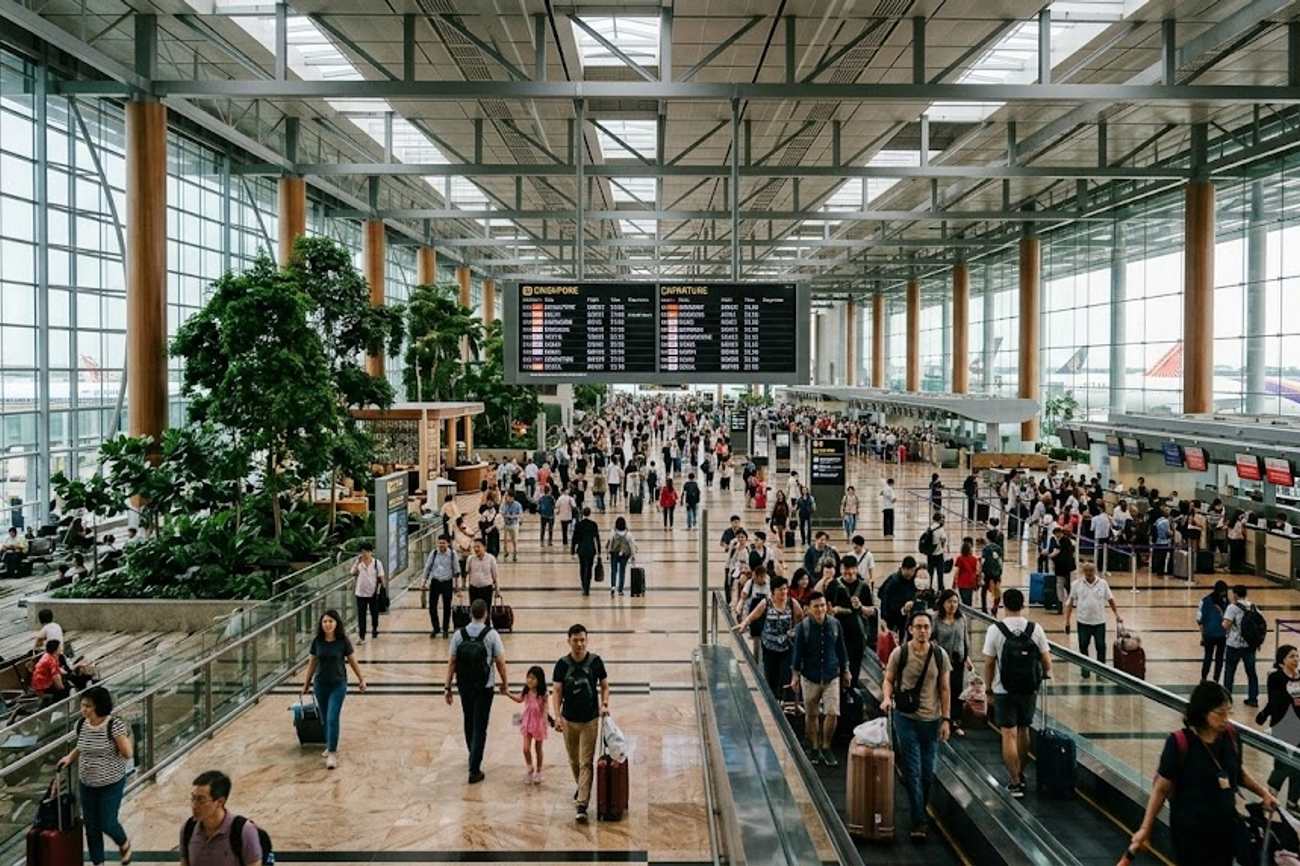
Image generated by AI
Asia-Pacific Aviation Infrastructure Enters Hyper-Growth Phase
The landscape of Asian aviation is undergoing a fundamental transformation as regional powers compete to establish the world's most dominant transit hubs. This is no longer a simple matter of adding gates or enlarging lounges; it is a strategic battle for connectivity, digital integration, and the ability to absorb a tidal wave of passenger demand.
Industry data indicates that the Asia-Pacific region is poised to account for 41% of all global passenger growth over the next two decades. According to IATA, passenger volumes in the region are expected to climb from 1.7 billion in 2024 to a staggering 4.1 billion by 2044. To sustain this 3.8% compound annual growth rate, governments are committing to a massive capital expenditure program, carving out a significant portion of a projected US$2.4 trillion global aviation investment through 2040.
This expansion is driven by real-time momentum. In 2025, Asia-Pacific passenger traffic surged by 7.8%, with international travel seeing a 10.9% increase. With a further 7.3% growth projected for 2026, the pressure on existing infrastructure has reached a breaking point, necessitating the "mega-airport" strategy.
Strategic Capacity Targets for Regional Hubs
The current development cycle is focused on "handling capacity"—the maximum number of passengers an airport can physically process—rather than immediate traffic forecasts. This distinction is vital, as it allows infrastructure to lead demand, ensuring that airports do not become bottlenecks for economic growth.
Several gateways are now targeting the 100-million-passenger milestone. Delhi and Bangkok are leading the charge with targets of 150 million each, while Singapore’s Changi is aiming for 140 million. Other significant expansions are underway in Kuala Lumpur, Manila, Navi Mumbai, and Tokyo.
| Airport | Long-term capacity | Development route | Target horizon |
|---|---|---|---|
| Delhi | 150 million | Existing airport expansion | 2033 |
| Bangkok Suvarnabhumi | 150 million | Existing airport expansion | 2033 |
| Singapore Changi | 140 million | Changi East expansion | Mid-2030s |
| Kuala Lumpur | 126 million | Long-term expansion | Long term |
| New Manila | 97 million | Greenfield airport | 2035 |
| Navi Mumbai | 90 million | Greenfield airport | 2036 |
| Tokyo Haneda | 90 million | Capacity enhancement | 2026 |
Delhi Scales Up for India’s Aviation Explosion
Delhi has emerged as one of the most critical nodes in the global aviation network. In financial year 2025, the airport processed 79.26 million passengers, a significant jump from the 73.67 million recorded the previous year. Currently operating with a capacity of roughly 100 million passengers, the hub serves 66 airlines connecting to 153 global destinations.
The leap to 150 million is a massive undertaking because Delhi is expanding an already saturated site. The Phase 3A expansion alone required a capital expenditure of approximately ₹12,169 crore, including construction interest. This phase, which included the expansion of Terminal 1, has already been completed and capitalized.
With over 483,000 aircraft movements recorded in financial year 2025 and four active runways, Delhi's goal is to transform raw capacity into improved schedule flexibility and a broader array of international direct routes.
Bangkok’s Multi-Phase Hub Strategy
Thailand is pursuing a phased growth model centered on Suvarnabhumi Airport. The development framework has evolved through several stages, moving from an initial 45-million-passenger capacity toward a long-term target of 150 million.
The current fifth phase of development focuses on adding new terminals and runway infrastructure. A key component of this strategy is the integration of airport-rail and road connections to ensure that the surge in passengers does not paralyze ground transport.
Reports from Airports of Thailand (AOT) show that the broader network is already seeing high volumes, with six major airports handling nearly 126 million passengers in 2025. AOT has set a network-wide target of 150 million passengers by 2027, though this differs from the specific 150-million-passenger capacity goal for Suvarnabhumi alone.
Singapore’s Integrated Model at Changi East
Singapore is redefining the mega-hub by focusing on systemic integration rather than just size. The centerpiece of this effort is the Changi East project, a 1,080-hectare development that includes the new Terminal 5 (T5).
The first phase of T5 is engineered to handle 50 million passenger movements annually and is slated for operation by the mid-2030s. This follows a period of strong recovery, with Changi handling 68.4 million passengers in financial year 2024/25, surpassing its pre-pandemic peaks.
Unlike traditional expansions, T5 will utilize a highly automated model. Automated people movers will link facilities, and a centralized ground transport center will unify rail, bus, and taxi services. Coupled with a three-runway system and expanded cargo capabilities, Changi is prioritizing the "passenger experience" over raw numbers.
The Connectivity Challenge in Kuala Lumpur
Kuala Lumpur is utilizing its scale to test the limits of regional connectivity. In 2025, KLIA handled 63.3 million passengers, positioning it as a key competitor in the Southeast Asian market. The long-term goal of 126 million passengers represents a strategic move to capture more transit traffic between Europe, Australia, and the rest of Asia.
Why This Matters: The Impact on the Global Traveler
For the average traveler, this infrastructure race is not about statistics—it is about the quality of the journey. The shift toward "mega-airports" creates several real-world implications:
1. Reduced Friction, Higher Volume: The move toward automated people movers (as seen in Singapore) and expanded terminal footprints (as seen in Delhi) means that while airports will be more crowded, the time spent in queues should theoretically decrease through better technology.
2. Route Proliferation: As capacity increases from 100 million to 150 million, airlines gain the "slot" availability to launch new direct routes. Travelers can expect fewer layovers and more competitive pricing as more carriers vie for space in these hubs.
3. The Ground Transport Bottleneck: The greatest risk to these projects is the "last mile." If a terminal can handle 150 million people but the rail and road links cannot, the airport becomes a gilded cage. The success of Bangkok and Singapore depends entirely on their ability to move passengers out of the airport as fast as they arrive.
4. Economic Shifts: From a logistical standpoint, these airports are becoming "Aerotropolises"—cities centered around aviation. This means more business hotels, warehouses, and commercial zones will emerge around these hubs, shifting the economic center of gravity in cities like Delhi and Bangkok.
Related Travel Guides
Disclaimer
This article is for informational and educational purposes only. It does not constitute legal, financial, or professional advice. While we strive to provide accurate and up-to-date information, travel policies, regulations, and conditions change rapidly. Always verify information with official sources before making travel decisions. Nomad Lawyer makes no representations about the accuracy, reliability, completeness, or suitability of the information provided. Readers should consult qualified professionals for advice specific to their circumstances. The views expressed in this article are those of the author and do not necessarily reflect the views of Nomad Lawyer.
Kunal K Choudhary
Co-Founder & Contributor
A passionate traveller and tech enthusiast. Kunal contributes to the vision and growth of Nomad Lawyer, bringing fresh perspectives and driving the community forward.
Learn more about our team →