
Asia Aviation Disruption Alert: Over 2,166 Delays and 256 Cancellations Snarl Delhi, Jakarta, Riyadh, and 32 Regional Hubs
Compounding monsoons, typhoons, wildfire haze, and Middle East airspace detours spark 2,166 delays and 256 cancellations across 34 Asian airports.

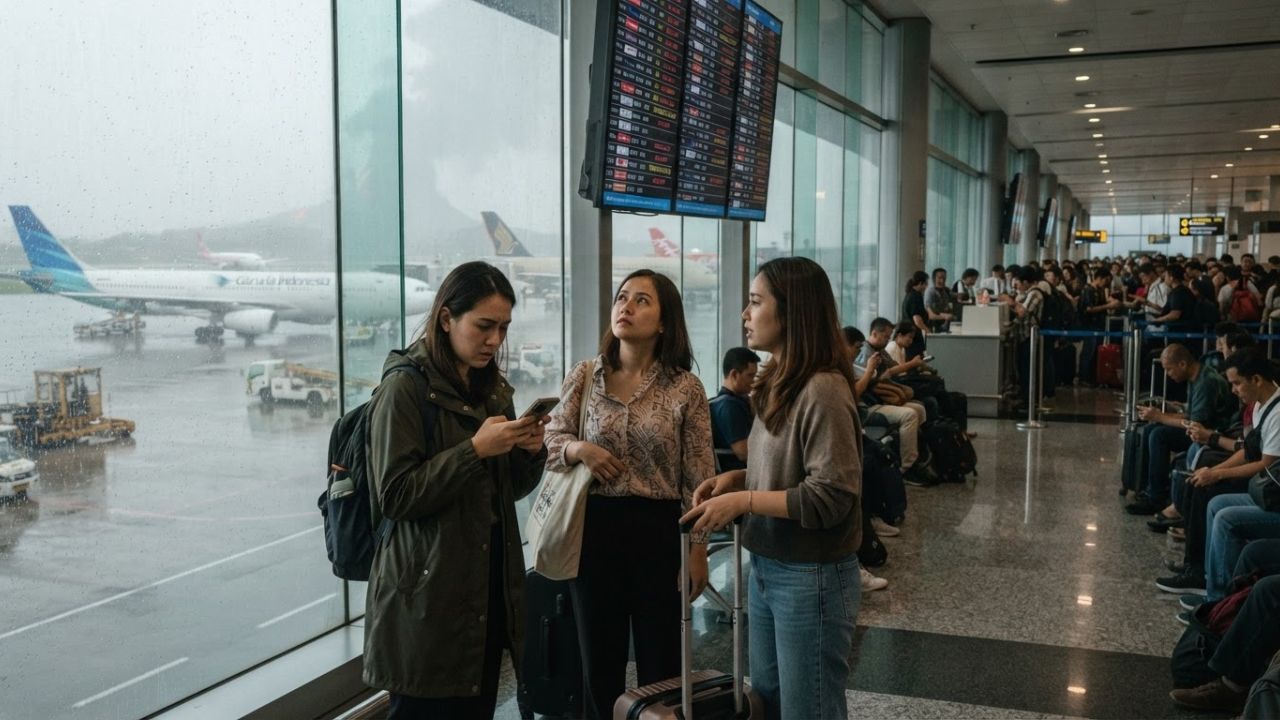
Image generated by AI
Confronting a compounding barrage of severe monsoon storms, active Pacific typhoons, dense wildfire haze, and Middle East airspace reroutings, Asian aviation networks experienced widespread operational gridlock on 3 September 2026, recording 2,166 delays and 256 cancellations across 34 major airports.
Systemic Environmental and Geopolitical Bottlenecks
Aviation transit across the Asian continent faced severe logistical friction on 3 September 2026. According to verified real-time flight tracking data logged at 2:58 PM ET (10:58 PM GST), regional commercial carriers and airport ground operators recorded a cumulative 2,166 flight delays and 256 flight cancellations.
Rather than stemming from a single isolated incident, the disruptions reflect overlapping environmental crises and geopolitical corridor closures:
- South Asian Monsoon Depressions: Intense localized cloudbursts and standing tarmac water triggered extended ground stops across northern and western India.
- East Asian Typhoon Bands: Strong crosswinds and gale-force squalls traversing coastal China, Taiwan, and southern Japan forced safety diversions and displaced aircraft crews far out of position.
- Southeast Asian Wildfire Haze: Smoldering forest fires across Indonesia generated dense particulate smoke, slashing runway visual range (RVR) below safe operating minimums at secondary and primary archipelago airfields.
- Middle East Airspace Detours: Persistent geopolitical restrictions across critical western Asian corridors forced westbound intercontinental flights onto circuitous, fuel-heavy bypass routes, delaying widebody turnarounds into subsequent hub rotations.
[Asian Aviation Operational Disruption Snapshot: 3 September 2026]
• Total Network Delays:        2,166 Flights
• Total Network Cancellations:   256 Flights
• Heavily Impacted Gateways:    34 Regional & Hub Airports
• Primary Peak Chokepoint:     Indira Gandhi International (DEL) - 326 Delays
• Secondary Peak Chokepoint:   Soekarno-Hatta International (CGK) - 232 Delays
• Most Disrupted Carrier:      IndiGo (289 Delays / 14% of Total Schedule)
| Region & Airport Hub | IATA Code | Scheduled Delays | Cancellations | Primary Disruption Factor |
|---|---|---|---|---|
| Delhi, India | DEL | 326 | 10 | Torrential monsoon rain & tarmac drainage holds |
| Jakarta, Indonesia | CGK | 232 | 12 | Dense wildfire smoke & reduced visibility |
| Guangzhou, China | CAN | 134 | Varies | Typhoon rainbands & southern flow control |
| Osaka (Itami), Japan | ITM | 128 | Varies | Regional squalls & airspace congestion |
| Mumbai, India | BOM | 120 | Varies | Monsoon cloudbursts & runway turnaround slows |
| Jeddah, Saudi Arabia | JED | 112 | Varies | Airspace corridor rerouting & bank congestion |
| Beijing Capital, China | PEK | 103 | Varies | Ground delay programs & northern weather holds |
| Makassar, Indonesia | UPG | 99 | Varies | Regional smoke haze & delayed feeder aircraft |
| Riyadh, Saudi Arabia | RUH | 96 | Varies | Corridor slot management & turnaround delays |
| Chengdu Tianfu, China | TFU | 44 | 20 | Severe localized convective storms |
| Kagoshima, Japan | KOJ | Varies | 21 | High crosswinds from active coastal typhoon |
South Asia and the Gulf: Indian Hubs and Middle Eastern Corridors
India’s primary aviation gateways absorbed the highest individual delay volumes on the continent. Indira Gandhi International Airport (DEL) in Delhi emerged as the central transit chokepoint, reporting an astonishing 326 flight delays alongside 10 outright cancellations. Concurrently, Chhatrapati Shivaji Maharaj International Airport (BOM) in Mumbai registered 120 flight delays, as heavy monsoon fronts saturated western coastal approach paths.
Among Indian carriers, low-cost powerhouse IndiGo logged 289 flight delays, representing 14% of its entire daily domestic and international schedule. National carrier Air India recorded 147 delays, struggling to synchronize connecting banks between long-haul flights from North America and domestic feeder routes.
Further west in Saudi Arabia, King Abdulaziz International Airport (JED) in Jeddah accumulated 112 delays, while King Khalid International Airport (RUH) in Riyadh logged 96 delays. National carrier Saudia managed 78 delayed departures and 24 flight cancellations, driven largely by schedule re-alignments necessitated by extended flight times around restricted airspace.
Southeast Asia: Indonesian Smoke Haze Strains Archipelago Flight Paths
Dense wildfire smoke blanketing portions of Sumatra and Kalimantan severely degraded visual thresholds across Indonesia. At Soekarno-Hatta International Airport (CGK) serving Jakarta, flight operations were heavily throttled, producing 232 delays and 12 cancellations.
In eastern Indonesia, Sultan Hasanuddin International Airport (UPG) in Makassar logged 99 delays, as aircraft awaiting clearance in Jakarta missed subsequent departure windows. Indonesian carrier Batik Air faced severe operational strain, recording 89 flight delays and 19 cancellations, stranding thousands of regional island-hopping passengers.
East Asia: Convective Typhoons Ground Coastal Japan and China
Across China and Japan, active typhoon paths and summer convective fronts disrupted major international gateways:
- China’s Megacities: Guangzhou Baiyun International Airport (CAN) logged 134 delays, while Beijing Capital International Airport (PEK) posted 103 delays. Inland, Chengdu Tianfu International Airport (TFU) recorded China’s steepest operational disruption rate, canceling 20 flights and delaying 44 others.
- Chinese Carrier Impact: China Eastern Airlines was compelled to delay 221 flights and cancel 28, while Air China canceled 37 departures and delayed an additional 95 flights.
- Japanese Island Disruption: At Osaka International Airport (Itami - ITM), operations were hindered by 128 delays. In southern Kyushu, regional Kagoshima Airport (KOJ) reported 21 cancellations.
- Regional Fleet Groundings: Flag carrier All Nippon Airways (ANA) suffered 120 delays, its regional arm ANA Wings posted 113 delays, and regional operator Japan Air Commuter canceled 34 flights—erasing an extraordinary 49% of its total operational schedule for the day.
Practical Contingency Strategies for Stranded Travelers
For international travelers caught in cascading delays across Asia, proactive management is necessary to avoid prolonged terminal encampments:
- Confirm Operational Status Before Leaving Accommodations: Do not travel to crowded airport terminals like Delhi Terminal 3 or Jakarta Terminal 2 without verifying that your specific aircraft has landed or is in transit. Terminal concourses are experiencing severe seating shortages and long security lines.
- Bypass Frontline Terminal Queues with Mobile Tools: Avoid joining several-hour customer service queues at terminal ticket counters. Open your airline’s mobile application or official desktop portal immediately to select alternative rebooking routings.
- Leverage International Call Centers: When Asian domestic customer service telephone lines are inundated with busy signals, place an international VoIP call (using Skype or mobile Wi-Fi calling) to the airline's North American, European, or Australian support desks. English-speaking agents in alternate time zones typically operate with minimal queue wait times.
- Document Out-of-Pocket Expenses for Insurance: Because delays triggered by severe monsoons, typhoons, and volcanic or wildfire smoke are classified under aviation maritime law as "acts of God" (force majeure), airlines are often not legally obligated to provide complimentary hotel accommodations or meal vouchers. Retain all itemized dining, lodging, and ground transit receipts to file comprehensive claims with your private travel insurance policy.
Local Insider Tips for Navigating Impacted Hubs
- At Delhi (DEL): Pivot to Rail Connections for Regional Travel: If your domestic flight from Delhi to neighboring cities (such as Jaipur, Chandigarh, or Agra) is canceled, avoid waiting at the airport. Board the high-speed Delhi Airport Metro Express from Terminal 3 directly to New Delhi Railway Station (NDLS) in 19 minutes, where punctual, air-conditioned Vande Bharat Express trains can get you to your destination without weather holds.
- At Jakarta (CGK): Avoid Expressway Traffic Jams: Severe airport congestion routinely spills onto the Professor Dr. Sedyatmo toll road. Take the dedicated Airport Railink train directly from Terminal 1, 2, or 3 via the automated Skytrain connector to reach central stations (BNI City / Manggarai) in 45 minutes flat.
- At Guangzhou (CAN): Utilize High-Speed Rail Detours: During typhoon ground stops in southern China, long-distance domestic travelers can connect from Baiyun Airport via Metro Line 3 to Guangzhou South Railway Station, boarding 300 km/h bullet trains north toward Wuhan, Changsha, or Shanghai.
Aviation Outlook: Building Weather Resilience in Asian Airspace
The staggering total of 2,166 delays and 256 cancellations across 34 airports underlines the delicate equilibrium of modern Asian commercial flight. As climate shifts intensify the frequency of monsoon surges, tropical typhoons, and environmental smoke hazards, civil aviation authorities are accelerating investments in advanced satellite navigation systems, automated tarmac surface management, and intermodal high-speed rail integration to keep the continent moving safely.
Frequently Asked Questions
How many flights were delayed and canceled across Asia on 3 September 2026?
Flight tracking records from FlightAware documented 2,166 flight delays and 256 cancellations across 34 major airports in Asia, driven by extreme weather, wildfire smoke, and airspace restrictions.
Which Asian airport experienced the highest volume of flight delays?
Delhi’s Indira Gandhi International Airport (DEL) in India recorded the highest individual delays, with 326 flights delayed and 10 flights canceled.
Which airlines experienced the most severe schedule disruptions?
In India, IndiGo logged 289 delays (14% of its daily operations) and Air India had 147 delays. In China, China Eastern delayed 221 flights and canceled 28, while Japan Air Commuter wiped out 49% of its daily flights with 34 cancellations.
Are airlines legally required to provide hotel rooms during weather cancellations?
Under most international aviation regulations, weather disruptions and environmental hazards are treated as force majeure ("acts of God"). While airlines must rebook passengers on the next available flight, complimentary hotel stays and meals are often discretionary rather than legally mandated.
What causes flight reroutings between Asia and Europe?
Geopolitical airspace closures across parts of the Middle East have forced international carriers to take longer southern or northern detour paths, increasing flight times, requiring extra fuel, and misaligning aircraft turnaround schedules across Asian hubs.
Related Travel Guides
Disclaimer
This article is for informational and educational purposes only. It does not constitute legal, financial, or professional advice. While we strive to provide accurate and up-to-date information, travel policies, regulations, and conditions change rapidly. Always verify information with official sources before making travel decisions. Nomad Lawyer makes no representations about the accuracy, reliability, completeness, or suitability of the information provided. Readers should consult qualified professionals for advice specific to their circumstances. The views expressed in this article are those of the author and do not necessarily reflect the views of Nomad Lawyer.
Raushan Kumar
Founder & Lead Developer
Full-stack developer with 11+ years of experience and a passionate traveller. Raushan built Nomad Lawyer from the ground up with a vision to create the best travel and law experience on the web.
Learn more about our team →