
Asia Aviation Network Faces Major Flight Delays and Cancellations
Asia's aviation network logs 3,605 delays and 182 cancellations, disrupting travel across major gateways including Hong Kong, Tokyo Haneda, and Shanghai.

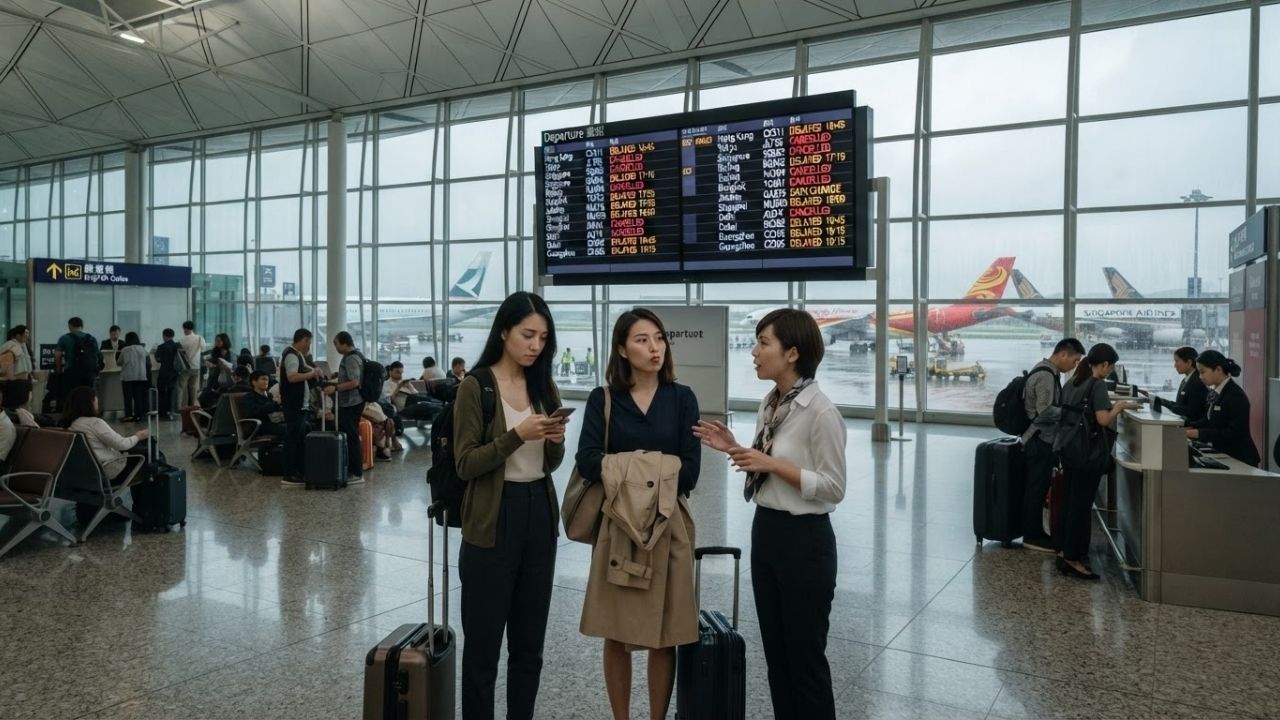
Image generated by AI
Asia's aviation network recorded 3,605 delays and 182 cancellations on August 28, 2026, causing major schedule disruptions at major transit hubs. Widespread operational constraints, seasonal weather challenges, and airport congestion impacted passengers traveling through China, Japan, Indonesia, India, the UAE, and Hong Kong.
The Local Trend Revealed
Asian aviation corridors are facing compounding schedule interruptions as high passenger demand matches seasonal weather disruptions and regional capacity limits. Monitored by the Civil Aviation Administration of China (CAAC) and the Japan Civil Aviation Bureau (JCAB), these airport and airline statistics outline the disruption recorded at 2:46 pm ET:
- Regional Airport Disruption Matrix:
- Tokyo Haneda (HND): 465 delays and 4 cancellations.
- Shanghai Pudong (PVG): 451 delays and 31 cancellations.
- Guangzhou Baiyun (CAN): 390 delays and 10 cancellations.
- Dubai International (DXB): 337 delays and 7 cancellations.
- Chengdu Tianfu (TFU): 303 delays and 8 cancellations.
- Jakarta Soekarno-Hatta (CGK): 226 delays and 18 cancellations.
- Beijing Capital (PEK): 188 delays and 5 cancellations.
- Hong Kong International (HKG): 179 delays and 7 cancellations.
- Chengdu Shuangliu (CTU): 152 delays and 11 cancellations.
- Beijing Daxing (PKX): 147 delays and 7 cancellations.
- Delhi Indira Gandhi (DEL): 141 delays and 9 cancellations.
- Xi'an Xianyang (XIY): 137 delays and 7 cancellations.
- King Khalid Riyadh (RUH): 84 delays and 2 cancellations.
- Sultan Hasanuddin Makassar (UPG): 78 delays and 6 cancellations.
- Sharjah (SHJ): 77 delays and 7 cancellations.
- Lhasa Gonggar (LXA): 55 delays and 4 cancellations.
- Taiyuan Wusu (TYN): 48 delays and 4 cancellations.
- Wenzhou (WNZ): 46 delays and 33 cancellations.
- Tianjin Binhai (TSN): 43 delays and 5 cancellations.
- Zhanjiang Wuchuan (ZHA): 19 delays and 4 cancellations.
- Guilin Liangjiang (KWL): 24 delays and 5 cancellations.
- Abha Regional (AHB): 15 delays and 2 cancellations.
- Airline Delays and Cancellations:
- China Eastern: 565 delays and 72 cancellations (highest cancellations).
- China Southern: 417 delays and 7 cancellations.
- Air China: 324 delays and 27 cancellations.
- Japan Airlines (JAL): 281 delays and 1 cancellation.
- XiamenAir: 210 delays and 11 cancellations.
- Sichuan Airlines: 210 delays and 4 cancellations.
- Spring Airlines: 175 delays and 1 cancellation.
- Shenzhen Airlines: 174 delays and 3 cancellations.
- All Nippon Airways (ANA): 169 delays and 1 cancellation.
- IndiGo: 157 delays and 4 cancellations.
- China Express: 132 delays and 11 cancellations.
- FlyDubai: 115 delays and 4 cancellations.
- Hainan Airlines: 104 delays and 3 cancellations.
Local Community & Environmental Value
For the traveler, the real benefit of supporting green local transport is protecting resident communities. Choosing to dine at family-run dim sum shops or traditional noodle bars inside or near airport neighborhoods (rather than major global fast-food chains) keeps travel spending within host communities.
Environmental protection is advanced by selecting low-carbon transport networks. Travelers in Japan and China can utilize high-speed rail lines (such as the Tokaido Shinkansen or China's national high-speed train grid) for regional travel instead of short-haul domestic flights, significantly reducing carbon emissions. Boarding electric airport monorails or Hong Kong's electric Airport Express minimizes passenger transit footprint, satisfying guidelines monitored by the Airport Authority Hong Kong (AAHK).
Visitor Insider Tips for Navigating Asian Airport Transit
Travel and transit specialists recommend the following practices when traveling through Asian hubs:
- Use Haneda's Observation Deck: If delayed at Tokyo Haneda (HND), head to the open-air observation deck on the 5th floor of Terminal 3. It offers views of Tokyo Bay and Mount Fuji on a clear day, away from departure gate crowds.
- Explore Edo Ko-ji in Tokyo: Skip the generic retail shops. Visit the Edo Ko-ji dining village on Haneda Terminal 3's 4th floor to experience reconstructed Edo-period architecture and sample local matcha tea.
- Observe the Off-Peak Window: Travel through East Asia during the autumn months of October and November. The weather is dry and mild (15°C to 22°C), avoiding summer typhoons (July to September) and major holiday crowds like Golden Week.
- Sample Regional Culinary Specialties:
- In Tokyo: Try a hot bowl of Tonkotsu Ramen at airport noodle stalls.
- In Hong Kong: Taste steamed Har Gow (shrimp dumplings) paired with hot jasmine tea.
- Observe Transit and Dining Etiquette: In Tokyo, stand on the left of escalators, leaving the right side clear for walkers. In Hong Kong, purchase and use an Octopus card for fast contactless payments at airport stores and transit gates.
- Utilize High-Speed Rail Alternatives: If domestic flights are canceled in China or Japan, check ticket availability for high-speed train alternatives, which depart frequently and operate with high punctuality.
Tourism Outlook
The long-term impact of rising regional flight delays is the acceleration of intermodal air-to-rail booking systems. By linking airport ticketing platforms directly with high-speed rail schedules in countries like China and Japan, travel planners aim to offer automatic land-based rebooking options during weather disruptions, helping stabilize Asia's regional travel sector.
FAQ: Asia Aviation disruptions
How many delays and cancellations were logged across Asia? Asia's aviation network logged 3,605 delays and 182 cancellations on August 28, 2026, as recorded by FlightAware.
Which Chinese airport recorded the highest flight delays? Shanghai Pudong International Airport (PVG) recorded the highest delays in China, with 451 delays and 31 cancellations.
Which airline experienced the highest cancellation count? China Eastern recorded the highest airline disruptions, logging 565 delays and 72 cancellations.
What is the preferred off-peak travel window for East Asia? The preferred off-peak travel window is the autumn months of October and November, which avoids the summer typhoon season and peak holiday crowds.
Related Travel Guides
Disclaimer
This article is for informational and educational purposes only. It does not constitute legal, financial, or professional advice. While we strive to provide accurate and up-to-date information, travel policies, regulations, and conditions change rapidly. Always verify information with official sources before making travel decisions. Nomad Lawyer makes no representations about the accuracy, reliability, completeness, or suitability of the information provided. Readers should consult qualified professionals for advice specific to their circumstances. The views expressed in this article are those of the author and do not necessarily reflect the views of Nomad Lawyer.
Raushan Kumar
Founder & Lead Developer
Full-stack developer with 11+ years of experience and a passionate traveller. Raushan built Nomad Lawyer from the ground up with a vision to create the best travel and law experience on the web.
Learn more about our team →