
Asia Aviation Network Crisis 2026: 3,605 Delays and 182 Cancellations Hit Hong Kong and China
Asia's aviation network faces severe operational collapse with 3,605 delays and 182 cancellations impacting major hubs in China, Japan, and the UAE.

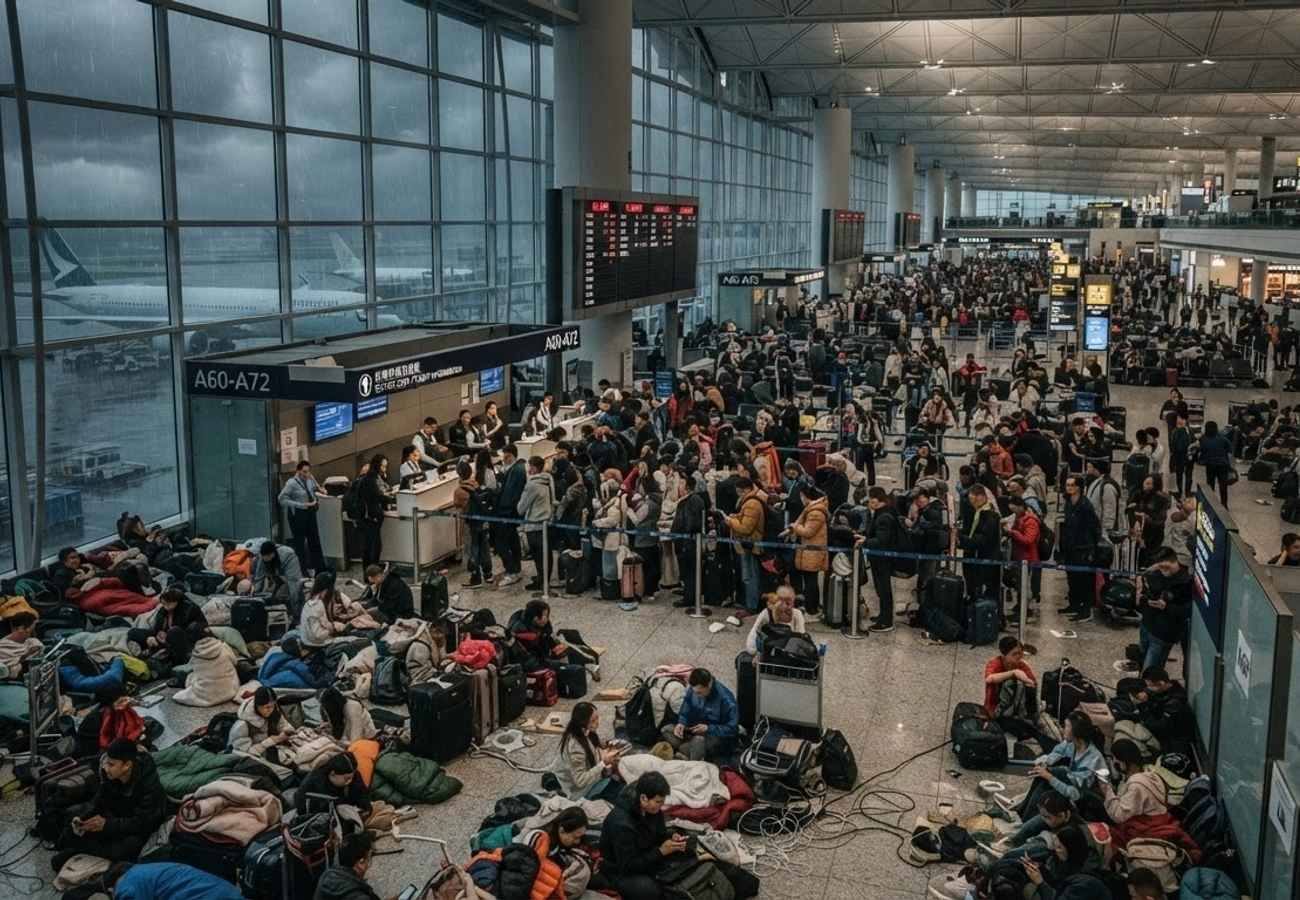
Image generated by AI
Asia’s aviation network is currently experiencing a systemic operational failure, recording 3,605 delays and 182 cancellations. The disruption is concentrated across East Asia and the UAE, paralyzing key transit hubs and creating a massive backlog for international travelers.
The current crisis is not isolated to a single region but is a widespread failure impacting China, Japan, India, Indonesia, and the UAE. Operational data indicates that a combination of severe weather, airport congestion, and systemic operational constraints has triggered a domino effect across the regional flight map.
Major gateways including Shanghai Pudong, Tokyo Haneda, and Hong Kong International are currently the primary bottlenecks. The scale of the disruption has extended beyond aviation, with reports of canceled train services in affected regions as passengers attempt to find alternative transport.
Regional Disruption Breakdown
The most acute pressure is centered in East Asia. China's aviation infrastructure is facing widespread instability, with multiple airports reporting critical levels of congestion.
China's Primary Hubs:
- Shanghai Pudong International: 451 delays, 31 cancellations.
- Guangzhou Baiyun International: 390 delays, 10 cancellations.
- Chengdu Tianfu International: 303 delays, 8 cancellations.
- Chengdu Shuangliu International: 152 delays, 11 cancellations.
Other Significant Chinese Impact Zones:
- Beijing Capital: 188 delays, 5 cancellations.
- Beijing Daxing: 147 delays, 7 cancellations.
- Xi’an Xianyang: 137 delays, 7 cancellations.
- Lhasa Gonggar: 55 delays, 4 cancellations.
- Taiyuan Wusu: 48 delays, 4 cancellations.
- Tianjin Binhai: 43 delays, 5 cancellations.
- Wenzhou: 46 delays, 33 cancellations.
- Guilin Liangjiang: 24 delays, 5 cancellations.
- Zhanjiang Wuchuan: 19 delays, 4 cancellations.
Outside of China, Tokyo Haneda International has emerged as one of the most delayed airports in Asia with 465 delays and 4 cancellations. Hong Kong International Airport reported 179 delays and 7 cancellations.
Other Regional Hubs:
- Dubai International (UAE): 337 delays, 7 cancellations.
- Jakarta Soekarno-Hatta (Indonesia): 226 delays, 18 cancellations.
- Indira Gandhi International (Delhi): 141 delays, 9 cancellations.
- Sharjah International (UAE): 77 delays, 7 cancellations.
- King Khalid International (UAE): 84 delays, 2 cancellations.
- Sultan Hasanuddin (Indonesia): 78 delays, 6 cancellations.
- Abha Regional (UAE): 15 delays, 2 cancellations.
Airline Operational Impact
The disruption has hit both full-service and low-cost carriers. China Eastern is currently the most impacted airline, suffering from a massive backlog of flights.
Carrier Disruption Statistics:
| Airline | Delays | Cancellations |
|---|---|---|
| China Eastern | 565 | 72 |
| China Southern | 417 | 7 |
| Air China | 324 | 27 |
| Japan Airlines | 281 | 1 |
| XiamenAir | 210 | 11 |
| Sichuan Airlines | 210 | 4 |
| Spring Airlines | 175 | 1 |
| Shenzhen Airlines | 174 | 3 |
| All Nippon Airways (ANA) | 169 | 1 |
| IndiGo | 157 | 4 |
| China Express Airlines | 132 | 11 |
| FlyDubai | 115 | 4 |
| Hainan Airlines | 104 | 3 |
Why This Matters: Industry Analysis
From a logistical perspective, the concentration of delays at Shanghai Pudong and Tokyo Haneda is catastrophic for regional connectivity. These airports do not just serve local traffic; they are the primary "spokes" for the entire Asia-Pacific network. When Haneda or Pudong stalls, it triggers a "knock-on" effect that disrupts flight crews and aircraft rotations thousands of miles away.
For travelers, the real impact is the collapse of the "tight connection." With 3,605 delays, the probability of missing a connecting flight in Hong Kong or Dubai is nearly certain for those arriving on delayed legs. Our analysis of the data suggests that the high cancellation rate at Wenzhou (33) relative to its delay count indicates a complete operational shutdown at smaller regional ports to prioritize hub traffic.
From an industry standpoint, this event highlights the fragility of the Asian aviation recovery. The simultaneous failure of multiple hubs suggests that current airport capacity cannot absorb even minor weather-related shocks without total systemic failure.
Forward Outlook
Expect a 48-to-72 hour recovery window. The backlog of passengers at hubs like Dubai and Shanghai will likely lead to hotel shortages and increased pressure on ground transportation. Airlines will likely prioritize long-haul international flights over short-haul domestic legs to clear the most expensive aircraft from the tarmac.
Passengers are advised to monitor flight status via airline apps rather than airport screens, as the latter often lag during high-volume disruptions. Those in China and Japan should prioritize high-speed rail for any domestic movement.
Aviation networks are only as strong as their weakest hub.
Related Travel Guides
Disclaimer
This article is for informational and educational purposes only. It does not constitute legal, financial, or professional advice. While we strive to provide accurate and up-to-date information, travel policies, regulations, and conditions change rapidly. Always verify information with official sources before making travel decisions. Nomad Lawyer makes no representations about the accuracy, reliability, completeness, or suitability of the information provided. Readers should consult qualified professionals for advice specific to their circumstances. The views expressed in this article are those of the author and do not necessarily reflect the views of Nomad Lawyer.
Raushan Kumar
Founder & Lead Developer
Full-stack developer with 11+ years of experience and a passionate traveller. Raushan built Nomad Lawyer from the ground up with a vision to create the best travel and law experience on the web.
Learn more about our team →