
Asia Aviation Crisis 2026: 3,786 Flights Delayed and 259 Cancelled Across Major Hubs
Severe weather and operational bottlenecks have triggered massive flight disruptions across Asia, with 3,786 delays and 259 cancellations impacting hubs from Tokyo to Dubai.

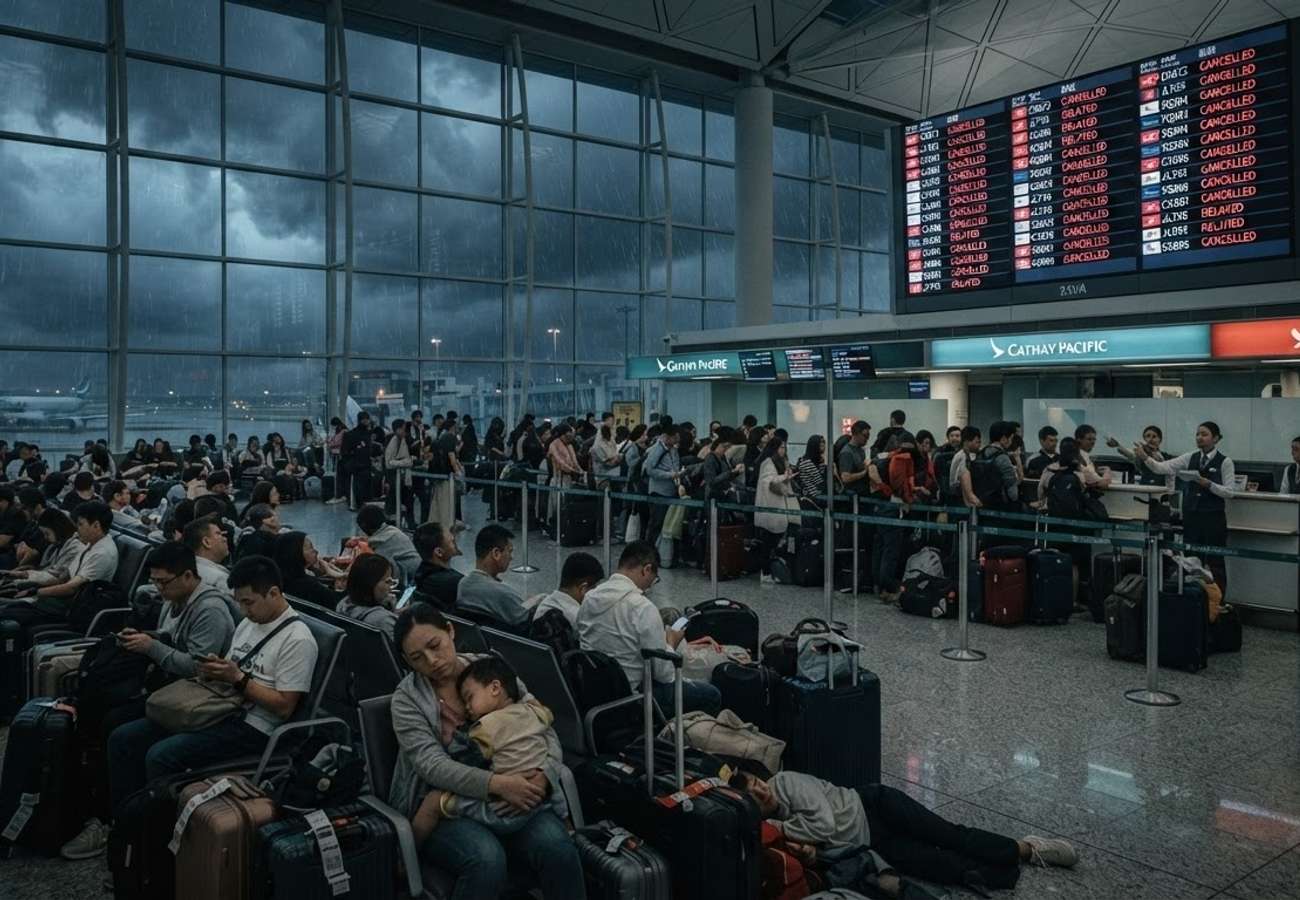
Image generated by AI
Severe weather and systemic operational failures have paralyzed air travel across Asia, resulting in 3,786 delays and 259 cancellations. From the hubs of China and Japan to the gateways of the UAE and Saudi Arabia, millions of passengers are facing significant itinerary shifts.
The current disruption is a convergence of extreme meteorological events and logistical pressures. Typhoon Saudel has emerged as a primary catalyst, sweeping across Okinawa and southwestern Japan before tracking westward toward the Chinese coast. This storm system has not only triggered heavy rainfall in northern and southern Taiwan but has also forced drastic schedule changes at Naha Airport and other regional nodes.
Beyond the weather, the industry is grappling with aircraft rotation issues, crew availability constraints, and airport capacity limits. These factors have combined to create a ripple effect across the East Asian and Middle Eastern aviation corridors.
High-Impact Airport Disruptions
The scale of the disruption is most evident in southern China and Southeast Asia. Shenzhen Bao’an International has emerged as the most impacted gateway, recording nearly 500 delays.
The following table details the disruption levels at the most affected international hubs:
| Airport | Delays | Cancellations |
|---|---|---|
| Shenzhen Bao’an Int’l (China) | 494 | 32 |
| Guangzhou Baiyun Int’l (China) | 387 | 8 |
| Jakarta-Soekarno-Hatta Int’l (Indonesia) | 287 | 14 |
| Tokyo Int’l Haneda (Japan) | 263 | 19 |
| Kuala Lumpur Int’l (Malaysia) | 245 | 3 |
| Dubai Int’l (UAE) | 230 | 1 |
| Singapore Changi (Singapore) | 155 | 2 |
| Fukuoka (Japan) | 140 | 36 |
| King Abdulaziz Int’l (Saudi Arabia) | 105 | 12 |
| King Khalid Int’l (Saudi Arabia) | 93 | 16 |
| Sharjah Int’l (UAE) | 73 | 9 |
| Naha (Japan) | 69 | 27 |
Other significant delays were noted at Beijing Capital, Shanghai Hongqiao, Kunming Changshui, Xiamen Gaoqi, and Chengdu Tianfu airports. In Saudi Arabia, regional airports including Abha (17 delays, 10 cancellations) and Gizan (8 cancellations) also reported operational failures.
Airlines Most Affected by Schedule Shifts
Chinese carriers have borne the brunt of the operational collapse, with China Eastern and China Southern reporting the highest volume of delays. However, Japanese and Middle Eastern carriers have seen a higher ratio of outright cancellations.
| Airline | Delays | Cancellations |
|---|---|---|
| China Eastern | 622 | 36 |
| China Southern Airlines | 465 | 10 |
| Batik Air | 99 | 15 |
| All Nippon (ANA) | 97 | 10 |
| Saudia | 58 | 26 |
| ANA Wings | 34 | 28 |
The data indicates that while China Eastern faces the largest volume of delays, ANA Wings and Saudia are experiencing more severe cancellation rates relative to their total flight volume.
Meteorological Drivers: Typhoon Saudel and Regional Rain
The aviation instability is closely tied to the movement of Typhoon Saudel. After impacting Okinawa and southwestern Japanese islands, the storm is currently crossing the East China Sea.
The atmospheric instability extends beyond Japan:
- Taiwan: The storm is passing north of the island, with heavy rainfall forecast for both northern and southern regions through Friday.
- China: Heavy rain is expected across southern provinces, compounding the delays seen in Shenzhen and Guangzhou.
- Vietnam: Multiple tropical systems are contributing to increased rainfall, further complicating regional flight paths.
Passenger Recovery Strategies
With network stability remaining volatile, travelers are advised to move from passive monitoring to active itinerary management.
- Pre-Departure Verification: Always check real-time flight status via the airline app before departing for the airport to avoid unnecessary transit.
- Documentation: Maintain a digital and physical folder of all booking confirmations and receipts for expenses incurred due to delays, as these are essential for insurance claims.
- Proactive Rebooking: Contact airlines immediately upon receiving a cancellation notice; waiting for airport staff often results in longer wait times for alternative flights.
- Connection Audits: If a primary leg is delayed, immediately verify the status of connecting flights to determine if a total itinerary restructure is required.
Travelers should continue to monitor local weather alerts and official airport announcements as Typhoon Saudel moves toward the Chinese coast.
Key Takeaways
- Scale of Impact: 3,786 delays and 259 cancellations across Asia and the Middle East.
- Hardest Hit Hub: Shenzhen Bao’an Int’l recorded the highest delays (494).
- Primary Cause: Typhoon Saudel's path through Japan and toward China, combined with systemic operational bottlenecks.
- Top Affected Airline: China Eastern reported the highest total disruptions with 622 delays.
FAQ
Which airports are currently seeing the most delays? Shenzhen Bao’an Int’l (494 delays) and Guangzhou Baiyun Int’l (387 delays) are currently the most disrupted hubs.
How is Typhoon Saudel affecting flights? The storm has caused significant cancellations at Naha Airport in Okinawa and is creating delays across Japan, Taiwan, and southern China due to high winds and heavy rain.
What should I do if my flight is cancelled during this period? Contact your airline immediately for rebooking, keep all receipts for travel expenses, and check the status of any connecting flights.
Related Travel Guides
Disclaimer
This article is for informational and educational purposes only. It does not constitute legal, financial, or professional advice. While we strive to provide accurate and up-to-date information, travel policies, regulations, and conditions change rapidly. Always verify information with official sources before making travel decisions. Nomad Lawyer makes no representations about the accuracy, reliability, completeness, or suitability of the information provided. Readers should consult qualified professionals for advice specific to their circumstances. The views expressed in this article are those of the author and do not necessarily reflect the views of Nomad Lawyer.
Preeti Gunjan
Contributor & Community Manager
A passionate traveller and community builder. Preeti helps grow the Nomad Lawyer community, fostering engagement and bringing the reader experience to life.
Learn more about our team →