
Aranui Cruises Launches 2026 Luxury Deals With Up to $2,000 Savings on French Polynesia, Japan, Philippines
Aranui Cruises unveils massive 2026 promotional discounts reaching $2,000 per couple on premium expeditions to French Polynesia, Japan, Vanuatu, and the Philippines, reshaping luxury cruise accessibility.

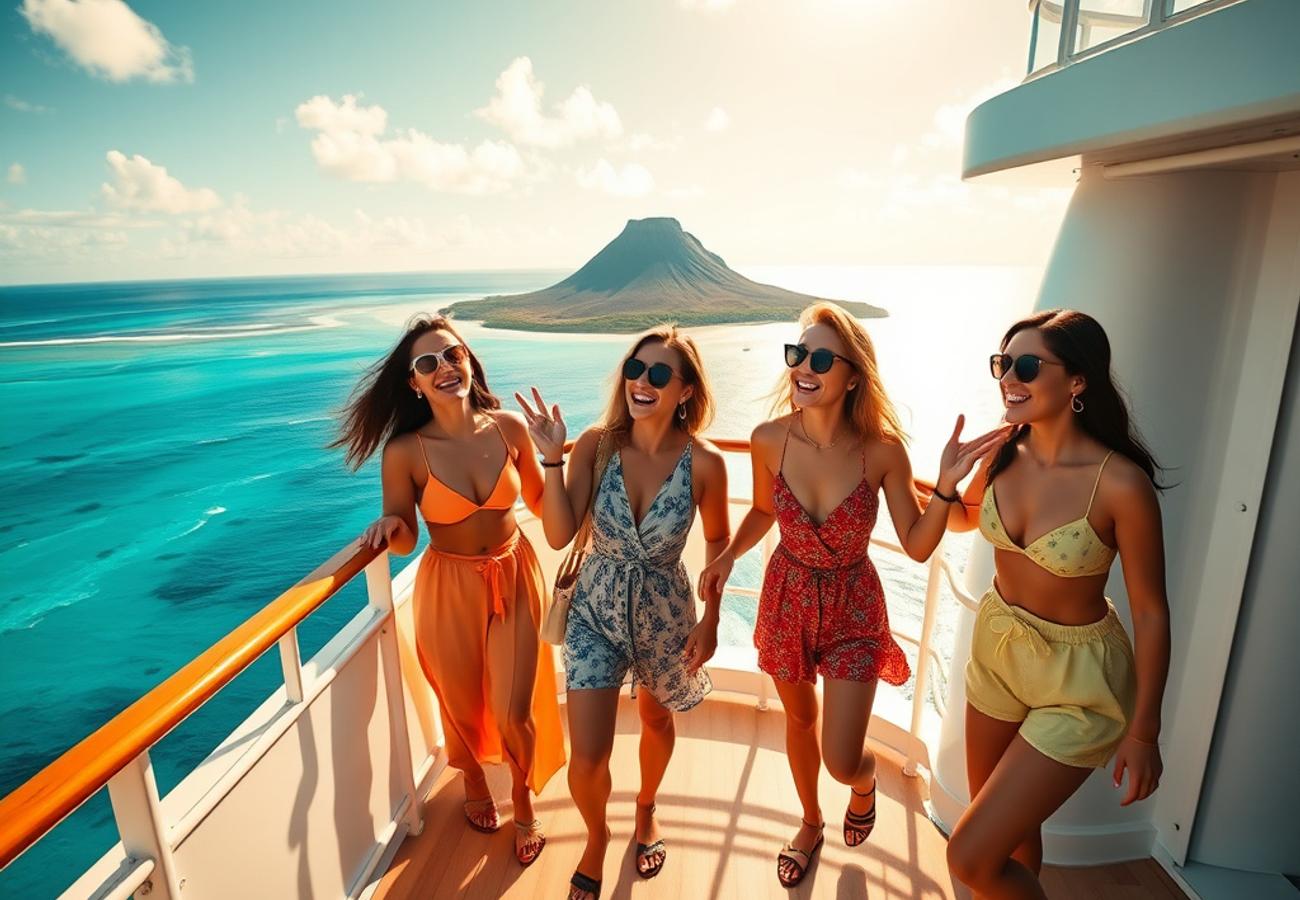
Image generated by AI
The Cruise Industry's Game-Changing Discount Wave
Aranui Cruises just dropped a bombshell on the premium travel market. Savings of up to $2,000 per couple are now available on selected 2026 voyages, fundamentally shifting the economics of luxury expedition cruising. This isn't just another promotional email—it's a strategic move that signals where affluent travelers are choosing to spend their money in 2026.
The global cruise sector has been experiencing a dramatic recalibration. Demand for experiential, destination-focused travel has outpaced conventional beach-resort holidays. Aranui, the French Polynesia-based operator of mixed passenger-freighter vessels, is capitalizing on this shift by making premium island expeditions genuinely accessible to broader demographics.
Reddit: "Finally someone is making Aranui affordable. These ships are the only way to actually see Polynesia like locals do, not like tourists." — r/cruising
Why Aranui's Model Beats Traditional Cruise Ships
Most cruise lines operate leisure vessels. Aranui Cruises operates something fundamentally different: passenger-freighter hybrids that transport cargo alongside tourists. This dual-purpose design creates authentic access to remote island communities that mainstream tourism has never reached.
The operational model preserves a direct connection between visiting travelers and local island economies. Crew members often hail from the very islands passengers visit. Shore excursions aren't choreographed resort experiences—they're genuine community encounters where cultural exchange happens organically.
The Austral Islands and Marquesas Islands remain among French Polynesia's least-commercialized corners. Aranui routes pass through Rapa Iti, Raivavae, and Nuku Hiva—destinations where traditional subsistence continues and international tourism remains minimal. Compare this to Tahiti and Bora Bora, where cruise-ship crowds have become a constant presence.
The Austral Islands: Where Time Moves Differently
The Austral Islands represent French Polynesia's southern frontier. These volcanic peaks drop dramatically into the Pacific, creating some of the South Pacific's most visually stunning seascapes. What makes them genuinely special is the absence of mega-resort infrastructure.
When an Aranui ship docks at Rapa Iti, passengers aren't greeted by organized tour operators. Instead, local residents—whose livelihoods depend on the ship's cargo delivery—provide informal, unscripted interactions. Traditional fishing methods, colonial-era stone structures, and taro cultivation remain central to daily life here.
Raivavae offers similar authenticity: untouched white-sand beaches, coral lagoons, and a population of roughly 800 people who've maintained cultural traditions across 2,000+ years of settlement. The island sits so remotely that French government vessels visit only quarterly.
The Marquesas: Isolation as a Feature, Not a Bug
The Marquesas Islands sit further north and represent French Polynesia's most geographically isolated zone. Nuku Hiva, the administrative center, remains a working port where fishing and copra production fuel the local economy—not tourism.
These islands possess dramatic topography: steep cliffs reaching 4,000+ feet, deep bays carved by geological upheaval, and vegetation patterns that shift dramatically with microclimatic variations. For travelers accustomed to symmetrical resort beaches, the Marquesas' raw, unpolished landscape can feel almost alien.
Archaeological sites scattered across these islands reveal pre-contact Polynesian civilization at scales rarely visible elsewhere. Tiki statues, stone platforms, and carved tikis populate ceremonial sites that remain active cultural spaces rather than museum exhibits.
Japan's Cruise Market: Redefining Asian Luxury Travel
While French Polynesia captures attention for remoteness, Japan attracts cruise-focused travelers seeking cultural sophistication mixed with geographic convenience. Japan's 2026 cruise market has expanded dramatically, with itineraries now accessing secondary ports that mainstream tourism historically overlooked.
Cruise passengers visiting Japan experience multiple cities—Tokyo's urban density, Kyoto's temple culture, Kobe's maritime heritage, Hiroshima's historical gravity—without the logistical friction of independent train travel and hotel changes. Modern Japanese ports now accommodate mega-ships with infrastructure that rivals European destinations.
Premium cruise operators have been redirecting focus toward cultural immersion rather than shopping excursions. Partnerships with local guides, sake brewery tours, sumo wrestling experiences, and temple meditation sessions have become standard offerings on upscale itineraries.
Philippines and Vanuatu: The Tropical Wild Card
The Philippines combines beach-resort appeal with genuine cultural diversity. The archipelago spans 7,641 islands, yet cruise itineraries typically access only 5-7 main destinations. Coron, Boracay, Cebu, and Palawan receive tourism infrastructure investment, while the vast majority of islands remain relatively undiscovered.
Vanuatu—an independent nation comprising 83 islands—occupies an even more remote position in global tourism consciousness. The destination attracts adventure travelers specifically because conventional tourism infrastructure remains deliberately minimal. Vanuatu's appeal lies precisely in what it lacks: chain hotels, cruise-terminal shopping complexes, and pre-packaged cultural performances.
Both destinations offer genuine tropical authenticity. Jungle treks, indigenous community encounters, and subsistence-level agriculture remain visible throughout. For travelers fatigued by homogenized resort experiences, this rawness represents genuine value.
The Financial Mechanics Behind the $2,000 Discount
Aranui's $2,000-per-couple reduction on 2026 cruises signals sophisticated pricing strategy. Premium expedition cruises typically generate margins between 40-55% on published pricing. Offering $2,000 discounts on cruises priced at $8,000-12,000 per person represents meaningful promotional depth—suggesting the operator is prioritizing booking volume over per-unit margin.
This strategy works when capacity utilization reaches critical thresholds. An 80-90% full ship generates greater absolute profit than a 60% full ship with full-price tickets. Aranui's promotional structure suggests confidence in booking momentum.
Early-booking incentives also function as demand-forecasting tools. 2026 bookings locked in June 2026 provide operational certainty and cash-flow predictability that influences ship maintenance scheduling and crew planning.
What This Means for the Broader Cruise Industry
Aranui's promotional aggression signals broader competitive pressure within luxury expedition cruising. Lines like Ponant, Lindblad Expeditions, and Seabourn now face pricing pressure in their core markets. When the destination-authenticity leader (Aranui's positioning) begins aggressively discounting, competitors must either match pricing or emphasize superior onboard amenities.
The industry is consolidating around experiential value rather than ship specifications. Travelers increasingly ask "What will I experience?" rather than "What are the suite sizes?" This philosophical shift favors operators with deep regional expertise—a category in which Aranui holds legitimate competitive advantage.
Booking patterns in 2026 will likely reveal whether these discounts represent strategic repositioning or temporary inventory clearance. If Aranui books 85%+ capacity across the discount period, expect similar strategies from competing operators throughout 2027.
Planning Your 2026 Expedition: Practical Considerations
If the Aranui opportunity interests you, timing matters enormously. Promotional inventory—the specific sailings eligible for $2,000 discounts—typically depletes within 60-90 days of announcement. Booking within the next 30 days provides maximum cabin selection flexibility.
French Polynesia cruises typically run 10-14 days and accommodate 220-250 passengers. Expect per-person costs between $7,000-11,000 even with discounts applied. Japan cruises run similar durations with comparable pricing.
Logistically, you'll need passport validity extending 6+ months beyond your travel date. French Polynesia requires no visa for U.S., EU, Canadian, or Australian citizens (90-day visa-free status). Japan maintains similar arrangements. The Philippines and Vanuatu employ straightforward visa processes with tourist visas available on arrival.
Health insurance becomes critical on expedition cruises. Remote itineraries mean medical evacuation may require helicopter deployment costing $50,000+. Verify that your policy covers maritime evacuation. Expedition Cruise Association guidelines provide comprehensive pre-departure resources.
The Authentic Travel Trend Accelerates
What Aranui's 2026 campaign reveals is fundamental: global affluent travelers have abandoned the standardized cruise experience. Mahogany-paneled dining rooms, waterslide complexes, and Caribbean beach calls no longer drive booking decisions.
Instead, travelers now prioritize genuine destination access, cultural authenticity, and the ability to witness how communities actually function rather than how they've been choreographed for tourism consumption. Aranui Cruises built its entire operation around this philosophy decades before it became fashionable.
The $2,000 discount represents democratization—making $10,000+ expeditions accessible to travelers for whom such spending previously felt prohibitive. For the broader industry, it signals that experiential travel isn't cyclical luxury but structural market demand.
The question isn't whether you can afford a premium Aranui cruise in 2026—it's whether you can afford to miss it.
Related Travel Guides
Disclaimer
This article is for informational and educational purposes only. It does not constitute legal, financial, or professional advice. While we strive to provide accurate and up-to-date information, travel policies, regulations, and conditions change rapidly. Always verify information with official sources before making travel decisions. Nomad Lawyer makes no representations about the accuracy, reliability, completeness, or suitability of the information provided. Readers should consult qualified professionals for advice specific to their circumstances. The views expressed in this article are those of the author and do not necessarily reflect the views of Nomad Lawyer.
Kunal K Choudhary
Co-Founder & Contributor
A passionate traveller and tech enthusiast. Kunal contributes to the vision and growth of Nomad Lawyer, bringing fresh perspectives and driving the community forward.
Learn more about our team →