
Anglesey and Welsh Coast Surge as Europe's Coastal Tourism Boom Reshapes Holiday Patterns in 2026
Wales' Anglesey island emerges as Europe's fastest-growing coastal escape as travelers abandon crowded cities for nature-led holidays across UK, Ireland, France, and Spain.

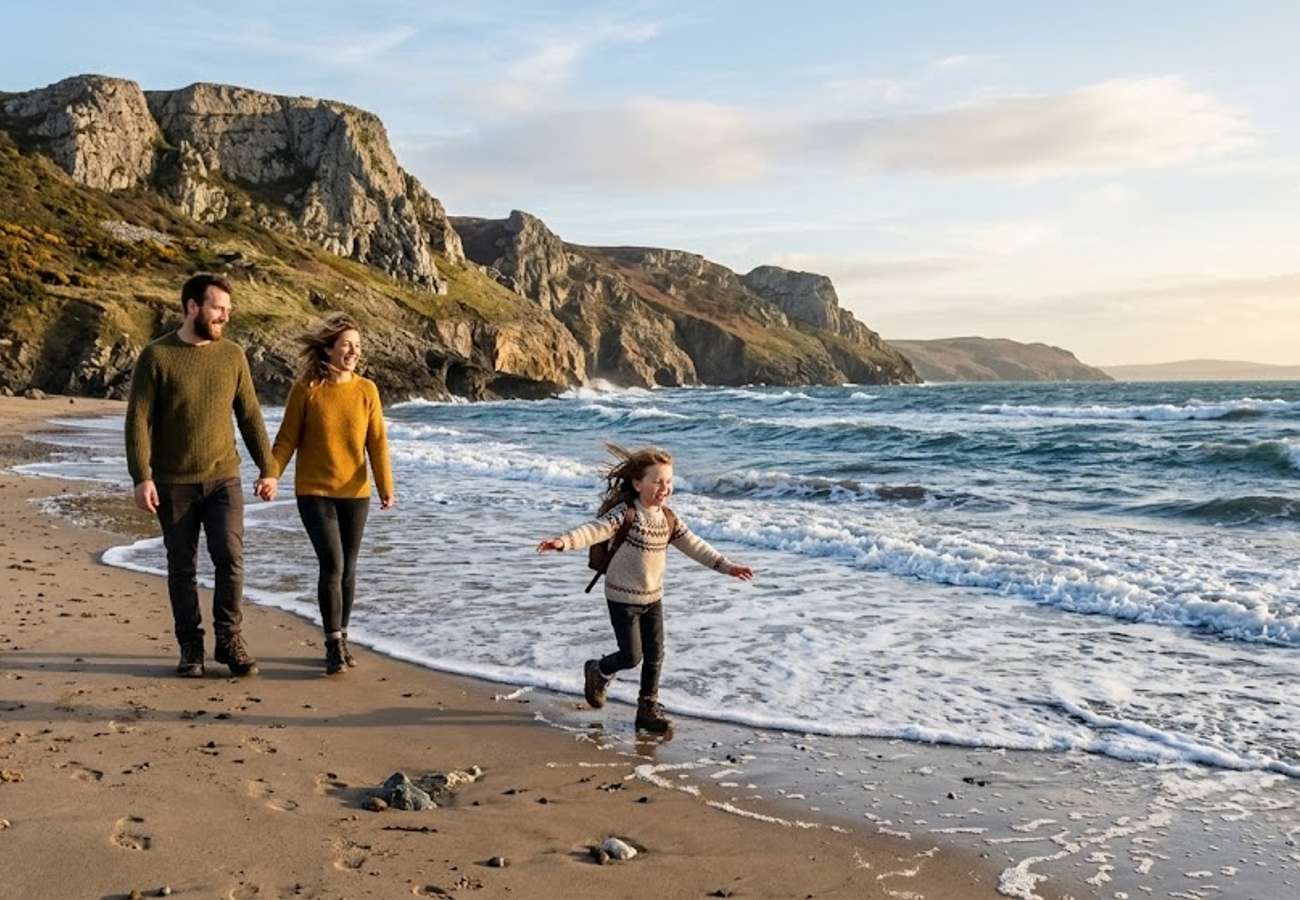
Image generated by AI
I've spent the last fifteen years watching tourism patterns shift across Europe, and what's happening right now in coastal destinations like Anglesey is genuinely different. After decades of tourists streaming into Barcelona, Amsterdam, and Rome, something fundamental has changed. Travelers are exhausted. They want sand between their toes, not crowded plazas. They want wind on their faces, not selfie sticks in their ribs.
The data backs this up: coastal regions across the UK, Ireland, France, and Spain are experiencing unprecedented demand. But here's what surprised me—it's not the obvious Mediterranean hotspots driving growth anymore. It's the quieter, grittier, genuinely wild coastlines that are seeing the real surge.
Why Coastal Tourism is Rewriting Europe's Travel Map
The shift toward nature-based tourism isn't just a trend; it's a wholesale recalibration of where people want to spend their money and time. According to recent tourism research from the European Commission, travelers are actively seeking destinations that prioritize authenticity over infrastructure spectacle. They want clean air, open horizons, and places where you don't need a reservation six months in advance just to walk down a street.
The pandemic accelerated this, but it's stuck around. People discovered they didn't need three-star Michelin restaurants and world-class museums to have a meaningful holiday. They needed space to breathe.
France's Atlantic coast and Mediterranean Riviera continue pulling visitors, but even there, the secondary towns—places like Île de Ré instead of the Côte d'Azur proper—are seeing visitor growth outpace the famous spots. Spain's interior coastal regions are filling up faster than its Barcelona beachfront. And Ireland's western shoreline has experienced a tourism boom that's pushing locals out of the housing market.
Within this continental shift, Wales is having a moment that feels genuinely earned.
Anglesey: The Welsh Island That Caught Everyone's Attention
I first visited Anglesey in 2015. It was raining. The only other person on Benllech Beach was a man with a metal detector. I remember thinking it was beautiful in that austere, unforgiving way that Welsh coastlines are—all gray sky and windswept grasses and the kind of cold Atlantic wind that hits your face like a rebuke.
Now, when I drive across Menai Bridge in summer 2026, there are cars parked every hundred meters along the verge. Tour buses idle outside cafés in Beaumaris. A brewery I'd never heard of before—Anglesey Ales—is now stocked in London corner shops.
What makes Anglesey different from other "rising coastal destinations" is that it's actually difficult to get to. That's a feature, not a bug.
To reach Anglesey from Liverpool or Manchester, you drive two hours through North Wales. There's no airport on the island. No motorway cuts through it. You arrive by intention, not by accident. This friction has accidentally preserved something authentic: the island genuinely doesn't feel like a tourist destination yet. It feels like a place where people live and work.
The island itself spans 276 square miles. It has:
Benllech Beach: A 2-mile sandy crescent on the eastern shore. At low tide, the beach expands dramatically—you're walking on what feels like reclaimed land. This is where families congregate, and honestly, during peak summer hours (10 AM to 4 PM), it gets genuinely busy. But walk north toward Traeth Coch or south beyond the dunes, and you're alone.
Newborough Beach and Forest: On the southwestern tip, this 10-mile stretch of sand dune and woodland feels like another planet entirely. There's a small car park at Newborough village (postcode LL61 6SG for GPS), and from there you can walk for hours along nearly empty sand. The forest behind the beach has walking trails that take you away from any sign of development.
Holyhead: The island's largest town (population ~14,000) on the western coast. The harbor here is genuinely working—fishing boats, ferries to Dublin, trawlers unloading catch. It's gritty in the best sense. The South Stack Lighthouse sits on offshore rocks accessible by a dramatic bridge walk; about 4,000 visitors per month make the crossing now, up from maybe 500 five years ago.
Castell Aberlleiniog: Perched above Benllech on the shoreline, this ruin offers views across the Irish Sea. It's not heavily promoted, and maybe 50 people visit daily. There's no admission fee, no gift shop, no café. You just show up and stand there and feel the weather.
Getting There Without the Usual Tourist Channels
Most first-time visitors to Anglesey drive via the A55 from Manchester (2 hours 15 minutes) or Liverpool (1 hour 45 minutes). Some come via train: the Arriva Trains Wales line runs from Manchester Piccadilly through Bangor to Llandudno Junction, but you then need to transfer to the local Arriva line that runs Bangor to Holyhead. Total time from Manchester: 3.5 hours.
Menai Bridge—the town itself, not just the bridge structure—serves as most people's psychological entry point. The Thomas Telford-designed bridge opened in 1826. It's stunning engineering, and crossing it for the first time creates a genuine moment. You're literally crossing from Wales (the "mainland" side) to Anglesey (the island). The road narrows. The water appears beneath you.
"Skip the Benllech Beach car park and drive to the gravel lot near Newborough village. Fewer crowds, better light, and you can actually see the horizon without other people's heads in your view. Spent three hours there yesterday alone except for one dog walker." — r/Wales, 2026
The Villages Worth Actually Visiting
Beaumaris (pronounced "Bay-more-iss") sits on the southeast coast facing the mainland. It has a castle (1295, Edward I), a Victorian pier, actual independent restaurants (Olde Bull's Head has a Michelin star and genuinely good food—book ahead), and enough charm that you understand why property values have jumped 18% in three years. The high street has small galleries, bookshops, and cafés that feel like they're run by people who actually care about what they're serving. Walk the waterfront at sunset; it's quiet and properly beautiful.
Menai Bridge proper (the town, not the bridge) has the Menai Bridge Library (excellent community resource, and sometimes they have local historians willing to chat about the island's history). The Anglesey Arms Hotel has a decent restaurant. There's a small pier walk worth doing.
Moelfre on the eastern coast is a working fishing village. The RNLI lifeboat station sits here (operational since 1829). There's a small maritime museum in a converted chapel. This is where you eat fish and chips that were literally caught this morning—Y Llan café, right on the harbor.
What Actually Makes Anglesey Work as a Destination Right Now
Unlike Spain or France, where coastal tourism infrastructure has been built up over decades, Anglesey still has room to absorb visitors without destroying the thing that makes it valuable. The accommodations haven't been replaced with chain hotels. The beaches haven't been "developed." There are holiday parks and Airbnb properties, sure, but they don't dominate visually.
The island's economy was historically dependent on agriculture, quarrying, and fishing. Tourism is relatively new as an income driver, which means local people are still figuring out how to engage with it. This creates an interesting dynamic: you get genuinely warm welcomes because tourism dollars are genuinely needed, but you don't get the performative friendliness of places that have tourism-industrial complexes.
The island also benefits from being Welsh-speaking in everyday life. About 69% of residents speak Welsh. This isn't a tourism gimmick—it's just how people talk to each other. Street signs, pub menus, local radio broadcasts are in Welsh and English. For English-speaking visitors, this creates an immediate sense of genuine place rather than generic tourist destination.
The Timing: Why Now, Why Here
I've been traveling to coastal Europe for 20 years. The pattern I'm seeing isn't coincidental. Post-pandemic, travelers developed an allergy to overtourism. Instagram made it clear that the "must-see" places are often the worst places to actually visit. Algorithms now show people what they didn't know existed—a Welsh lighthouse, a quiet beach, a village harbor at dawn.
Additionally, remote work normalized location independence. If you can work from anywhere, why choose Barcelona where a café cortado costs €4 and you're shoulder-to-shoulder with 50 other remote workers? Anglesey's internet is fine (Openreach fiber coverage reaches about 80% of the island). Accommodations are 60-70% cheaper than equivalent properties in southern France. Solitude is free.
The UK's post-Brexit travel patterns have also shifted domestic tourism. Brits increasingly opt for domestic holidays over European trips due to simplified logistics (no passport delays, no currency exchanges). Wales has benefited enormously from this shift.
Practical Visitor Guide
Best Times to Visit
May through September sees peak visitor activity. June is excellent—weather is relatively stable, daylight extends until 10 PM, and it's not yet August peak season chaos. July-August can be genuinely busy, especially Benllech Beach. April and October are underrated: temperatures around 12-14°C, frequent rain, but stunning light and no crowds. Winter (November-February) sees the island at its most brutal and authentic—this is when you see what it's actually like.
Accommodation Reality
Mid-range: Holiday parks like Ty'n Rhos or Newborough Estate offer caravans and lodges (£600-900/week, summer season). Independent B&Bs in Beaumaris and Menai Bridge run £80-120/night. Airbnb has exploded (£70-150/night for basic properties). Book 6-8 weeks ahead for July-August.
Budget: Camping is extensive. Ty'n Rhos has 300+ pitches. Expect £20-35/night for a pitch. Hostels are limited—the YMCA Llandrillo Centre (Y Llys, near Llandrillo) offers budget accommodation in dorms (£25-35/night).
Premium: Hotels like Ye Olde Bulls Head in Beaumaris offer 4-star comfort (£150-220/night). Still nothing like London prices.
Transportation & Logistics
Car rental from Liverpool or Manchester is essential unless you enjoy bus journeys. Hertz, Enterprise, and Avis all have airport desks. Petrol/diesel costs equivalent to mainland UK. No tolls except crossing the Severn Bridge (if approaching from the south).
Parking: Most beach car parks charge £4-6 for all-day parking. Benllech has three large car parks (all fill by 11 AM in summer). Newborough village car park has 200 spaces (£5). Don't park on roadsides—parking enforcement is active and fines are £70.
Public transport: Bus Arriva service is reliable but infrequent outside of main routes. Plan bus journeys with the Traveline Wales app before arrival.
Eating & Budget
Groceries: Tesco in Beaumaris, Sainsbury's in Holyhead. Daily costs for self-catering: £35-50/person. Restaurant meals: £12-18 for mains at mid-range spots, £25-40 at nicer establishments. Fish and chips runs £7-10. Coffee is £2-3.
Pubs worth visiting: The Boathouse (Menai Bridge waterfront), Y Llan (Moelfre harbor), The George & Dragon (Beaumaris town square). Most serve food; expect £14-16 for a main.
Weather & What to Pack
Rain is frequent. I cannot overstate this. Pack waterproof jackets, not umbrellas (wind makes umbrellas useless). Layers are essential—mornings can be 8°C even in July. Waterproof hiking boots if you're doing coastal walks. Sun protection for the rare sunny days (UV exposure is intense near water and has no competition from pollution).
Safety
Anglesey is genuinely safe. Petty theft is virtually nonexistent. Violent crime is almost unknown. The main risks are environmental: coastal paths can be unstable after heavy rain, tides around Menai Strait move fast, and the Atlantic is cold enough year-round that hypothermia is a real risk for accidental swimmers.
Local Navigation
Download offline maps (Google Maps, OSM.be) before arrival—cell coverage is good in towns but patchy in open countryside. Most villages are small enough to navigate on foot once parked.
Budget Estimation (per person, 5 days)
Accommodation: £400-600 (mid-range), £200-300 (budget camping/hostel), £750-1100 (premium) Food: £200-250 (self-catering/casual dining), £350-450 (restaurant meals) Activities: £50-100 (mostly free; lighthouse entry £5, castle £8) Transport: £40-60 (petrol for island circulation) Total: £690-1070 (budget), £1000-1500 (mid-range), £1500-2200 (premium)
This is 40-50% cheaper than equivalent weeks in southern France or Spain.
What to Actually Do
Walk the South Stack Lighthouse bridge. Drive the A5025 coastline road (no det
Disclaimer
This article is for informational and educational purposes only. It does not constitute legal, financial, or professional advice. While we strive to provide accurate and up-to-date information, travel policies, regulations, and conditions change rapidly. Always verify information with official sources before making travel decisions. Nomad Lawyer makes no representations about the accuracy, reliability, completeness, or suitability of the information provided. Readers should consult qualified professionals for advice specific to their circumstances. The views expressed in this article are those of the author and do not necessarily reflect the views of Nomad Lawyer.
Kunal K Choudhary
Co-Founder & Contributor
A passionate traveller and tech enthusiast. Kunal contributes to the vision and growth of Nomad Lawyer, bringing fresh perspectives and driving the community forward.
Learn more about our team →