
Amsterdam Airport's Electric TaxiBot Cuts Aircraft Emissions by 65%
Amsterdam Airport Schiphol deploys electric TaxiBot technology to reduce aircraft fuel consumption and emissions during ground operations. The system cuts fuel use by 50–65% per taxiing cycle.

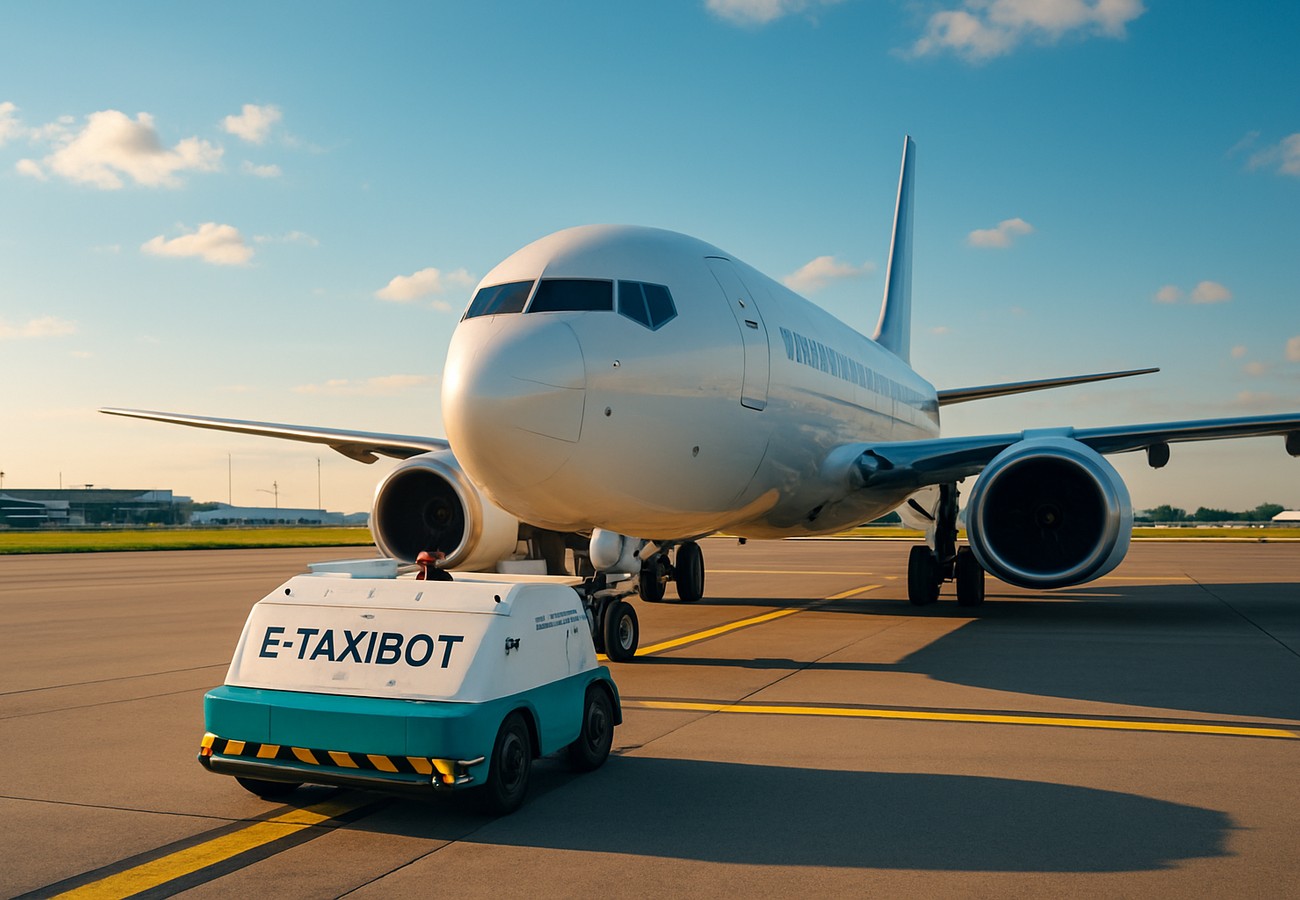
Image generated by AI
Electric Tug Systems Transform Amsterdam's Ground Operations
Amsterdam Airport Schiphol has become the first European airport to deploy electric TaxiBot systems for large-scale aircraft operations. In partnership with easyJet and other industry stakeholders, the airport is using semi-robotic ground tractors to tow aircraft from the terminal gate to the runway without activating main engines. This initiative directly supports Schiphol's long-term sustainability roadmap and represents a measurable shift in how major European hubs manage emissions during ground movements.
The TaxiBot is essentially a specialized electric tractor that couples to an aircraft's nose gear. A pilot maintains steering and braking control from the cockpit while a ground operator manages the attachment and disconnection process. Once the aircraft reaches the runway, the TaxiBot disconnects and the engines start for takeoff. This simple operational change eliminates hours of unnecessary engine idle time—traditionally one of aviation's hidden emissions drains.
Reddit: "If this tech can actually cut 65% of taxi fuel, why isn't every major airport doing it right now?" — r/aviation
The Fuel and Emissions Impact
Prior testing has demonstrated that sustainable taxiing with TaxiBots reduces fuel consumption by 50–65% per aircraft taxiing cycle. For context, easyJet's deployment estimates that each taxiing cycle with the system saves approximately 95 kilograms of fuel and roughly 299 kilograms of CO₂ per flight. Scale that across thousands of daily operations at a busy hub like Schiphol, and the cumulative environmental benefit becomes substantial.
The reduction extends beyond carbon dioxide. Using TaxiBots also decreases nitrogen oxides (NOx) and ultrafine particle emissions, which directly improve local air quality around the apron—the area where aircraft are prepared for departure. Ground staff working on the apron also benefit from significantly lower noise and air pollution exposure, creating a healthier workplace environment.
Schiphol's initial deployment has focused on the Polderbaan runway, where taxi distances are longest and fuel savings potential is highest. The airport plans to introduce additional TaxiBot units in coming years, broadening coverage to more aircraft types and making sustainable taxiing a routine operational standard by 2030.
Research and International Collaboration
This deployment is not isolated innovation. TaxiBot operations at Schiphol are embedded within the SESAR HERON project, a flagship initiative under the Single European Sky ATM Research (SESAR) 3 Joint Undertaking. HERON aims to demonstrate a suite of greener, smarter aviation procedures that reduce the sector's environmental footprint across both ground and airborne operations.
The project receives co-funding from the European Climate, Infrastructure and Environment Executive Agency (CINEA) under the European Union's Connecting Europe Facility. This institutional backing reflects broader EU commitment to accelerating green aviation technologies across member states. Major airlines and ground handlers at Schiphol—including KLM, Transavia, Corendon, Swissport, and dnata—participate in the collaborative framework, alongside the Netherlands' Ministry of Infrastructure and Water Management.
You can explore the SESAR programme's official sustainability initiatives to understand how TaxiBot fits into Europe's broader air traffic modernization strategy.
EasyJet's Environmental Roadmap
easyJet incorporated TaxiBot technology into four Airbus A320neo aircraft operating at Schiphol. The airline's first passenger flight using the system occurred in late April 2026, following successful earlier trials. This operational integration aligns with easyJet's stated environmental targets: reducing carbon emission intensity by 35% by 2035 and progressing toward net zero emissions by 2050.
For a carrier operating hundreds of daily flights across Europe, such efficiency improvements are non-trivial components of broader decarbonization strategy. Each cycle saved represents progress toward measurable targets, creating accountability in an industry historically resistant to rapid change.
Why TaxiBot Matters for Airport Sustainability
The broader context matters. Aviation represents roughly 2–3% of global carbon emissions, and ground operations—while smaller than cruise flight—remain an addressable source. By tackling taxiing emissions now, airports like Schiphol demonstrate that meaningful environmental gains don't require waiting for wholesale aircraft fleet replacement or revolutionary fuel innovations.
Schiphol's commitment to becoming an emission-free airport by 2030 depends on incremental operational improvements stacked together. TaxiBot is one piece of that puzzle, alongside renewable energy integration at terminals, electric ground support vehicles, and optimized air traffic procedures.
Research into sustainable aviation fuel and operational efficiency through bodies like ICAO confirms that multi-pronged approaches deliver faster emissions reductions than single-technology bets.
The Practical Reality
What makes TaxiBot deployment noteworthy is its pragmatism. The technology works within existing aircraft designs and airport infrastructure. Pilots already hold the controls. Ground crews understand tug operations. There's no need to retrofit entire fleets or rebuild runways. Schiphol proved the concept at scale with a major airline partner and documented measurable results.
As additional TaxiBot units roll out across European hubs and aircraft manufacturers develop compatible variants, the economics improve and operational familiarity spreads. Within five years, sustainable taxiing may transition from a Schiphol innovation story to standard practice at major continental airports.
Green aviation isn't always about the next big breakthrough—sometimes it's about doing the obvious thing differently.
Related Travel Guides
New Zealand Cuts Visa Fees for Pacific—But Activists Push for Full Exemption
Ebola Travel Alert: Australia Implements Screening as Global Cases Surge
Disclaimer
This article is for informational and educational purposes only. It does not constitute legal, financial, or professional advice. While we strive to provide accurate and up-to-date information, travel policies, regulations, and conditions change rapidly. Always verify information with official sources before making travel decisions. Nomad Lawyer makes no representations about the accuracy, reliability, completeness, or suitability of the information provided. Readers should consult qualified professionals for advice specific to their circumstances. The views expressed in this article are those of the author and do not necessarily reflect the views of Nomad Lawyer.
Preeti Gunjan
Contributor & Community Manager
A passionate traveller and community builder. Preeti helps grow the Nomad Lawyer community, fostering engagement and bringing the reader experience to life.
Learn more about our team →