
American Tourists Face $25,000 Fine After Viral Off-Leash Dog Encounter With Grizzly in Banff National Park
Two Washington residents are facing potential $25,000 penalties from Parks Canada after filming a viral encounter with a 16-year-old grizzly bear while their dog remained off-leash.

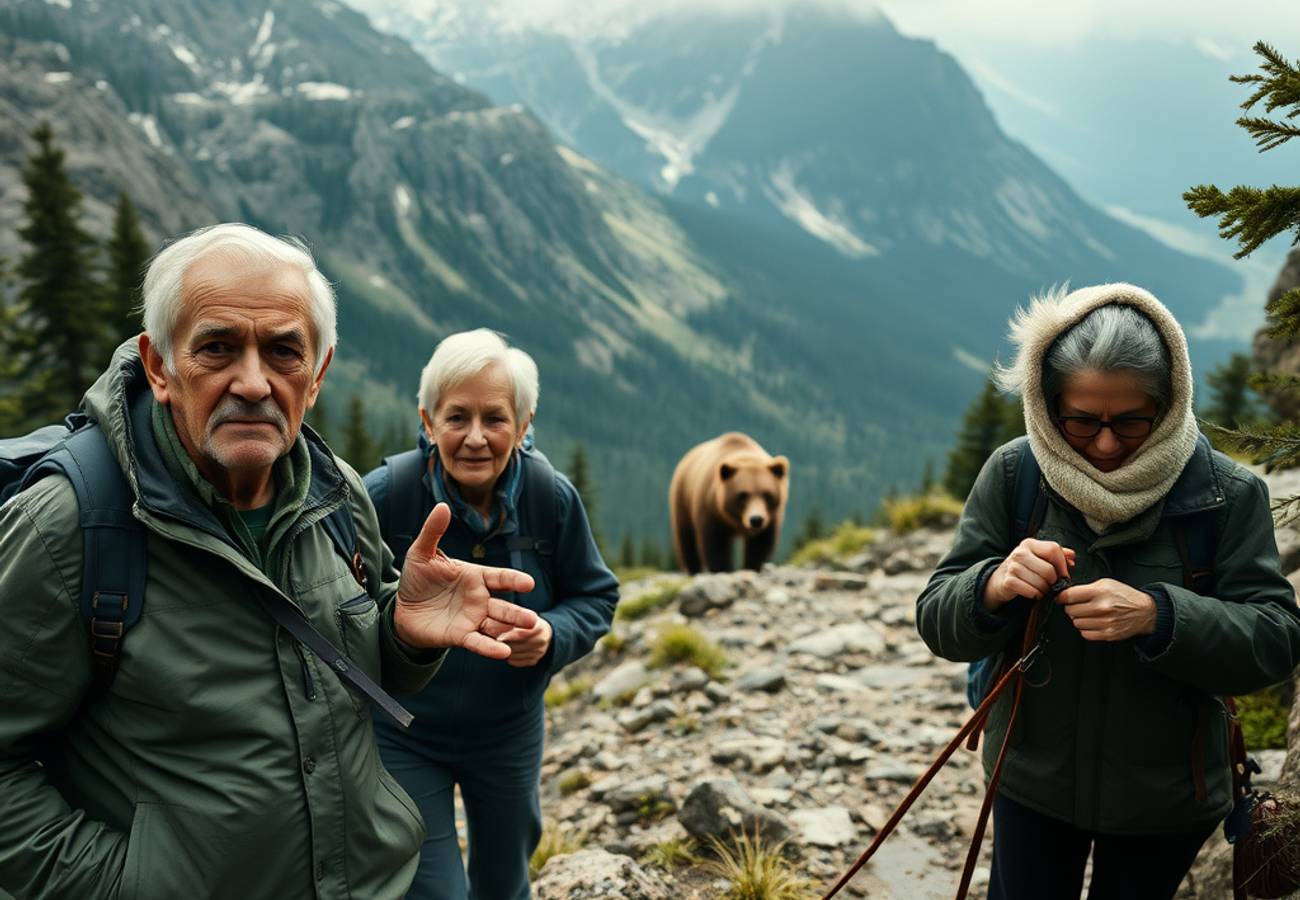
Image generated by AI
[Banff, Alberta] — A viral video capturing a tense encounter between two American tourists and a 16-year-old female grizzly bear has led to legal charges and a potential $25,000 fine. The incident, which took place on a hiking trail in Banff National Park, has sparked widespread condemnation from wildlife experts and travelers after the couple was seen filming the animal while their dog remained off-leash.
The encounter involved Brook and Kraig Koski, residents of Washington state, who were vacationing in the Canadian Rockies. While hiking, the couple crossed paths with "Bear 142," a well-known apex predator in the region. The footage, recorded by Brook Koski, shows the large grizzly following the pair up a steep trail. While Kraig Koski attempted to wave his arms to deter the bear, the animal continued to track them closely.
Legal Violations and the Canada National Parks Act
Following the circulation of the video on social media, Parks Canada wardens identified the couple and subsequently filed charges. The primary legal breach centers on the Canada National Parks Act, which strictly mandates that all dogs must be kept on a physical leash. According to the regulations, these leashes must not exceed a maximum length of 9.8 feet (approximately 3 meters).
Industry reports indicate that the couple's actions likely violated multiple park regulations. Beyond the leash requirement, the dog's behavior—specifically barking at the grizzly—could be legally interpreted as harassing or chasing wildlife.
James Eastham, a spokesperson for Parks Canada, emphasized the danger of such negligence in a statement to Global News. Eastham noted that failing to leash pets creates significant risks for both the animals and the humans involved, as bears often perceive off-leash dogs as threats, which can trigger aggressive and lethal reactions.
Parks Canada Dog Regulations and Safety Mandates
To prevent wildlife conflicts, Parks Canada enforces a strict set of guidelines for visitors traveling with pets. The following requirements are mandatory for all visitors within the national park system:
| Regulation Category | Mandatory Requirement |
|---|---|
| Leash Law | Dogs must be on a physical leash (3 meters or less) at all times. |
| Waste Management | All dog waste must be picked up and disposed of in designated garbage bins. |
| Wildlife Distance | Visitors must maintain a safe distance and give wildlife ample space. |
| Behavioral Control | Owners must ensure dogs do not attack, harass, or chase people, vehicles, or animals. |
| Activity Planning | Terrain and activities must be suitable for the specific dog's abilities. |
| Information Review | Visitors must check for area closures and wildlife activity updates via Visitor Centers. |
| Backcountry Advice | It is strongly recommended to leave dogs at home when camping or hiking in the backcountry. |
Ecological Impact of Off-Leash Pets in Banff
Wildlife officials have expressed concern that the Koskis' actions extend beyond a simple fine. Off-leash dogs are cited as a primary cause of wildlife incidents in protected areas. When dogs disturb apex predators or smaller species at risk, it can lead to permanent behavioral changes in the wildlife.
According to officials, such encounters can cause bears to avoid critical feeding grounds or develop a negative association with specific areas of the park. In this specific case, Bear 142 may now perceive the hiking trail as an unsafe or hostile environment due to the presence of a barking, unrestrained dog.
The timing of the encounter added to the risk. Industry observers note that August marks the beginning of a period where grizzly bears exhibit more aggressive behavior as they seek to build fat reserves for winter hibernation.
Potential Financial Penalties and Judicial Outcome
While the charges have been filed, the final verdict on the punishment for the Washington couple has not yet been determined. However, the maximum penalty under the current regulations for these violations is $25,000.
The decision by Parks Canada to pursue these charges has been widely supported by the outdoor community. Many argue that the couple prioritized capturing "viral" content over the safety of their pet and the stability of the local ecosystem. In the video, Brook Koski can be heard shouting for the dog, Lola, while the animal ran between the owners and the bear, completely unrestrained.
Why This Matters: The Legal and Logistical Reality for Travelers
For the international traveler, this incident serves as a stark warning that "vacation mode" does not grant immunity from local environmental laws. In many U.S. state parks, leash laws are loosely enforced or vary by trail. However, in Canada's National Parks, these are federal mandates with severe financial consequences.
From a legal standpoint, the use of social media as evidence is a growing trend. By posting the video to gain views, the tourists provided the authorities with a timestamped, visual confession of their violation of the Canada National Parks Act. This creates a new precedent where "digital footprints" can lead directly to high-value fines.
Logistically, this highlights the necessity of "wildlife literacy." Understanding that a bear's behavior changes seasonally (such as the August aggression window) is not just a safety tip—it is a component of responsible travel. For those traveling with pets, the safest option in high-predator zones is often to leave the animal in a secure environment rather than risking a $25,000 liability and a potentially fatal encounter.
The intersection of social media fame and wildlife conservation continues to create high-risk scenarios for unprepared tourists.
Related Travel Guides
Disclaimer
This article is for informational and educational purposes only. It does not constitute legal, financial, or professional advice. While we strive to provide accurate and up-to-date information, travel policies, regulations, and conditions change rapidly. Always verify information with official sources before making travel decisions. Nomad Lawyer makes no representations about the accuracy, reliability, completeness, or suitability of the information provided. Readers should consult qualified professionals for advice specific to their circumstances. The views expressed in this article are those of the author and do not necessarily reflect the views of Nomad Lawyer.
Raushan Kumar
Founder & Lead Developer
Full-stack developer with 11+ years of experience and a passionate traveller. Raushan built Nomad Lawyer from the ground up with a vision to create the best travel and law experience on the web.
Learn more about our team →