
Piedmont American Eagle ERJ-145 Diverts from Charlotte to Lynchburg Regional Airport August 10
A Piedmont-operated American Eagle flight from Charlotte to Roanoke was forced to divert to Lynchburg Regional Airport on August 10, disrupting regional travel in western Virginia.

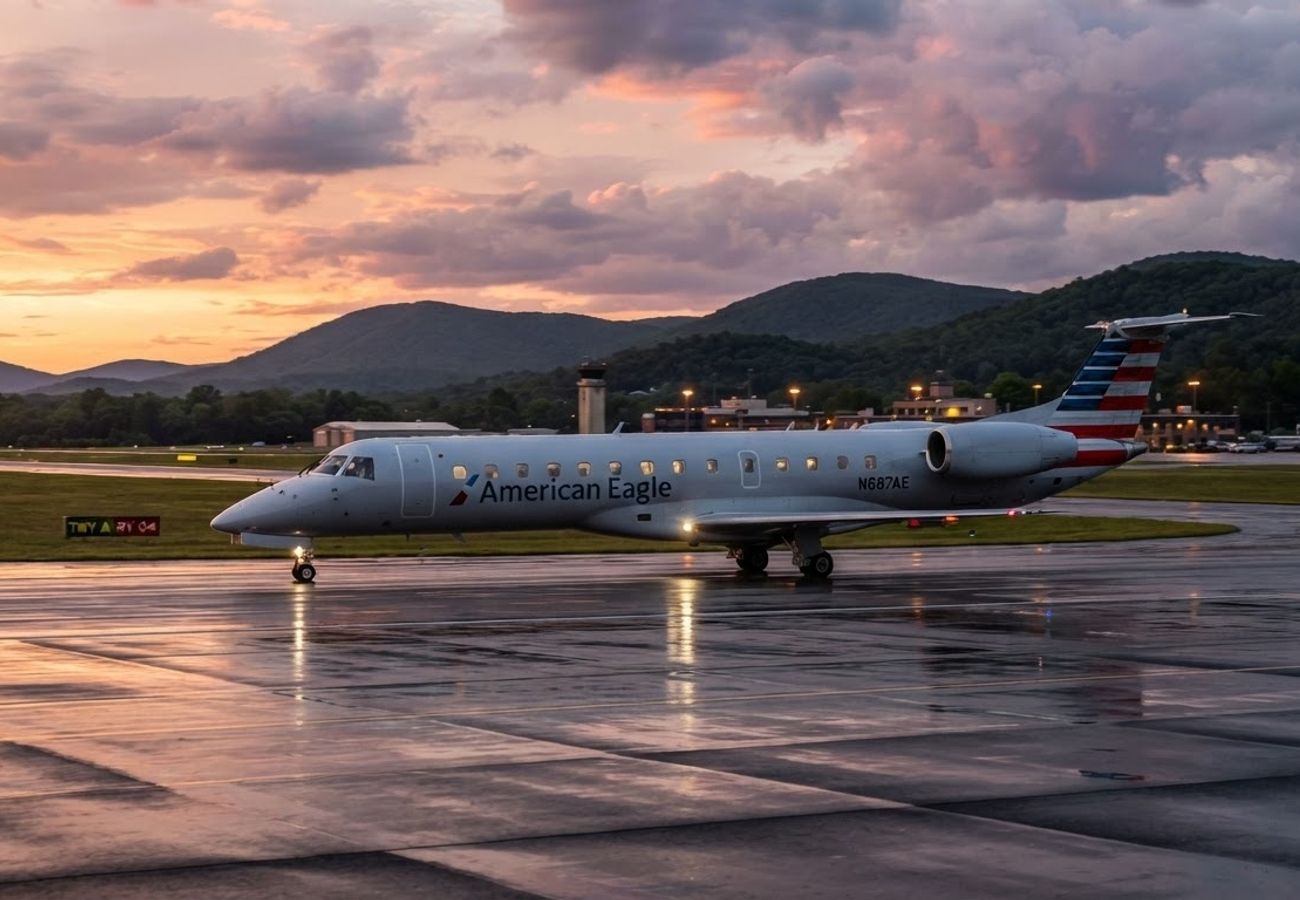
Image generated by AI
A Piedmont-operated American Eagle flight bound for Roanoke was rerouted to Lynchburg on August 10, highlighting the operational volatility of regional aviation corridors in Virginia.
An unscheduled stop at Lynchburg Regional Airport interrupted evening travel for passengers on a regional hop from North Carolina to Virginia. The diversion affected flight PDT6067, a service operated by Piedmont Airlines on behalf of American Eagle.
The aircraft, an Embraer ERJ-145, had departed from Charlotte Douglas International Airport in North Carolina. While the flight was scheduled to terminate at Roanoke–Blacksburg Regional Airport, flight-tracking data confirms the jet altered its course northeast to land in Lynchburg.
This specific route is a vital link in American Airlines' regional strategy, connecting smaller Appalachian markets to the primary hub in Charlotte.
Operational Logistics of the PDT6067 Diversion
The diversion occurred during the evening of August 10. The ERJ-145, which features a 50-seat capacity, landed at a facility already equipped to handle Piedmont’s regional operations.
Aviation data suggests the event was handled as a short-notice operational change. The aircraft landed safely, and the airline moved to re-accommodate the affected passengers.
Flight Specifications and Routing
| Detail | Information |
|---|---|
| Flight Number | PDT6067 |
| Operator | Piedmont Airlines (American Eagle) |
| Aircraft Model | Embraer ERJ-145 |
| Departure Airport | Charlotte Douglas International Airport (CLT) |
| Intended Destination | Roanoke–Blacksburg Regional Airport (ROA) |
| Diversion Airport | Lynchburg Regional Airport (LYH) |
| Date of Incident | August 10, 2026 |
| Passenger Capacity | 50 Seats |
The Strategic Role of Lynchburg Regional Airport
Lynchburg Regional Airport serves as a critical alternative for flights operating in central and western Virginia. Positioned between Charlottesville and Roanoke, the airport is designed to support the regional jet traffic common to American Eagle's network.
The facility's infrastructure includes a primary runway capable of supporting the Embraer ERJ-145, alongside a secondary runway for general aviation. This layout makes Lynchburg a logical diversion point for flights bound for Roanoke when operational constraints or weather conditions necessitate a change in plan.
Most commercial traffic at Lynchburg consists of daily round trips to Charlotte, operating under capacity purchase agreements. This tight integration allows for the rapid rerouting of aircraft to maintain network stability.
Piedmont Airlines and ERJ-145 Fleet Utility
Piedmont Airlines, a wholly owned subsidiary of the American Airlines Group, specializes in linking smaller communities to major hubs. While the airline has a history with turboprops, its current fleet relies heavily on the Embraer ERJ-145.
The ERJ-145 is specifically utilized for short-haul sectors—typically under 500 miles—where larger mainline jets would be economically unsustainable. Its ability to operate from airports with limited terminal infrastructure and shorter runways makes it the primary tool for serving tertiary markets like Roanoke and Lynchburg.
In regional aviation, diversions are often a tool for safety and efficiency. The proximity of these smaller airfields allows crews to react quickly to airspace restrictions or performance considerations without leaving the range of maintenance support.
Passenger Impact and Regional Connectivity
For the passengers on PDT6067, the diversion introduced immediate logistical hurdles. Because regional routes often have limited daily frequencies, a single rerouted flight can cause a disproportionate ripple effect on travel schedules.
Common triggers for such diversions include:
- Unexpected weather patterns along the approach path.
- Air traffic flow restrictions.
- Technical performance considerations.
- Airport lighting or runway issues.
In western Virginia, where Roanoke and Lynchburg are the primary gateways, these flights are lifelines for business and student travel. With minimal carrier competition, the reliability of the Piedmont-American Eagle partnership is central to the region's air access.
Regional diversions remain a routine, though disruptive, necessity in maintaining the safety of the U.S. regional airline network.
Key Takeaways
- Flight Diverted: American Eagle flight PDT6067 diverted from its Roanoke destination to Lynchburg on August 10.
- Aircraft Used: The flight utilized an Embraer ERJ-145, a 50-seat regional jet operated by Piedmont Airlines.
- Network Impact: The event underscores the interdependence of regional airports in Virginia and their role as alternates for the Charlotte hub.
- Safety First: The diversion was managed as a standard operational change, ensuring the aircraft landed safely at a compatible facility.
FAQ
Why did the American Eagle flight divert to Lynchburg? While the specific cause was not detailed in public records, regional diversions are typically caused by weather, air traffic control restrictions, or aircraft performance needs.
What aircraft was used for flight PDT6067? The flight was operated using an Embraer ERJ-145, a regional jet with a 50-seat capacity.
How does Lynchburg Regional Airport support American Eagle? Lynchburg provides critical infrastructure, including a primary runway suited for regional jets, and maintains frequent capacity purchase agreements for flights to Charlotte.
Related Travel Guides
Disclaimer
This article is for informational and educational purposes only. It does not constitute legal, financial, or professional advice. While we strive to provide accurate and up-to-date information, travel policies, regulations, and conditions change rapidly. Always verify information with official sources before making travel decisions. Nomad Lawyer makes no representations about the accuracy, reliability, completeness, or suitability of the information provided. Readers should consult qualified professionals for advice specific to their circumstances. The views expressed in this article are those of the author and do not necessarily reflect the views of Nomad Lawyer.
Raushan Kumar
Founder & Lead Developer
Full-stack developer with 11+ years of experience and a passionate traveller. Raushan built Nomad Lawyer from the ground up with a vision to create the best travel and law experience on the web.
Learn more about our team →