
American Airlines and United Lead US Carriers for Mishandled Baggage Rates in 2026
New performance data reveals American Airlines and United Airlines struggle with the highest rates of lost and delayed luggage due to network complexity and hub congestion.

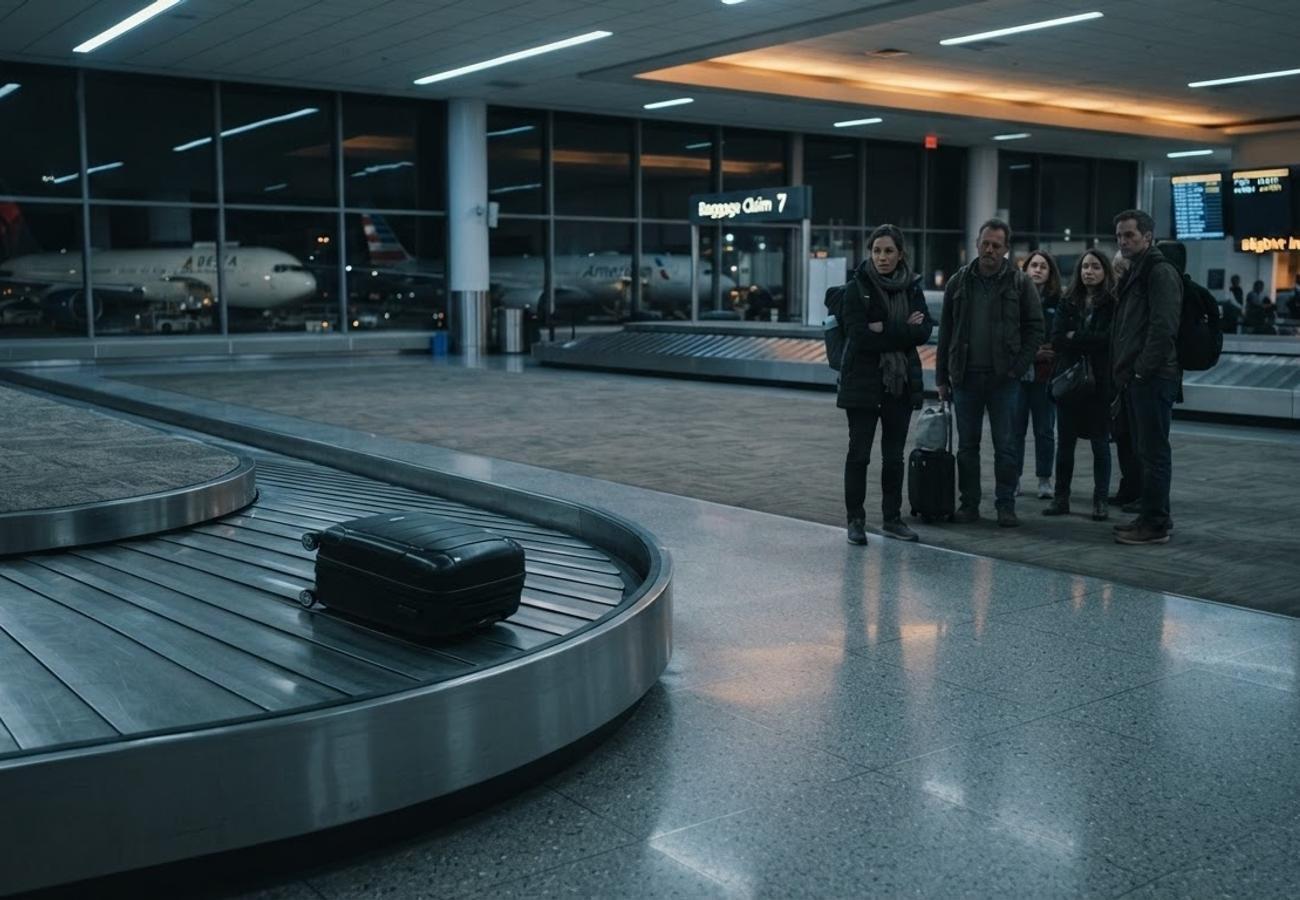
Image generated by AI
The anxiety of the baggage carousel is highest for passengers flying American and United, where network scale and hub congestion drive the highest rates of mishandled luggage. While budget carriers face criticism for service recovery, the sheer complexity of global hubs remains the primary driver of lost suitcases.
The Scale of the Baggage Crisis in US Aviation
For millions of travelers, the flight is only half the journey. The true test of an airline's operational efficiency occurs at the baggage carousel. Recent data indicates a stark divide in reliability across the US aviation sector, with a small group of major carriers consistently struggling to deliver luggage on time and intact.
The US Department of Transportation (DOT) monitors these trends through its Air Travel Consumer Reports. By measuring mishandled bags against the total volume of luggage processed, the DOT provides a standardized rate that allows travelers to see past the raw numbers. While a massive airline will always have more lost bags in total, the rate of failure reveals the actual systemic weakness.
Why Network Giants Struggle with Luggage
American Airlines and United Airlines frequently rank as the weakest performers in baggage reliability. This is rarely a result of simple negligence but is instead a byproduct of their massive operational footprints.
The Hub-and-Spoke Pressure Point
Both carriers rely on complex hub-and-spoke models. For American Airlines, hubs like Dallas/Fort Worth, Charlotte, Miami, Chicago O’Hare, and Phoenix act as massive funnels. For United, the pressure centers on Chicago O’Hare, Denver, Houston, Newark, San Francisco, and Washington Dulles.
When a passenger flies from a regional airport to an international destination, their luggage undergoes a perilous multi-stage journey:
- Initial check-in at a local terminal.
- Transfer from a regional aircraft to a hub facility.
- Sorting and transit through a major hub connection.
- Loading onto an international wide-body aircraft.
- Customs processing and final delivery.
Every transfer point is a potential failure node. International-to-domestic transfers are particularly volatile, often requiring additional security screenings or terminal changes that increase the risk of a bag being left behind.
Budget Carriers: Service Gaps vs. Operational Simplicity
The narrative surrounding budget airlines like Spirit and Frontier is often focused on poor customer service, but their baggage performance is a different story. These carriers prioritize high aircraft utilization and lean staffing to maintain low fares.
While they may not lose bags as often as the global giants—thanks to simpler point-to-point route structures with fewer connections—the experience of losing a bag is often worse. Passengers frequently report:
- Extended wait times for resolution.
- A lack of available ground staff for immediate assistance.
- Fewer alternative flight options to expedite bag recovery.
- Strict, rigid baggage policies that offer little flexibility during disruptions.
Comparative Analysis of US Airline Baggage Performance
The following data outlines the risk levels and primary drivers of baggage issues across the major US carriers.
US Airlines Baggage Handling Risk Assessment
| Rank | Airline | Performance Level | Primary Cause of Issues | Passenger Impact |
|---|---|---|---|---|
| 1 | American Airlines | Weakest | Huge network, hub congestion, connection complexity | High risk of delays during tight connections |
| 2 | United Airlines | Below Average | Large international network, heavy transfer traffic | Frequent delays in international-to-domestic transfers |
| 3 | Frontier Airlines | Low | Limited staffing, strict processes | Longer resolution and recovery times |
| 4 | Spirit Airlines | Low | High aircraft utilization, airport handling pressure | Significant disruption for leisure travelers |
| 5 | JetBlue Airways | Mixed | East Coast base congestion, operational pressure | Impact on short-haul domestic trips |
| 6 | Southwest Airlines | Moderate | High checked-bag volume, point-to-point network | Occasional peak-period delays |
| 7 | Alaska Airlines | Strong | Regional complexity, integration challenges | Moderate risk |
| 8 | Delta Air Lines | Very Strong | High investment in digital tracking systems | Lower risk relative to competitors |
| 9 | Hawaiian Airlines | Very Strong | Unique island logistics | Low risk, but limited recovery alternatives |
Factors Driving Baggage Failure Rates
Baggage mishandling is seldom the result of one error. Instead, it is a combination of systemic stressors:
- Connection Volume: Every additional stop exponentially increases the chance of a sorting error.
- Airport Congestion: Overcrowded terminals slow down the movement of luggage from the plane to the carousel.
- Staffing Shortages: Ground-handling labor gaps directly correlate to slower loading and unloading times.
- Turnaround Pressure: Short windows between landing and takeoff put immense pressure on ground crews to move bags quickly, increasing the likelihood of mistakes.
- Weather Volatility: Severe storms can paralyze automated sorting systems and disrupt entire regional networks.
The Gold Standard: Who Handles Bags Best?
Delta Air Lines has distinguished itself by treating baggage as a technology challenge rather than just a manual labor task. By investing in automated tracking and providing passengers with digital monitoring tools, Delta has reduced the "black hole" effect where passengers have no idea where their luggage is.
Similarly, Southwest Airlines benefits from a simpler operational model. By focusing on domestic, point-to-point travel, they avoid the complex international transfer hurdles that plague United and American.
The difference between a seamless trip and a travel nightmare often comes down to the complexity of the airline's map.
Key Takeaways
- Network Complexity = Higher Risk: American and United face the most challenges due to their massive hub-and-spoke systems.
- Tech Investment Matters: Delta's superior performance is linked to heavy investment in digital baggage tracking.
- Budget Trade-offs: Low-cost carriers may have simpler logistics, but they offer the weakest service recovery when bags go missing.
- Hub Hazards: Travelers using major hubs like O'Hare or Dallas/Fort Worth face the highest probability of mishandled luggage.
FAQ
Which US airline is safest for my checked luggage? Based on current performance data, Delta Air Lines and Hawaiian Airlines offer some of the highest reliability rates for baggage handling.
Why do American and United lose more bags than budget airlines? Their massive international networks and complex hub-and-spoke systems create more "transfer points" where luggage can be misrouted or delayed.
Does flying a budget airline mean my bag is more likely to be lost? Not necessarily. Because budget airlines often fly point-to-point with fewer connections, the risk of loss may be lower, although the process of recovering a lost bag is often slower.
Related Travel Guides
Disclaimer
This article is for informational and educational purposes only. It does not constitute legal, financial, or professional advice. While we strive to provide accurate and up-to-date information, travel policies, regulations, and conditions change rapidly. Always verify information with official sources before making travel decisions. Nomad Lawyer makes no representations about the accuracy, reliability, completeness, or suitability of the information provided. Readers should consult qualified professionals for advice specific to their circumstances. The views expressed in this article are those of the author and do not necessarily reflect the views of Nomad Lawyer.
Preeti Gunjan
Contributor & Community Manager
A passionate traveller and community builder. Preeti helps grow the Nomad Lawyer community, fostering engagement and bringing the reader experience to life.
Learn more about our team →