
American Airlines to Install Seatback Screens on 800+ Narrowbody Aircraft and Expand Premium Seating by 2028
American Airlines is reversing its device-only entertainment strategy, committing to fleetwide seatback screens and increasing premium seating to 40% across its narrowbody fleet starting in 2028.

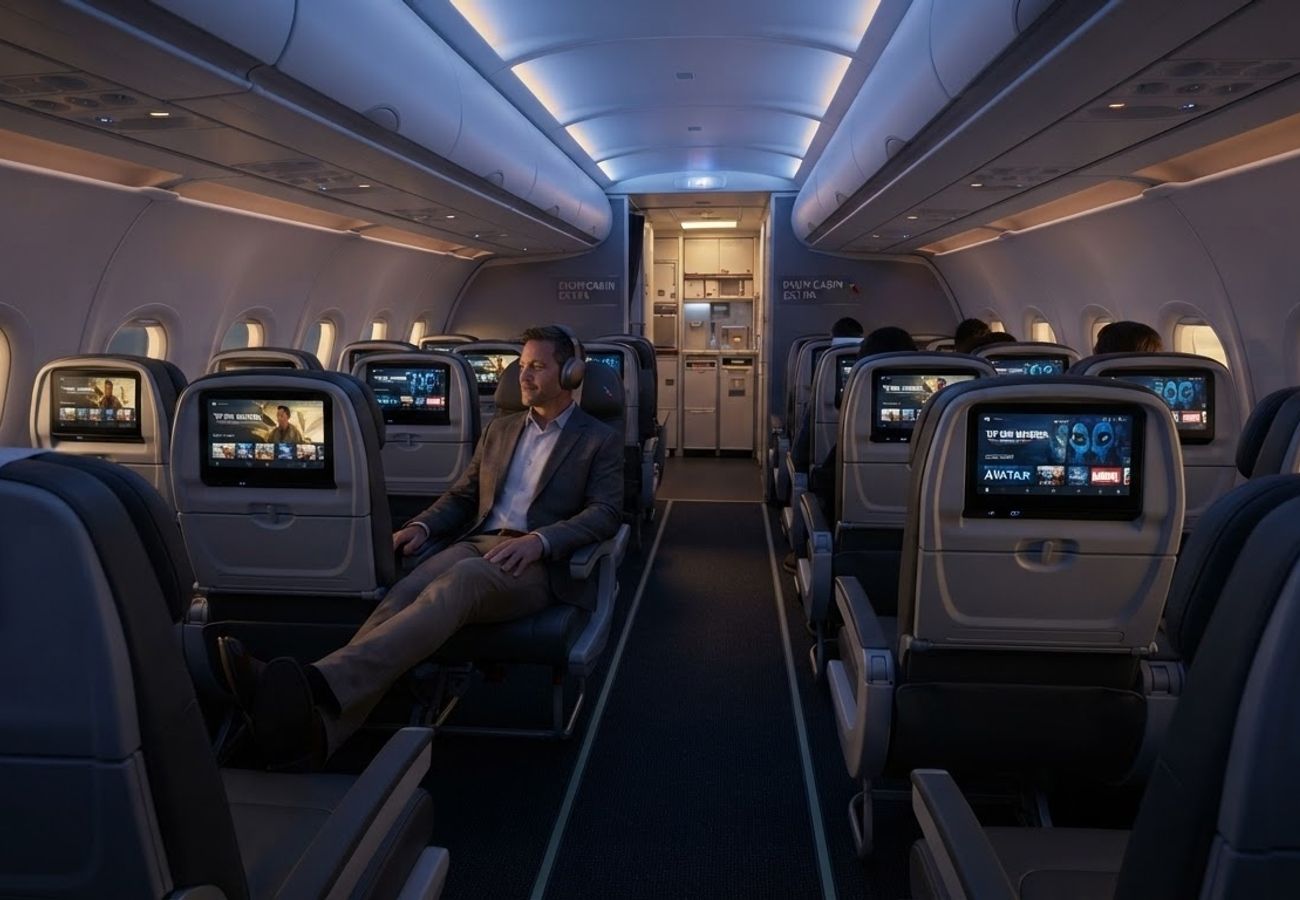
Image generated by AI
American Airlines is abandoning its "bring-your-own-device" entertainment model to reinstall seatback screens across its entire narrowbody fleet. This pivot, alongside a massive expansion of premium seating, marks a strategic shift to recapture the high-yield business travel market.
The largest carrier in the United States has announced a comprehensive overhaul of its domestic cabin experience. Beginning in 2028, American Airlines will ensure every seat on its narrowbody aircraft is equipped with an entertainment screen, ending a multi-year era where passengers were encouraged to stream content on personal tablets and smartphones.
This initiative is not merely about entertainment; it is a calculated move to increase the airline's revenue per seat. By upgrading the physical environment and the digital interface, the carrier aims to align its domestic product with the luxury standards found on its long-haul widebody flights.
Aggressive Expansion of Premium Cabin Capacity
A central pillar of this transformation is the redistribution of cabin space. American Airlines intends to significantly increase the proportion of premium seats on its narrowbody aircraft to better serve corporate travelers and luxury seekers.
- Current Premium Share: Approximately 25% of seating.
- Future Target: Nearly 40% of seating.
The expansion will focus on increasing the number of First Class seats and Main Cabin Extra options. Passengers in the Main Cabin Extra section will continue to benefit from enhanced perks, including:
- Increased legroom and dedicated overhead bin space.
- Priority boarding access.
- Complimentary beverage services.
This shift reflects a broader trend in US aviation where carriers are prioritizing "high-value" passengers. While premium travelers make up a smaller percentage of total passenger volume, they contribute a disproportionately high share of overall earnings.
The Return of Onboard Entertainment Systems
The decision to return to seatback screens marks a total reversal of the airline's previous digital strategy. While the "BYOD" (Bring Your Own Device) approach reduced aircraft weight and maintenance costs, it failed to meet the evolving expectations of domestic passengers.
Starting in 2028, newly delivered aircraft will come factory-equipped with these systems, while older planes will undergo a rigorous retrofit process. The new hardware is designed for the modern digital nomad and leisure traveler, featuring:
- High-resolution large displays.
- Integrated USB-C charging ports to eliminate battery anxiety.
- Bluetooth audio connectivity for personal headphones.
- On-demand access to movies, music, games, and real-time flight data.
Fleet Impact and Implementation Timeline
The scale of this rollout is massive, affecting the core of American's domestic network. The airline has identified more than 800 narrowbody aircraft for these technology upgrades.
Targeted Aircraft Models
The retrofit and new-delivery program will specifically target the following aircraft families:
- Airbus: A319, A320, and the A321 family.
- Boeing: Future 737 MAX deliveries.
While the first factory-installed systems will enter service in 2028, the retrofit of the existing fleet is a long-term project expected to continue into the early 2030s. This ensures that the transition to a fully connected fleet is phased without causing catastrophic schedule disruptions.
Strategic Implications for US Domestic Travel
For the average passenger, these changes resolve several pain points associated with domestic flying. The reliance on personal devices often creates friction for families with children or travelers who lack compatible electronics. By providing a standardized entertainment experience, American Airlines removes these barriers.
Furthermore, the airline is pairing these hardware upgrades with investments in faster onboard internet. The combination of high-speed connectivity, USB-C power, and upgraded seating is intended to make the domestic experience comparable to the leading global carriers.
By investing in the physical "hard product," American Airlines is positioning itself to compete more aggressively for loyalty. In a market where price parity often exists between major carriers, the onboard experience—specifically comfort and connectivity—becomes the primary deciding factor for the passenger.
Summary of Fleet Transformations
| Feature | Current State (Pre-2028) | Future State (2028 & Beyond) |
|---|---|---|
| Premium Seat Share | ~25% | Nearly 40% |
| Entertainment | Device-based (BYOD) | Fleetwide Seatback Screens |
| Charging | Limited/Varying | Standardized USB-C |
| Aircraft Scope | Widebody only (Screens) | 800+ Narrowbody Aircraft |
| Primary Focus | Cost efficiency/Weight | Premium Revenue/Passenger Experience |
Key Takeaways
- Hardware Pivot: American Airlines is returning to seatback screens for all narrowbody flights starting in 2028.
- Revenue Strategy: Premium seating will increase from 25% to nearly 40% to attract high-spending business travelers.
- Scale: Over 800 aircraft, including Airbus A320 family and Boeing 737 MAX, will be upgraded.
- Connectivity: The rollout includes USB-C charging and faster onboard Wi-Fi to modernize the domestic experience.
Frequently Asked Questions
When will I see the new screens on my flight? New aircraft will feature them starting in 2028, but the retrofit of existing planes will happen gradually through the early 2030s.
Will this change the price of domestic tickets? While the airline is targeting premium revenue, the increased number of Main Cabin Extra and First Class seats may provide more upgrade opportunities for loyalty members.
Which aircraft are being upgraded? The upgrade focuses on the narrowbody fleet, specifically the Airbus A319, A320, A321, and Boeing 737 MAX.
A bold bet on luxury and legacy hardware to win back the American business traveler.
Related Travel Guides
Disclaimer
This article is for informational and educational purposes only. It does not constitute legal, financial, or professional advice. While we strive to provide accurate and up-to-date information, travel policies, regulations, and conditions change rapidly. Always verify information with official sources before making travel decisions. Nomad Lawyer makes no representations about the accuracy, reliability, completeness, or suitability of the information provided. Readers should consult qualified professionals for advice specific to their circumstances. The views expressed in this article are those of the author and do not necessarily reflect the views of Nomad Lawyer.
Raushan Kumar
Founder & Lead Developer
Full-stack developer with 11+ years of experience and a passionate traveller. Raushan built Nomad Lawyer from the ground up with a vision to create the best travel and law experience on the web.
Learn more about our team →