
American Airlines Launches Philadelphia to Budapest Boeing 787-8 Service Amid $200 Oil Shock and Strait of Hormuz Blockade: How US-Iran Conflict Volatility Accelerates Strategic Transatlantic Fleet Deployment
As the $200 oil crisis and Strait of Hormuz blockade squeeze international airline margins, American Airlines deploys its fuel-efficient Boeing 787-8 on a new nonstop Philadelphia to Budapest route.

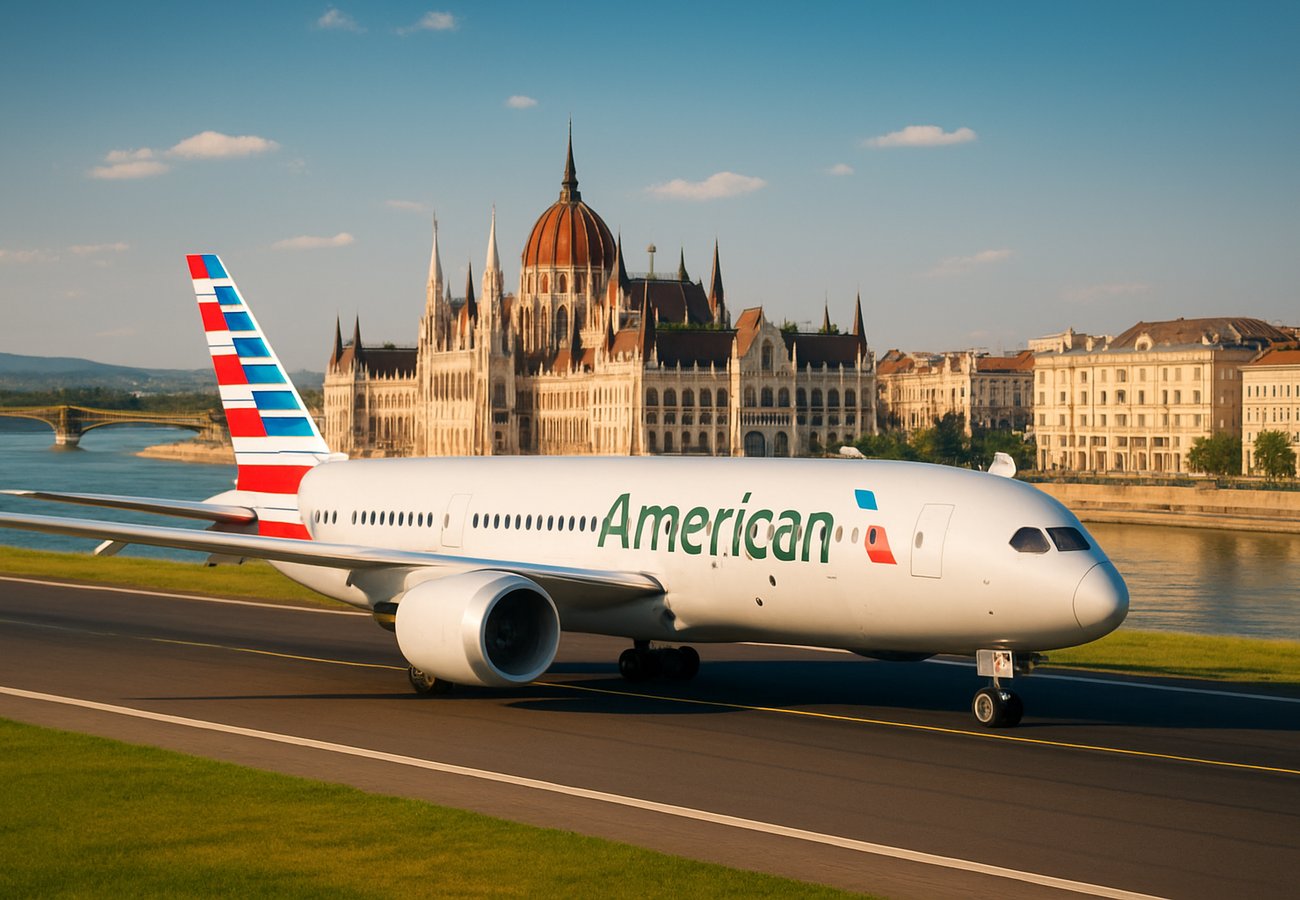
Image generated by AI
The transatlantic aviation sector is executing an aggressive efficiency drive. Confronted by an unprecedented $200 per barrel oil shock and the military blockade of the Strait of Hormuz, international airlines are prioritizing fuel-efficient, widebody fleets and direct-route networks to bypass volatile airspace and minimize soaring operating costs.
Amid this challenging environment, American Airlines has announced a major European expansion: a new nonstop transatlantic route connecting Philadelphia (PHL), United States, directly to Budapest (BUD), Hungary. Launching in summer 2026, the service will deploy the airline's state-of-the-art Boeing 787-8 Dreamliner widebody aircraft, featuring advanced fuel-efficient technology. As the escalating US-Iran conflict drives jet fuel costs to historic heights and places immense pressure on traditional airline models, American Airlines is leveraging advanced aerodynamics and fuel economy to keep travel affordable and accessible between the U.S. East Coast and Central Europe. While major Gulf states like Saudi Arabia, the United Arab Emirates (UAE), and Qatar work to secure energy corridors in the Middle East, Philadelphia is pioneering a highly efficient, direct-transit alternative that avoids fuel-heavy layovers.
Expanded Overview: Dreamliner Efficiency Defies Severe Fuel Squeezes
The ongoing global energy crisis has forced a complete reorganization of international trade and travel logistics. The naval blockade of the Strait of Hormuz—the world’s most critical maritime oil corridor, handling roughly 20% of global petroleum transit—has taken millions of barrels of crude off the market, sending fuel prices soaring.
For the international aviation and shipping sectors, this fuel crisis has made older widebody fleets extremely expensive to operate. To maintain low-cost operations, airlines must focus on fuel efficiency. The Boeing 787-8 Dreamliner is central to this strategy. By offering quieter cabins, larger windows, improved air quality systems, and significantly lower fuel consumption, the aircraft allows American Airlines to operate long-haul routes efficiently, maintaining competitive fares for leisure and business travelers despite the global energy crisis.
Geopolitical Context: Persian Gulf Volatility and the Demand for Direct Routing
The military standoff between the United States and Iran in the Persian Gulf has disrupted major trade corridors and airspace, keeping global energy markets highly volatile.
This conflict has directly impacted major Middle Eastern oil producers—including Saudi Arabia, the UAE, Qatar, Kuwait, Oman, and Bahrain—who are working hard to protect their energy supply lines and secure alternative shipping channels. In this climate of high volatility, airlines are forced to optimize fuel efficiency and fleet capacity. American's new service represents a strategic shift in Central European transit. By offering a direct connection that bypasses traditional layovers, the Philadelphia–Budapest route reduces unnecessary flight time, fuel burn, and takeoff fees, helping to stabilize transatlantic travel networks.
Global Energy Impact: Squeezed Airlines and the Boeing 787-8 Advantage
With oil prices firmly established at $200/bbl, airlines are under intense pressure to optimize their operations. Jet fuel costs have forced carriers to raise airfares, making efficient routing and advanced fleet design essential for business survival.
| Service Element / Metric | Target Value / Specification | Primary Hub Target | Core Strategic Impact |
|---|---|---|---|
| Aviation Route | Philadelphia (PHL) – Budapest (BUD) | East Coast U.S. – Hungary | Direct connectivity bypasses layovers. |
| Launch Timeline | Summer 2026 | Regional leisure markets | Taps into high-value seasonal travel demand. |
| Aircraft Model | Boeing 787-8 Dreamliner | Fuel-Efficient Widebody | Advanced technology reduces fuel burn. |
| Budapest Specialties | History, Architecture, Culture | Thermal Baths & Tourism Hub | Stimulates local hotels and gastronomy. |
| Philadelphia Profile | Historic Sites, Culture, Retail | International Gateway | Boosts East Coast inbound arrivals. |
By utilizing the Boeing 787-8 Dreamliner, American Airlines has successfully insulated its new route from the high fuel surcharges impacting older widebody aircraft, keeping international travel accessible and competitive.
Shipping & Trade Impact: Capacity Bottlenecks and Localized Supply Sourcing
The ongoing Strait of Hormuz blockade has forced cargo fleets to bypass the Suez Canal and route around Africa’s Cape of Good Hope, sending maritime insurance rates soaring by over 500% and delaying global shipments of luxury resort supplies.
For Central Europe and the U.S. East Coast's tourism and business economies, these maritime supply chain delays have made air freight and direct trade connections increasingly important. The new direct flights from Philadelphia offer a faster, more reliable option for moving premium goods, electronic components, and medical supplies between the U.S. and Hungary, bypassing congested sea routes and supporting localized trade networks.
Regional Impact: Strategic Connectivity and Economic Integration
The successful launch of the Philadelphia to Budapest service has received strong support from local communities, business owners, and regional tourism boards:
- Improving Regional Connectivity: Establishing a direct air corridor that connects Hungary and U.S. East Coast travelers, allowing for quick, efficient transit.
- Boosting Budapest's Tourism: Driving inbound tourism to Hungary's capital city, famous for its historic architecture, thermal baths, and vibrant culture.
- Promoting Business Opportunities: Creating a direct, cost-efficient transit route for corporate travelers and tech sector executives to network and collaborate.
- Supporting Local Economies: Stimulating visitor spending on hotels, restaurants, transport, and local tour operators across both metropolitan areas.
Budapest's Role in Europe's Resilient Tourism Economy
Budapest is one of Europe's most famous capitals, offering a wide range of attractions that draw international and domestic visitors year-round:
- Historic Thermal Baths: Serving as the heart of Central Europe's wellness and spa industry, attracting millions of visitors seeking relaxation.
- Stunning Architecture: Offering iconic landmarks like the Hungarian Parliament Building and historic Buda Castle along the Danube River.
- Expanding Tech and Business Hub: Developing a growing technology sector that attracts corporate investment and cross-border business exchanges.
- Vibrant Culinary Scene: Hosting world-class food festivals and offering unique gastronomic experiences that celebrate Hungarian culture.
Industry Analysis: A Masterclass in Widebody Asset Utilization
Transatlantic aviation and economic analysts emphasize that American's widebody strategy is a masterclass in fleet optimization during a global energy crisis.
By actively leveraging the fuel-efficient Boeing 787-8 Dreamliner, expanding regional air connections, promoting direct-routing models, and targeting cost-conscious leisure and business travel, American Airlines has successfully insulated its operations from the economic pressures of high fuel surcharges, ensuring steady growth and high passenger satisfaction.
What Happens Next: Future Scenarios and Fleet Outlook
- Prolonged Energy Crises: If Middle Eastern tensions remain high and oil prices stay at $200/bbl, the travel industry will continue to favor fuel-efficient, direct-routing widebody models. American's focus on high-yield transatlantic connectivity is expected to see sustained growth well into 2027.
- Diplomatic De-escalation: If international diplomatic efforts successfully resolve the US-Iran conflict and stabilize global fuel prices, the fuel-efficient fleets and direct routes established during this crisis will continue to provide American Airlines with a major competitive advantage.
Conclusion
American Airlines' Philadelphia to Budapest direct service represents a major milestone for transatlantic aviation. As the Strait of Hormuz blockade and $200 oil prices continue to disrupt traditional travel economics, the airline has shown that investing in advanced, fuel-efficient widebody aircraft is the ultimate defense against global economic volatility. By expanding regional air connections, upgrading key leisure routes, and focusing on direct-transit efficiency, American is successfully redefining the future of transatlantic travel, proving that adaptability, efficiency, and strategic design are the ultimate keys to economic resilience.
Key Takeaways
- Philadelphia – Budapest Service: American Airlines is launching a new direct route connecting Philadelphia (PHL) to Budapest (BUD).
- Launch Date & Fleet: The direct flight launches in summer 2026, utilizing advanced Boeing 787-8 Dreamliner widebody aircraft.
- Boeing 787-8 Efficiency: The aircraft utilizes advanced fuel-efficient technology with quieter engines, larger windows, and advanced air quality systems.
- Bypassing Congested Hubs: The direct service improves connectivity by bypassing traditional layovers and offering seamless East Coast transit.
- Boosting Regional Economies: The flight is expected to stimulate tourism, business partnerships, and tech trade, driving growth in both the U.S. and Hungary.
FAQ: Philadelphia to Budapest Flight & Geopolitical Volatility 2026
What are the main advantages of American's Boeing 787-8 Dreamliner? The Boeing 787-8 utilizes advanced fuel-efficient technology, offering quieter engines, larger windows, improved air quality, and modern amenities like Wi-Fi and power outlets.
Why is Budapest an important destination for travelers? Budapest is Hungary's historic capital, famous for its thermal baths, stunning Danube architecture, vibrant cultural scene, and expanding business hubs.
How does the global energy crisis affect American's operations? With oil prices at $200/bbl, American's fuel-efficient widebody fleet allows the carrier to keep operating costs low, enabling affordable fares on direct transatlantic routes.
Related Travel Guides
Disclaimer
This article is for informational and educational purposes only. It does not constitute legal, financial, or professional advice. While we strive to provide accurate and up-to-date information, travel policies, regulations, and conditions change rapidly. Always verify information with official sources before making travel decisions. Nomad Lawyer makes no representations about the accuracy, reliability, completeness, or suitability of the information provided. Readers should consult qualified professionals for advice specific to their circumstances. The views expressed in this article are those of the author and do not necessarily reflect the views of Nomad Lawyer.
Kunal K Choudhary
Co-Founder & Contributor
A passionate traveller and tech enthusiast. Kunal contributes to the vision and growth of Nomad Lawyer, bringing fresh perspectives and driving the community forward.
Learn more about our team →