
American Airlines Operated PSA Airlines Flight 5526 From Houston to Washington Reagan Diverts to Richmond International Airport
American Airlines flight 5526 from Houston to Washington National diverted to Richmond International Airport due to terminal airspace constraints.

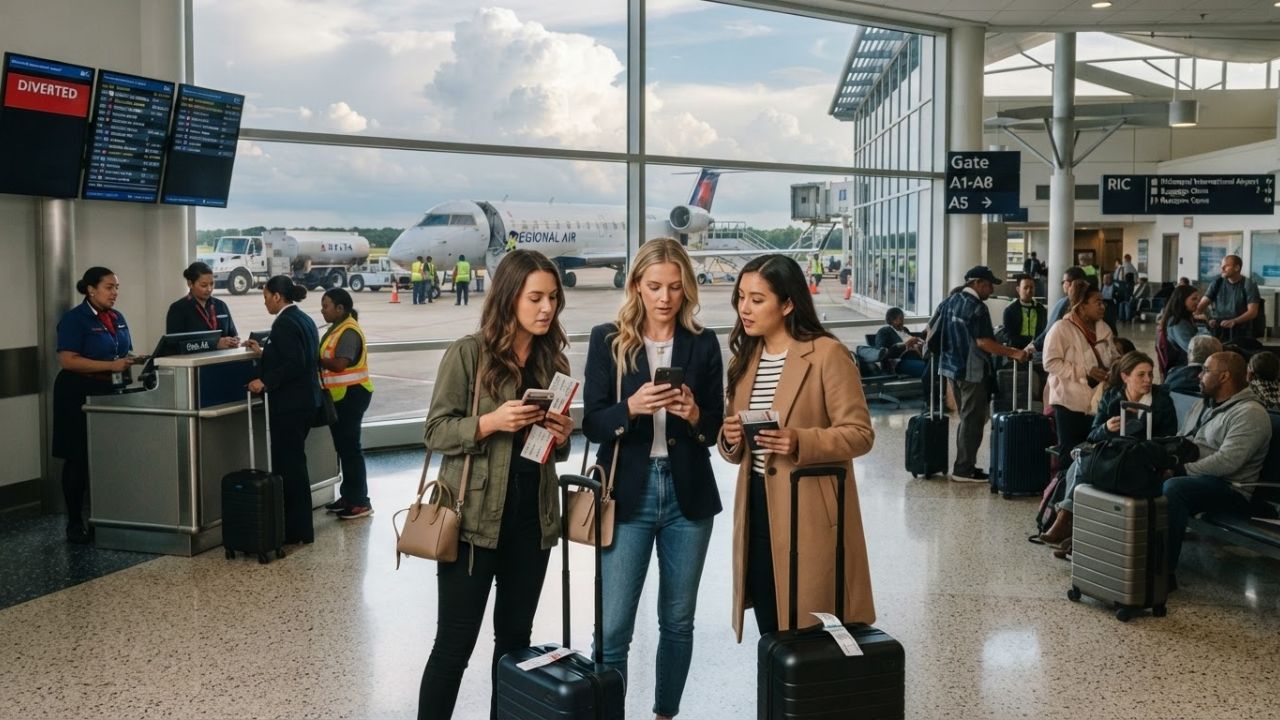
Image generated by AI
[Richmond, July 7, 2026] — The recent American Airlines Flight 5526 diversion from Houston to Richmond International Airport has highlighted operational pressures in the Washington terminal airspace. The regional jet was scheduled to land at Ronald Reagan Washington National Airport.
On July 6, 2026, American Airlines flight 5526, operated by regional partner PSA Airlines, departed George Bush Intercontinental Airport (IAH) in Houston, Texas, at approximately 1:05 PM CDT, following a two-hour delay from its scheduled 10:48 AM departure. The flight, operated by a Canadair Regional Jet CRJ-700 registered as N710PS, was bound for Ronald Reagan Washington National Airport (DCA). However, during its approach to the Washington terminal control area, the flight crew diverted the aircraft to Richmond International Airport (RIC) in Sandston, Virginia, landing at approximately 3:03 PM EDT. Neither American Airlines nor PSA Airlines has officially confirmed the cause of the route change.
Ronald Reagan Washington National Airport (DCA) is one of the most slot-restricted and congested airports in the United States. Due to its proximity to the federal capital, its flight paths are tightly controlled, and any localized weather or air traffic control volume delays immediately trigger ground stops or holding patterns. For regional flights like PSA 5526, carrying fewer passengers than mainline aircraft, air traffic controllers often prioritize larger narrowbody and widebody jets for landing slots. Consequently, regional jets are more likely to be directed to regional alternates like Richmond (RIC) to manage airspace queues. Richmond serves as a practical alternate because of its proximity, allowing the carrier to manage ground arrangements or passenger shuttles to Washington.
Regional Flight From Houston Redirected to Sandston Alternate
The flight diversion disrupted scheduled service between Houston and Washington:
- The flight departed Houston close to its rescheduled departure time of 1:05 PM CDT.
- Airspace constraints near Washington National prompted the redirect to Virginia.
- The flight crew landed safely at Richmond International Airport.
This operational change forced travelers to land far from their planned destination.
Airspace Constraints and Terminal Congestion at Washington National
Air traffic control limitations regularly affect regional routes serving the capital:
- Washington National operates under strict slot controls to manage runway capacity.
- Storm systems along the East Coast quickly reduce airport arrival rates.
- Regional flights are frequently delayed or diverted to keep mainline schedules active.
These adjustments help balance capacity across the regional airport network.
Passenger Accommodation and Richmond Transit Logistics
The alternate landing changed the travel arrangements for passengers:
- Passengers landing at Richmond required alternative transit options to reach Washington.
- Ground handling crews at Richmond coordinated gate access and bag transfers.
- Airline customer service teams assisted travelers with re-booking options.
These logistics changes demand coordination between dispatch teams and local airport staff.
Alternate Airport Role and Regional Gate Infrastructure
Richmond International Airport served as a key relief point for the carrier:
- Richmond's facilities support regional jets including the CRJ-700.
- Landing at Richmond reduced fuel consumption compared to holding near DCA.
- Secondary airports help maintain overall system safety during peak traffic periods.
This relief role is important for supporting the wider East Coast aviation network.
PSA Airlines Flight 5526 Operations Profile
| Parameter Category | Flight Detail Information |
|---|---|
| Operating Carrier | PSA Airlines (operating for American Airlines) |
| Route Corridor | Houston George Bush (IAH) to Washington National (DCA) |
| Actual Departure Date | July 6, 2026 |
| Aircraft Model | Canadair Regional Jet CRJ-700 (CRJ7) |
| Registration Number | N710PS |
| Scheduled Departure Time | 10:48 AM CDT |
| Actual Departure Time | 1:05 PM CDT |
| Actual Landing Time | 3:03 PM EDT |
| Alternate Landing Airport | Richmond International Airport (RIC), Sandston, Virginia |
| Intended Destination | Ronald Reagan Washington National Airport (DCA) |
Key Takeaways
- Route Diversion: American Airlines flight 5526 diverted to Richmond International Airport instead of Washington National.
- Flight Equipment: The flight utilized a Canadair Regional Jet CRJ-700 registered as N710PS.
- Schedule Timeline: The flight departed Houston at 1:05 PM CDT on July 6, 2026, landing in Richmond at 3:03 PM EDT.
- Unconfirmed Cause: The operating carriers have not yet confirmed the specific reason for the diversion.
Why This Matters
Our analysis of the flight data indicates that the diversion of flight 5526 highlights the operational vulnerability of regional feed services during terminal congestion periods. In high-density airspace like the Washington-New York corridor, slots are managed under strict caps. When delays build up, carriers are forced to make tactical decisions to prioritize mainline flights over regional feeder routes. Redirecting a CRJ-700 to Richmond (RIC) allows the carrier to protect its mainline slots at DCA while minimizing passenger inconvenience, since Richmond is within driving distance of Washington. This shows that regional carriers are often used as operational buffers to absorb airspace delays, highlighting the strategic trade-offs airlines make between hub capacity and regional connectivity.
Industry Outlook
Market trends suggest that regional airlines operating in the Northeast corridor will continue to phase out smaller regional jets in favor of larger dual-class aircraft by 2028 to maximize slot efficiency at congested airports like DCA. Long-term projections indicate that the FAA will implement new arrival management software to optimize terminal spacing, reducing the need for regional diversions during peak hours. Expect Richmond International Airport to expand its dedicated parking facilities to accommodate a growing volume of diverted commercial aircraft from the Washington area.
FAQ
Why did American Airlines flight 5526 divert to Richmond?
The carriers have not released a public explanation, though terminal airspace congestion or weather are typical causes for DCA-bound diversions.
What type of aircraft was used on this flight?
The flight was operated using a Canadair Regional Jet CRJ-700 registered as N710PS.
How far is Richmond International Airport from Washington National?
Richmond International Airport is located approximately 100 miles south of Ronald Reagan Washington National Airport, making it a primary alternate facility.
Related Travel Guides
- Delta Connection Flight 5773 Operated by Republic Airways From LaGuardia to Memphis Diverts to Idaho Falls Regional Airport
- Pakistan International Airlines Launches Direct Lahore to Manchester Service Carrying Three Hundred Twenty-Five Passengers on Inaugural Flight
- Japan Airlines Transfers Tokyo Narita to Chicago Route to American Airlines Under Oneworld Joint Venture Starting March 2027
Disclaimer
This article is for informational and educational purposes only. It does not constitute legal, financial, or professional advice. While we strive to provide accurate and up-to-date information, travel policies, regulations, and conditions change rapidly. Always verify information with official sources before making travel decisions. Nomad Lawyer makes no representations about the accuracy, reliability, completeness, or suitability of the information provided. Readers should consult qualified professionals for advice specific to their circumstances. The views expressed in this article are those of the author and do not necessarily reflect the views of Nomad Lawyer.
Kunal K Choudhary
Co-Founder & Contributor
A passionate traveller and tech enthusiast. Kunal contributes to the vision and growth of Nomad Lawyer, bringing fresh perspectives and driving the community forward.
Learn more about our team →