
American Airlines Flight AAL2884 Airbus A319 Diverts from Phoenix to Las Vegas in July 2026
American Airlines Flight AAL2884, an Airbus A319-112 traveling from Monterey to Phoenix, diverted to Las Vegas on July 20, 2026, resulting in a 2 hour and 34 minute delay.

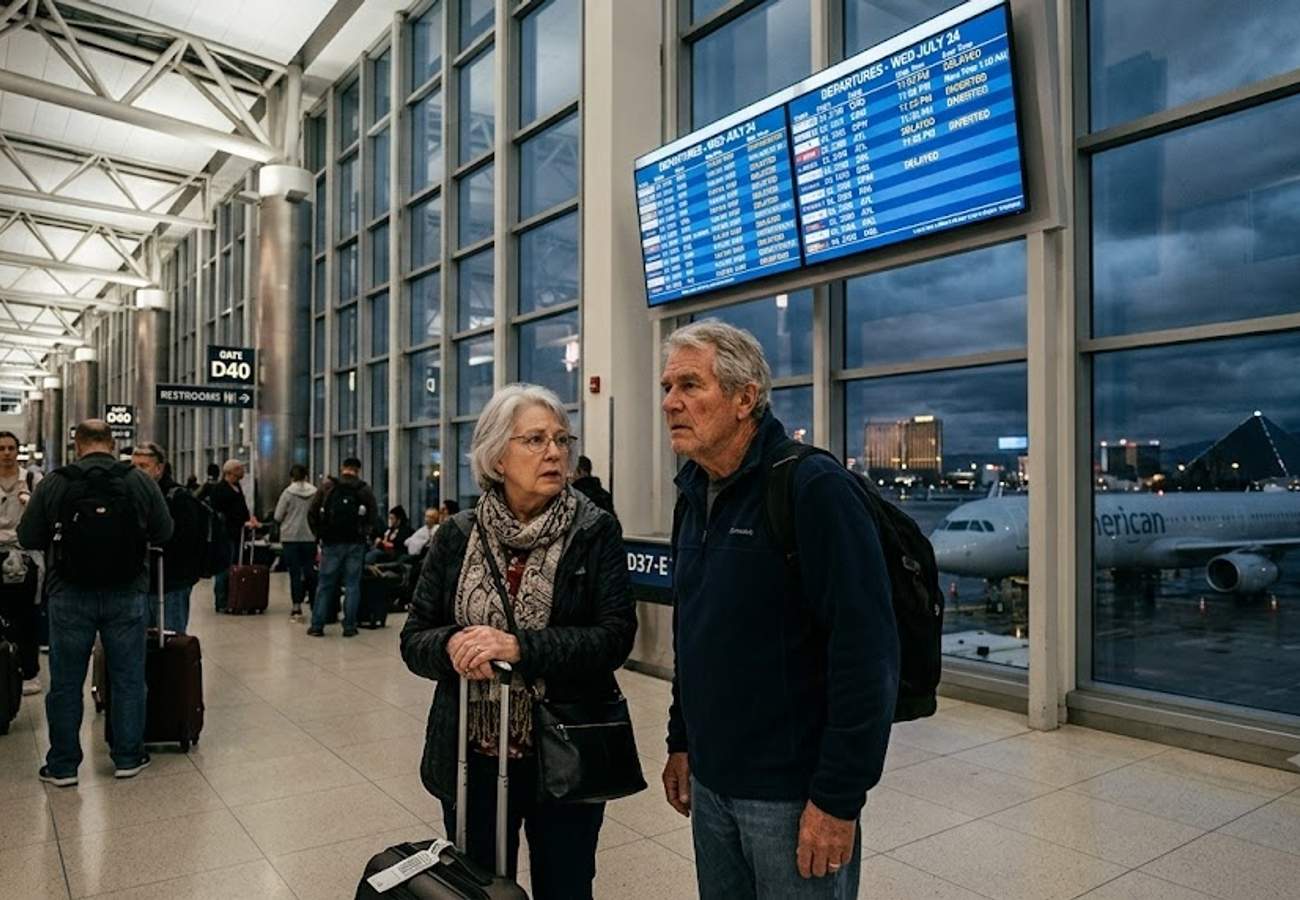
Image generated by AI
American Airlines Flight AAL2884 diverted to Las Vegas on July 20, 2026, after departing Monterey for Phoenix, causing a significant arrival delay for all passengers.
Operational Details of Flight AAL2884
On Monday, July 20, 2026, American Airlines Flight AAL2884 departed from Monterey, California, bound for Phoenix, Arizona. The aircraft, an Airbus A319-112 with registration N712US, took off at 7:09 PM PDT, operating slightly ahead of its scheduled departure time.
Flight tracking data indicates that the aircraft maintained its planned trajectory toward Phoenix for a portion of the journey before the flight crew initiated a course change. Rather than landing at Phoenix Sky Harbor, the aircraft was diverted to Harry Reid International Airport in Las Vegas.
The aircraft touched down in Las Vegas at 11:38 PM PDT. This operational shift resulted in a total arrival delay of 2 hours and 34 minutes compared to the original scheduled arrival time in Phoenix.
Critical Flight Specifications
- Flight Number: AAL2884
- Aircraft Model: Airbus A319-112
- Registration: N712US
- Departure Point: Monterey, California
- Intended Destination: Phoenix Sky Harbor International Airport (PHX)
- Actual Landing Site: Harry Reid International Airport (LAS), Las Vegas
- Departure Time: 7:09 PM PDT (July 20, 2026)
- Actual Arrival Time: 11:38 PM PDT (July 20, 2026)
- Total Delay: 2 hours and 34 minutes
Diversion Analysis and Cause
As of the latest reports, American Airlines has not released a specific official reason for the diversion. In the aviation industry, such routing changes are typically analyzed internally before a public statement is issued.
Industry observers note that diversions are standard precautionary measures. Potential catalysts for such a decision include:
- Unexpected technical indications or aircraft system alerts.
- Medical emergencies involving passengers or crew.
- Air traffic congestion or sudden airport operational constraints.
- Adverse weather conditions at the primary destination.
Aviation safety protocols dictate that a diversion is a proactive decision made by the flight crew in coordination with air traffic control and dispatchers. These actions prioritize passenger safety over schedule adherence.
Passenger Impact and Logistics
The diversion forced American Airlines to manage a displaced passenger load in Las Vegas. Because the aircraft landed at a different airport than intended, the airline was required to implement recovery plans, which typically include:
- Arranging onward transportation to Phoenix.
- Adjusting crew duty hours to comply with legal limits.
- Repositioning the aircraft for subsequent scheduled flights.
- Managing baggage transfers from Las Vegas to the final destination.
Why This Matters: Industry Implication
This incident highlights the rigid application of the "Safety First" culture in modern commercial aviation. While a 2 hour and 34 minute delay is a significant inconvenience for travelers, the decision to divert an Airbus A319 to a secondary hub like Las Vegas demonstrates the effectiveness of real-time operational decision-making.
From an analyst's perspective, the use of Harry Reid International (LAS) as a diversion point for a Phoenix-bound flight is a logical tactical choice given the proximity and infrastructure capabilities of the airport. This ensures that if a technical or medical issue is present, the aircraft lands at a facility capable of providing immediate support.
Forward Outlook
Expect American Airlines to provide a detailed operational report once the internal investigation of N712US is complete. Passengers affected by the diversion may seek clarification on compensation or travel vouchers depending on the final determined cause (e.g., mechanical failure vs. weather).
Flight data confirms a safe landing; further official updates are pending.
Related Travel Guides
Disclaimer
This article is for informational and educational purposes only. It does not constitute legal, financial, or professional advice. While we strive to provide accurate and up-to-date information, travel policies, regulations, and conditions change rapidly. Always verify information with official sources before making travel decisions. Nomad Lawyer makes no representations about the accuracy, reliability, completeness, or suitability of the information provided. Readers should consult qualified professionals for advice specific to their circumstances. The views expressed in this article are those of the author and do not necessarily reflect the views of Nomad Lawyer.
Preeti Gunjan
Contributor & Community Manager
A passionate traveller and community builder. Preeti helps grow the Nomad Lawyer community, fostering engagement and bringing the reader experience to life.
Learn more about our team →