
American Airlines Flight AA836 Diverted to Minneapolis Amid Nationwide Holiday Travel Congestion
American Airlines flight AA836 faced an 11-hour delay and diverted to Minneapolis on July 5, 2026, as severe weather collided with holiday passenger volumes.

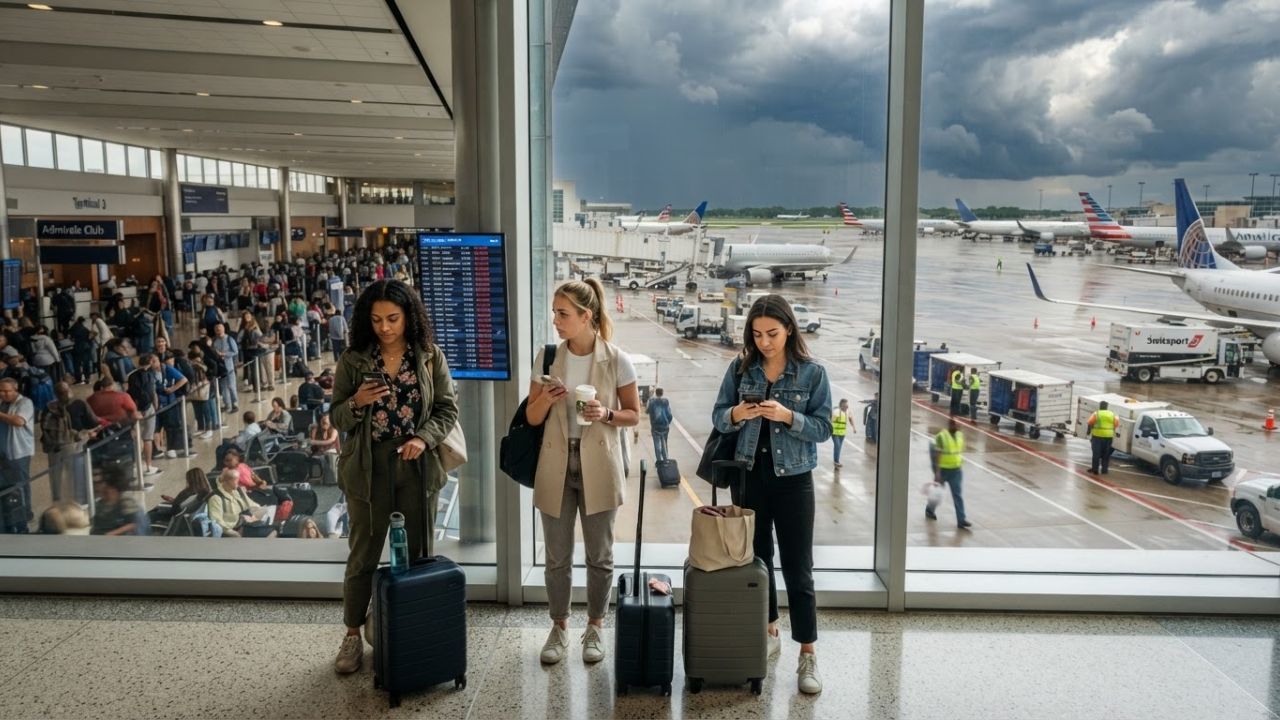
Image generated by AI
A major American Airlines flight AA836 diversion occurred on July 5, 2026, when an Airbus A321neo flying from Charlotte to Chicago diverted to Minneapolis-Saint Paul International Airport (MSP). The flight faced an 11-hour delay as severe weather disrupted transit networks during the holiday travel rush.
Strategic Exit from New York JFK and Midwestern Routes
The flight was scheduled to depart Charlotte Douglas International Airport (CLT) at 1:05 PM. However, systemic ground congestion kept the twin-engine Airbus on the tarmac for seven and a half hours, delaying takeoff until 8:27 PM.
Once airborne, the aircraft encountered severe convective weather cells across northern Illinois. The pilots deviated from standard routing before choosing to divert to Minneapolis, landing at 10:08 PM.
Following a two-hour refueling and gate stop, the flight resumed its path to Chicago. The aircraft finally landed at O'Hare at 1:22 AM, nearly 11 hours behind its original schedule.
Midwest Weather Systems and Airspace Instability
Flight tracking data indicates that convective storm cells swept across Illinois during the afternoon. The atmospheric instability forced air traffic controllers to issue ground stops for both O’Hare and Midway airports.
Multiple aircraft were routed into holding patterns over the Great Lakes. The high density of flights quickly exhausted holding airspace capacity, necessitating diversions to alternate airfields.
Minneapolis-Saint Paul International Airport (MSP) functioned as a key holding station for diverted traffic. Airfield operators coordinated ground schedules to handle the unscheduled holiday arrivals.
O'Hare Capacity Constraints and FAA Runway Caps
Chicago O’Hare International Airport recorded over 600 flight cancellations and 1,000 delays during the storm. As one of the busiest hubs in the world, O'Hare suffers from minimal operational buffer during weather events.
Competing hub carriers are expanding daily operations at O’Hare, with one carrier targeting 500 daily flights and another pushing toward 750 daily departures. This schedule concentration has prompted federal intervention.
To stabilize runway loads, the Federal Aviation Administration has capped daily operations at O’Hare to approximately 2,800 flights. However, storm disruptions still trigger immediate delays that cascade nationwide.
Passenger Rights and Weather Compensation Guidelines
The widespread disruptions highlight the limitations of current passenger protection policies in the United States. Under Department of Transportation rules, convective weather delays are classified as uncontrollable events.
Consequently, airlines are not legally required to provide hotel vouchers or meal compensation for weather-related detours. Passengers are eligible for refunds only if they choose to cancel their tickets rather than travel.
Because the passengers on flight AA836 completed their journey to Chicago, standard refund protocols did not apply. This regulatory framework places the burden of accommodation costs on the travelers themselves.
| Operational Parameter | Flight Specification Details |
|---|---|
| Flight Number | American Airlines AA836 |
| Operating Aircraft | Airbus A321neo |
| Departure Airport | Charlotte Douglas International Airport (CLT) |
| Scheduled Destination | Chicago O'Hare International Airport (ORD) |
| Diversion Airport | Minneapolis–St. Paul International Airport (MSP) |
| Scheduled Departure Time | 1:05 PM (July 4, 2026) |
| Actual Departure Time | 8:27 PM (July 4, 2026) |
| Arrival at Destination | 1:22 AM (July 5, 2026) |
| Total Route Delay | Approximately 11 hours |
Why This Matters
Our analysis of the flight data indicates that the AA836 delay is a symptom of "load stacking" where holiday travel peaks, capacity expansions, and severe weather systems collide. When the TSA reports travel volumes near 18.7 million passengers, major hub airports like O'Hare operate at absolute capacity. Under these conditions, the loss of a single runway configuration due to wind shear triggers a domino effect of delays across the entire domestic network. Because regional and transcontinental schedules are tightly integrated, a ground delay in Charlotte forces aircraft into overnight duty limit issues, leaving airlines unable to recover schedules without canceling hundreds of connecting flights.
Industry Outlook
Market trends suggest that airlines will increasingly schedule wider aircraft turnaround times during peak summer travel periods to prevent delay propagation. Long-term projections indicate that the Department of Transportation will face pressure to update passenger compensation rules, potentially aligning them with European standards for carrier-controllable delay recovery. Expect major hubs to integrate predictive weather routing tools directly into air traffic control databases to reduce the frequency of last-minute transcontinental diversions.
Frequently Asked Questions: AA836 Flight Diversion
Why was American Airlines flight AA836 delayed for 11 hours?
The flight faced a 7.5-hour ground delay in Charlotte due to airspace congestion, followed by a weather diversion to Minneapolis due to storms in Chicago.
Are passengers entitled to compensation for weather-related flight diversions?
No. Under US Department of Transportation rules, weather delays are uncontrollable events, meaning airlines are not required to provide hotel or meal compensation.
How many flights were cancelled at Chicago O'Hare during the disruption?
O'Hare recorded over 600 cancellations and more than 1,000 flight delays on the day of the storm.
Related Travel Guides
Disclaimer
This article is for informational and educational purposes only. It does not constitute legal, financial, or professional advice. While we strive to provide accurate and up-to-date information, travel policies, regulations, and conditions change rapidly. Always verify information with official sources before making travel decisions. Nomad Lawyer makes no representations about the accuracy, reliability, completeness, or suitability of the information provided. Readers should consult qualified professionals for advice specific to their circumstances. The views expressed in this article are those of the author and do not necessarily reflect the views of Nomad Lawyer.
Kunal K Choudhary
Co-Founder & Contributor
A passionate traveller and tech enthusiast. Kunal contributes to the vision and growth of Nomad Lawyer, bringing fresh perspectives and driving the community forward.
Learn more about our team →