
American Airlines Flight AA1931, Boeing 737-800, from Houston to Miami diverts to Louis Armstrong New Orleans International Airport, United States: You Need to Know
American Airlines flight AA1931 (Boeing 737-800) from Houston to Miami diverted to New Orleans Airport (MSY) on June 29,

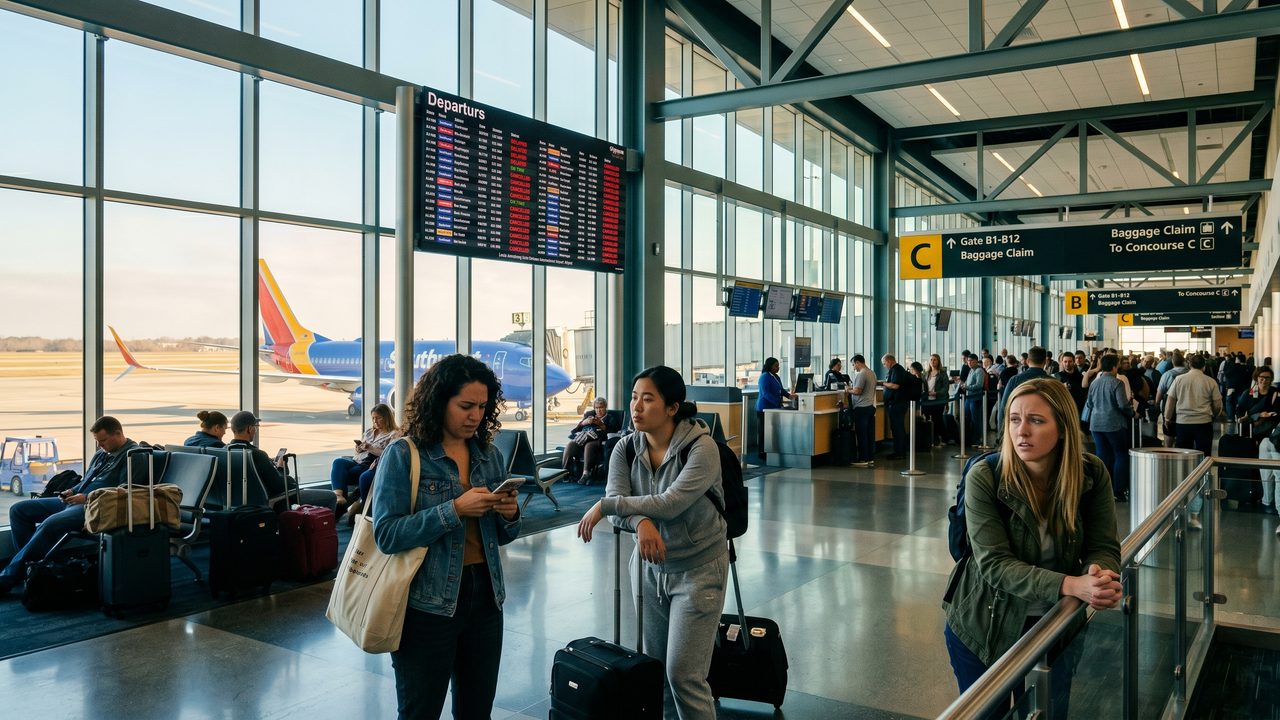
Image generated by AI
[New Orleans, June 29, 2026] — An American Airlines flight traveling from Houston to Miami was forced to divert to Louis Armstrong New Orleans International Airport on June 29, 2026, following an operational disruption. The aircraft, a Boeing 737-800 operating as flight AA1931, was redirected to New Orleans to ensure passenger safety and maintain aviation security protocols.
Operational Disruption on the Houston-Miami Route
The flight path between Houston and Miami is one of the most heavily trafficked corridors in the United States, serving as a vital link for both corporate travel and international tourism. Miami International Airport (MIA) functions as a primary hub for travelers heading to the Caribbean and Latin America, while Houston (IAH) serves as a central node for passengers moving across the southern U.S.
When AA1931 experienced the necessity for a diversion, it triggered a cascade of minor scheduling adjustments. According to industry observers, such diversions are standard safety measures mandated by the Federal Aviation Administration (FAA) when pilots identify weather risks, medical emergencies, or technical operational requirements. By rerouting to New Orleans, the flight crew adhered to established safety frameworks that prioritize the integrity of the aircraft and the welfare of those on board over strict adherence to the original flight plan.
Louis Armstrong New Orleans International Airport Serves as Strategic Alternate
The selection of Louis Armstrong New Orleans International Airport (MSY) as the landing site was a strategic decision based on the aircraft's position within the Gulf air corridor. MSY is recognized within federal aviation planning as a critical alternate for flights traversing the region between Texas and Florida.
The Boeing 737-800, a mainstay of the American Airlines domestic fleet, is specifically designed for these short-to-medium haul routes. Its operational versatility allows it to be rerouted to regional airports like MSY efficiently. Aviation reports indicate that the presence of such robust alternate landing sites is essential for maintaining the stability of the Gulf Coast aviation network, preventing total route collapses when a single flight encounters an issue.
Impact on Passenger Logistics and Tourism Connectivity
The diversion of AA1931 created immediate ripple effects for passengers and ground operations in both Houston and Miami. Because the aircraft did not arrive at its destination on schedule, the flow of passengers into Miami was delayed, which impacted several downstream tourism services.
Industry sources indicate that the following sectors experienced temporary disruptions:
- Hotel Transfers: Pre-arranged shuttles and concierge services in Miami faced timing shifts.
- Cruise Departures: Passengers with tight connections to cruise terminals faced potential delays.
- Connecting Flights: Onward travel arrangements for passengers transitioning through Miami to international destinations were recalibrated.
In Houston, the diversion necessitated minor adjustments to aircraft rotation patterns. When a plane is diverted, the subsequent flights assigned to that specific aircraft must be rescheduled or swapped, creating a brief period of volatility in the departure schedule.
Aviation Safety Data and Route Specifications
The following table outlines the specific details regarding the diverted operation:
| Flight Detail | Information |
|---|---|
| Flight Number | AA1931 |
| Airline | American Airlines |
| Aircraft Type | Boeing 737-800 |
| Departure Point | Houston, Texas (IAH) |
| Intended Destination | Miami, Florida (MIA) |
| Diversion Airport | Louis Armstrong New Orleans International (MSY) |
| Date of Incident | June 29, 2026 |
| Regulatory Oversight | Federal Aviation Administration (FAA) |
Resilience of the Gulf Coast Aviation Infrastructure
Despite the disruption, the incident underscores the resilience of the U.S. domestic aviation system. The seamless transition of AA1931 from its planned trajectory to a safe landing in New Orleans demonstrates the effectiveness of FAA-regulated safety standards. These protocols ensure that pilots have the authority and the infrastructure support to make real-time decisions that protect passenger lives.
The integration of IAH, MIA, and MSY into a cohesive network allows the aviation system to absorb shocks. Rather than resulting in a total cancellation of the route, the diversion allowed the airline to manage the crisis in a controlled environment, eventually restoring the flow of passengers toward their final destinations.
Why This Matters: The Broader Aviation Perspective
The diversion of AA1931 is more than a simple scheduling delay; it is a practical demonstration of "infrastructure redundancy" in aviation. In high-density tourism corridors, the reliance on a single path is a vulnerability. By utilizing New Orleans as a strategic relief valve, the aviation network prevents a localized issue from becoming a systemic failure.
From an industry perspective, this event highlights the critical role of narrow-body aircraft like the Boeing 737-800 in maintaining domestic connectivity. Their ability to land at a variety of airport sizes—from massive hubs like Miami to regional alternates like New Orleans—provides airlines with the flexibility needed to handle emergencies without grounding entire fleets.
Furthermore, this incident emphasizes the interdependence of aviation and the wider tourism economy. The delay of a single flight can impact hotel occupancy and cruise manifests, proving that aviation stability is the bedrock of the travel industry's financial health. The fact that the disruption was absorbed with minimal long-term impact reinforces confidence in the safety and reliability of the Gulf Coast's aerial infrastructure.
Related Travel Guides
Disclaimer
This article is for informational and educational purposes only. It does not constitute legal, financial, or professional advice. While we strive to provide accurate and up-to-date information, travel policies, regulations, and conditions change rapidly. Always verify information with official sources before making travel decisions. Nomad Lawyer makes no representations about the accuracy, reliability, completeness, or suitability of the information provided. Readers should consult qualified professionals for advice specific to their circumstances. The views expressed in this article are those of the author and do not necessarily reflect the views of Nomad Lawyer.
Raushan Kumar
Founder & Lead Developer
Full-stack developer with 11+ years of experience and a passionate traveller. Raushan built Nomad Lawyer from the ground up with a vision to create the best travel and law experience on the web.
Learn more about our team →