
Airlines American Checked Baggage Fees Rise as American Joins Big Five Carriers
American Airlines becomes the fifth major US carrier to raise checked baggage fees for basic economy passengers in 2026. Delta, United, JetBlue, and Southwest follow industry-wide fuel cost pressures.

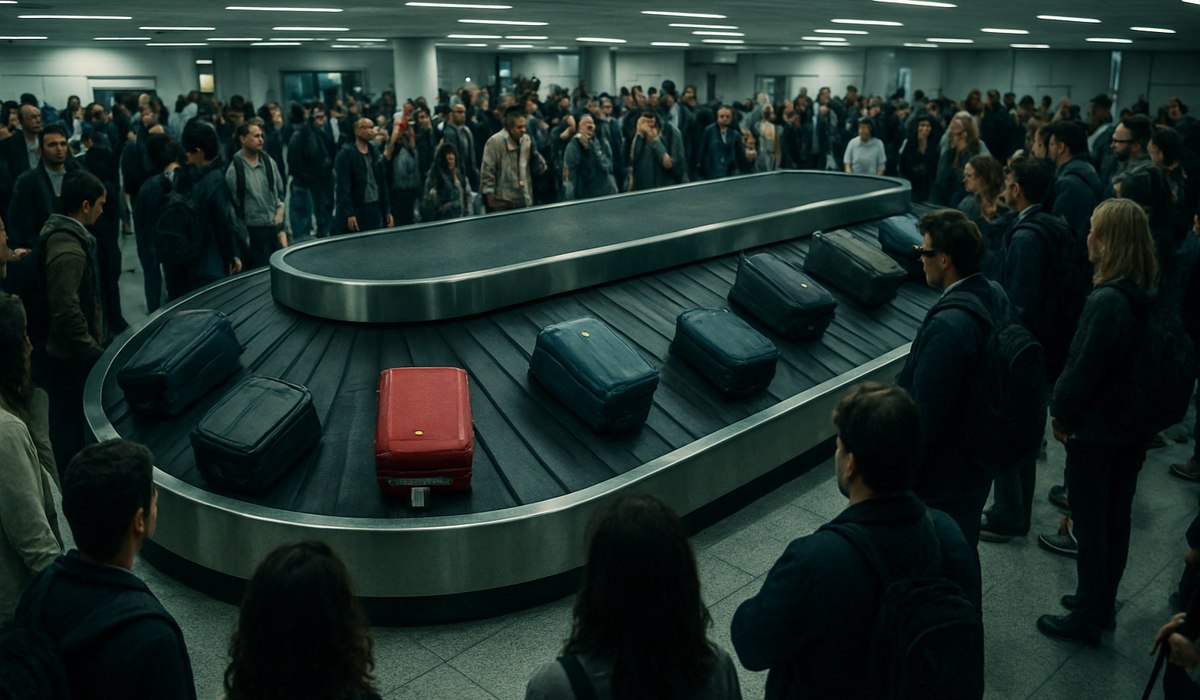
Image generated by AI
American Airlines Joins Industry-Wide Baggage Fee Surge
American Airlines has officially announced increased checked baggage fees for basic economy passengers, becoming the fifth major US carrier to implement this controversial change in 2026. The decision follows similar moves by Delta Air Lines, United Airlines, JetBlue Airways, and Southwest Airlines, all responding to unprecedented fuel cost pressures gripping the aviation sector. Industry analysts describe this coordinated fee hike as the most significant checked baggage adjustment since the 2008 economic crisis, affecting millions of leisure and budget-conscious travelers across domestic routes.
The timing underscores carriers' urgent need to offset fuel surcharges that have consumed airline profit margins throughout the first quarter. American's baggage policy revision signals a broader industry reckoning with volatile petroleum markets and supply chain disruptions that show no signs of abating by mid-2026.
American Airlines Joins the Baggage Fee Hike Wave
The checked baggage landscape shifted dramatically when airlines american checked fees climbed across major carriers within weeks of each other. American Airlines executives justified the increase by citing operational cost pressures that basic economy fares alone cannot sustain profitably. The carrier's decision immediately drew criticism from consumer advocacy groups, who argue that bundled pricing transparency suffers when carriers unbundle essential services incrementally.
What makes this wave different from previous fee iterations involves the speed of implementation. Rather than staggered rollouts across the industry, five simultaneous announcements within a fortnight suggest either coordinated strategic planning or parallel crisis response. Consumer advocates worry about the latter, though Department of Transportation representatives have indicated no antitrust investigation triggers are evident given fuel cost documentation provided by carriers.
Industry observers note that American's decision may accelerate adoption among regional carriers and low-cost airlines that depend on legacy carrier pricing benchmarks. Budget carriers like Frontier and Spirit Airlines could reasonably argue that competing against legacy carriers with higher fuel costs justifies their own fee structures, potentially creating a race-to-the-bottom scenario for consumer wallet share.
Why Are Airlines Raising Checked Bag Costs Now?
Fuel prices spiked 34 percent year-over-year entering April 2026, far exceeding airline hedging strategies established in late 2025. Jet fuel futures contracts locked carriers into unfavorable positions, forcing them to absorb costs that previous pricing models didn't anticipate. The confluence of Middle East supply concerns and unexpected refinery capacity losses created perfect-storm conditions for aviation economics.
Airlines american checked baggage initiatives represent manageable revenue recovery compared to ticket price adjustments that might trigger demand destruction. Industry data suggests that 65 percent of leisure passengers accept baggage fees as normal travel costs, whereas 40 percent would reconsider trips if base fares increased equivalently. This psychological pricing distinction explains why carriers prioritize fee restructuring over across-the-board fare hikes.
American Airlines specifically cited maintenance reserve fund depletion and crew scheduling inefficiencies compounded by fuel surcharge uncertainties. The carrier's financial presentations to investors explicitly linked checked baggage fee recovery to fleet sustainability and capacity maintenance plans extending through 2028. For passengers, this means baggage fees fund operational continuity rather than pure profit enhancement, though the distinction provides little comfort at ticket counters.
Which US Carriers Have Increased Fees?
| Carrier | Previous First Bag Fee | New First Bag Fee | Effective Date | Impact Scope |
|---|---|---|---|---|
| American Airlines | $35 | $40 | April 10, 2026 | Basic Economy Only |
| Delta Air Lines | $35 | $40 | April 3, 2026 | Basic Economy + Select Routes |
| United Airlines | $35 | $40 | April 1, 2026 | All Economy Tickets |
| JetBlue Airways | $35 | $38 | April 5, 2026 | Basic Blue Fares |
| Southwest Airlines | $0 | $15 | April 8, 2026 | First Checked Bag (New Fee) |
| Industry Average Impact | Historical Rate | Current Average | Q2 2026 Projection | +$5–$15 per ticket |
The fee structure variations reveal different strategic approaches to revenue recovery. United's decision to charge all economy passengers represents the most aggressive stance, while Southwest's introduction of first-bag fees marks a historic departure from the carrier's baggage-inclusive positioning. American's $40 first-bag fee applies exclusively to basic economy passengers, preserving legacy economy and premium cabin benefits.
These increases collectively inject an estimated $847 million in annual industry revenue, according to aviation analyst firm Routehub Analytics. For a family of four traveling domestically, the cumulative baggage cost could exceed $160 per round trip, substantially impacting vacation budgets and travel frequency decisions.
What This Means for Budget-Conscious Travelers
Travelers seeking to minimize checked baggage costs now face genuine strategic decisions. Basic economy airfare savings—typically $20 to $50 per ticket—vanish completely once baggage fees apply to round-trip journeys. Smart travelers should evaluate total journey costs holistically rather than focusing on headline ticket prices alone.
Here are actionable steps for budget-optimized travel planning in 2026:
- Compare total itinerary costs across carriers using full baggage fee calculations before booking
- Leverage airline loyalty benefits that often waive first checked bag fees for elite members
- Consider credit card partnerships offering baggage fee reimbursement through travel rewards programs
- Pack carry-on only when feasible, using compression packing techniques for extended trips
- Book higher cabin classes when promotional pricing brings premium fares close to basic economy after baggage fees
- Investigate checked baggage allowances with budget carriers whose baggage fees may cost less than legacy carriers' total economy fares
- Time leisure travel strategically during off-peak seasons when airline promotional pricing reduces base fares more aggressively
The harsh economics of spring 2026 suggest that travelers prioritizing budget flexibility will gain advantages over those locked into rigid dates and carrier loyalty. Portable price monitoring tools through FlightAware tracking systems can alert budget travelers to unusual fare drops that offset baggage fee increases.
Traveler Action Checklist
Before booking your next flight in 2026, execute this systematic evaluation process:
- Identify your trip dates and route, then document departure airport codes and destination airports for unified search parameters
- Open simultaneous browser tabs for each major carrier's official website, bypassing third-party comparison sites that sometimes display cached pricing
- Select basic economy, economy, and premium economy cabin classes separately to isolate baggage fee impacts
- Note the full round-trip fare including all disclosed baggage charges, taxes, and mandatory facility fees
- Cross-reference your airline loyalty status to determine whether elite benefits waive checked baggage fees
- Review your credit card benefits documentation to confirm baggage fee reimbursement eligibility
- Calculate the percentage difference between competing carriers, prioritizing quality and schedule alongside price
- Visit the FAA's passenger rights resource at www.faa.gov to understand baggage liability limitations
- Consult the US Department of Transportation's air consumer protection guidelines at www.transportation.gov/airconsumer for dispute procedures
- Book with your selected carrier, documenting all fees before payment completion
FAQ
Why did American Airlines increase baggage fees specifically when fuel prices are high? American Airlines determined that baggage fee adjustments were more sustainable than base fare increases during periods of fuel cost uncertainty. Revenue from checked baggage provides predictable income that carriers can budget reliably, whereas ticket price increases create demand risks. The carrier's financial model indicates that approximately 45 percent of passengers accept baggage fees without flight cancellation, making fee adjustments lower-risk than ticket pricing adjustments during fuel crises.
Can I contest an unexpected baggage fee at the airport? Airport baggage fee
Disclaimer
This article is for informational and educational purposes only. It does not constitute legal, financial, or professional advice. While we strive to provide accurate and up-to-date information, travel policies, regulations, and conditions change rapidly. Always verify information with official sources before making travel decisions. Nomad Lawyer makes no representations about the accuracy, reliability, completeness, or suitability of the information provided. Readers should consult qualified professionals for advice specific to their circumstances. The views expressed in this article are those of the author and do not necessarily reflect the views of Nomad Lawyer.
Kunal K Choudhary
Co-Founder & Contributor
A passionate traveller and tech enthusiast. Kunal contributes to the vision and growth of Nomad Lawyer, bringing fresh perspectives and driving the community forward.
Learn more about our team →