
American Airlines and STARLUX Expand Taiwan Connectivity With New Codeshare
American Airlines and STARLUX Expand Taiwan Connectivity With New Codeshare

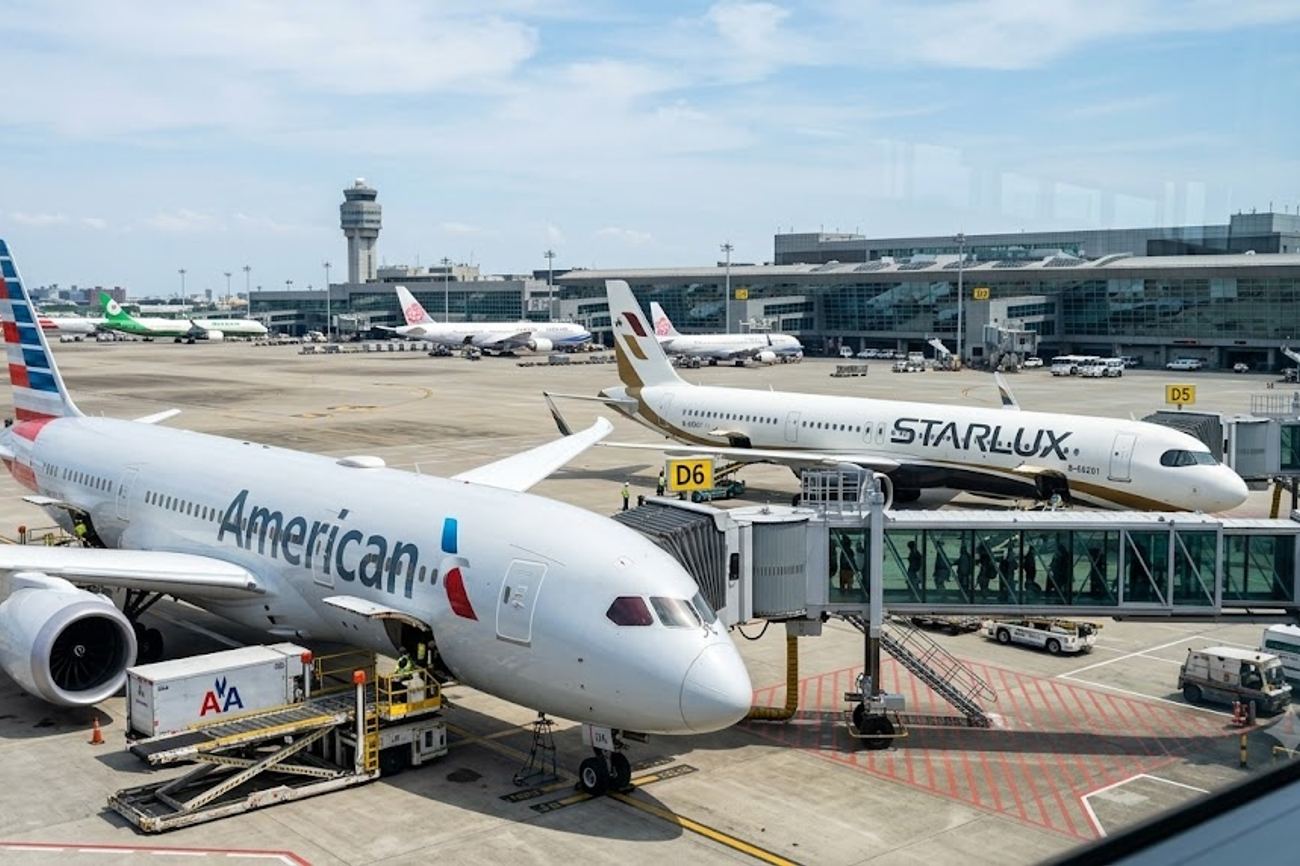
Image generated by AI
September 30, 2026, marks the projected activation date for a reciprocal codeshare agreement between American Airlines and STARLUX Airlines, a move that transforms a basic interline connection into a deeply integrated commercial partnership. This shift allows both carriers to sell seats on each other's aircraft under their own flight designators, effectively merging the domestic reach of one of the world's largest airlines with the aggressive trans-Pacific expansion of Taiwan's newest luxury carrier.
The Evolution from Interline to Codeshare
To understand the significance of this move, one must distinguish between the interline agreement established in 2025 and the upcoming codeshare. The 2025 arrangement was a foundational logistical step; it permitted passengers to book a single ticket across both airlines and ensured that baggage was checked through to the final destination. This initial phase already linked Taipei to major U.S. hubs including Dallas-Fort Worth, Miami, Charlotte, Chicago, Boston, Philadelphia, and New York.
However, a codeshare is a more sophisticated commercial instrument. As defined by the U.S. Department of Transportation (DOT), a codeshare occurs when an airline places its own designator code on a flight operated by another carrier. For the traveler, this means the booking process is seamless, often allowing for unified mileage accrual and simplified check-in procedures. For the airlines, it is a strategic play to capture market share without the massive capital expenditure of purchasing new aircraft or securing additional landing slots.
Network Expansion and Gateway Dynamics
The integration focuses on four primary U.S. gateways that serve as the bridge to Taipei Taoyuan International Airport. American Airlines will place its code on STARLUX-operated flights departing from:
- Los Angeles
- Ontario
- San Francisco
- Seattle
Conversely, STARLUX will market its code on a wide array of American-operated domestic flights. This allows passengers arriving in the U.S. via STARLUX to connect effortlessly to destinations including New York, Philadelphia, Miami, Chicago, Dallas-Fort Worth, Denver, Las Vegas, Charlotte, and Atlanta.
A notable nuance in the data involves the Phoenix market. STARLUX launched a nonstop Taipei–Phoenix service in January 2026, with schedules confirming operations through October 2026. While Phoenix is a critical node in the STARLUX network, it is not among the four trans-Pacific routes carrying an American code. Instead, Phoenix serves as a domestic feeder point where STARLUX will market American-operated flights, creating a distinct flow of traffic compared to the West Coast gateways.
| Feature | Interline (2025) | Codeshare (Sept 2026) |
|---|---|---|
| Ticketing | Single ticket possible | Single ticket + Partner Flight Code |
| Baggage | Through-checked | Integrated partner policies |
| Marketing | Separate carrier branding | Cross-branded flight numbers |
| Booking | Manual connection search | Integrated itinerary search |
| Network | Basic connectivity | Deep commercial integration |
Expert Analysis: The Taipei Pivot Strategy
For travelers booking routes into Asia, the direct consequence of this partnership is the elevation of Taipei from a destination to a primary transit hub. This is not merely a bilateral agreement between two airlines; it is a geopolitical play for the "middle ground" of trans-Pacific travel.
The pricing pressure created by this alliance will likely impact other major Asian hubs like Tokyo-Narita or Seoul-Incheon. By integrating American Airlines with STARLUX, the carriers are creating a high-capacity pipeline that bypasses traditional hubs. For the nomad lawyer or corporate traveler, the value proposition is the "North America–Taipei–Asia" corridor.
The strategic reasoning is clear: STARLUX does not need to fly into every U.S. city to own the market. By leveraging American's domestic dominance, STARLUX can funnel passengers from the American Midwest or East Coast through Los Angeles or San Francisco and into Taipei, then onward to other Asian destinations. This mirrors the strategy STARLUX has already implemented with Alaska Airlines, signaling a broader intent to dominate the "luxury-connection" segment of the market.
The risk for the traveler remains the "operating carrier" disconnect. Because a codeshare is a marketing arrangement, not a merger, the service quality, baggage allowances, and onboard amenities are dictated by the airline actually flying the plane, not the one that sold the ticket. A passenger booking an "American" flight to Taipei may find themselves on a STARLUX aircraft with entirely different service standards.
Key Takeaways
- Activation Date: The reciprocal codeshare is slated to begin as early as September 30, 2026.
- Primary Gateways: American codes will appear on STARLUX flights from Los Angeles, Ontario, San Francisco, and Seattle.
- Domestic Reach: STARLUX will market American flights to major hubs including Miami, Dallas-Fort Worth, and New York.
- The Phoenix Exception: While STARLUX flies nonstop to Phoenix, that specific trans-Pacific leg is not part of the initial American codeshare; Phoenix is utilized for domestic connections.
- Operational Reality: Passengers must verify the "operating carrier" during booking, as the selling airline and the flying airline may differ.
FAQ: U.S.–Taiwan Travel 2026
Will my baggage be transferred automatically between American and STARLUX? Yes. Both the previous interline agreement and the new codeshare facilitate through-checked baggage, though passengers should verify specific weight and piece limits for the operating carrier on their itinerary.
Can I use American Airlines miles to book STARLUX flights? Codeshare agreements typically allow for mileage accrual and redemption, but specific rules vary by loyalty tier. Travelers should check the International Air Transport Association (IATA) standards or their specific airline loyalty portal for confirmation.
What is the difference between the interline and codeshare options? Interlining allows you to buy one ticket for two airlines. Codesharing allows one airline to sell a seat on another's plane using its own flight number, usually simplifying the booking and check-in process.
Which cities can I fly from to reach Taipei via this partnership? Beyond the West Coast gateways, travelers from New York, Philadelphia, Boston, Chicago, Charlotte, Miami, and Dallas-Fort Worth can connect to STARLUX services via the integrated network.
The trans-Pacific corridor is no longer about the longest flight, but the smartest connection.
Tags: American Airlines, STARLUX Airlines, Taipei Taoyuan International Airport, US-Taiwan Aviation 2026, Trans-Pacific Codeshare
Related Travel Guides
Disclaimer
This article is for informational and educational purposes only. It does not constitute legal, financial, or professional advice. While we strive to provide accurate and up-to-date information, travel policies, regulations, and conditions change rapidly. Always verify information with official sources before making travel decisions. Nomad Lawyer makes no representations about the accuracy, reliability, completeness, or suitability of the information provided. Readers should consult qualified professionals for advice specific to their circumstances. The views expressed in this article are those of the author and do not necessarily reflect the views of Nomad Lawyer.
Preeti Gunjan
Contributor & Community Manager
A passionate traveller and community builder. Preeti helps grow the Nomad Lawyer community, fostering engagement and bringing the reader experience to life.
Learn more about our team →