
Emergency Response at Honolulu Airport After Unexplained Cabin Odor Aboard Alaska-Hawaiian Flight 803
Carrying 252 passengers from Los Angeles, an Airbus A330 operated by Hawaiian Airlines landed at Daniel K. Inouye International Airport Terminal 1, where paramedics treated seven flight attendants for nausea.

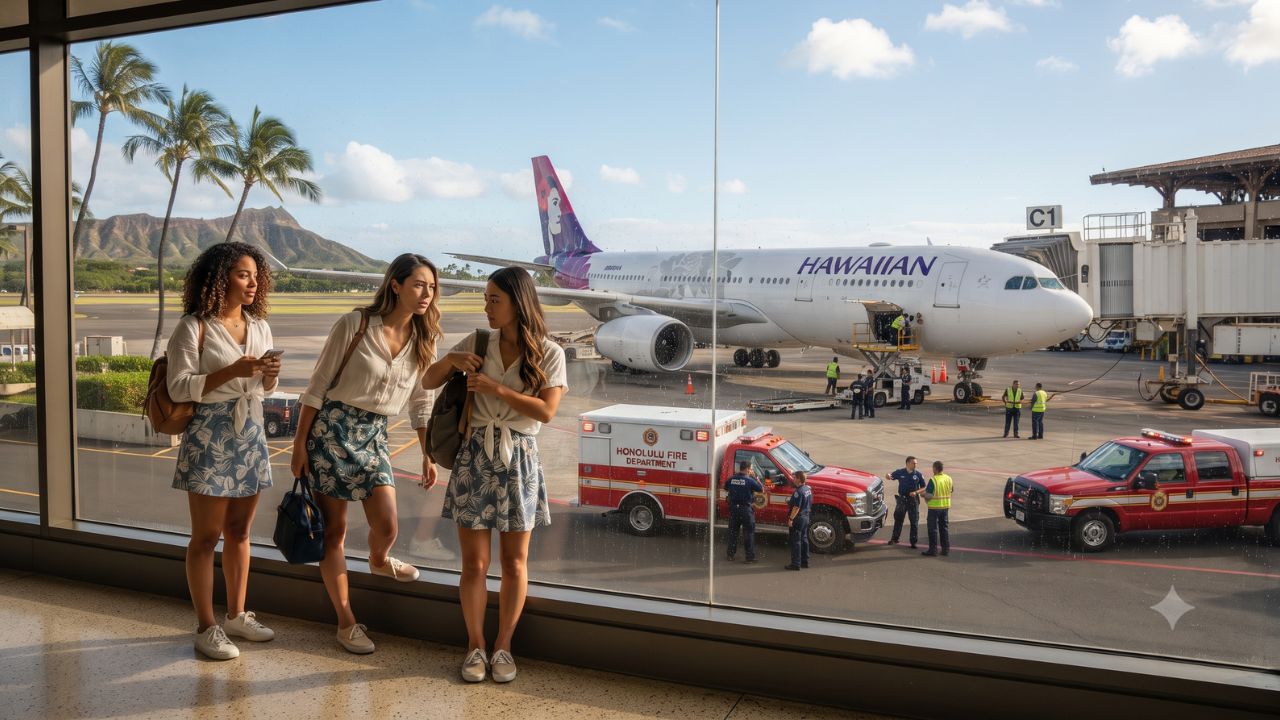
Honolulu's Daniel K. Inouye International Airport handling Transpacific commercial air traffic
Crossing the eastern Pacific on a five-hour overwater transit leaves zero room for mechanical ambiguity, which is why a sudden synthetic scent in an aircraft galley triggers immediate emergency ground protocols. On September 26, 2026, emergency medical crews met Alaska Airlines Flight 803 upon touchdown at Terminal 1 of Daniel K. Inouye International Airport in Honolulu after an unidentified cabin odor caused seven flight attendants to experience sudden headaches and nausea.
Activating Ground Protocols Across Transpacific Corridors
The service, operated by Hawaiian Airlines using a wide-body Airbus A330 aircraft as part of its network integration with Alaska Airlines, was carrying 252 passengers from Los Angeles International Airport. While all 252 passengers completed the transpacific crossing without reporting ill effects or requiring medical evaluation, the cabin crew detected the unusual odor during the descent toward Oahu's southern coastline.
Upon taxiing to the gate at Terminal 1, Honolulu Emergency Medical Services evaluated the seven affected crew members on-site. First responders treated the attendants for mild respiratory discomfort and headaches; fortunately, none required hospitalization. Airline maintenance personnel immediately removed the Airbus A330 from scheduled rotations to conduct thorough ventilation inspections, bleed-air filter replacements, and auxiliary power unit diagnostics before clearing the airframe to resume service.
The Honolulu occurrence follows a similar cabin air-quality incident earlier in the month, when a Delta Air Lines flight from Los Angeles to New York was diverted to Albuquerque after crew and passengers reported a smoky odor. Modern aviation safety standards treat unverified cabin fumes with extreme caution, as cockpit crews must guard against electrical short circuits or engine oil mist entering environmental control systems.
What Makes Honolulu's Transpacific Gateway Geographically Unique
Daniel K. Inouye International Airport occupies an unusual place in global aviation architecture. Located on the southern edge of Oahu adjacent to Keehi Lagoon, its famous Reef Runway—the world’s first major offshore runway constructed entirely on a coral reef—was built to handle transpacific wide-body jetliners while steering engine noise away from downtown Honolulu.
The airport’s open-air concourses reflect traditional Hawaiian design, incorporating central landscaped courtyards filled with tropical ferns, plumeria trees, and koi ponds that expose arriving passengers to ocean trade winds the moment they step off the jet bridge.
Oahu itself functions as a cultural crossroads where ancient Polynesian voyaging heritage converges with modern Pacific Rim commerce. Beyond the hotel towers of Waikiki Beach and the historic volcanic crater of Diamond Head, the island transitions into the quiet windward communities of Kailua and the rugged surf breaks of the North Shore. A short drive west of the airport leads to Pearl Harbor National Memorial, preserved under the National Park Service to honor maritime service members.
Visitor Insider Tips for Arriving in Oahu and Navigating Honolulu
Navigating your arrival at Honolulu Airport and exploring Oahu requires practical insight into airport ground transit, rental logistics, and local cultural etiquette.
Navigating Terminal 1 and Skyline Rail Access
Terminal 1 handles Hawaiian Airlines interisland and domestic operations. If you are connecting from a mainland flight to Maui, Kauai, or the Big Island, allow forty-five minutes to clear agricultural inspection and walk between the interisland gates. For ground transit into west Oahu, utilize the newly expanded Skyline elevated rail system, which connects airport transit centers to suburban residential and commercial hubs without sitting in H-1 freeway traffic.
Avoiding Peak Arrival Waves and Car Rental Bottlenecks
Mainland flights from California, Seattle, and Vancouver typically land in concentrated waves between 11:30 and 15:00. To avoid hour-long lines at the consolidated car rental facility across from Terminal 2, sign up for your rental company’s direct-to-car mobile loyalty program before departure. This allows you to walk straight to your assigned parking bay and exit the airport within minutes of retrieving your luggage.
Choosing Your Oahu Neighborhood Base
Select your lodging according to your desired travel pace. If you value walkability, historic beachfront dining, and surf lessons, base yourself in Waikiki. If you prefer quiet residential beaches away from high-rise hotels, consider private guesthouses in Kailua or boutique oceanfront inns near Haleiwa on the North Shore. Up-to-date travel advice and cultural event calendars are published directly by the Hawaii Tourism Authority.
Authentic Island Gastronomy to Savor
Skip commercial hotel buffets and seek out traditional local food stalls across Honolulu. Sample authentic poke made from fresh, non-frozen yellowfin ahi tossed with Hawaiian sea salt, limu seaweed, and roasted kukui nut at neighborhood fish markets like Tamura's or Off the Hook. In the historic working-class neighborhood of Kalihi near the airport, order traditional Hawaiian plates featuring slow-roasted kalua pork, lomi salmon, poi, and haupia coconut pudding.
Cultural and Environmental Context of the Hawaiian Islands
The delicate natural ecosystems of the Hawaiian archipelago demand active environmental mindfulness from every visitor. Isolated by thousands of miles of ocean, native Hawaiian flora and fauna evolved without natural predators, making the islands vulnerable to invasive pests and agricultural diseases.
Hawaii enforces strict mandatory agricultural inspection protocols for all incoming and departing baggage at Daniel K. Inouye International Airport to prevent the introduction of invasive insects, seeds, and soil bacteria.
Furthermore, Hawaiian cultural tourism is guided by the philosophy of mālama—the sacred duty to care for, protect, and preserve the land and ocean. Travelers are encouraged to use mineral-only reef-safe sunscreens to protect living coral reef colonies, respect marine wildlife by keeping legal distances from green sea turtles (honu) and Hawaiian monk seals, and support indigenous community farm restoration projects across Oahu’s windward valleys.
FAQ: Flying to Honolulu and Visiting Oahu 2026
What happened on Alaska Airlines Flight 803?
On September 26, 2026, an Airbus A330 carrying 252 passengers from Los Angeles landed safely at Honolulu Airport, where paramedics treated seven flight attendants for nausea caused by an unknown cabin odor.
Were any passengers injured or hospitalized?
No. None of the 252 passengers on board reported health issues, and all seven crew members were cleared by medical staff at the terminal without requiring hospitalization.
What is the best time of year to visit Oahu?
April through May and September through November offer optimal weather, lower accommodation rates, and pleasant ocean swimming conditions outside the busy summer and holiday peak periods.
How far is Daniel K. Inouye International Airport from Waikiki?
The airport is located approximately 9 miles west of Waikiki Beach, with drive times ranging from 20 to 45 minutes depending on H-1 freeway traffic.
Above the vast blue expanse of the Pacific, safety is not merely a checklist, but the quiet guardian of every journey toward island shores.
Related Travel Guides
Disclaimer
This article is for informational and educational purposes only. It does not constitute legal, financial, or professional advice. While we strive to provide accurate and up-to-date information, travel policies, regulations, and conditions change rapidly. Always verify information with official sources before making travel decisions. Nomad Lawyer makes no representations about the accuracy, reliability, completeness, or suitability of the information provided. Readers should consult qualified professionals for advice specific to their circumstances. The views expressed in this article are those of the author and do not necessarily reflect the views of Nomad Lawyer.
Naina Thakur
Contributor & Travel Specialist
Travel enthusiast and legal writer covering visa regulations, responsible tourism, and cultural journeys across global destinations.
Learn more about our team →