
Akasa Air Operates First SAF-Blended Commercial Flight from Mumbai to Goa

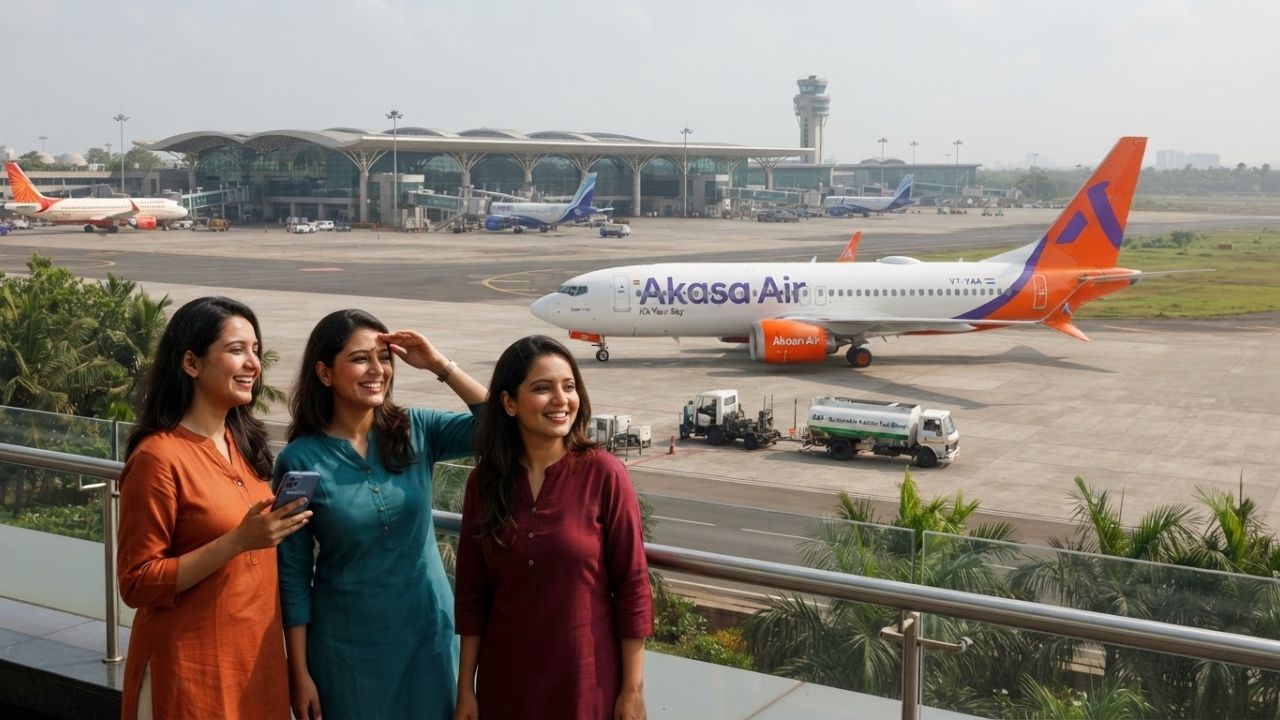
Akasa Air achieved a defining domestic sustainability milestone on September 8, 2026, successfully operating a scheduled commercial flight from Mumbai to Goa powered by a 1% Sustainable Aviation Fuel (SAF) blend supplied by Bharat Petroleum Corporation Limited (BPCL). The Boeing 737 MAX journey sets a practical operational precedent as Indian aviation works toward a nationwide 5% SAF blending mandate by 2030.
The historic commercial service departed Chhatrapati Shivaji Maharaj International Airport in Mumbai at 13:05 IST and touched down smoothly at Manohar International Airport in Goa at 14:30 IST. By integrating a drop-in 1% bio-derived fuel blend into normal scheduled line operations without requiring mechanical modifications to the aircraft or fueling infrastructure, the flight demonstrated the immediate viability of low-carbon fuels in South Asian skies.
The breakthrough is the direct outcome of a Memorandum of Understanding signed between Akasa Air and public-sector energy major BPCL in July 2026. The bilateral partnership aims to establish commercial pathways for sustainable fuels and gather real-world flight performance metrics under Indian operating conditions.
Strategic Perspectives from Akasa Air and BPCL
Highlighting the airline's environmental focus, Ankur Goel, Chief Financial Officer of Akasa Air, stated: "Sustainability is one of Akasa Air’s core values and shapes how we are building the airline for the long term. Since inception, we have invested in next-generation aircraft, technology and responsible practices that enable more conscious and efficient operations, both on the ground and in the air. This flight with BPCL translates our partnership into tangible action. Scaling SAF in India will require coordinated action across the ecosystem, supported by domestic supply, enabling policy and commercial viability. We are committed to exploring this transition."
Emphasizing the national energy dimension, Mr. Subhankar Sen, Director (Marketing) of Bharat Petroleum Corporation Limited (BPCL), remarked: "The transition from conventional fuels to sustainable alternatives is both an environmental imperative and a strategic necessity for India. While feedstock availability and aggregation have historically posed challenges due to fragmented supply chains, sustained efforts across the value chain have helped create the foundation for a viable Sustainable Aviation Fuel ecosystem. BPCL remains firmly committed to advancing sustainable fuels as part of India’s broader energy transition journey. As a nation that relies significantly on crude oil imports, enhancing energy security through sustainable and indigenous energy solutions is the way forward. BPCL is actively driving sustainability initiatives across multiple sectors, and today’s milestone with Akasa Air marks an important step in extending these efforts to aviation and supporting India’s decarbonisation goals."
Sen also acknowledged the guidance of central regulatory authorities, noting the invaluable support provided by the Ministry of Petroleum and Natural Gas, the Ministry of Civil Aviation, and the Directorate General of Civil Aviation (DGCA) in facilitating regulatory clearances for the operation.
| Operational & Regulatory Milestone | Details & Figures |
|---|---|
| Operating Airline | Akasa Air |
| Fuel Partner | Bharat Petroleum Corporation Limited (BPCL) |
| Fuel Composition | Conventional Jet A-1 blended with 1% Sustainable Aviation Fuel (SAF) |
| Flight Date | September 8, 2026 |
| Departure Point & Time | Mumbai (BOM) at 13:05 IST |
| Arrival Gateway & Time | Goa Manohar International Airport (GOX) at 14:30 IST |
| Fleet Architecture | Boeing 737 MAX with CFM LEAP-1B engines & advanced winglets |
| Fleet Carbon Reduction | Around 20% lower fuel burn and emissions vs. older models |
| Digital Fuel Efficiency Platform | OpenAirlines SkyBreathe® big data analytics |
| Water Conservation Measure | Elimination of ceremonial water-cannon salutes (>550,000 litres saved) |
| National Blending Target | 5% SAF blend by 2030 (Ministry of Civil Aviation / DGCA) |
| Global Net-Zero Target | Net-zero carbon emissions by 2050 (IATA framework) |
Fleet Architecture and Multi-Tiered Conservation
The SAF demonstration builds directly upon Akasa Air's young and technologically modern fleet. Central to this efficiency is the carrier's reliance on Boeing 737 MAX aircraft powered by CFM International LEAP-1B engines and aerodynamic advanced-technology winglets. These airframe enhancements yield an approximate 20% reduction in fuel consumption and carbon emissions compared to the previous-generation single-aisle jets they replace, while simultaneously curbing noise pollution by up to 50%.
Beyond propulsion, the airline incorporates digital operational intelligence through a collaboration with OpenAirlines, utilizing its SkyBreathe® platform. By processing telemetry data across every phase of flight, SkyBreathe® provides pilots and dispatch teams with real-time recommendations for single-engine taxiing, optimized climb profiles, continuous descent approaches, and speed management, steadily compounding network-wide emission reductions.
On the ground, Akasa Air became the first airline in India to voluntarily abolish ceremonial water-cannon salutes traditionally used to inaugurate new routes and aircraft. This single policy change has conserved more than 550,000 litres of treated water across Indian airports to date.
Cultural & Environmental Value: Aligning Green Flights with Goan Agro-Tourism
For conscious travelers, linking Mumbai's commercial financial center with Goa through green aviation carries profound cultural and environmental significance. Goa's coastal ecology, mangrove estuaries, and Western Ghats biodiversity hotspots face acute pressures from rapid tourist influxes. Decarbonizing air corridors represents a vital first step in preserving the state's natural beauty.
The arrival of the SAF-blended service at Manohar International Airport (Mopa) in Pernem directly connects visitors to North Goa's burgeoning hinterland conservation movements. Historically, tourism centered almost entirely on packed beachfront shacks in Calangute and Baga. Today, travelers landing at Mopa are increasingly venturing inland to patronize:
- Regenerative Spice Plantations: Organic farms across Ponda, Valpoi, and Bicholim cultivate black pepper, vanilla, and nutmeg using rainwater harvesting, preserving indigenous farming wisdom.
- Turtle Conservation Corridors: Pristine coastal stretches such as Morjim, Mandrem, and Galgibaga serve as protected nesting sanctuaries for endangered Olive Ridley sea turtles, managed in partnership with local forest department rangers.
- Architectural Preservation in Fontainhas and Raia: Revenue generated by high-value cultural visitors supports heritage trusts maintaining centuries-old Indo-Portuguese mansions, local bakeries baking traditional crusty poi, and community-run feni distilleries utilizing wild cashew apples.
By championing drop-in biofuels produced from agricultural wastes and non-food feedstocks, Indian aviation creates rural economic cycles where regional farmers and bio-refineries contribute directly to commercial aviation energy security.
Visitor Insider Tips: Eco-Conscious Travel Between Mumbai and Goa
Travelers planning journeys between Mumbai and Goa can maximize both convenience and sustainability with these practical recommendations:
- Select Manohar International (GOX) for North Goa and Hinterlands: When visiting Arambol, Ashwem, Morjim, or the cultural retreats of Bicholim and Sawantwadi, book flights arriving at Manohar International Airport in Mopa. Located in northernmost Goa, it cuts highway travel time to northern beaches by up to 45 minutes compared to southern Dabolim Airport (GOI).
- Utilize Electric Ground Transit: Exit Mopa's terminal and utilize the dedicated GoaMiles app or state-operated Kadamba electric AC transit buses running direct routes to Panaji, Mapusa, and Calangute. Electric vehicle cabs provide quiet, zero-emission transfers through the scenic Konkan hills.
- Off-Peak Travel Windows: For an authentic, unhurried cultural immersion, visit during the post-monsoon shoulder months (mid-September to November) or late February. Room tariffs drop significantly, humidity recedes, and the lush tropical foliage remains vibrant.
- Responsible Coastal Dining: Seek out authentic local thalis at heritage eateries in Panaji or Mapusa featuring seasonal catches like kingfish (viswon), mackerel (bangda), and crab curry served with red rice. Confirm that seafood is harvested sustainably in accordance with seasonal fishing bans instituted along the Konkan coast.
Tourism Outlook: Paving the Way for India's 2030 SAF Mandate
The success of Akasa Air and BPCL's inaugural commercial flight delivers practical momentum toward the Government of India's target of achieving a 5% SAF blending mandate by 2030. It aligns domestic operations with the International Air Transport Association's (IATA) overarching commitment to reach net-zero carbon emissions by 2050.
Scaling up SAF from 1% demonstration flights to commercial volume across hundreds of daily departures will require deep capital investments in bio-refineries, stable supply chains for agricultural waste aggregation, and supportive tax frameworks. Nevertheless, this milestone confirms that the technology, aircraft systems, and distribution networks are fully capable of handling sustainable alternatives. As airlines modernize fleets and airports enhance green infrastructure, Indian travelers can look forward to a cleaner, lower-impact era of domestic exploration.
Related Travel Guides
Disclaimer
This article is for informational and educational purposes only. It does not constitute legal, financial, or professional advice. While we strive to provide accurate and up-to-date information, travel policies, regulations, and conditions change rapidly. Always verify information with official sources before making travel decisions. Nomad Lawyer makes no representations about the accuracy, reliability, completeness, or suitability of the information provided. Readers should consult qualified professionals for advice specific to their circumstances. The views expressed in this article are those of the author and do not necessarily reflect the views of Nomad Lawyer.
Raushan Kumar
Founder & Lead Developer
Full-stack developer with 11+ years of experience and a passionate traveller. Raushan built Nomad Lawyer from the ground up with a vision to create the best travel and law experience on the web.
Learn more about our team →