
Airport Strikes Plunge European Travel Into Chaos: 90K+ Stranded
Coordinated airport strikes plunge European travel into chaos across five nations in mid-April 2026. Over 90,000 passengers stranded at Frankfurt, Rome, and London as Lufthansa grounds hundreds of flights and air traffic control slowdowns cascade across the continent.

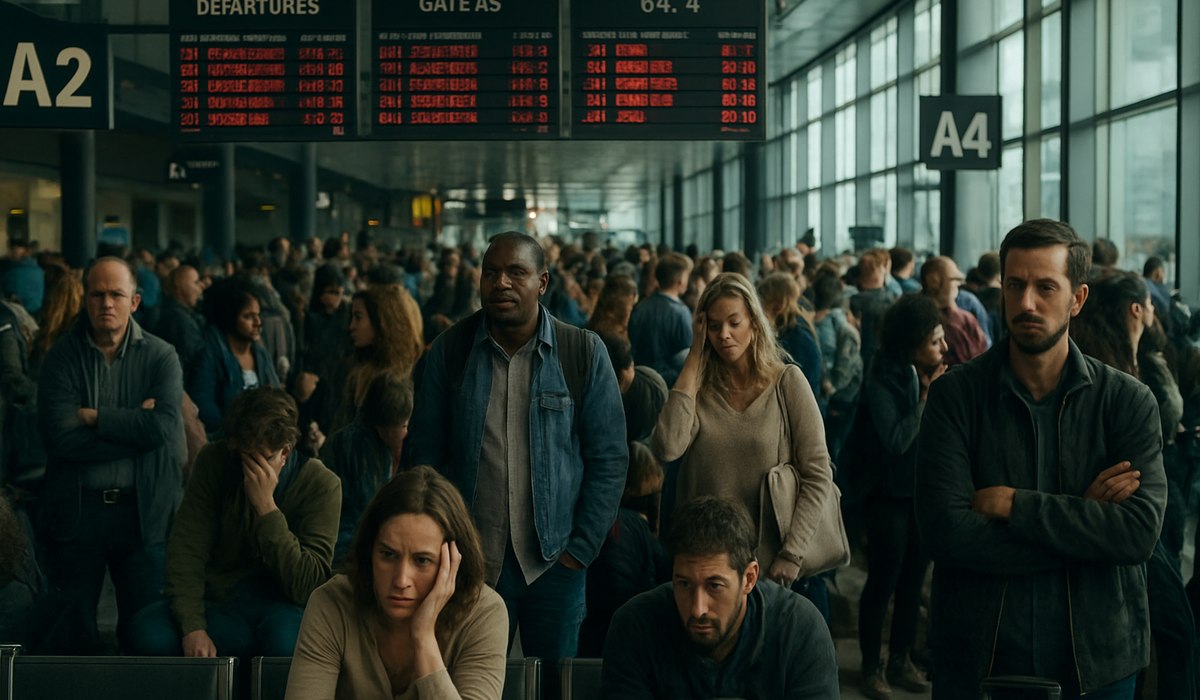
Image generated by AI
European Travel Grinds to Halt as Coordinated Strikes Trigger Mass Disruption
Coordinated strikes across Italy, Germany, the United Kingdom, Spain, and neighboring nations have triggered unprecedented disruption to European air travel. Beginning April 9 and intensifying through April 11, 2026, the industrial actions have grounded hundreds of flights, forced thousands of schedule changes, and left over 90,000 passengers stranded at major hubs including Frankfurt, Rome Fiumicino, and London Heathrow. The simultaneous work stoppages—affecting cabin crew, ground handlers, air traffic controllers, and fuel suppliers—represent one of spring's most significant travel disruptions, with cascading delays extending far beyond strike zones.
Strikes Converge Across Key European Hubs
The convergence of multiple labor actions created a perfect storm for European aviation during the critical mid-April travel period. Strike actions initiated on April 9 across air traffic control facilities in Italy and ground handling operations at major airports created initial bottlenecks. By April 10, the disruption accelerated when Lufthansa's workforce took coordinated action, amplifying delays across Germany, Austria, and the broader European network. Travel monitoring platforms documented the compounding effect: individual regional strikes transformed into continent-wide operational chaos within 36 hours.
Data compiled from aviation tracking services shows that England, Germany, Austria, and Italy collectively cancelled 1,800+ flights and delayed nearly 3,800 additional services within a 48-hour window. Secondary airports felt severe knock-on effects, including Berlin Brandenburg, Hamburg, Düsseldorf, Milan Malpensa, Paris Charles de Gaulle, and Amsterdam Schiphol. The cascading nature of modern aviation networks meant that delays at one hub rapidly propagated across Europe, affecting passengers on connections weeks in advance.
Germany's Lufthansa Walkout Grounds Hundreds of Flights
The Lufthansa strike on April 10 emerged as the epicenter of German disruption, with the airline's cabin crew and Lufthansa CityLine staff initiating a 24-hour walkout that proved catastrophic for European connectivity. Between Frankfurt and Munich alone, estimates suggest 90,000 to 100,000 passengers faced cancellations or mandatory rebooking. The strike's timing—targeting a Friday during peak spring travel season—magnified its impact across weekend leisure and business travel.
Frankfurt Airport, Europe's third-busiest hub by passenger volume, bore the brunt of Lufthansa's grounding. Departure boards on April 10-11 displayed dense clusters of cancellations across short-haul European services, long-haul intercontinental routes, and connecting flights. Stranded transfer passengers discovered severely limited rebooking options as other airlines' aircraft reached capacity. Airlines attempted consolidating passengers onto remaining flights, but crew duty limitations and aircraft availability restrictions slowed recovery efforts. The Lufthansa disruption illustrated how concentrated carrier dominance at single hubs creates systemic vulnerability during labor actions.
Italy's Air Traffic Control Disruptions Amplify Delays
Italy's air traffic control system became a secondary crisis point as controllers implemented work-to-rule slowdowns and strike periods beginning April 9. Rome Fiumicino and Milan Malpensa—Italy's two largest airports—experienced departure delays averaging over 60 minutes as traffic management procedures slowed aircraft throughput. Fuel supply restrictions linked to the labor dispute further constrained operations, forcing some airlines to reduce flight frequency or consolidate services.
The Italian disruption proved particularly damaging due to Rome and Milan's role as transit hubs for southern Europe-bound traffic. Roughly one in six flights missed onward slot times at secondary hubs like Frankfurt, London, and Paris, triggering cascading missed connections across the network. Italian consumer protection agencies reported extended queues at airline rebooking desks and sharp increases in hotel booking requests from stranded passengers in Rome and Lombardy regions. Additional scheduled strike days raised concerns that disruption would persist beyond the immediate April 11 period.
UK and Spain Face Cascading Operational Challenges
The United Kingdom's two largest airports—London Heathrow and London Gatwick—experienced compounding operational challenges during the strike period. While UK airports themselves remained largely operational, the knock-on effects of continental disruptions created widespread schedule slippage. Crew positioning became impossible as aircraft and personnel remained stranded at Frankfurt, Rome, and other affected continental hubs, forcing dozens of cancellations and hundreds of delays at Heathrow and Gatwick.
Airlines operating dense London-Frankfurt, London-Rome, and London-Amsterdam routes struggled to maintain scheduled frequencies. Industry dashboards tracked over 1,600 delayed flights across Europe within single 24-hour periods, with London airports serving as the network's nerve center and feeling continuous ripple effects. Spanish airports, while less directly affected than Frankfurt or Rome, also recorded elevated disruption due to route concentrations and European network dependencies.
Critical Flight Disruption Data
| Metric | April 10 | April 11 | Total Impact |
|---|---|---|---|
| Flights Cancelled (4 nations) | ~900 | ~900 | 1,800+ |
| Flights Delayed (4 nations) | ~1,900 | ~1,900 | 3,800+ |
| Passengers Affected | 45,000+ | 45,000+ | 90,000+ |
| Primary Hub: Frankfurt | 400+ cancellations | 300+ cancellations | 700+ cancellations |
| Primary Hub: Rome Fiumicino | 150+ cancellations | 120+ cancellations | 270+ cancellations |
| Average Delay Duration | 65 minutes | 62 minutes | 64 minutes |
What This Means for Travelers
Travelers affected by the April 2026 European airport strikes plunge should take immediate action to protect their travel plans and exercise passenger rights:
-
Check your flight status immediately via FlightAware or your airline's website to confirm whether your booking remains operational or faces cancellation/delay.
-
Contact your airline directly rather than relying on email or social media, as customer service lines experience exceptional volume during major disruptions.
-
Understand EU261 passenger rights, which guarantee compensation of €250-€600 per passenger for cancellations (absent extraordinary circumstances) and €125-€400 for delays exceeding 3+ hours.
-
Explore alternative routing options through partner airlines, budget carriers, or rail services (Eurostar, rail networks) to reach your destination if your original flight remains cancelled.
-
Document all expenses related to the disruption—meals, hotels, ground transportation—as these may qualify for reimbursement under passenger protection regulations and airline liability standards.
-
File compensation claims with your airline within six months using EU261 (European Union) or equivalent national regulations through resources like the US Department of Transportation consumer protection guidance.
-
Monitor scheduled strike calendars published by Italian, German, Spanish, and UK aviation authorities, as additional labor actions through mid-April may extend disruption.
Frequently Asked Questions
Q: Will my flight from London to Frankfurt on April 12 be affected?
A: April 12 falls outside confirmed strike periods for major hubs, but knock-on effects from April 10-11 disruptions may persist. Check FlightAware for real-time status. Airlines are prioritizing repositioning aircraft and crews, but backlogs may cause delays. Contact your airline to confirm your flight's operational status 24 hours before departure.
**Q: Am
Disclaimer
This article is for informational and educational purposes only. It does not constitute legal, financial, or professional advice. While we strive to provide accurate and up-to-date information, travel policies, regulations, and conditions change rapidly. Always verify information with official sources before making travel decisions. Nomad Lawyer makes no representations about the accuracy, reliability, completeness, or suitability of the information provided. Readers should consult qualified professionals for advice specific to their circumstances. The views expressed in this article are those of the author and do not necessarily reflect the views of Nomad Lawyer.
Kunal K Choudhary
Co-Founder & Contributor
A passionate traveller and tech enthusiast. Kunal contributes to the vision and growth of Nomad Lawyer, bringing fresh perspectives and driving the community forward.
Learn more about our team →