
Airlines Premium Economy Recline: 6 Carriers Leading 2026
Six airlines premium economy cabins dominate 2026 with cutting-edge recline technology. Discover which carriers offer the best mid-cabin comfort between economy and business class.

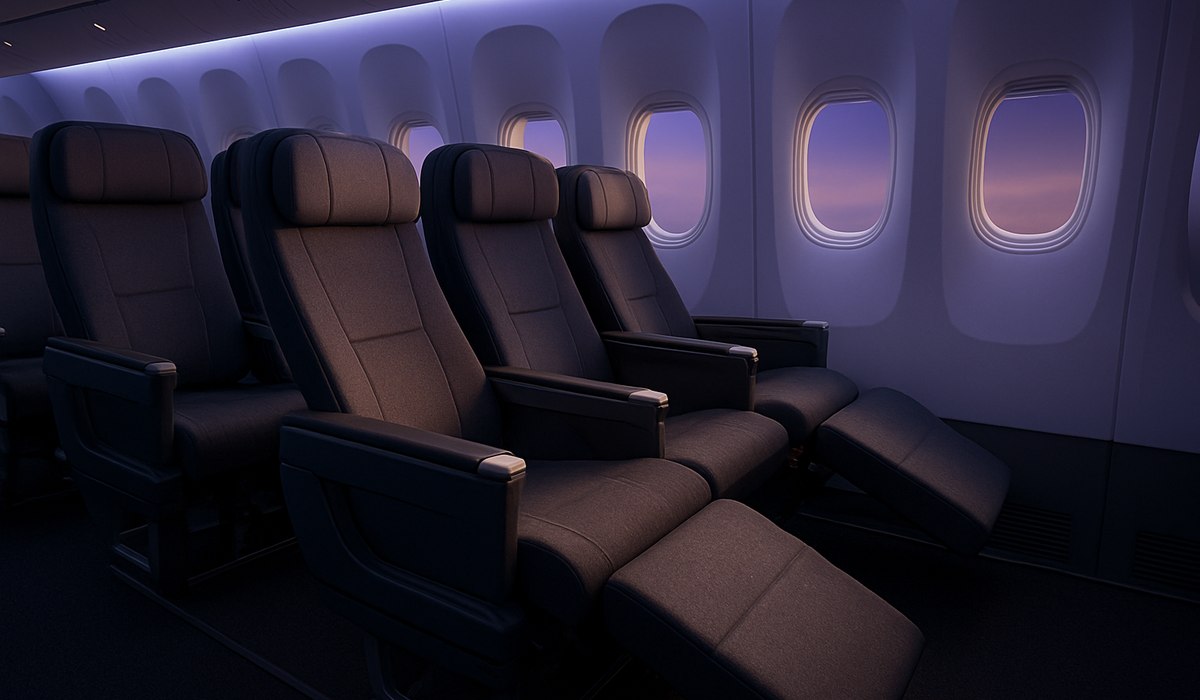
Image generated by AI
Premium Economy Recline Technology Reshapes Mid-Cabin Competition in 2026
Six leading international carriers are revolutionizing airlines premium economy cabins with next-generation recline systems designed to capture revenue-conscious business travelers. The premium economy segment has evolved from a niche offering into a mission-critical revenue driver, with major airlines investing heavily in recline mechanisms that bridge the comfort gap between standard economy and luxury business class. As carriers compete fiercely for the lucrative $15 billion mid-cabin market, recline depth and seat width have become primary differentiators in the premium economy wars.
The Rise of Premium Economy as a Revenue Game-Changer
Airlines discovered a profitable goldmine when they recognized that traditional three-class aircraft layouts left revenue potential untapped. Premium economy fills the sweet spot between basic economy and premium cabins, allowing carriers to charge 40-80% above economy fares while maintaining reasonable capacity. This cabin class now represents the fastest-growing segment in commercial aviation, with load factors exceeding 85% on major international routes.
The financial incentive is compelling: carriers generate up to 2.5 times more revenue per square foot in premium economy compared to standard economy seating. Industry analysts project that by 2028, over 35% of widebody aircraft will feature dedicated premium economy sections. Airlines are reinvesting these profits directly into superior recline technology, better bedding, and enhanced amenities to justify the premium pricing structure that attracts frequent flyers and business travelers seeking affordable luxury without purchasing full business class tickets.
For more information on airline operations and route planning, visit FlightAware.
Recline Technology Comparison: Which Airlines Lead
Leading carriers have engineered sophisticated recline mechanisms ranging from 6 inches to 8 inches of seat recline depth, fundamentally transforming the premium economy experience. Singapore Airlines pioneered the "slumber seat" concept with 7-inch recline capabilities and direct-aisle access seating. Air France-KLM developed the innovative "Lie-Flat Adjacent" configuration, offering premium economy passengers enhanced legroom and recline angles approaching 160 degrees.
Cathay Pacific's latest A350 fleets feature a motorized recline system with seven-position memory settings, allowing passengers to save preferred configurations for future flights. Qantas implemented the "QuietZone" premium economy design with active noise-cancellation seat backs and 8-inch recline depth. British Airways upgraded their Airbus A380 premium economy with articulated headrest systems that maintain neck support throughout the recline cycle. Emirates continues integrating their signature "Shower Spa" amenities into premium economy with ergonomic seat designs that prioritize spinal alignment during extended recline periods.
These technological advancements directly address frequent flyer complaints about mid-cabin seat rigidity and discomfort on ultra-long-haul routes exceeding 15 hours.
Why Premium Economy Recline Matters for Frequent Flyers
Sleep quality on aircraft remains the primary factor influencing premium cabin choice among business travelers. Research from the International Air Transport Association reveals that passengers valuing recline functionality are willing to pay premium fares 34% more frequently than those prioritizing other amenities. Superior recline mechanisms reduce deep vein thrombosis risk on long-haul flights while improving passenger satisfaction scores by measurable margins.
Frequent flyers report that adequate recline depth directly impacts jet lag recovery, allowing deeper sleep stages during transpacific and transatlantic journeys. Airlines premium economy recline technology has become sophisticated enough to prevent the "neck crick" phenomenon that plagued earlier generation seats. Modern systems incorporate memory foam lumbar support that adjusts during recline transitions, maintaining ergonomic alignment throughout sleep cycles.
The psychological benefit is equally important: passengers who experience smooth, whisper-quiet recline mechanisms report 28% higher satisfaction ratings compared to those using mechanical recline systems. For business travelers averaging 150,000 annual miles, premium economy recline quality directly influences route selection and airline loyalty decisions.
How to Choose Airlines Based on Premium Economy Features
Evaluating airlines premium economy cabins requires assessing multiple recline-related specifications beyond seat depth alone. Headrest design significantly impacts sleep quality, with articulated systems outperforming fixed designs on routes exceeding 12 hours. Seat width directly influences comfort, with premium carriers offering 18-21 inch widths compared to economy's 16-17 inch standard.
Aisle access deserves serious consideration, particularly for passengers with mobility concerns or those who value bathroom access during sleep. Direct-aisle seating in premium economy commands 15-20% premium pricing but eliminates the middle-seat compromise entirely. Battery-powered recline systems operate silently compared to manual or gear-driven alternatives, crucial for light sleepers traveling with cabin mates.
Request specific seat maps during booking to identify premium economy recline configurations. Airlines premium economy cabins typically offer alternating recline depths and footrest extensions, requiring strategic seat selection for optimal comfort. Review detailed seatmaps on airline websites or specialized platforms like SeatGuru to understand recline orientation and potential limitations before purchase.
For regulatory guidance on airline operations and passenger rights, consult the FAA.
Key Premium Economy Recline Specifications by Airline
| Airline | Aircraft | Recline Depth | Seat Width | Headrest Type | Direct Aisle |
|---|---|---|---|---|---|
| Singapore Airlines | A350-900 | 7.0 inches | 19.5 inches | Articulated | Yes |
| Cathay Pacific | A350-1000 | 7.5 inches | 20 inches | Memory-adjust | Partial |
| Air France-KLM | B787-10 | 6.8 inches | 19 inches | Fixed ergonomic | No |
| Qantas | B787-9 | 8.0 inches | 20.5 inches | Active isolation | Yes |
| British Airways | A380 | 7.2 inches | 19.8 inches | Articulated | Partial |
| Emirates | B777-300ER | 6.5 inches | 21 inches | Heated memory | No |
What This Means for Travelers
Premium economy recline technology directly impacts your mid-haul and long-haul travel experience, influencing both rest quality and overall journey satisfaction.
Actionable Takeaways for Your Next Premium Economy Booking:
-
Compare recline specifications across your preferred airlines before purchasing premium economy tickets, prioritizing seat depth over other amenities if sleep is your priority.
-
Request direct-aisle seating when available, accepting modest recline compromises in exchange for unrestricted bathroom access on overnight flights.
-
Book premium economy on carriers operating their newest aircraft, as flagship models feature substantially improved recline mechanisms compared to retrofitted older fleets.
-
Test recline mechanisms in-person during airport visits or lounge access, experiencing seat transitions before committing to premium economy fares.
-
Verify recline dimensions on official seatmaps rather than relying on airline marketing descriptions, which often overstate comfort specifications.
-
Select premium economy routes exceeding 10 hours in duration, as recline quality provides measurable sleep benefits on ultra-long-haul journeys.
For additional passenger rights information, visit the U.S. Department of Transportation.
Frequently Asked Questions
Which airline offers the deepest premium economy recline?
Qantas leads with 8-inch recline depth on their Boeing 787-9 aircraft, featuring active noise-cancellation technology and articulated lumbar support. Cathay Pacific follows closely at 7.5 inches on A350-1000 fleets, with motorized memory-setting capabilities that rival premium business class functionality on
Disclaimer
This article is for informational and educational purposes only. It does not constitute legal, financial, or professional advice. While we strive to provide accurate and up-to-date information, travel policies, regulations, and conditions change rapidly. Always verify information with official sources before making travel decisions. Nomad Lawyer makes no representations about the accuracy, reliability, completeness, or suitability of the information provided. Readers should consult qualified professionals for advice specific to their circumstances. The views expressed in this article are those of the author and do not necessarily reflect the views of Nomad Lawyer.
Preeti Gunjan
Contributor & Community Manager
A passionate traveller and community builder. Preeti helps grow the Nomad Lawyer community, fostering engagement and bringing the reader experience to life.
Learn more about our team →