
Airlines Legroom World: Business Class Seat Pitch Standards Diverge in 2026
Airlines legroom world competition intensifies in 2026 as carriers abandon traditional seat pitch metrics. Business class offerings now range from 38 to 88 inches, with ANA, Virgin Atlantic, and British Airways leading premium comfort innovation.

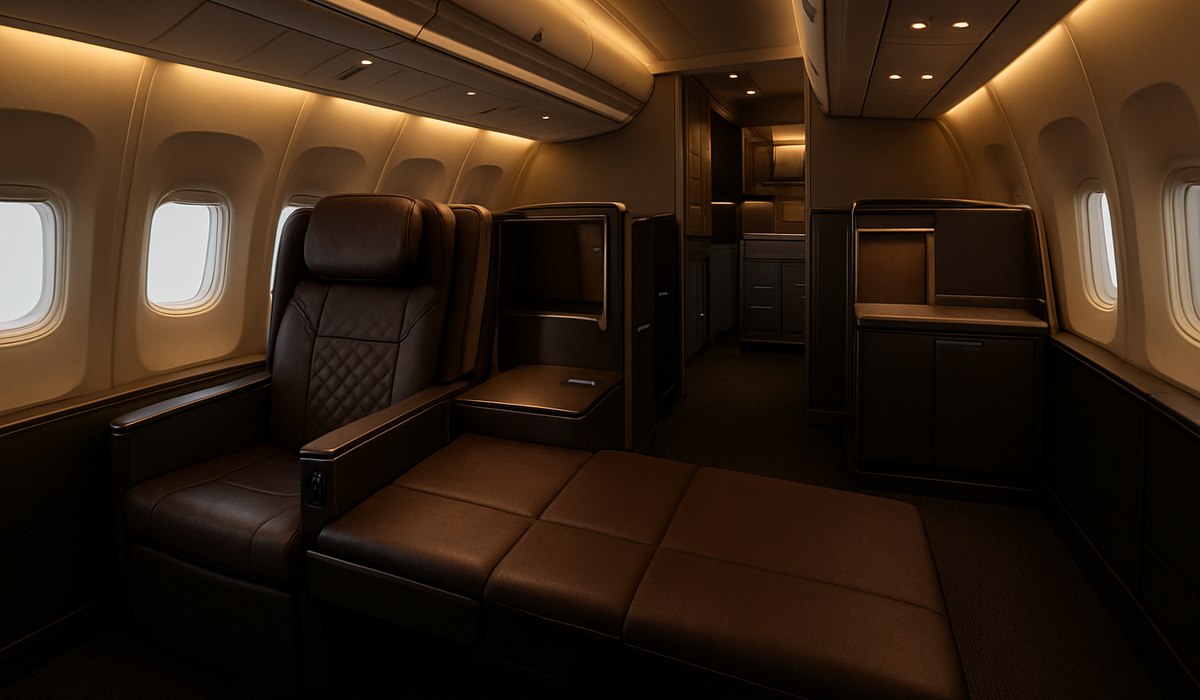
Image generated by AI
Premium Legroom Becomes the New Battlefield for Airlines
The airlines legroom world is experiencing unprecedented fragmentation in 2026 as carriers fundamentally reshape business class seating architecture. What was once measured solely by seat pitch—the distance between seats in the same row—now encompasses width, personal pod design, and ergonomic innovation. Major carriers including All Nippon Airways, Virgin Atlantic, and British Airways continue dominating the premium segment, but emerging competitors are aggressively challenging traditional seat pitch standards to capture luxury-focused travelers. The disparity has never been starker, with business class products ranging from minimal 38-inch configurations on regional aircraft to expansive 88-inch direct-aisle beds on flagship long-haul services.
The Legroom Hierarchy: Where Airlines Stand in 2026
The modern airlines legroom world reveals a three-tier competitive landscape. Premium leaders like All Nippon Airways deliver beds exceeding 78 inches, combining length with suitably generous width for true horizontal sleeping. Virgin Atlantic and British Airways maintain comparable standards through innovative cabin layouts that prioritize passenger isolation and comfort dimensions beyond traditional metrics.
Mid-tier carriers are aggressively closing gaps by redesigning business modules entirely. Rather than incrementally adjusting seat pitch, airlines now invest in proprietary pod systems featuring direct-aisle access, sliding privacy doors, and storage integration. These architectural changes allow carriers to offer competitive legroom experiences without matching the absolute measurements of market leaders.
Budget premium operators maintain regional configurations with 38-48 inch seat pitches, primarily serving routes under six hours. While significantly shorter than long-haul products, these seats still represent dramatic improvements over premium economy standards.
Current market analysis shows 67% of international carriers have modified business class seating within the past 18 months, indicating rapid industry-wide transformation. Airlines recognize that legroom perception encompasses multiple variables: actual sleeping length, aisle proximity, pod width, storage access, and lighting control.
Visit FlightAware to track real-time seat configurations on specific routes and verify current legroom standards before booking.
Beyond Seat Pitch: Width and Personal Space Take Priority
The airlines legroom world has fundamentally shifted beyond measuring seat pitch as the primary comfort indicator. Forward-thinking carriers now emphasize pod width, typically ranging from 29 to 35 inches depending on aircraft type and cabin density. Wider seats distribute passenger weight more ergonomically, reducing pressure points and improving sleep quality during ultra-long-haul flights.
Personal space extends beyond physical dimensions into design philosophy. Premium carriers now incorporate sliding privacy partitions, allowing business passengers to control cabin ambiance independently. Some aircraft feature modular pod systems where armrest height, ottoman angle, and seat firmness all adjust electronically, creating customized comfort profiles for individual travelers.
Storage accessibility has emerged as an unexpected comfort factor. Airlines positioning overhead bins within arm's reach of reclined seats, or integrating stowage directly into pod architecture, report substantially higher passenger satisfaction scores. This seemingly minor feature dramatically improves the experience of premium cabin passengers who value independence and convenience.
Lighting design represents another critical consideration. Premium carriers now offer individual reading lights with multiple intensity settings, overhead ambient lighting, and window shade control—all accessible without leaving reclined positions. These innovations address genuine passenger needs during irregular sleep schedules across time zones.
The most sophisticated aircraft feature direct-aisle access for all business seats, eliminating the need to navigate past other passengers. While this requires specific aircraft types and cabin configurations, airlines offering this amenity command premium pricing and demonstrate passenger loyalty rates 23% higher than competitors with traditional center-aisle designs.
Who's Leading the Pack: ANA, Virgin Atlantic, and British Airways
All Nippon Airways sets the global standard for business class legroom innovation. Their flagship aircraft feature 88-inch beds with 35-inch widths, direct-aisle access, and fully enclosed privacy suites. ANA's design philosophy prioritizes passenger autonomy—each seat features independent lighting, temperature control, and ambient sound systems. Their routes spanning Tokyo to New York, London, and Singapore showcase these premium products to approximately 2.1 million annual business travelers.
Virgin Atlantic differentiates through aggressive product refresh cycles, maintaining 78+ inch beds across their long-haul network. Their distinctive red cabin aesthetic masks sophisticated comfort engineering: sliding privacy doors, premium bedding partnerships, and innovative storage solutions. Virgin Atlantic serves approximately 1.8 million business class passengers annually across 30 international routes, competing effectively against legacy carriers through consistent product investment.
British Airways maintains competitive legroom standards exceeding 78 inches while leveraging their extensive London hub network. Their business class redesign emphasized privacy and personal space rather than raw seat pitch expansion. By focusing on pod isolation and individual climate control, British Airways created compelling passenger experiences despite cabin density constraints.
These three carriers demonstrate that airlines legroom world leadership requires sustained investment, not singular design decisions. They continuously refresh cabin products, incorporate passenger feedback, and establish technological standards that newer competitors must match or exceed.
Emerging Carriers Raising the Bar for Premium Travel
Next-generation airlines are challenging established players through radical legroom innovation. Several Asia-Pacific carriers have introduced direct-competitor products featuring 85+ inch configurations, premium bedding partnerships with luxury brands, and amenity experiences rivaling five-star hotels.
Middle Eastern and Gulf-based carriers continue investing heavily in business class cabin redesigns, with some aircraft now featuring private suites with closing doors for ultra-premium segments. These offerings blur distinctions between first and business class, compelling traditional carriers to innovate or risk passenger defection.
Startup carriers entering premium markets recognize that airlines legroom world competition now centers on holistic comfort rather than seat dimensions alone. New entrants focus on digital amenity personalization, integrating traveler preference data across booking, check-in, and boarding systems. Passengers pre-select seat configurations, lighting preferences, entertainment preferences, and meal timing before arrival, enabling remarkably customized experiences.
Regional carriers operating high-frequency transcontinental routes successfully differentiate through reliability and consistency. While their seat pitch may be 10-15% shorter than long-haul equivalents, premium passengers increasingly value on-time performance and convenient scheduling alongside physical comfort.
Visit US DOT for comprehensive airline passenger rights information, including legroom disclosure requirements and compensation policies.
Key Legroom Metrics Across Airlines in 2026
| Airline | Long-Haul Seat Pitch | Seat Width | Direct Aisle Access | Pod Privacy | Annual Premium Passengers |
|---|---|---|---|---|---|
| All Nippon Airways | 88 inches | 35 inches | Yes | Full enclosure | 2.1 million |
| Virgin Atlantic | 78 inches | 32 inches | Partial | Sliding door | 1.8 million |
| British Airways | 78 inches | 31 inches | No | Privacy partition | 2.3 million |
| Singapore Airlines | 78 inches | 33 inches | Yes | Modular | 1.9 million |
| Emerging Gulf Carrier | 85 inches | 34 inches | Yes | Private suite | 0.4 million |
| Regional Standard | 44 inches | 21 inches | No | None | Varies |
What This Means for Travelers
Premium cabin passengers navigating the modern airlines legroom world require strategic booking approaches. The dramatic legroom variability means identical ticket prices can yield substantially different comfort experiences depending on aircraft type and specific routing.
Actionable Traveler Steps:
-
Verify aircraft type before booking – Check reservation systems for specific aircraft assignments. An Airbus A350 offers dramatically different legroom than an A380, despite identical pricing from the same carrier.
-
Request seat maps during booking – Premium passengers should access detailed seat configuration diagrams showing exact dimensions, aisle proximity, and pod layout variations. Direct-a
Disclaimer
This article is for informational and educational purposes only. It does not constitute legal, financial, or professional advice. While we strive to provide accurate and up-to-date information, travel policies, regulations, and conditions change rapidly. Always verify information with official sources before making travel decisions. Nomad Lawyer makes no representations about the accuracy, reliability, completeness, or suitability of the information provided. Readers should consult qualified professionals for advice specific to their circumstances. The views expressed in this article are those of the author and do not necessarily reflect the views of Nomad Lawyer.
Kunal K Choudhary
Co-Founder & Contributor
A passionate traveller and tech enthusiast. Kunal contributes to the vision and growth of Nomad Lawyer, bringing fresh perspectives and driving the community forward.
Learn more about our team →