
Airline Iran Travel Conflict: Flight Cancellations Surge Across Middle East
Airline Iran travel disruptions escalate as U.S.-Iran tensions spark widespread flight cancellations across Dubai, Tel Aviv, Riyadh, and Doha in March 2026. Airlines suspend routes and reroute passengers amid regional instability.

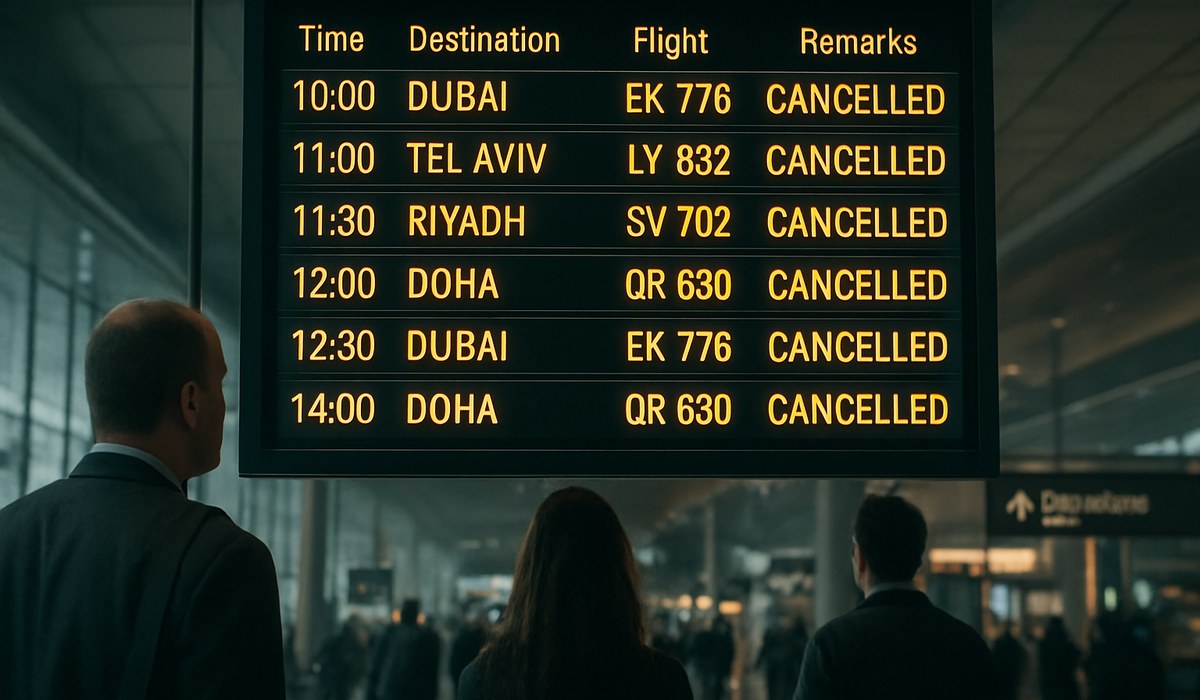
Image generated by AI
Geopolitical Tensions Trigger Major Airline Iran Travel Disruptions
U.S.-Iran tensions have ignited a cascade of flight cancellations and operational chaos across the Middle East, affecting millions of travelers and reshaping schedules at major regional hubs. Beginning March 25, 2026, airlines operating through Dubai International (DXB), Tel Aviv Ben Gurion (TLV), King Fahd International (RUH), Hamad International (DOH), and Abu Dhabi International (AUH) have implemented emergency protocols. The conflict sparks unprecedented demand for alternative routing, with carriers diverting aircraft from traditional Middle Eastern corridors to avoid contested airspace.
Commercial aviation in the region faces its most significant operational challenge since 2024. Airlines have suspended service to Iranian airspace entirely, forcing long-haul flights between Europe and Asia to add 3–5 hours to journey times. Passengers booked on airline Iran travel routes now face extended delays, mandatory rebooking, or complete cancellations as carriers reassess operations daily.
Flight Cancellations Escalate at Regional Hubs
Major airports across the Arabian Peninsula and Levant region report unprecedented cancellation rates. Dubai International (DXB), the world's busiest airport by international passenger traffic, has cancelled over 340 flights since Tuesday evening, affecting more than 45,000 travelers. Emirates Airlines, the dominant carrier at DXB, suspended all flights to Iranian cities and reduced European connections by 22%.
Tel Aviv Ben Gurion (TLV) has grounded outbound flights for 18 hours and implemented mandatory security delays averaging 90 minutes per passenger. El Al Israel Airlines cancelled 28 transatlantic flights, stranding 6,400 passengers. At King Fahd International (RUH) in Riyadh, Saudi Arabian Airlines (Saudia) and Flyadeal suspended operations to Baghdad, Beirut, and northern Gulf routes. Hamad International (DOH) remains partially operational, though Qatar Airways reduced capacity by 35% on affected routes.
Airline Iran Travel Routes Face Complete Suspension
Airline Iran travel has ceased on most international routes, with carriers citing airspace closure orders and insurance underwriting restrictions. Iran Air, the country's flag carrier, announced suspension of all flights to Europe and North America through at least March 31, 2026. Turkish Airlines, which maintains significant Persian Gulf connectivity, cancelled 67 flights across its network.
Connecting flights through Middle Eastern hubs—historically the most economical for transatlantic and Europe-Asia routing—now carry unpredictable delays. Lufthansa, Air France, and British Airways rerouted aircraft over the Mediterranean and African airspace, adding operational costs and extended flight times. IATA, the International Air Transport Association, issued guidance recommending carriers avoid all Iranian territory through at least April 2026.
Live Flight Tracking and Real-Time Updates
Travelers can monitor cancellations and delays using FlightAware, which provides real-time tracking for affected Middle Eastern airports. The platform reports that average flight delays at DXB have reached 267 minutes, while TLV experiences 180-minute average hold times. Most airlines have activated their customer service platforms, though phone lines remain congested.
Emirates, Etihad Airways, Saudi Arabian Airlines, and Qatar Airways each operate dedicated conflict-response pages on their websites with hourly updates on suspensions and rebooking options. Flyadeal and regional carriers have implemented automated SMS notifications for affected passengers. FlightAware alerts remain the most reliable real-time resource for tracking schedule changes.
Passenger Rights and Compensation Framework
International carriers are obligated to provide compensation, accommodation, and rebooking on alternative flights under standard aviation regulations. EU Regulation 261/2004 requires airlines to pay €400–€600 per passenger for cancellations or delays exceeding three hours, regardless of conflict status. However, most carriers are invoking "extraordinary circumstances" clauses to deny compensation claims.
The U.S. Department of Transportation has issued guidance clarifying that geopolitical events do not automatically exempt carriers from compensation requirements. American and Canadian travelers are entitled to refunds or rebooking plus meal/hotel accommodation for multi-hour delays. Passengers should document all expenses and file formal complaints within 60 days. Airlines must provide written cancellation notices within 14 days and respond to compensation claims within 30 days per international standards.
Recovery Timeline and Operational Outlook
Airlines project normal operations will resume gradually, with most carriers expecting partial service restoration by March 28, 2026. Full capacity restoration to pre-conflict levels is estimated at 10–14 days. Emirates stated it will prioritize long-haul transatlantic routes and critical cargo operations during the recovery phase. Saudia expects to resume regional Gulf connectivity within 72 hours, beginning with Riyadh-based domestic operations.
Booking cancellation policies have been extended through April 15, 2026. Most major carriers allow free rebooking to alternative dates without penalty during this period. However, alternative flights show fares 30–50% higher than pre-conflict prices due to reduced availability and increased demand for rerouted passengers. Recovery timelines depend on political developments and airspace reopening decisions by regional aviation authorities.
| Airport Code | Location | Carrier Affected | Cancellations Reported | Est. Recovery Date | Avg. Delay (mins) |
|---|---|---|---|---|---|
| DXB | Dubai, UAE | Emirates, FlyDubai | 340+ | March 28 | 267 |
| TLV | Tel Aviv, Israel | El Al, Arkia | 28+ | March 27 | 180 |
| RUH | Riyadh, Saudi Arabia | Saudia, Flyadeal | 55+ | March 26 | 145 |
| DOH | Doha, Qatar | Qatar Airways | 42+ | March 28 | 190 |
| AUH | Abu Dhabi, UAE | Etihad Airways | 31+ | March 27 | 165 |
| BEY | Beirut, Lebanon | MEA, regional carriers | 22+ | April 2 | 240 |
What This Means for Travelers
1. Verify your flight status immediately. Use FlightAware or your airline's app to confirm whether your flight is cancelled or delayed. Do not assume normal operation.
2. Contact your airline before the airport. Call their dedicated conflict hotline or use chat support to rebook before arriving. Airport rebooking queues exceed 4–6 hours currently.
3. Document all expenses. Keep receipts for hotels, meals, transportation, and phone calls. You may claim reimbursement under passenger protection rules.
4. Request compensation in writing. Email your airline's customer relations department with flight number, date, cancellation confirmation, and compensation request. Reference EU261 or your country's aviation authority regulations.
5. Consider travel insurance claims. If you purchased coverage, file claims for unused portions of airline Iran travel bookings immediately. Insurance companies are processing claims rapidly but require documentation.
6. Explore alternative routing. Look for flights through European hubs (Frankfurt, Zurich, Paris) rather than Middle Eastern gateways. These routes add 2–4 hours but show higher availability.
7. Book flexible fares moving forward. Until April 30, 2026, purchase refundable or flexible tickets for travel through affected regions. Premium and flexible fares cost 15–25% more but provide protection against cancellation.
FAQ: Airline Iran Travel Conflict Questions
Will airline Iran travel resume by April 2026? No official timeline exists for Iran Air resumption of international service. Most analysts expect suspension through at least mid-April 2026, pending de-escalation of tensions. International carriers serving Persian Gulf routes will gradually restore operations based on airspace clearance from regional authorities.
Can I get a full refund for cancelled airline Iran travel bookings? Yes. Airlines must offer full refunds or rebooking on alternative flights at no additional charge. Request refunds within 30 days of cancellation. Processing times are 21–45 days currently due to high claim volume. Refunds apply automatically if you don't select rebooking within seven days.
Which Middle Eastern airports are still operating? Dubai (DXB), Abu Dhabi (AUH), Doha (DOH), and Riyadh (RUH) remain operational with reduced capacity. Tel Aviv (TLV) operates limited domestic and North American flights. Beirut (BEY) experiences intermittent closures. Check FlightAware for real-time airport status before booking.
How much compensation am I entitled to for cancellations? EU residents and U.S./Canadian passengers are eligible for €400–€600 per person (approximately $435–$650 USD) for cancellations within EU/U.S. jurisdiction. This applies only if you don't receive rebooking within three hours. Airlines must issue compensation within 60 days. Extraordinary circumstances may reduce or eliminate compensation eligibility depending on your location.
Related Travel Guides
Complete Guide to Middle East Air Travel During Geopolitical Uncertainty 2026
Dubai Airport Operations and Emirates Flight Rebooking Process
Passenger Rights Under EU261 and DOT Regulations
Disclaimer
Disclaimer
This article is for informational and educational purposes only. It does not constitute legal, financial, or professional advice. While we strive to provide accurate and up-to-date information, travel policies, regulations, and conditions change rapidly. Always verify information with official sources before making travel decisions. Nomad Lawyer makes no representations about the accuracy, reliability, completeness, or suitability of the information provided. Readers should consult qualified professionals for advice specific to their circumstances. The views expressed in this article are those of the author and do not necessarily reflect the views of Nomad Lawyer.
Kunal K Choudhary
Co-Founder & Contributor
A passionate traveller and tech enthusiast. Kunal contributes to the vision and growth of Nomad Lawyer, bringing fresh perspectives and driving the community forward.
Learn more about our team →