
Airbus A350F Liters of Water Power Critical Ground Tests
Airbus A350F freighter advances toward market entry in 2026 as ground testing begins using 180 liters of water to validate aircraft systems and operational readiness.

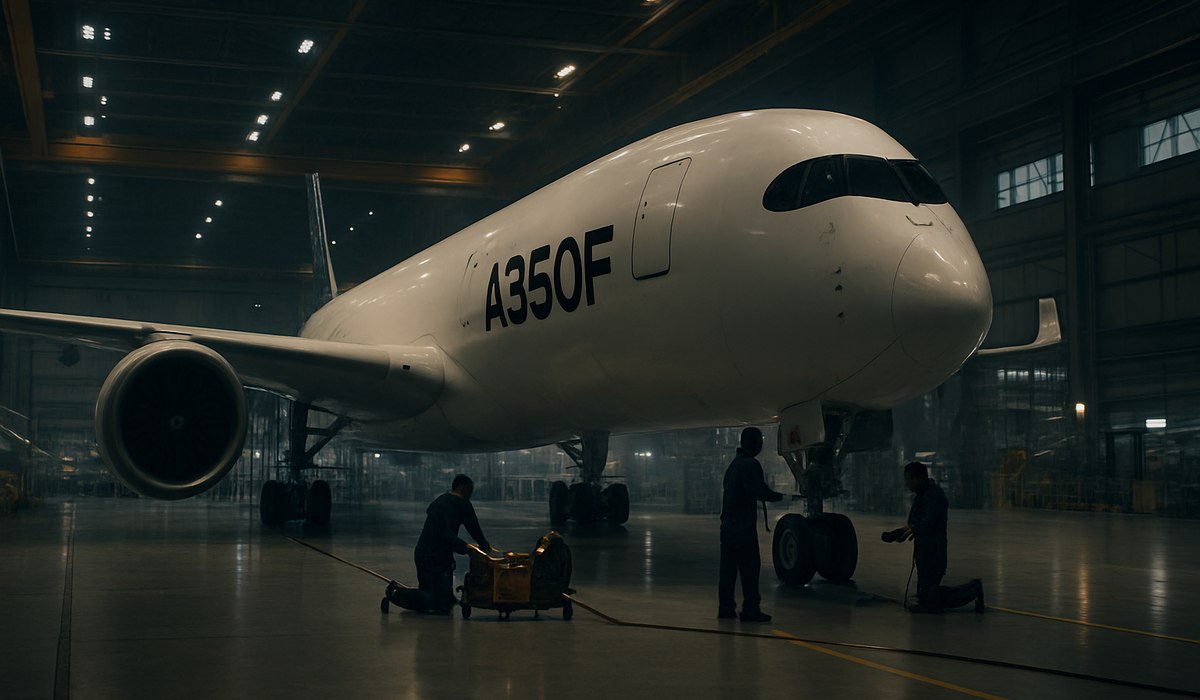
Image generated by AI
Airbus A350F Freighter Enters Ground Testing Phase Using Water System Validation
The Airbus A350F freighter has officially commenced critical ground testing procedures, marking a significant milestone in the European manufacturer's path toward commercial service entry in 2026. Airbus announced today that the new wide-body cargo variant has begun its rigorous validation phase during final assembly, employing an unusual yet essential methodology: 180 liters of water to systematically test aircraft systems complexity. This groundbreaking approach demonstrates the engineering rigor required when introducing a new aircraft variant to the competitive global cargo market. The water-based testing framework validates critical hydraulic, pneumatic, and thermal management systems before the A350F enters revenue service with freight operators worldwide.
What Is The Airbus A350F Freighter?
The Airbus A350F represents the cargo-optimized variant of the acclaimed A350 XWB (extra-wide body) family. Unlike its passenger-carrying counterpart, the A350F sacrifices cabin windows and premium seating configurations for a dedicated main deck cargo hold spanning the aircraft's full length. The freighter variant accommodates approximately 140 cubic meters of cargo space with a maximum payload capacity exceeding 70 tons, making it directly competitive with Boeing's 777F and 747-8F models.
Airbus designed the A350F specifically to address logistics operators' demand for fuel-efficient, long-range cargo aircraft. The variant inherits the A350's advanced Rolls-Royce Trent XWB engines, composite fuselage construction, and cutting-edge avionics suite. The airbus a350f liters specification in water testing validates these systems' integrated performance before airlines and freight operators commit to purchasing decisions. The aircraft can operate intercontinental routes from emerging markets, connecting secondary cities without the fuel penalties associated with older-generation freighters like the Airbus A330-200F.
Why Water Testing Matters For New Aircraft Validation
Water system testing represents one of aviation's most critical certification procedures, ensuring hydraulic redundancy and thermal management under extreme operational scenarios. The 180-liter water methodology employed in airbus a350f liters ground validation tests simulate real-world conditions including maximum-load taxi operations, high-altitude flight maneuvers, and emergency descent scenarios. This unusual approach allows engineers to measure system pressure responses, identify potential leaks, and validate backup system activation without exposing the aircraft to full-power engine operations during initial validation phases.
The testing matrix includes landing gear extension-retraction cycles, flight control surface responsiveness, environmental control system performance, and fire protection activation sequences. Water-based testing offers distinct advantages over alternative methodologies: it provides measurable, repeatable results; reduces thermal stresses on virgin components; and accelerates the validation timeline compared to full-power engine runs. According to aerospace engineering standards maintained by EASA (European Union Aviation Safety Agency), this systematic approach validates system redundancy critical for single-pilot cargo operations across remote airfields. The rigorous protocol ensures that when the A350F enters service, operators face minimal technical surprises during initial operations.
Ground Testing Challenges And Expected Timelines
Airbus faces considerable engineering complexity bringing the A350F to market in an increasingly competitive cargo landscape. Ground testing procedures typically extend across 6-8 months of continuous validation, encompassing environmental extremes from Arctic cold-soak conditions to Middle East desert heat exposure. The water testing protocol for airbus a350f liters specifications represents just one component of a comprehensive validation matrix that also includes avionics integration checks, weight-and-balance verification, and fuel system contamination analysis.
Logistics operators including Nippon Cargo Airlines, FedEx, and DHL have expressed strong interest in A350F deployment, but certification delays could disadvantage Airbus against Boeing's established freighter portfolio. The manufacturer must complete ground testing, followed by airworthiness certification flights, before aviation authorities including EASA and FAA certification processes grant Type Certification. Weather delays, component availability challenges, and regulatory approval timelines could extend the A350F's service entry into late 2026 or early 2027. Industry observers note that successful ground testing completion represents the critical path item preventing schedule slippage.
What's Next For The A350F Market Deployment
Following ground testing completion, Airbus will commence the airworthiness certification campaign, engaging test pilots and avionics specialists to validate performance across the cargo aircraft's operational envelope. First revenue flights are anticipated in 2026, pending successful completion of all regulatory milestones. Existing freight operators face aging Airbus A330-200F fleets and Boeing 777F aircraft requiring replacement by 2027-2030, creating market demand for approximately 400-500 A350F aircraft over the next decade.
Supply chain logistics present secondary considerations: Rolls-Royce Trent engine production rates, composite fuselage component manufacturing from Airbus suppliers across Europe and Asia, and landing gear availability from Moog and Liebherr will determine delivery cadences. Early customer commitments from Middle Eastern and Asian carriers suggest strong demand momentum. The A350F's 13,000+ nautical mile range enables direct service between Asian manufacturing hubs and European distribution centers, capturing market share from carriers currently requiring trans-shipment operations. Sustainability-focused operators recognize the A350F's 20% fuel consumption advantage over comparable freighter aircraft, aligning with aviation's decarbonization objectives through 2050.
Key Data Table: Airbus A350F Specifications And Testing Parameters
| Specification | Value | Relevance |
|---|---|---|
| Water Test Volume | 180 liters | System validation methodology |
| Cargo Capacity | 140 cubic meters | Competitive positioning |
| Maximum Payload | 72 metric tons | Route planning capability |
| Range (max payload) | 4,700 nautical miles | Operational flexibility |
| Range (reduced payload) | 5,600 nautical miles | Extended network reach |
| Expected Service Entry | 2026 | Market timeline |
| Fuel Efficiency Advantage | 20% vs. A330-200F | Operating cost reduction |
| Expected Demand | 400-500 aircraft | Market potential |
| Ground Testing Duration | 6-8 months | Certification timeline |
| Engine Type | Rolls-Royce Trent XWB | Power plant specs |
What This Means For Travelers And Logistics Operators
The A350F ground testing advancement directly impacts international supply chains, e-commerce delivery reliability, and perishable goods transport across emerging markets. Here's what cargo operators and businesses dependent on air freight should understand:
1. Enhanced Route Availability – The A350F enables carriers to establish direct cargo service between secondary cities, reducing transit times for time-sensitive shipments and lowering overall logistics costs for manufacturers and retailers.
2. Improved Fuel Economy – The aircraft's 20% fuel efficiency advantage translates directly to reduced surcharges on air freight rates, benefiting cost-sensitive sectors including pharmaceuticals, electronics, and temperature-controlled commodities.
3. Environmental Compliance – Operators deploying A350F fleets achieve significant carbon footprint reductions, supporting corporate sustainability commitments and regulatory compliance in regions implementing aviation carbon pricing mechanisms.
4. Supply Chain Resilience – The A350F expands capacity beyond aging Boeing 777F availability, reducing logistics bottlenecks during peak shipping periods and improving reliability for mission-critical supply chains.
5. Emerging Market Connectivity – The aircraft's capability to operate from medium-sized airports in Africa, South Asia, and Latin America creates unprecedented logistics possibilities for developing economies previously dependent on hub-and-spoke consolidation models.
Frequently Asked Questions
When will the Airbus A350F officially enter service with cargo operators? Service entry is targeted for 2026
Disclaimer
This article is for informational and educational purposes only. It does not constitute legal, financial, or professional advice. While we strive to provide accurate and up-to-date information, travel policies, regulations, and conditions change rapidly. Always verify information with official sources before making travel decisions. Nomad Lawyer makes no representations about the accuracy, reliability, completeness, or suitability of the information provided. Readers should consult qualified professionals for advice specific to their circumstances. The views expressed in this article are those of the author and do not necessarily reflect the views of Nomad Lawyer.
Preeti Gunjan
Contributor & Community Manager
A passionate traveller and community builder. Preeti helps grow the Nomad Lawyer community, fostering engagement and bringing the reader experience to life.
Learn more about our team →