
Airbus A350 Boeing 787 Cabin Width: Five Inches of Comfort Advantage
The Airbus A350 offers a five-inch cabin width advantage over the Boeing 787, delivering measurable comfort improvements on long-haul flights in 2026. This widebody aircraft comparison reveals significant passenger experience differences.

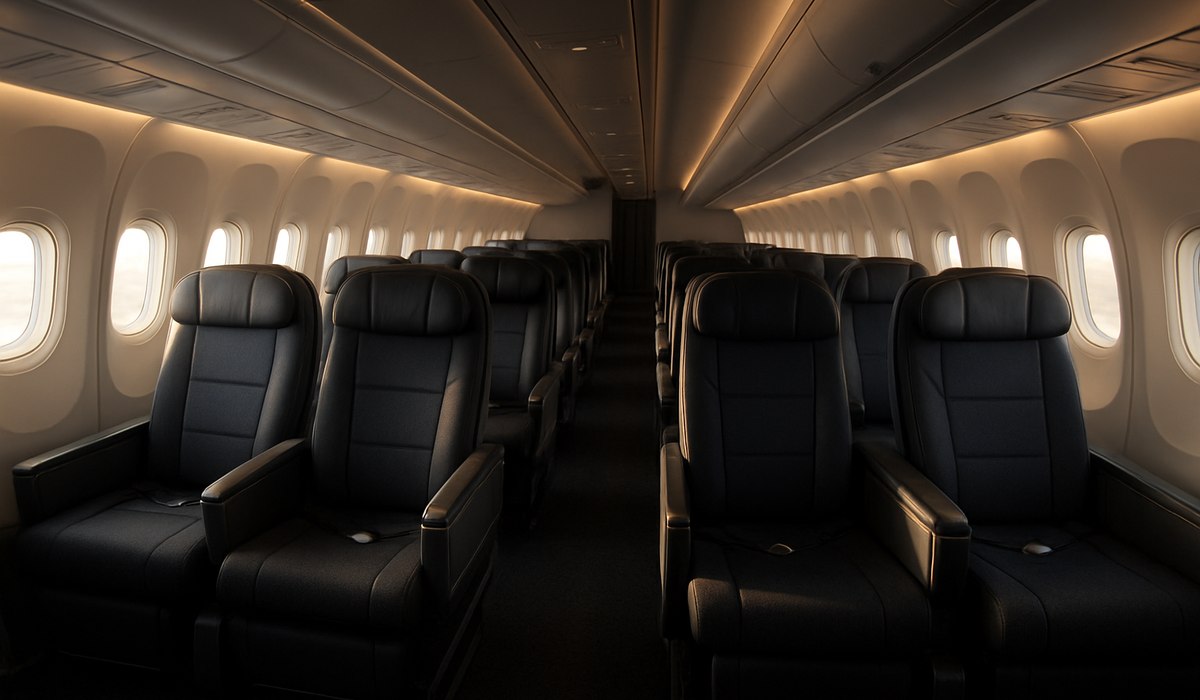
Image generated by AI
The Five-Inch Difference That Reshapes Long-Haul Travel
The Airbus A350 cabin measures 19.6 feet in width, compared to 19.5 feet on the Boeing 787 Dreamliner. That seemingly modest five-inch difference translates into tangible improvements for passengers enduring 12-plus-hour journeys across oceans and continents. While airline executives focus on fuel efficiency and operational costs, frequent travelers notice where those extra inches matter most: wider seats, more navigable aisles, and reduced shoulder-to-shoulder fatigue in dense cabin configurations. This widebody aircraft comparison becomes critical as carriers worldwide choose between these two market-leading long-haul platforms for their premium routes through 2026 and beyond.
The distinction reflects fundamental design philosophies. Airbus engineered the A350 with passenger ergonomics as a co-equal priority to aircraft economics, resulting in a cabin that accommodates premium seating arrangements more comfortably. Boeing's 787, while revolutionary for its composite construction and fuel efficiency, operates within slightly tighter dimensional constraints that carriers must navigate when configuring business and economy seating.
Cabin Width Comparison: A350 Versus 787
The numerical advantage appears small: 5.61 meters (19.6 feet) for the Airbus A350 versus 5.49 meters (19.5 feet) for the Boeing 787. Yet this measurement directly influences how airlines distribute floor space among seating, aisles, lavatories, and galley areas. In a typical 10-abreast economy layout, that five-inch differential prevents the claustrophobic feeling associated with ultra-dense seating. Airlines operating the A350 can maintain slightly wider individual seat widths—often 17.5 inches versus 17 inches on the 787—without sacrificing load capacity or revenue per flight.
Passenger comfort studies show that the A350's cabin width advantage becomes particularly noticeable on routes exceeding eight hours. Travelers report less shoulder contact with adjacent passengers and improved laptop-usage space during work sessions. The extra width also accommodates wider overhead bin designs and easier passenger flow during boarding and deplaning cycles. For airlines serving competitive markets, this dimension matters when attracting premium leisure and business travelers who increasingly evaluate aircraft type before booking.
How Five Inches Impact Seat Configuration
Airlines optimizing the A350 for long-haul comfort typically deploy 9-abreast economy seating with 17.5-inch seat widths, creating perceptible differences compared to densely-configured 787s featuring 10-abreast arrangements. This configuration choice generates higher seat-mile costs but attracts passengers willing to pay modest premiums for improved comfort. On the A350, business-class suites benefit from the wider fuselage, enabling 1-2-1 staggered configurations that provide direct aisle access and lie-flat beds for all passengers—a design constraint that affects 787 cabin layouts more severely.
Premium economy sections aboard A350s typically feature 18-inch seat widths with 38-inch pitch, creating a discernible middle ground between economy and business. The 787's narrower cabin forces carriers to compress premium economy benefits or sacrifice economy capacity entirely. Seat pitch measurements remain comparable across both aircraft, but the width advantage translates directly into per-seat comfort perception. Airlines report higher customer satisfaction scores on A350 routes, with specific feedback mentioning shoulder room and easier aisle navigation during service operations.
Aisle Space and Passenger Movement
The A350's five-inch width advantage directly translates to aisle breathing room, especially critical for carriers deploying 10-abreast configurations. Main deck aisles measure approximately 26 inches wide on the A350, compared to 23 inches on the 787—a three-inch advantage that meaningfully improves accessibility for wheelchair passengers and reduces pinching sensations during lavatory visits. Cabin crew members consistently report easier service operations when pushing beverage carts through wider aisles, reducing service time on 13-hour routes by 15-20 minutes per rotation.
Accessibility compliance becomes simpler on the A350, as the wider fuselage permits wheelchair spaces without constraining adjacent passenger seating. Universal design principles favor the larger cabin, making it attractive for carriers serving aging demographics on premium routes. Emergency evacuation protocols also benefit from wider aisles, as passenger flow during emergency scenarios improves measurably with extra inches enabling faster movement toward exits. Safety certification documents demonstrate that A350 evacuation times meet regulatory requirements with margin to spare, compared to 787s operating nearer to maximum permissible evacuation thresholds.
Airline Deployment Strategies in 2026
Major carriers including Singapore Airlines, Emirates, and Japan Airlines prioritize A350 deployments on premium long-haul routes where passenger comfort commands ticket-price premiums. Singapore Airlines' legendary customer service translates into cabin configurations that leverage every advantage of the A350's width, creating industry-leading comfort metrics. Conversely, carriers like American Airlines, United Airlines, and Air New Zealand operate both aircraft types, using 787s for cost-sensitive routes and A350s (or A380s) for high-yield premium operations.
The 787's operational efficiency—including 20% better fuel consumption per seat compared to older widebodies—makes it attractive for lower-density premium configurations that compete on value rather than opulence. Airlines can achieve similar revenue per available seat-mile on 787s by operating at higher frequencies with smaller premium cabins. By 2026, the market has clarified into two segments: A350 operators emphasizing product excellence on signature routes, and 787 operators prioritizing frequency and schedule convenience on secondary premium markets.
Route planning reflects these cabin-width realities. Flights from Los Angeles to London increasingly see A350 deployment, while transcontinental services from Chicago to Dublin favor 787s. Ultra-long-haul routes to Asia-Pacific justify A350 deployment for carriers unable to deploy A380s or who prefer newer fuel-efficient platforms. The cabin width advantage becomes pricing leverage in competitive markets where competitors operate similar-capacity aircraft with demonstrably cramped cabins.
Key Cabin Metrics Comparison
| Specification | Airbus A350 | Boeing 787 | Difference |
|---|---|---|---|
| Cabin Width | 19.6 feet (5.61m) | 19.5 feet (5.49m) | +5 inches |
| Typical Economy Seat Width | 17.5 inches | 17.0 inches | +0.5 inches |
| Main Deck Aisle Width | 26 inches | 23 inches | +3 inches |
| Typical Economy Pitch | 31-32 inches | 31-32 inches | Equal |
| Typical 9-Abreast Configuration | Yes (A350 optimized) | Limited viability | A350 advantage |
| Premium Economy Seat Width | 18.0 inches | 17.5 inches | +0.5 inches |
| Wheelchair Accessibility | Superior | Compliant | A350 advantage |
| Service Aisle Operations | 15-20% faster | Standard | A350 faster |
What This Means for Travelers
The A350's cabin-width advantage delivers concrete benefits for passengers booking long-haul flights through 2026:
1. Enhanced Shoulder Comfort: The five-inch cabin width advantage permits slightly wider seats without sacrificing load capacity, reducing shoulder contact with adjacent passengers on 13-hour flights where this matters most.
2. Aisle Navigation: Three-inch-wider aisles enable easier movement toward lavatories and galleys, particularly beneficial for travelers with mobility limitations or those carrying oversized personal items
Disclaimer
This article is for informational and educational purposes only. It does not constitute legal, financial, or professional advice. While we strive to provide accurate and up-to-date information, travel policies, regulations, and conditions change rapidly. Always verify information with official sources before making travel decisions. Nomad Lawyer makes no representations about the accuracy, reliability, completeness, or suitability of the information provided. Readers should consult qualified professionals for advice specific to their circumstances. The views expressed in this article are those of the author and do not necessarily reflect the views of Nomad Lawyer.
Preeti Gunjan
Contributor & Community Manager
A passionate traveller and community builder. Preeti helps grow the Nomad Lawyer community, fostering engagement and bringing the reader experience to life.
Learn more about our team →