
Airbus A350-1000 Outranges Boeing 787-9 on Ultra-Long-Haul Routes in 2026
The Airbus A350-1000 extends maximum range beyond Boeing's 787-9, reshaping ultra-long-haul nonstop flight capabilities for global carriers in 2026.

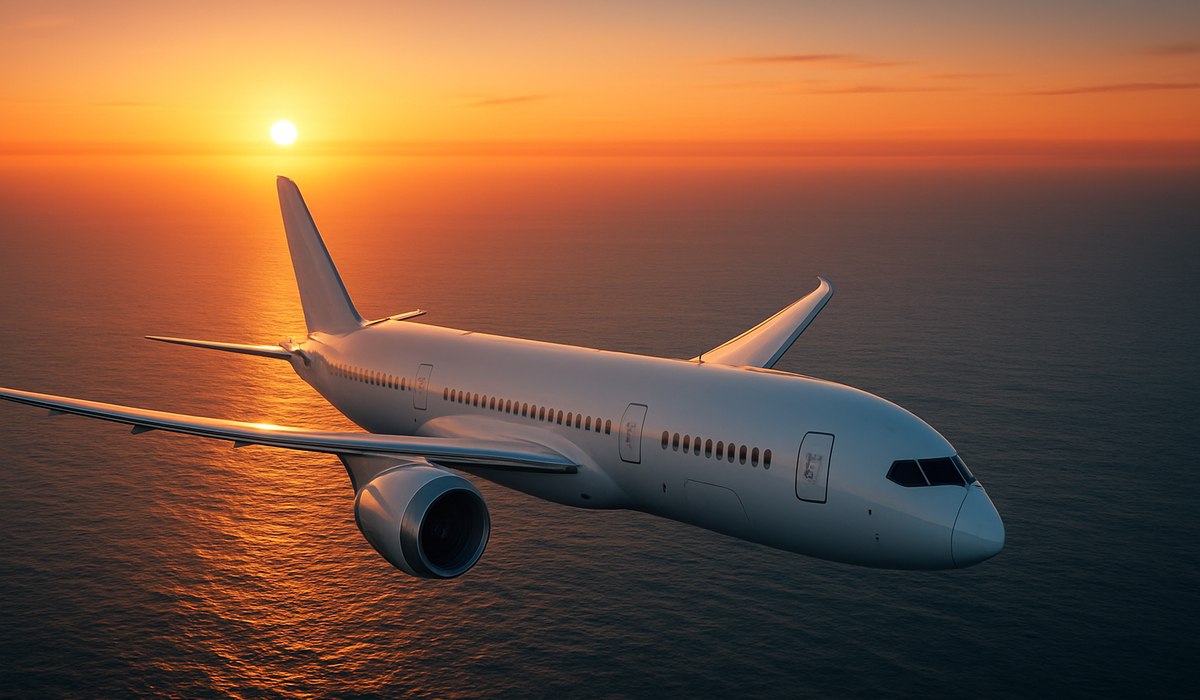
Image generated by AI
The Airbus A350-1000 Redefines Ultra-Long-Haul Capacity
The Airbus A350-1000 has emerged as the range leader in premium widebody aircraft, surpassing the Boeing 787-9 in maximum nonstop flight distance. When passengers board Japan Airlines' A350-1000 departing Tokyo Haneda or settle into Qatar Airways cabins from Doha Hamad International, they're experiencing some of aviation's most ambitious nonstop routes. Meanwhile, Boeing 787-9 operators continue connecting major hubs like San Francisco to Singapore and Perth to London, yet with measurably shorter range capabilities. This distinction reshapes how global carriers plan their route networks and passenger connectivity strategies for 2026 and beyond.
Range Specifications: A350-1000 vs Boeing 787-9
The Airbus A350-1000 vs Boeing 787-9 range comparison reveals significant operational advantages for the Airbus platform. The A350-1000 delivers a maximum range of approximately 8,000 nautical miles (14,800 kilometers), while the Boeing 787-9 reaches around 7,635 nautical miles (14,140 kilometers). This 365-nautical-mile advantage translates to meaningful payload and routing flexibility. The A350-1000 accommodates up to 350 passengers in typical three-class configurations, compared to the 787-9's 242 to 330-seat capacity depending on configuration.
Fuel efficiency plays a critical role in these specifications. Both aircraft utilize advanced turbofan engines—the A350-1000 features Rolls-Royce Trent XWB engines, while the 787-9 employs General Electric GEnx turbofans. The A350-1000's larger fuselage and wing design allow for greater fuel capacity and lower fuel consumption per available seat kilometer (ASK). Airlines operating the A350-1000 report seat-mile economics that advantage longer routes, particularly on ultra-long-haul missions exceeding 15 hours.
For detailed aircraft specifications and performance data, visit the Federal Aviation Administration's aircraft certification database.
Real-World Route Applications and Network Strategy
Premium carriers have deployed these aircraft strategically across their long-haul networks. Qatar Airways operates A350-1000 services on high-demand routes including Doha to Los Angeles, Doha to New York, and Doha to London Gatwick—routes where the additional 365 nautical miles enables more flexible payload planning and weather routing alternatives.
Japan Airlines launched A350-1000 nonstop services from Tokyo Haneda to New York JFK, leveraging the aircraft's range to compete directly on prestige routes while maintaining superior passenger comfort through widebody cabins. Singapore Airlines operates similar equipment across its ultra-long-haul network.
Boeing 787-9 operators including United Airlines, American Airlines, and Lufthansa excel on routes ranging from 14 to 16 hours, including San Francisco to Singapore Changi, Perth to London Heathrow, and Brisbane to Los Angeles. The 787-9's lighter weight structure and advanced avionics deliver competitive advantages on specific routing profiles where range isn't the limiting factor.
The distinction matters considerably for route planning, fuel surcharges, and competitive positioning on premium international routes.
Competitive Advantage for Airlines and Network Design
Airlines selecting the A350-1000 versus 787-9 must evaluate total cost of ownership, route networks, and competitive positioning. The A350-1000's range advantage enables:
- Gateway consolidation on ultra-long-haul routes
- Greater payload flexibility on marginal routes
- Premium positioning on signature nonstop flights
- Reduced dependency on fuel stops and alternative routings
The Boeing 787-9 remains exceptionally well-suited for operations where range limits don't constrain network design. Its lighter structure, smaller fuel burn per available seat, and proven reliability across diverse route structures deliver compelling economics for many carriers. Airlines including Air New Zealand and Turkish Airlines have built extensive 787-9 networks serving secondary and primary markets effectively.
For route-specific questions and operational considerations, travelers should consult airline representatives or visit FlightAware for real-time schedule and aircraft tracking.
Future of Ultra-Long-Haul Travel and Aircraft Development
The airbus a350 boeing 787 range comparison signals broader industry trends toward extended nonstop capabilities. Emerging services from Middle Eastern carriers continue expanding ultra-long-haul networks, with Doha, Abu Dhabi, and Dubai serving as premium hubs for A350-equipped networks.
Boeing's future response includes the 787-10 variant and potential 777X derivatives with improved range specifications. Airbus continues A350-1000 production with consistent demand from Gulf carriers and Asian legacy carriers. The competitive dynamics favor extended-range aircraft as passenger demand for direct routing intensifies and airport slot constraints tighten.
Environmental considerations increasingly influence aircraft selection. The A350-1000's fuel efficiency translates to lower carbon emissions per passenger on ultra-long-haul missions. Both aircraft represent significant environmental improvements over earlier widebody generations, though the A350-1000 achieves measurably better performance metrics per available seat kilometer.
Industry projections through 2030 suggest sustained demand for both aircraft types, with 350+ additional deliveries anticipated globally.
Traveler Action Checklist
Planning travel on ultra-long-haul routes in 2026 requires understanding aircraft capabilities and service standards:
- Verify aircraft type before booking by checking airline websites or FlightAware schedules to confirm A350-1000 or 787-9 equipment assignment
- Compare cabin products across both aircraft types, as A350-1000 widebody configuration offers additional space and amenity variations
- Check route availability on your preferred origin-destination pair, as certain routes operate exclusively on specific aircraft
- Review airline policies for schedule changes, as aircraft substitutions occur and may affect selected cabin experiences
- Monitor booking confirmations for equipment confirmation 60 days before departure
- Understand baggage and comfort policies specific to each carrier's configuration of these aircraft types
- Contact customer service directly with equipment preferences, as some airlines accommodate requests based on availability
Frequently Asked Questions
What is the maximum range difference between the A350-1000 and 787-9? The A350-1000 achieves approximately 8,000 nautical miles maximum range, while the 787-9 reaches around 7,635 nautical miles—a difference of 365 nautical miles. This advantage enables the A350-1000 to operate longer nonstop routes with greater payload flexibility and fewer constraints on fuel and weather routing alternatives.
Which aircraft operates longer routes currently in 2026? The A350-1000 operates the longest commercially scheduled nonstop routes, including Doha to Los Angeles and Doha to New York. Boeing 787-9 operators serve ultra-long routes like Perth to London and San Francisco to Singapore effectively, though maximum scheduled range typically remains slightly shorter than A350-1000 networks.
How does passenger capacity differ between these aircraft? The A350-1000 typically seats 350 passengers in three-class configuration, compared to 242-330 seats on the 787-9 depending on airline configuration. The A350-1000's wider fuselage accommodates ten-a
Disclaimer
This article is for informational and educational purposes only. It does not constitute legal, financial, or professional advice. While we strive to provide accurate and up-to-date information, travel policies, regulations, and conditions change rapidly. Always verify information with official sources before making travel decisions. Nomad Lawyer makes no representations about the accuracy, reliability, completeness, or suitability of the information provided. Readers should consult qualified professionals for advice specific to their circumstances. The views expressed in this article are those of the author and do not necessarily reflect the views of Nomad Lawyer.
Preeti Gunjan
Contributor & Community Manager
A passionate traveller and community builder. Preeti helps grow the Nomad Lawyer community, fostering engagement and bringing the reader experience to life.
Learn more about our team →