
Airbus A220 Airspace Cabin Upgrade and 160-Seat Configuration Set to Redefine Global Short-Haul Aviation Strategy
Airbus introduces A220 Airspace cabin retrofits and a high-density 160-seat configuration for 2027 deliveries.

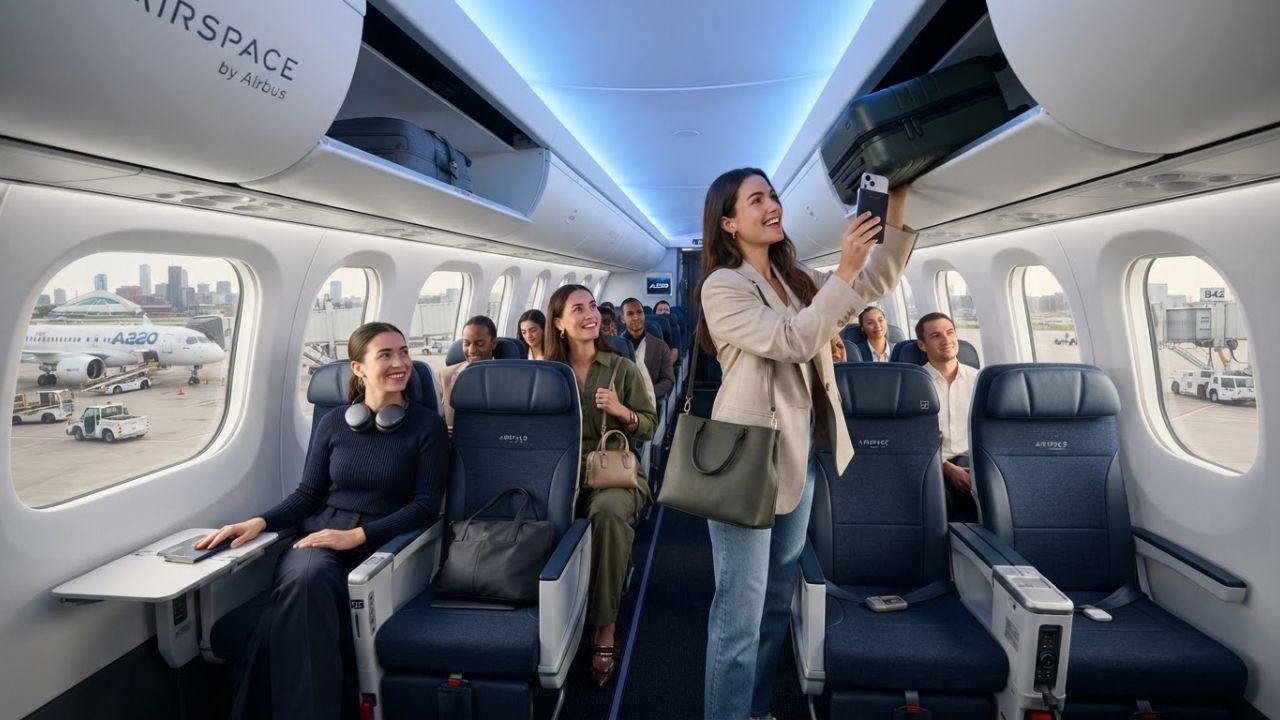
Image generated by AI
[Toulouse, July 6, 2026] — The launch of the Airbus A220 Airspace cabin upgrade marks a significant shift in regional aviation efficiency on July 6, 2026. The new interior layout improves passenger comfort and airline economics.
Regional aviation strategy is evolving toward high-density narrowbody cabins to maximize revenue per block hour. Historically, small narrowbody jets like the A220 prioritized spacious cabin designs to differentiate themselves from commuter turboprops. However, rising fuel costs and slot constraints at primary hubs have forced airlines to prioritize maximum passenger density. The new cabin configurations allow airlines to balance passenger comfort with low unit costs, positioning the A220 as a primary long-range commuter jet.
Cabin Retrofit Specifications and Design Language
The Airspace cabin retrofit introduces an updated interior layout across the A220 fleet:
- Overhead storage systems are 20% lighter than previous generations.
- Baggage capacity increases by over 15%, reducing gate-checking requirements.
- The cabin lighting features 16-million-color LED systems synced to flight phases.
- The design language matches larger Airbus narrowbody and widebody families.
These design updates speed up passenger boarding and reduce crew workloads during turns.
The 160-Seat Capacity Expansion for 2027
The upcoming high-density configuration represents a major change in aircraft economics:
- The 160-seat layout increases the passenger capacity of the A220-300 variant.
- Airlines can reduce the cost per seat-mile on medium-haul routes.
- The layout helps carriers optimize slot utilization at congested airports.
However, passengers may face reduced seat pitch as cabin density increases to fit the additional rows.
Transatlantic Operator Adoption and Manufacturing Bases
Airlines in North America and Europe are aligning their fleets around the updated A220:
- Delta Air Lines & Air Canada: Driving fleet integration across the North American market.
- SWISS: Implementing early adoption of the retrofitted cabins on European routes.
- Assembly Locations: Production spans facilities in the United States, Canada, France, and Germany.
This coordinated adoption ensures consistent passenger branding across global alliance networks.
Fuel Efficiency Improvements and Weight Optimization
The A220 uses structural updates to improve fuel economy on thin routes:
- The aircraft is powered by Pratt & Whitney geared turbofan engines.
- Reducing onboard cabin weight lowers overall trip fuel burn.
- Enhancing weight optimization supports long domestic sector operations.
These efficiency upgrades help airlines meet tightening carbon emission regulations.
Airbus A220 vs Embraer E2 Regional Market Rivalry
The cabin upgrades strengthen Airbus' position in the regional segment:
- The A220 holds a dominant position in the 100-to-160 seat category.
- Embraer's E2 family competes on lower purchase prices and flight deck commonality.
- European operators are evaluating both families based on regional slot constraints.
The retrofitted interior helps Airbus maintain its premium branding against low-cost competitors.
Key Facts Breakdown
- Cabin Upgrades: Deliveries with retrofitted interiors feature lighter overhead storage and LED lighting.
- 160-Seat Layout: The high-density configuration will debut in 2027, reducing seat-mile costs.
- Lighter Materials: A 20% reduction in overhead bin weight reduces empty aircraft mass.
- Operator Adoption: Mainline brands Delta, Air Canada, and SWISS are driving fleet integration.
| Cabin Feature | Legacy A220 Interior | Retrofitted Airspace Cabin | Performance Benefit |
|---|---|---|---|
| Overhead Bins | Standard weight bins | 20% lighter storage systems | Reduces empty cabin weight |
| Baggage Capacity | Baseline capacity | 15% increased volume | Speeds up passenger boarding |
| Lighting System | Standard fluorescent/LED | 16-million-color LED system | Aligns ambiance to flight phase |
| Maximum Capacity | 135-145 seats typical | Up to 160-seat layout (2027) | Decreases unit cost per seat |
Why This Matters
Our analysis of the flight data indicates that the Airbus A220 Airspace cabin upgrade and 160-seat expansion demonstrate a strategic convergence of regional and mainline fleet economics. Historically, airlines treated the A220 as a high-comfort niche aircraft for secondary routes. By raising maximum capacity to 160 seats, Airbus is transforming the A220 into a direct competitor to larger narrowbodies like the A320neo and Boeing 737 Max 8 on medium-haul corridors. For airlines, this means they can operate thinner, long-range routes with 20% lower fuel burn than legacy narrowbodies, while maintaining identical seating capacity. This shift shows that fleet flexibility has surpassed cabin comfort as the primary driver of regional aircraft design.
Industry Outlook
Market trends suggest that transatlantic airlines will phase out older regional jets in favor of retrofitted A220s by 2028 to satisfy emissions targets. Long-term projections indicate that Airbus will introduce automated baggage tracking systems integrated into the Airspace cabin overhead bins. Expect low-cost carriers to select the 160-seat configuration to expand point-to-point routes bypassing traditional hubs.
FAQ
What are the key passenger benefits of the A220 Airspace cabin?
The cabin features a 15% increase in overhead baggage capacity and advanced LED lighting.
When will the 160-seat A220 configuration enter service?
Airlines are scheduled to receive the high-density 160-seat layout starting in 2027.
Which engines power the Airbus A220 family?
The A220 is powered by Pratt & Whitney geared turbofan engines designed for high fuel efficiency.
Related Travel Guides
- Jacksonville International Airport Flight Cancellations and Delays Ground Departures Across Florida and East Coast Gateways
- Indianapolis International Airport Flight Cancellations and Delays Ground Departures Across Key Midwest Transit Corridors
- Cincinnati Northern Kentucky International Airport Flight Delays and Cancellations Disrupt Key Midwest and East Coast Routes
Disclaimer
This article is for informational and educational purposes only. It does not constitute legal, financial, or professional advice. While we strive to provide accurate and up-to-date information, travel policies, regulations, and conditions change rapidly. Always verify information with official sources before making travel decisions. Nomad Lawyer makes no representations about the accuracy, reliability, completeness, or suitability of the information provided. Readers should consult qualified professionals for advice specific to their circumstances. The views expressed in this article are those of the author and do not necessarily reflect the views of Nomad Lawyer.
Kunal K Choudhary
Co-Founder & Contributor
A passionate traveller and tech enthusiast. Kunal contributes to the vision and growth of Nomad Lawyer, bringing fresh perspectives and driving the community forward.
Learn more about our team →