
Breaking Airline News: Massive AirBorneo and MASwings Fleet Groundings Spark Extreme Travel Chaos Across Malaysia
Breaking airline news: Amidst a terrifying era of severe operational fragility, a massive maintenance backlog grounds AirBorneo and MASwings fleets, plunging major Malaysian airports into extreme travel chaos.

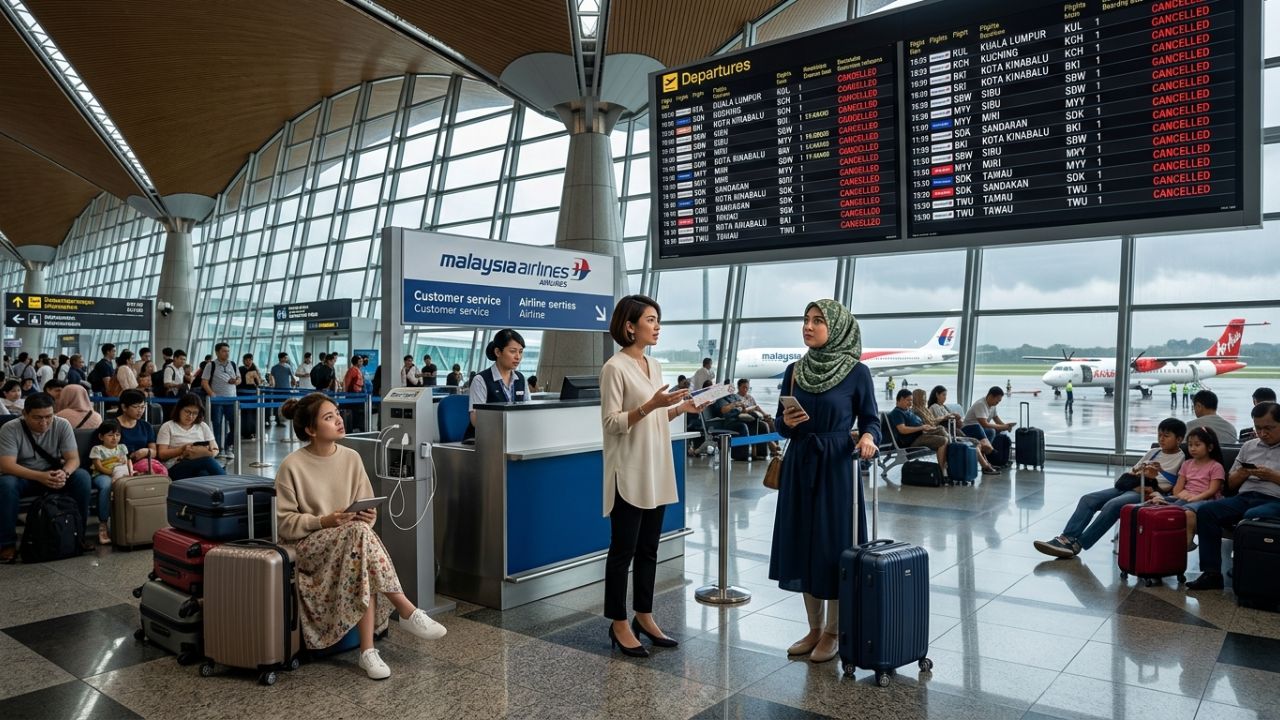
Image representing the intense strategic battle as thousands of abandoned passengers desperately navigate massive terminal gridlock and extreme travel chaos across the paralyzed Malaysian aviation grid.
Breaking Airline News: Massive AirBorneo and MASwings Fleet Groundings Spark Extreme Travel Chaos Across Malaysia
As paralyzing terminal bottlenecks, terrifying capacity limits, and severe operational fragility violently threaten to completely shatter passenger mobility across Southeast Asia, the Malaysian commercial aviation network has suffered a devastating structural collapse. In a harrowing display of infrastructure vulnerability, thousands of international and domestic travelers have been utterly abandoned after major hubs suddenly succumbed to massive, systemic flight cancellations. Triggered by severe maintenance issues and a catastrophic supply chain failure affecting critical replacement parts, AirBorneo and MASwings have been forced to abruptly ground large segments of their regional fleets. This sudden reduction in operational capacity has violently severed critical aviation lifelines across KLIA, Kuching, and Kota Kinabalu International Airports, plunging high-value tourists from Singapore, China, Indonesia, and India into absolute, extreme travel chaos.
In a brutal demonstration of how fragile modern, high-density regional networks truly are, the sheer logistical nightmare of attempting to navigate East Malaysia has rapidly degenerated into a terrifying transit scenario. Because secondary sectors serving remote communities rely heavily on highly constrained aircraft stocks and single-aircraft schedules, any sudden unscheduled maintenance instantly destroys connectivity. The Civil Aviation Authority of Malaysia (CAAM) has aggressively intervened, attempting to enforce passenger rights under the Malaysian Aviation Consumer Protection Code, but the massive scale of these sudden flight disruptions continues to violently erode economic confidence and threatens to completely derail the highly anticipated "Visit Malaysia 2026" tourism initiative.
Expanded Overview: The Anatomy of a Fleet Collapse
The terrifying crisis of overwhelming passenger stress currently gripping the Malaysian aviation sector brutally exposes the severe limitations of airlines battling global supply chain logistics. AirBorneo recently admitted to massive operational failures, confirming that several of their aircraft were suddenly forced out of service due to highly dangerous faulty technology.
This terrifying vulnerability required immediate, unscheduled maintenance across multiple airframes. However, the airline is simultaneously suffering from massive delays in their parts supply chain. Unable to secure critical components, scheduled maintenance routines have completely collapsed. Consequently, numerous flights within East Malaysia were violently delayed or outright canceled. While AirBorneo has issued formal apologies and stated that returning to a normal schedule with absolute safety is their top priority, passengers are currently trapped in massive terminal gridlock.
Section-Wise Breakdown: Shattering the Hubs and Routes
To fully comprehend the massive logistical and strategic fallout of this terrifying network collapse, travel managers must review the exact operational metrics across the compromised gateways.
The Urban-Regional Disconnect: Stranded in Sibu The failure rapidly consumed connectivity between larger urban areas and smaller towns across East Malaysia. In a shocking display of how desperate the travel chaos has become, one stranded passenger based in Sibu reported being forced to hire a ride-sharing service to execute a massive overland extraction to Kuala Lumpur. This desperate maneuver cost the passenger over RM700 and took approximately 6 hours to complete a journey that normally requires a simple 1-hour flight.
Severed Intra-Borneo Arteries The operational friction is most violently noticeable on highly critical intra-Borneo transit corridors. Flights connecting Kuching ↔ Kota Kinabalu, Tawau ↔ Sandakan, and Sibu ↔ Bintulu / Miri have been heavily compromised. These routes are the absolute lifeblood of regional commerce, and their sudden closure leaves remote communities completely isolated.
Malaysian Aviation Disruption Operations Matrix
To ensure travel planners can aggressively track this massive operational vulnerability, the following matrix details the specific, verified metrics defining the AirBorneo and MASwings collapse.
| Operational Metric | Strategic Disruption Data |
|---|---|
| Primary Airlines Impacted | AirBorneo, MASwings |
| Primary Airports Paralyzed | KLIA, Kuching Int'l, Kota Kinabalu Int'l |
| Core Operational Failure | Faulty technology requiring unscheduled maintenance |
| Supply Chain Failure | Delayed shipping of critical replacement parts |
| Severed Domestic Route 1 | Kuching ↔ Kota Kinabalu |
| Severed Domestic Route 2 | Tawau ↔ Sandakan |
| Severed Domestic Route 3 | Sibu ↔ Bintulu / Miri |
| High-Risk Tourism Markets | Singapore, China, Indonesia, India |
| Regulatory Enforcement | CAAM (Civil Aviation Authority of Malaysia) |
| Legal Framework Activated | Malaysian Aviation Consumer Protection Code |
| Competitive Threat Landscape | AirAsia, Malaysia Airlines (capitalizing on vulnerability) |
Passenger Impact: The Threat to "Visit Malaysia 2026"
For the thousands of international travelers attempting to execute complex multi-destination itineraries across Malaysia, this massive capacity failure represents a highly terrifying reality. Prior to this collapse, the Malaysian tourism market was heavily projected to boom heading into "Visit Malaysia 2026." However, the complete degradation of regional air connections violently destroys the confidence of high-yield tourists arriving from massive neighboring markets like China and India.
While internal flight numbers remain statistically relevant on major trunk routes, the terrifying unpredictability of East Malaysian connections guarantees that international travelers will aggressively avoid multi-destination trips. If tourists cannot trust that their flight from KLIA to Kota Kinabalu will actually operate, they will simply divert their capital to far more reliable regional competitors.
Industry Analysis: The Fleet Consolidation Crisis
From a strategic aviation perspective, the sheer volume of cancellations highlights the immense pressure surrounding AirBorneo’s fleet renewal. As the carrier aggressively attempts to take over regional operations from MASwings and transition the regional aviation industry into a far more competitive space, it must battle massive operational friction.
The immediate challenge of constrained aircraft stocks is violently magnified by the presence of strong, hyper-aggressive regional competitors like AirAsia and Malaysia Airlines. These legacy carriers fiercely highlight the urgent need for greater operational reliability from AirBorneo. In response, AirBorneo is actively attempting to increase access to faster technologies for critical aircraft components to permanently remove these terrifying operational constraints.
Conclusion: A Strategic Warning for Regional Travelers
As the extremely critical Malaysian travel network continues to face terrifying strain from unprecedented supply chain disruptions, the massive volume of cancellations executed by AirBorneo and MASwings represents a massive warning to passengers. The Civil Aviation Authority of Malaysia (CAAM) is executing close monitoring of AirBorneo’s performance, leading to the enforcement of much higher consumer protection standards and forced refunds. However, surviving modern aviation in this region requires terrifyingly swift adaptability and a highly aggressive approach to securing travel insurance.
Key Takeaways: Passenger Survival FAQs
- What triggered the extreme travel chaos? A massive number of AirBorneo and MASwings aircraft were violently grounded due to a severe maintenance backlog directly caused by critical parts shortages and technical failures.
- Which transit corridors are completely paralyzed? The most violently impacted sectors are domestic routes within Sabah and Sarawak, specifically severing connections between Kuching, Kota Kinabalu, Tawau, and Sandakan.
- What are passenger rights during this collapse? Under the strict Malaysian Aviation Consumer Protection Code, passengers trapped by these disruptions are legally entitled to rebooking, refunds, and potentially meals, lodging, and expense coverage depending on the specific flight cancellation.
- How can passengers survive the disruption? Desperate travelers must aggressively verify flight status before approaching the terminal, secure alternative backup flights on competing carriers, and purchase comprehensive travel insurance to cover massive delay expenses.
- Will international tourism collapse? Yes. While internal routes struggle, the severe lack of multi-destination reliability will violently degrade confidence among highly lucrative international tourists arriving from Singapore, China, Indonesia, and India.
Related Travel Guides
Disclaimer
This article is for informational and educational purposes only. It does not constitute legal, financial, or professional advice. While we strive to provide accurate and up-to-date information, travel policies, regulations, and conditions change rapidly. Always verify information with official sources before making travel decisions. Nomad Lawyer makes no representations about the accuracy, reliability, completeness, or suitability of the information provided. Readers should consult qualified professionals for advice specific to their circumstances. The views expressed in this article are those of the author and do not necessarily reflect the views of Nomad Lawyer.
Kunal K Choudhary
Co-Founder & Contributor
A passionate traveller and tech enthusiast. Kunal contributes to the vision and growth of Nomad Lawyer, bringing fresh perspectives and driving the community forward.
Learn more about our team →