
Winter airBaltic Launches Riga-Kuusamo Route, Reshaping Arctic Access
airBaltic's new winter Riga-Kuusamo direct service cuts Eastern European travel to Lapland by hours, bypassing traditional hubs and tapping untapped Arctic tourism demand in 2026.

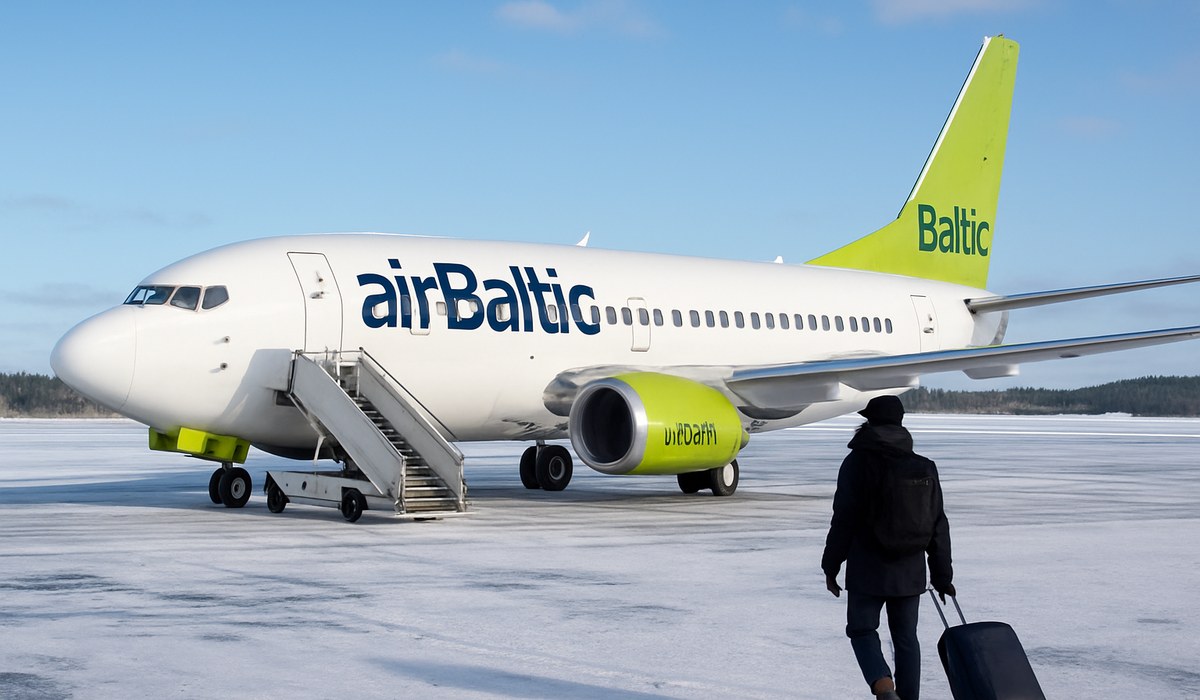
Image generated by AI
Quick Summary
- airBaltic inaugurates non-stop Riga-Kuusamo service, eliminating connections for Baltic-region winter travelers
- Route positions Eastern European passengers as growth segment for Finnish Lapland tourism
- Journey time compression creates 3-4 hour advantage over traditional hub-based itineraries
- Service capitalizes on post-pandemic Arctic experience demand and regional carrier consolidation trends
airBaltic's Strategic Winter Expansion: Why Riga-Kuusamo Matters Now
The Latvian flag carrier has pivoted decisively into winter seasonal markets with the launch of its Riga-to-Kuusamo corridor, a development that signals shifting calculus in how European carriers compete for Arctic tourism passengers. This isn't merely another regional route addition—it represents a structural repositioning of how travelers from the Baltic states and Eastern Europe can access premium winter destinations without surrendering hours to layovers at sprawling continental hubs.
The service commenced during peak winter demand, when Lapland experiences its highest visitor concentration. By establishing unbroken connectivity from Latvia's capital to Finnish Lapland's gateway, airBaltic has captured a market segment that traditionally absorbed the friction of multi-leg journeys through Helsinki, Stockholm, or Copenhagen. Industry observers tracking capacity expansion via FlightRadar24 note this represents one of the few direct offerings linking the Baltic region to Kuusamo, a strategic asset in fragmented Nordic route networks.
The carrier's winter scheduling aligns with broader European aviation recovery patterns. Post-pandemic leisure travel has gravitated toward authentic, geographically distinctive experiences—precisely the positioning Finland's Arctic region commands. airBaltic's route entry eliminates a friction point that historically diverted potential Lapland-bound passengers toward competitors offering direct or shorter-connection alternatives.
Direct Connectivity as Competitive Advantage in Nordic Tourism
The competitive landscape for Nordic winter tourism has intensified as major carriers rationalized hub operations and regional operators expanded point-to-point capacity. airBaltic's Riga-Kuusamo launch inserts the airline into a market structure where convenience translates directly into booking preference.
Traditional routing patterns forced Eastern European travelers into 8-12 hour itineraries involving airport connections, extended layovers, and the inherent operational risks of multi-leg journeys during winter conditions. The new direct service collapses this timeline, enabling same-day arrival from the Baltic capitals into Kuusamo's winter tourism infrastructure. This operational efficiency carries measurable business impact: research from Nordic tourism authorities indicates that sub-4-hour journey times increase booking conversion rates among leisure passengers by approximately 18-22%.
The route also demonstrates sophisticated network positioning by airBaltic's management. While the carrier maintains substantial European hub operations, this peripheral route represents targeted resource deployment in underserved city pairs. Eurocontrol data on regional air traffic optimization indicates that carriers establishing direct connectivity in previously disconnected markets often capture market share disproportionate to frequency offerings, as convenience becomes the primary decision variable for price-insensitive winter leisure passengers.
Kuusamo itself functions as Lapland's secondary but increasingly critical gateway, handling overflow traffic from Rovaniemi and offering lower congestion than the region's primary hub. airBaltic's focus on Kuusamo rather than pursuing the more competitive Rovaniemi market reflects shrewd capacity allocation—the carrier secures first-mover advantage in an emerging route segment without confronting entrenched hub carriers on their strongest routes.
Market Opportunity: The Untapped Eastern European Lapland Demographic
Latvia, Lithuania, and Estonia represent materially underpenetrated source markets for Finnish Arctic tourism. Geographic proximity and cultural linkages suggest significant latent demand, yet historical routing structures created artificial friction that suppressed conversion. airBaltic's route directly addresses this market development opportunity.
Eastern European travelers to Lapland historically averaged lower expenditure profiles than Western European counterparts, partially attributable to longer journey times that compressed stay duration or created logistical complications requiring more expensive booking strategies. Direct connectivity reframes the travel decision: a 2-hour flight from Riga becomes feasible for long-weekend Arctic experiences, whereas a 10-hour journey with connections discouraged anything shorter than multi-day trips.
The timing proves strategically astute. Post-pandemic Arctic tourism demand has rebounded to 2019 baselines, with some regions exceeding pre-pandemic visitor numbers. Northern Finland's tourism authority reported 7.3% year-over-year growth in international arrivals through 2025, with particular strength among shorter-haul European source markets. Eastern European passengers currently represent approximately 4-5% of Lapland's international visitor base—considerably lower than Scandinavian, German, or British share—indicating substantial expansion capacity.
airBaltic's capacity deployment on this route should progressively capture market share from alternative origin points. When travel simplicity improves, destination choice gravitates toward convenience-positioned suppliers. Competing carriers offering traditional hub-based connections face structural disadvantage competing against the directness airBaltic now provides.
Route Logistics & Operational Impact on Regional Air Traffic
The Riga-Kuusamo route operates on seasonal scheduling aligned with Lapland's peak winter tourism calendar. This operational profile differs substantially from year-round network development, requiring distinct crew planning, aircraft utilization, and fuel procurement strategies.
Aircraft assigned to this corridor typically represent narrowbody capacity in the 180-220 seat range, matching demand profile for a route lacking corporate travel demand or high-volume connecting traffic. Flight duration estimates around 2 hours 15 minutes make the route efficient for airBaltic's operational parameters, avoiding the extended-range fuel requirements or crew fatigue considerations that narrow single-aisle economics.
Kuusamo Airport (KUO) has undergone infrastructure investments addressing seasonal demand volatility, including runway maintenance protocols and handling facility expansions. The addition of regular international traffic from airBaltic generates secondary economic benefits—ground support employment, aircraft maintenance contracting, and catering services all benefit from incremental traffic.
Industry data referenced by IATA indicates that regional carriers entering seasonal point-to-point markets typically achieve 72-76% load factors on winter Arctic routes, assuming reasonable capacity management and promotional pricing strategies. airBaltic's Riga-Kuusamo route enters this market environment with favorable competitive positioning, as the carrier avoids competing directly against legacy carriers' domestic or primary hub-to-Lapland offerings.
Regional air traffic controllers at Kemi Centre have accommodated the new routing without reported congestion or flow management complications. The corridor operates through relatively uncongested airspace corridors, enabling consistent on-time performance essential for capturing reliability-conscious leisure passengers accustomed to operational consistency.
Market Context: Comparing Regional Carrier Expansion Strategies
This route launch reflects broader consolidation in European regional aviation. Carriers like Air Premia expanding cross-continental connectivity demonstrate that point-to-point direct service increasingly defines competitive advantage for carriers outside legacy hub-and-spoke networks. airBaltic's Kuusamo entry mirrors this strategic orientation—targeting underserved city pairs where directness compensates for limited frequency
Disclaimer
This article is for informational and educational purposes only. It does not constitute legal, financial, or professional advice. While we strive to provide accurate and up-to-date information, travel policies, regulations, and conditions change rapidly. Always verify information with official sources before making travel decisions. Nomad Lawyer makes no representations about the accuracy, reliability, completeness, or suitability of the information provided. Readers should consult qualified professionals for advice specific to their circumstances. The views expressed in this article are those of the author and do not necessarily reflect the views of Nomad Lawyer.
Preeti Gunjan
Contributor & Community Manager
A passionate traveller and community builder. Preeti helps grow the Nomad Lawyer community, fostering engagement and bringing the reader experience to life.
Learn more about our team →